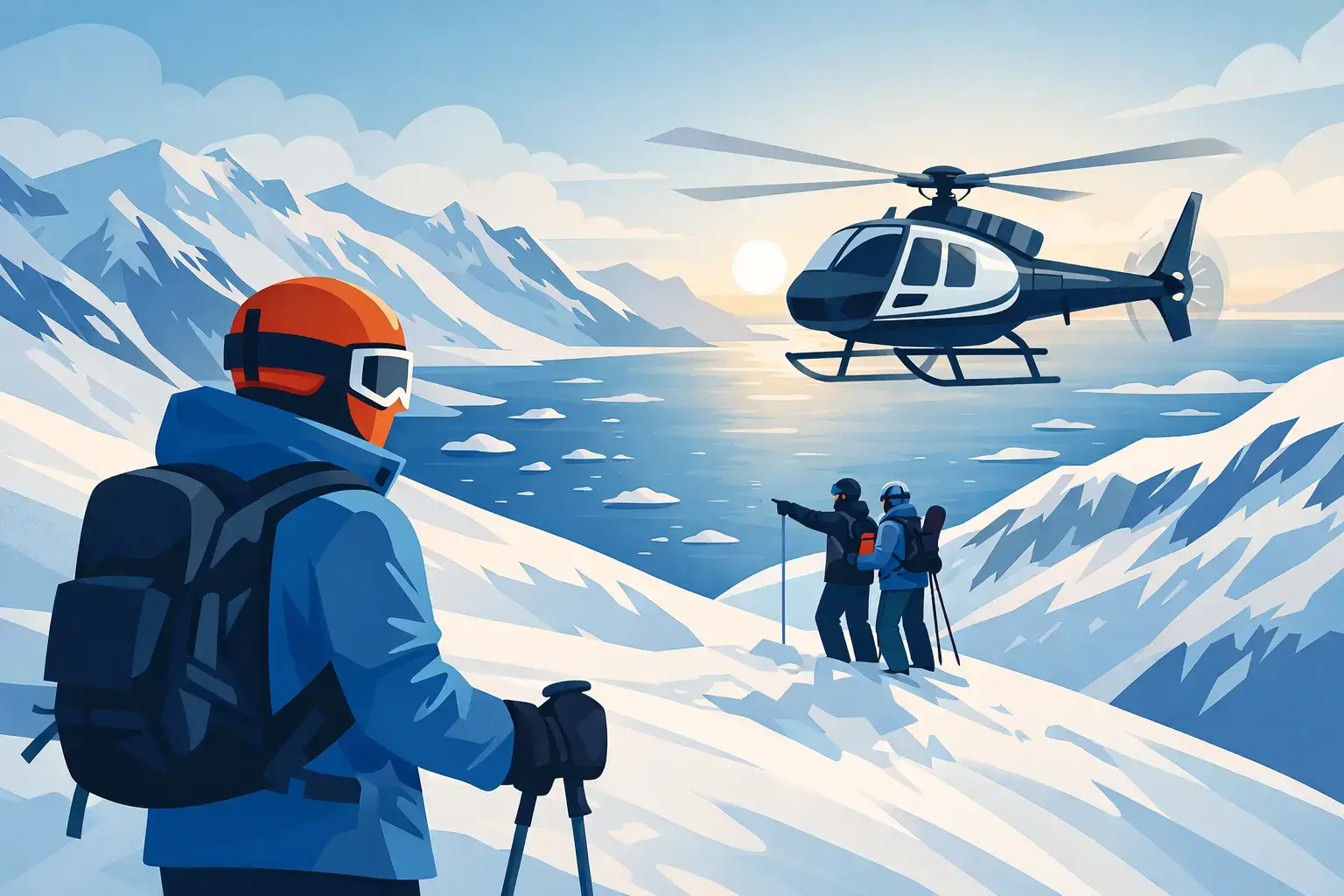
A glacier line dropping toward the North Atlantic is not the usual heli-ski backdrop. That is part of what makes heli skiing Iceland different. You are not flying into a crowded alpine system with lodges stacked valley to valley. You are stepping into a remote, weather-shaped landscape where long descents, dramatic sea views, and direct helicopter access create a ski day that feels far more private.
For travelers used to skiing in the Rockies, the Alps, or British Columbia, Iceland changes the scale of the experience. The mountains are not the tallest in the world, but they rise sharply from fjords and coastal valleys, which makes the skiing visually striking and surprisingly varied. A single day can bring powder fields, steeper technical lines, and wide-open runs with a view of the ocean below. The appeal is not just snow quality. It is access, terrain character, and the rare feeling that you are skiing at the edge of the Arctic on your own schedule.
Why heli skiing Iceland stands out
Most premium ski trips promise exclusivity. Iceland can deliver it in a more literal sense. Large areas of skiable terrain sit far from roads and traditional resort infrastructure, so the helicopter is not a luxury add-on. It is the practical way in.
That creates a different rhythm from a conventional ski vacation. You are not commuting from a lift base or waiting in public lines. The day is built around weather windows, guide judgment, helicopter efficiency, and terrain choice. For private groups, that means a more tailored experience from the start. Ability level, preferred pace, filming requests, sightseeing interests, and even non-ski add-ons can shape the itinerary.
The setting also matters. In northern Iceland especially, mountains drop toward narrow fjords and open water, giving many runs a visual scale that feels outsized compared with the vertical. You may not remember every number on the altimeter, but you will remember the sensation of landing on a ridge with snow in one direction and the sea in the other.
What the terrain is really like
Travelers sometimes assume Iceland is all volcanic novelty and no serious skiing. That misses the point. The country offers real ski terrain, but it expresses itself differently from major continental mountain ranges.
You can expect a mix of broad alpine slopes, couloirs, ridge-accessed descents, and long rolling lines that keep opening as you ski lower. Snow conditions vary with elevation, aspect, wind, and the maritime climate. That means flexibility is part of the experience. Some days favor softer powder snow in protected zones. Other days are about stable, confidence-building corn cycles in spring. The best operators plan around what the mountain is offering that day rather than forcing a fixed agenda.
This is also why group composition matters. A private group of strong skiers can move toward steeper and more technical objectives if conditions allow. Mixed-ability groups usually get more value from a balanced day with terrain that stays enjoyable rather than overly ambitious. In Iceland, good planning is not about squeezing in the maximum number of runs at any cost. It is about choosing lines that fit the weather, snowpack, and guests in the aircraft.
When to go for heli skiing in Iceland
The main season is typically spring, when longer daylight and more stable patterns support flight operations and snow quality. This timing surprises some US travelers who associate ski trips with midwinter powder calendars. In Iceland, spring often delivers the better balance of access, visibility, and snow coverage.
March through early June is generally the window people look at first, though exact timing depends on the region and seasonal conditions. Earlier in the season can bring a more winter snow feel, while later spring may offer smoother, more predictable corn snow in the right zones. Neither is universally better. It depends on what kind of skiing you want and how much flexibility you have in your travel dates.
If your priority is the highest chance of flight-ready weather, it helps to build margin into the itinerary. A multi-day stay gives your operator more room to work around Icelandic conditions. Travelers who lock themselves into a single narrow day can still have a great experience, but they are accepting more weather risk.
Weather is part of the luxury equation
In Iceland, premium service does not mean pretending the weather is controllable. It means managing it well.
Helicopter skiing depends on visibility, wind, landing conditions, and snow stability. The best experience comes from operators who are direct about that from the outset. Sometimes that means adjusting departure times. Sometimes it means switching terrain zones. Sometimes it means waiting for the right window instead of chasing a marginal one.
For high-end travelers, this can actually be a strength rather than a drawback. A professionally managed helicopter operation should protect the quality of the day, not just the calendar reservation. Clear communication, local knowledge, and flexible planning matter more in Iceland than flashy promises. When conditions line up, the reward is exceptional. When they do not, you want an aviation team that knows exactly where the margins are.
Who heli skiing Iceland is best for
This is not only for expert skiers collecting bragging rights, although advanced skiers will find plenty to appreciate. Iceland works especially well for private groups who want a ski trip that feels exclusive without becoming overly formal. Couples celebrating a major trip, families with strong skiing backgrounds, small groups of friends, and photographers all tend to get a lot out of the format.
It is also a strong fit for travelers who value time. Iceland’s roads are scenic, but reaching remote mountain areas overland takes commitment. A helicopter changes that equation completely. The day begins with direct access and unfolds around experience rather than transit.
That said, heli-skiing is not a casual add-on for first-time skiers. Guests should arrive with solid off-piste ability, strong fitness, and realistic expectations about variable snow. The better your group communicates its skill level in advance, the better the day can be designed.
Planning the day: private, tailored, and efficient
A good heli-ski day starts well before takeoff. The planning conversation should cover skiing ability, group size, preferred style of terrain, and whether the day is purely ski-focused or part of a broader Iceland itinerary.
This is where a helicopter operator with wider charter capability adds value. If you are already organizing scenic flights, private transfers, filming support, or a custom itinerary around Iceland, heli-skiing can fit into a larger aviation plan rather than stand alone as a fixed package. That is especially useful for travelers combining Reykjavík, the north, and remote landscapes in one trip.
For some guests, the goal is simple: ski the best available lines. For others, the experience matters just as much as the descents. They may want aerial photography, a scenic landing, or a day shaped around a premium private group experience. HeliAir approaches this as a bespoke operation, which is exactly how heli-skiing in Iceland should be handled.
What to wear and bring
Gear matters, but not in a complicated way. If you have heli-skied elsewhere, the basics are familiar: proper ski clothing for changing mountain conditions, avalanche safety equipment as required by the operator, appropriate skis for off-piste snow, and a clear understanding of the day’s plan.
The main adjustment for Iceland is the maritime weather. Conditions can shift quickly, and wind can play a bigger role in perceived temperature than visitors expect. Layering well, protecting hands and face, and bringing quality eyewear are simple choices that improve the day. Premium trips feel better when small discomforts are handled before they become distractions.
If you are traveling from the US and building this into a broader Iceland vacation, ask early about rental logistics, luggage limitations, and staging points. Smooth planning on the ground makes the flight experience feel effortless once you are in the air.
More than a ski trip
The strongest case for heli skiing Iceland is not that it replaces classic destinations. It does something different. It combines serious skiing with an aerial perspective that belongs to Iceland alone – glaciers, dark peaks, fjords, distant coastlines, and terrain that still feels genuinely removed from the usual circuit.
For the right traveler, that difference is the whole point. You are not coming here to repeat a trip you could take somewhere else. You are coming for a day shaped by local aviation expertise, mountain judgment, and direct access to places few visitors ever see from above, let alone ski.
If you are considering it, plan with enough flexibility to let Iceland be Iceland. That is usually when the best days happen.