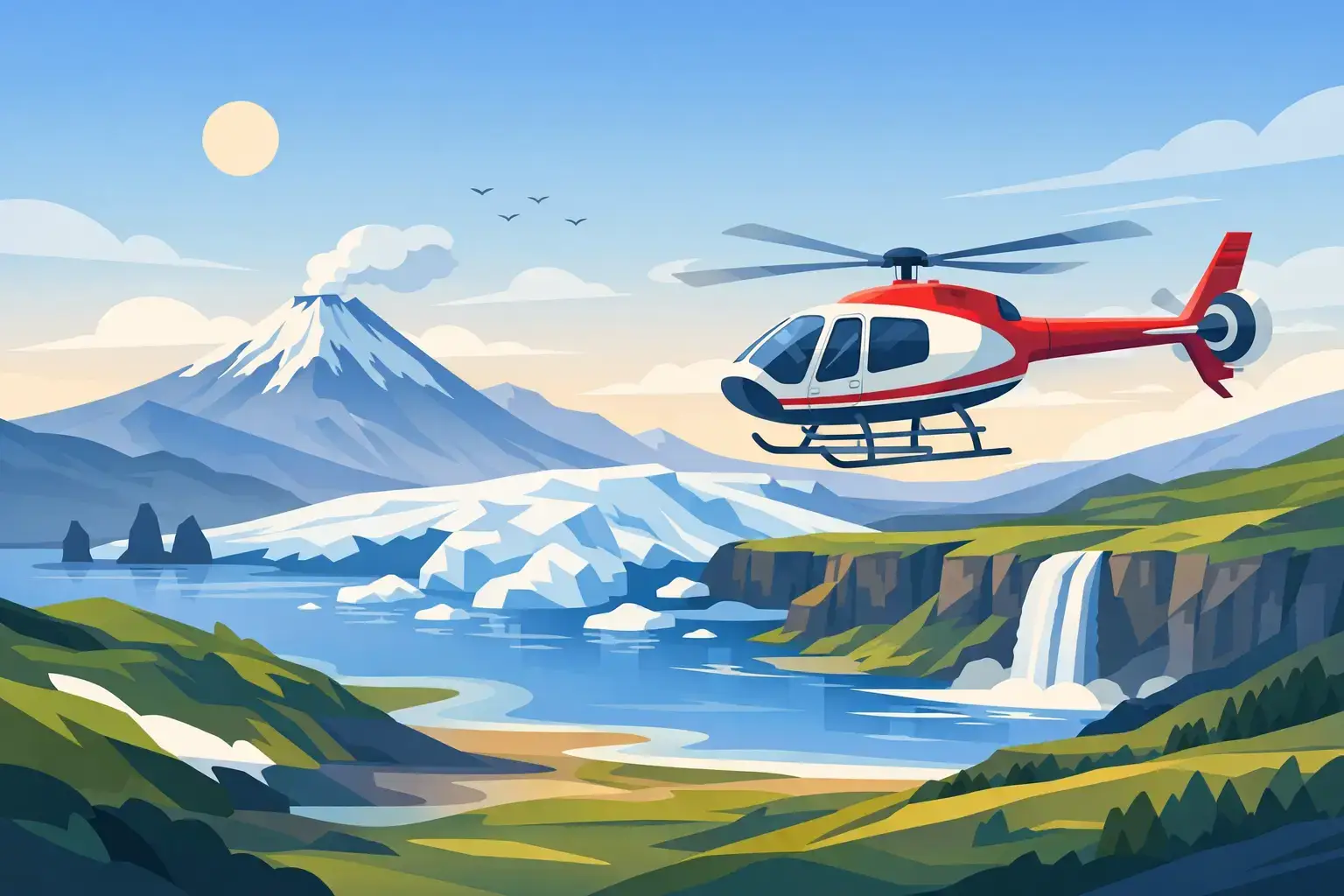
A helicopter tour in Iceland can feel completely different in June than it does in February, even if the route is similar. That is why the best time for Iceland helicopter tour planning depends less on a single month and more on what you want to see from the air – green highlands, snow-covered peaks, fresh volcanic terrain, midnight sun, or sharp winter light over glaciers.
For some travelers, the answer is simple: come in summer for longer days and broader access. For others, winter delivers the drama they had in mind all along. The right timing comes down to priorities, flexibility, and an honest understanding of Icelandic weather.
What makes timing matter so much in Iceland
In many destinations, helicopter sightseeing is mostly a question of availability. In Iceland, season changes the landscape itself. Rivers shift in color and volume, snowlines move, the highlands open and close, and light can be soft and low for much of the day or bright well into the evening.
That matters because helicopter travel gives you access to places most visitors never reach by road. If you are booking a scenic flight, a volcano tour, a glacier landing, or a custom charter into remote terrain, the month you choose affects not only the view but also what is realistically accessible and how much daylight you have to work with.
Weather is the other major factor. Iceland rewards flexible travelers. Clear skies can produce extraordinary visibility, but aviation always works within real conditions. The best experience usually comes from choosing the right season for your goals and leaving room for adjustments if needed.
Best time for Iceland helicopter tour by season
Summer: June through August
If you want the broadest access and the easiest planning window, summer is often the best time for Iceland helicopter tour travel. Days are long, the landscape is open, and remote areas become much more practical for sightseeing and private itineraries.
This is the season for green valleys, exposed volcanic formations, braided rivers, waterfalls at full force, and extended flights that benefit from abundant daylight. It is especially appealing for first-time visitors who want classic Iceland from above without worrying about short days or winter driving before or after the tour.
Summer also works well for families, private groups, and travelers building a premium itinerary with several moving parts. If you are pairing a helicopter experience with luxury lodging, highland access, photography stops, or same-day transfers, the long light gives you more room to plan.
The trade-off is demand. Summer is Iceland’s busiest travel season, and the premium experiences tend to fill earlier. The scenery is spectacular, but it is not the snowy, cinematic Iceland some visitors imagine first.
Fall: September and October
Fall is one of the most underrated times to fly. Early September can still offer strong access and relatively generous daylight, while the colors begin to shift across moss fields, lava, and mountain slopes.
For photographers, this season has real appeal. The light softens, the crowds thin compared with peak summer, and the contrast between dark volcanic ground and fresh seasonal change can be striking from the air. Custom scenic flights can feel especially refined at this time of year because Iceland starts to look more dramatic and less uniformly bright.
Conditions also become more changeable. Some routes remain excellent, but flexibility becomes more important as the season progresses. If your schedule is tight and you want the most predictable planning conditions, summer still has the edge.
Winter: November through March
For travelers chasing atmosphere, winter may be the best time for Iceland helicopter tour experiences. Snow on mountains and lava fields changes the scale of the landscape. Glaciers look sharper, ridgelines stand out, and low winter sun can create an almost cinematic view across the country.
Winter flights are ideal for guests who want drama over breadth. A shorter scenic route can feel more intense because every surface has contrast. Glacier regions are especially impressive in clear winter conditions, and aerial sightseeing from Reykjavík can be a powerful way to experience Iceland without committing to long overland travel in winter weather.
This season suits couples, luxury travelers, and private groups looking for a standout experience within a broader winter itinerary. It can also be a smart option for visitors with limited time who still want access to Iceland’s biggest scenery.
The trade-offs are clear. Daylight is limited, weather can shift quickly, and some remote areas are less practical for the kind of broad custom routing that works easily in summer. Winter can be exceptional, but it rewards travelers who value quality of conditions over maximizing range.
Spring: April and May
Spring sits in an appealing middle ground. Snow still lingers in higher terrain, but the days are getting longer and the country starts opening up again. From the air, that mix can be beautiful – white peaks, dark lava, thawing valleys, and stronger light than winter.
For visitors who want fewer peak-season crowds without giving up too much daylight, spring is worth serious consideration. It works particularly well for scenic flights and bespoke tours where the goal is variety in the landscape rather than a single seasonal effect.
Spring does not always deliver the certainty of full summer access or the pure winter look some travelers want. But if you like Iceland in transition, it can be one of the most interesting times to fly.
The best month depends on what you want to see
If your priority is volcanoes and raw geological landscapes, late spring through early fall often gives the clearest operational window for wider routing and landings in suitable conditions. Volcanic terrain is impressive year-round, but the combination of daylight and access can make summer and early fall particularly strong.
If glaciers are at the top of your list, winter and spring offer strong visual contrast, while summer gives more flexibility for combining glacier views with waterfalls, black sand areas, and inland routes. There is no bad season for glacier scenery from the air – only different moods.
If you are focused on waterfalls and green interiors, aim for summer. The country feels open, vivid, and expansive. If your ideal Iceland is snow, shadow, and sharp mountain relief, winter is the obvious fit.
For photographers, the answer is usually more specific. Summer gives range and late-evening light. Fall gives color and mood. Winter gives clean contrast and dramatic low-angle light. The best timing depends on your visual style, not just the destination.
Weather matters more than the calendar
It is tempting to search for a perfect month and treat it as a guarantee. In Iceland, that is not how it works. Even in the strongest season for your goals, conditions on the day still matter.
That is not a drawback of helicopter touring here. It is part of flying in a place defined by active weather, shifting visibility, and fast-changing natural conditions. An experienced local operator plans around that reality with route judgment, timing adjustments, and practical communication.
For guests, the smart approach is simple. If your Iceland helicopter tour is a high priority, avoid placing it in the final non-flexible hours of your trip. Give yourself room in the itinerary when possible. Premium travel works best here when there is enough space to let conditions line up properly.
When to book for the best experience
If you are traveling in summer, book early. This is the season most visitors instinctively choose, especially for private sightseeing, volcano flights, and custom experiences built around multiple stops.
For winter, earlier planning is still helpful, particularly if the helicopter tour is part of a larger luxury itinerary or a proposal, celebration, filming plan, or private transfer day. The advantage in winter is not necessarily easier last-minute availability. It is the chance to shape the right day around light, route, and overall travel flow.
For custom charters, earlier is almost always better. It gives more time to discuss exactly where you want to go, whether that is a remote waterfall, a glacier edge, a highland landing, or a point-to-point solution that saves hours of ground travel.
So when is the best time for Iceland helicopter tour travel?
For the widest choice of routes, longest days, and easiest logistics, summer is the safest answer. For the most dramatic visual atmosphere, winter is hard to beat. Spring and fall offer a more nuanced version of Iceland – quieter, moodier, and often ideal for travelers who care as much about quality of light as they do about checking off landmarks.
If you want one clear recommendation, June through September is the strongest overall window for most travelers. If you want the most memorable recommendation, choose the season that matches the Iceland you came to see.
The best flights are not built around a generic peak month. They are built around your timing, your priorities, and the version of Iceland that will stay with you long after you leave the ground.