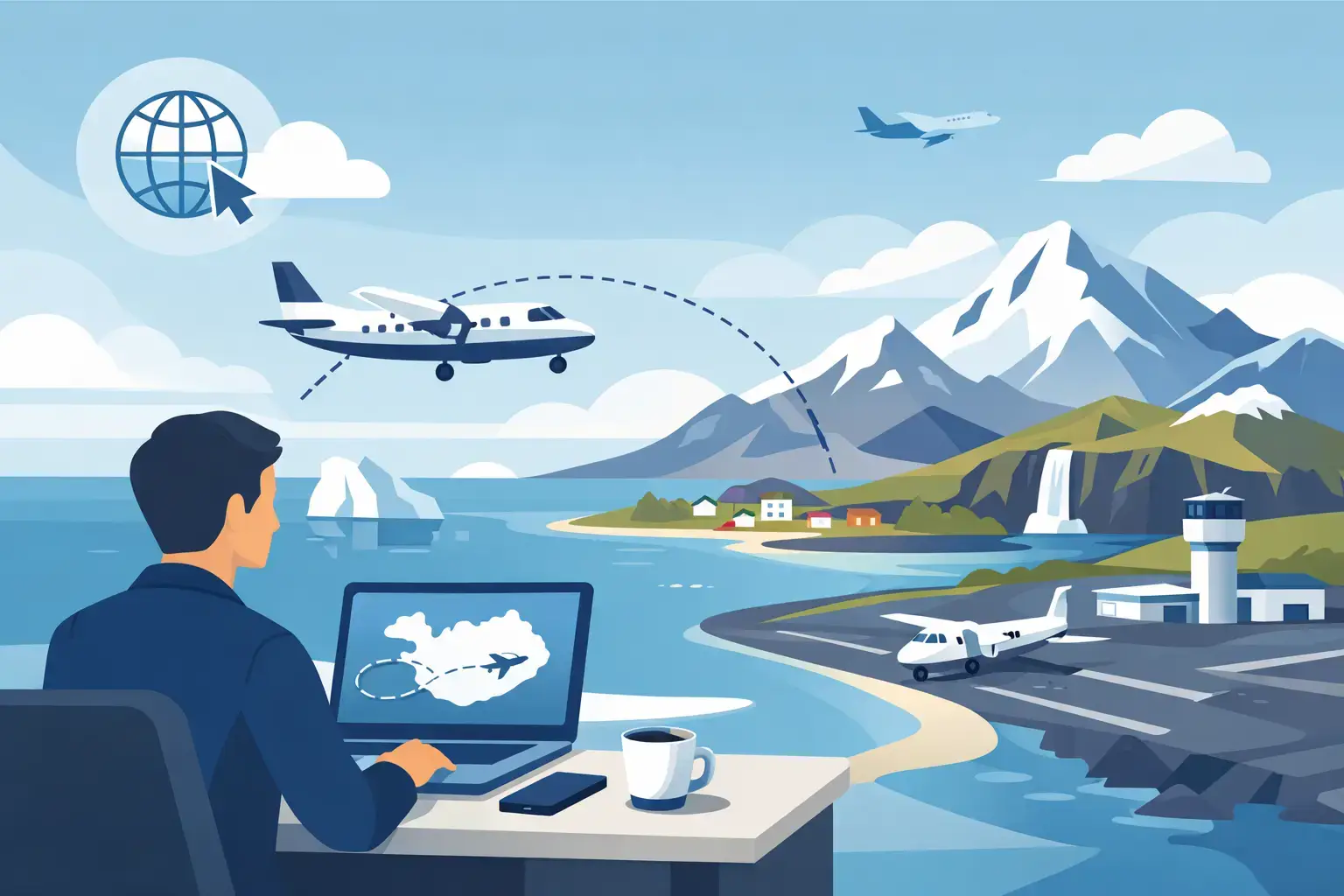
Some parts of Iceland look close on a map and still take most of a day to reach. A waterfall deep in the highlands, a glacier landing site, or a ridgeline beyond the road network can turn a simple outing into a long logistical exercise. That is exactly where Iceland remote access flights change the experience. Instead of planning around road limits, river crossings, seasonal closures, and long transfer times, you plan around where you actually want to go.
For travelers who value time, privacy, and access, this is less about transportation in the basic sense and more about shaping the day around the destination. You can leave from the capital area or North Iceland, reach terrain that would otherwise require a serious overland effort, and spend your energy on the landscape itself rather than the approach.
What Iceland remote access flights really mean
Remote access flights are designed for places that are hard, slow, or sometimes impossible to reach efficiently by car. In Iceland, that often means the central highlands, isolated waterfalls, glacier margins, volcanic terrain, black sand stretches, or private landing areas arranged for a specific itinerary.
The point is not simply that a helicopter can go where a car cannot. It is that Iceland’s geography creates real gaps between what looks nearby and what is practical in one day. Roads can be seasonal. Highland routes can be rough even in summer. Weather can reshape a driving plan fast. A direct flight turns those variables into a much cleaner travel window.
That matters for luxury travelers, photographers, families, private groups, and production teams alike. Everyone wants something slightly different, but the common thread is efficiency paired with access.
Why travelers choose Iceland remote access flights
The first reason is time. A place that may take five or six hours to reach over land, once you factor in route conditions and stops, can become part of a half-day or full-day aerial plan. That changes what is possible, especially for visitors with limited time in Iceland.
The second reason is exclusivity. Remote areas feel different when you arrive directly, land with space around you, and experience the setting without the rhythm of crowded roadside stops. For couples celebrating something special, families wanting a private day out, or groups planning a high-end Iceland itinerary, that privacy is part of the value.
The third reason is perspective. Iceland’s terrain is dramatic from the ground, but it makes more sense from above. Glacial rivers show their braided paths. Volcanic fields reveal their scale. Highland plateaus and cliff edges stop looking like isolated sights and start reading as one connected landscape.
There is also a practical side that should not be overlooked. For some clients, remote access flights are not a scenic extra. They are the most sensible option for reaching a filming location, moving between points quickly, scouting terrain, or supporting specialist work in places where roads are not the best answer.
Where these flights can take you
Iceland remote access flights are at their best when the destination is visually extraordinary and logistically awkward. That includes glacier areas where a landing creates a far more direct experience than a long overland approach. It includes volcano regions where aerial access gives you a safer, broader view of active or recently active landscapes. It includes waterfalls tucked into less-traveled terrain and highland sites that feel genuinely removed from the standard tourist route.
The south often draws the most attention because of its glaciers, black sand coast, and famous volcanic systems. The highlands appeal to travelers who want a wilder, more remote Iceland, especially in summer when the interior opens up but still demands time and planning. North Iceland adds another dimension, with mountain terrain, coastal drama, and access points that suit travelers staying away from Reykjavík.
The best destination is rarely the one with the biggest name. It is the one that matches the kind of day you want. Some travelers want a cinematic landing near a glacier or volcano. Others want multiple scenic passes with one quiet stop in a place they would never reach on their own. The strongest itineraries are built around that preference rather than a generic checklist.
Scenic tour or custom charter?
This is where expectations matter. A structured scenic flight works well when you want a polished experience with a clear route and a fixed duration. It is a strong fit for travelers who want premium access without needing to design every detail.
A custom charter makes more sense when the destination is the priority. If you have a specific waterfall in mind, want to combine several areas in one day, need a pickup or transfer component, or are planning photography, heli-skiing support, or location work, custom routing is usually the better route.
Neither option is automatically better. It depends on whether you want simplicity or precision. Many guests start with a general idea – glaciers, volcanoes, highlands, or a proposal setting far from the crowds – and refine the plan with the operator based on season, weather, and flight time.
What to expect from the planning process
Good remote access flight planning starts with a simple question: where do you want the day to lead? Once that is clear, the rest falls into place more easily. Departure base, flight duration, landing options, seasonal access, and timing all depend on the destination.
Weather is always part of the conversation in Iceland, and any serious operator will be direct about that. Clear skies in one region do not guarantee the same conditions in another. Wind, visibility, and safety always come first. That does not make planning uncertain so much as realistic. The best flight plans are flexible enough to adapt while still protecting the overall experience.
This is also why direct communication matters. Premium helicopter travel in Iceland is not a one-size-fits-all product. A private couple planning a once-in-a-lifetime flight, a family wanting easier access to dramatic scenery, and a production team needing aerial logistics all require different routing, timing, and operational support. A tailored conversation usually produces a better result than forcing a complex request into a standard booking mold.
Iceland remote access flights for photography, proposals, and private events
Some of the strongest use cases for remote access flights are personal. A photographer may want low-angle light over glacial terrain and enough flexibility to position for the best conditions. A couple may want a landing site with privacy and scale, somewhere that feels impossible to stage by road. A private group may want to turn transfer time into the highlight of the trip.
In those cases, the details matter. Time of day, direction of light, season, and the character of the landing location shape the result. So does pacing. A rushed itinerary can make even a spectacular route feel transactional. A well-planned one gives the experience room to breathe.
That same principle applies to corporate and technical use. If the goal is aerial filming, scouting, or support work, access is only part of the equation. Stability, timing, route control, and coordination all become part of the service. Premium remote access flights should feel organized without feeling rigid.
Trade-offs worth understanding
Helicopter access is fast, but it is not casual. Weather can shift plans. Some areas are better in one season than another. Not every landing is appropriate every day, and not every beautiful place is equally suitable for every group.
Cost is another real consideration. Remote access flights are premium by nature, especially private charters. But the value is not measured only in flight time. It is measured in what the flight replaces: long drives, overnight logistics, convoy planning, limited access windows, or simply the inability to reach a place at all within your schedule.
For many travelers, that trade makes sense when the trip itself is built around high-value experiences. For technical clients, it can be even more straightforward. Efficiency, direct routing, and operational flexibility often justify the decision immediately.
Choosing the right operator for remote access
Experience in Iceland matters. So does clarity. You want an operator who knows the terrain, understands how quickly conditions can change, and can speak honestly about what is possible on the day you want to fly.
That includes more than aviation skill. It means understanding how to shape a route that feels worth the investment, how to balance ambition with safety, and how to suggest alternatives when conditions call for them. A company like HeliAir is built around that kind of local judgment, combining scenic expertise with practical charter capability across very different types of flights.
The best remote access flight is not always the most complicated one. Often it is the one that feels effortless from the client side because the planning behind it was thoughtful from the start.
If Iceland is on your list because you want more than roadside viewpoints, remote access flights open a different version of the country – one where distance shrinks, the map gets more interesting, and the day can be designed around the places that usually stay out of reach.