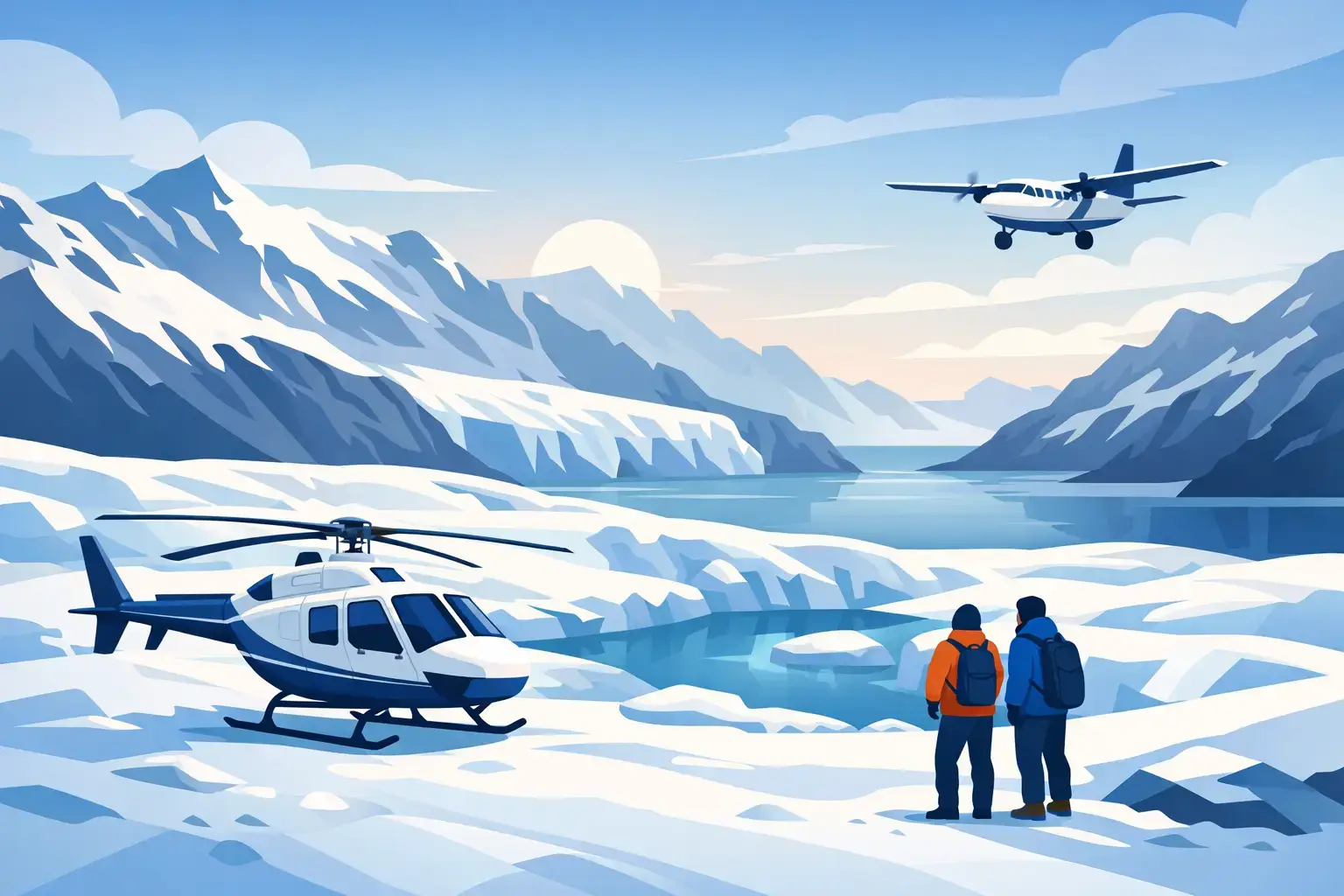
A glacier landing flight Iceland experience changes your sense of scale almost immediately. Roads, rivers, and lava fields flatten into patterns from the air, then a white ice cap rises ahead and fills the windshield. The moment that matters most, though, is not only the flight itself. It is the landing – stepping out onto a glacier that would take hours, or in some cases days, to approach overland.
For travelers who want more than a scenic pass, this is one of the most memorable ways to experience Iceland. It combines the reach of helicopter travel with the feeling of arriving somewhere genuinely remote. You are not looking at the landscape from a distance. You are standing inside it.
Why a glacier landing flight in Iceland stands apart
Iceland has no shortage of dramatic scenery, and plenty of tours promise a lot in a short time. A glacier landing flight is different because it does two things at once. It gives you the broad cinematic perspective that only comes from the air, and it adds a physical destination instead of a flyby.
That distinction matters. Aerial sightseeing is spectacular, but a landing creates a different kind of memory. The sound drops when the rotor slows. The air feels sharper. Snow, ice, volcanic ash, and distant mountain ridges all become tangible rather than abstract. If you are celebrating a milestone, traveling as a couple, planning a private family experience, or simply want access without long hours on the road, this is where the value becomes clear.
It also suits travelers who are short on time but unwilling to compromise on experience. Iceland’s geography is beautiful, but it can be slow to cross by car. A helicopter compresses distance in a way that opens up the day. You can leave from the city or a regional base, reach glacier terrain quickly, land in a place few visitors ever stand, and still have the rest of your itinerary ahead of you.
What the experience actually feels like
Most guests imagine the glacier as the main event, but the flight there is half the story. From the helicopter, Iceland reveals how tightly its landscapes are layered. You may lift off over coastal areas or lowland valleys, then cross black sand stretches, braided rivers, moss-covered lava, waterfalls, and rising highlands in one continuous sweep.
As the glacier comes into view, you begin to see texture rather than just whiteness. Crevasse lines, wind-shaped ridges, ash-streaked snow, and the edge where ice meets exposed rock all tell the story of a living environment. On clear days, visibility can be extraordinary. Distances feel deceptive because the air is so crisp.
The landing itself is smooth but thrilling. Pilots select a suitable site based on conditions, visibility, and the character of the terrain that day. Once on the ground, you are usually given time to step out, take photos, absorb the silence, and simply look around. Depending on the route and weather, you may have views toward volcanoes, mountain ranges, interior highlands, or coastal plains.
This is not a strenuous expedition. It is premium access to a place that still feels wild.
Who a glacier landing flight Iceland is best for
This type of flight appeals to travelers who want exclusivity, but not necessarily extravagance for its own sake. The real luxury is access. You are avoiding long drives, crowded viewpoints, and the limits of standard sightseeing routes.
Couples often choose glacier landings for proposals, anniversaries, or once-in-a-lifetime trips. Families like them because the experience is visually dramatic without requiring technical ability. Private groups and photographers are drawn to the flexibility. If conditions allow, routing can be tailored around what matters most – ice formations, volcanic landscapes, waterfalls, or a broader multi-stop scenic plan.
It is also a strong fit for travelers who have seen Iceland before and want a more elevated perspective on a return visit. If you have already driven the South Coast or visited glacier viewpoints from the ground, arriving by helicopter creates a completely different understanding of the same landscape.
Weather, season, and the reality of flying in Iceland
The best glacier flights are shaped by conditions, not by rigid promises. That is true of aviation anywhere, but especially in Iceland. Weather changes quickly, and responsible operators plan around that rather than against it.
For guests, this means flexibility is part of the experience. Some days bring perfect visibility and dramatic contrast across the ice. Other days may still be flyable but softer in tone, with low cloud, shifting light, or route adjustments. Occasionally, conditions mean delaying or rescheduling for safety. That is not a flaw in the product. It is part of operating well in a country where weather and terrain demand real judgment.
Season matters too, though not always in the way travelers expect. Summer often brings longer daylight and easier trip planning, while winter can create striking light, snow cover, and a stronger sense of Arctic atmosphere. Shoulder seasons can be excellent for contrast in the landscape. The right time depends on what kind of scenery you want, how flexible your itinerary is, and whether this is one part of a larger private travel plan.
Choosing the right flight, not just the longest one
Longer is not automatically better. The best glacier landing flight in Iceland is the one built around your priorities.
If your goal is to add a high-impact experience to a packed Reykjavík itinerary, a shorter scenic flight with a glacier landing may be exactly right. If you want a more immersive day, a custom charter can combine glaciers with waterfalls, volcanic zones, black sand areas, or remote highland locations that are difficult to connect efficiently by car. For photographers, timing and route flexibility may matter more than raw flight duration. For families, comfort and pacing may take priority.
This is where bespoke planning becomes valuable. Instead of trying to force your interests into a fixed sightseeing template, you can build around the views and landings that matter most. In Iceland, that often produces a better experience than simply selecting the most time in the air.
What to wear and how to prepare
Even in summer, glacier environments are cooler than many guests expect. Dress for exposure rather than city weather. A warm layer, solid shoes or boots, and a wind-resistant outer layer are usually the smart choice. You do not need technical expedition gear for a standard landing, but you do want to feel comfortable standing on snow or ice for a period of time.
A camera or phone is obvious, but it helps to remember that this is one of those rare travel moments that can become overly filtered through a screen. Take the photos, then put the device down for a minute. The sound, scale, and light are a large part of what makes the landing memorable.
If you are planning a special occasion or have a very specific destination in mind, mention that early. Operators can advise what is realistic based on season, timing, and aircraft availability. With premium helicopter travel, the planning conversation is part of the service.
The difference between a scenic add-on and a serious experience
Not every helicopter tour is designed the same way. Some are built to offer a quick highlight. Others are created around access, flexibility, and destination quality. If a glacier landing is high on your list, it is worth choosing an operator that understands Iceland’s terrain in operational detail and can shape the route around the day rather than relying on a generic script.
That local knowledge affects more than comfort. It influences where you can land, how you adapt to weather, and how effectively a flight can combine multiple landscapes without feeling rushed. For travelers investing in a premium experience, that operational depth is not background detail. It is part of what you are paying for.
At HeliAir, that approach is central to the experience. The goal is not just to fly over Iceland’s best scenery. It is to get you into it, with the kind of route planning and local aviation judgment that makes a private or semi-private flight feel purposeful from start to finish.
Is it worth it?
For the right traveler, absolutely. A glacier landing is not the cheapest way to see Iceland, and it is not meant to be. It is for people who value time, access, privacy, and the feeling of doing something few others will do on their trip.
The trade-off is simple. You are choosing depth over volume. Rather than spending a full day covering ground to reach a viewpoint, you arrive directly in extraordinary terrain and experience it from both above and under your feet. That combination is hard to match.
If Iceland is a once-in-a-lifetime journey, this is the kind of experience that earns its place. And if it is your second or third visit, it may be the one that changes how you see the country altogether.
A good glacier landing flight does more than show you Iceland at its best. It gives you a way to stand still in one of its most remote places and feel, for a moment, like the country opened just for you.