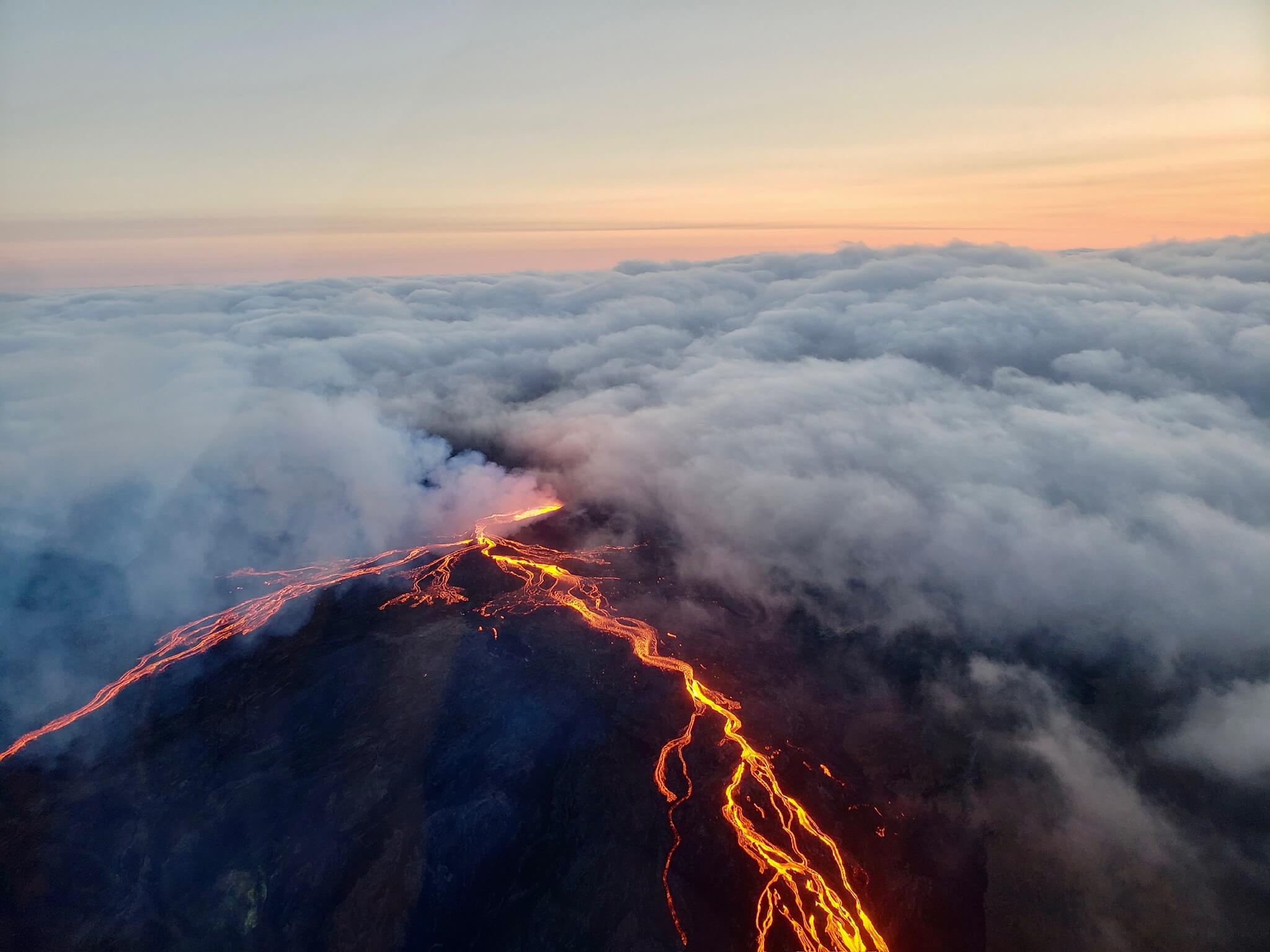
If you are planning a helicopter trip in Iceland, one question usually comes up fast: can you fly over Iceland volcano landscapes, or are they off-limits once activity starts? The short answer is yes, sometimes you can – but only when conditions, airspace, and safety assessments allow it.
That distinction matters. Iceland’s volcanic areas are not theme-park attractions with fixed access rules. They are active geological systems, and flight decisions change with weather, gas levels, ash, visibility, eruption intensity, and guidance from aviation and civil protection authorities. For travelers, photographers, and private groups, that means the experience can be extraordinary, but it is never casual.
Can you fly over Iceland volcano areas during an eruption?
Yes, aircraft can and do operate near volcanic areas in Iceland, including during eruptive periods, but not as a blanket rule and not on demand at any cost. Whether a helicopter can fly over or around a volcano depends on the specific eruption and the exact hazards present that day.
A slow fissure eruption with limited ash may allow carefully planned scenic flights at approved distances and altitudes. A more explosive event with heavy ash, unstable wind direction, or elevated gas concentrations can shut down access quickly. Even when the volcano itself looks visually calm, the surrounding air may not be suitable for flight.
This is where local operational judgment matters. An experienced Iceland-based helicopter operator is not simply deciding whether the view is good. The real question is whether the route can be flown safely, legally, and with a useful margin if conditions change.
Why the answer is not always simple
People often imagine volcano flights as a matter of flying directly above lava. In reality, the decision starts much earlier, with the type of eruption. Iceland sees different volcanic behavior, and each one affects aviation differently.
Ash is one of the biggest concerns. Fine volcanic ash can damage aircraft systems and engines, reduce visibility, and create serious operational risk. Gas exposure is another issue. Depending on wind and terrain, volcanic gases can collect in certain areas or drift across likely flight paths. Then there is the weather itself. Icelandic weather changes quickly, and volcanic regions are often in remote terrain where cloud cover, wind, and visibility can tighten flight options fast.
That is why a premium volcano flight is never just a sightseeing loop. It is a carefully managed operation shaped by live information, route flexibility, and conservative decision-making.
What a volcano flight in Iceland usually looks like
When conditions are suitable, volcano flights are designed to give you the best perspective without pushing into unsafe airspace or unstable zones. That may mean orbiting the active site rather than passing directly overhead. It may mean approaching from one side only, staying at a controlled altitude, or changing the route mid-flight if wind or visibility shifts.
For guests, that often translates into something better than a simple flyover. From a helicopter, you can see how the lava field sits inside the wider Icelandic landscape – black ridgelines, fresh fissures, steam columns, old craters, moss-covered fields, and coastline or highlands beyond. The scale is hard to understand from the ground. From the air, it becomes obvious.
Some flights are purely scenic. Others are tailored for photographers, private groups, or travelers who want to combine a volcano with glaciers, waterfalls, geothermal areas, or a remote landing elsewhere on the same journey. That flexibility is one of the strongest reasons people choose a helicopter in Iceland rather than committing to a long ground route with uncertain access.
Can you fly over Iceland volcano sites year-round?
Not exactly. You can fly in Iceland year-round, but volcano access is always seasonal in a practical sense because daylight, weather patterns, and storm frequency all affect what is feasible.
Summer offers longer daylight windows and generally more scheduling flexibility. Shoulder seasons can be excellent for dramatic light and fewer crowds, though conditions can change quickly. Winter flights can be spectacular, especially when volcanic terrain contrasts with snow and low sun, but weather margins are tighter and routes may need to stay more flexible.
The volcano itself also changes over time. A newly active area may be visually intense for a short period, then transition into a quieter but still striking landscape of cooling lava, steam, and fresh geological scars. Even if an eruption is no longer headline news, the aerial experience can remain remarkable.
What stops a helicopter from flying over a volcano?
There are several reasons a flight might be adjusted, delayed, or canceled, and most of them are exactly the reasons you want a serious operator making the call.
The first is airspace restriction. Icelandic authorities may establish temporary no-fly zones or operational limits around active volcanic systems. The second is ash and gas. Even if the landscape is visible, the air may not be suitable. The third is weather, especially wind, low cloud, icing conditions, or poor visibility around the route.
There is also the matter of landing access. Some guests assume a volcano tour always includes a landing near the site. That depends heavily on terrain, heat, surface stability, local restrictions, and current hazard assessments. In some cases, the best and safest experience is an aerial circuit with no landing at all.
For travelers used to luxury experiences with fixed itineraries, this is one of the few places where flexibility is part of the premium. The aircraft may be private, the service high-touch, and the route bespoke, but nature still sets the final terms.
Why helicopter access changes the experience
Driving to Iceland’s volcanic regions can take hours, and when activity is ongoing, ground access may be limited, crowded, or closed altogether. A helicopter changes the equation. You can reach remote volcanic landscapes quickly, avoid long overland detours, and build a broader day around what matters most to you.
That might mean combining a volcano with a glacier valley and waterfall. It might mean departing from Reykjavík, viewing an active zone from the air, then continuing to a remote landing site for a private moment away from the usual visitor flow. For photographers and private groups, it also means perspective control. You are not limited to one overlook or one trail. You can see the land as a connected system.
This is where an operator like HeliAir becomes valuable. The goal is not simply to sell a seat with a volcano in the distance. It is to shape a flight around the best possible conditions, the right aircraft, and the kind of experience you actually came to Iceland for.
Is it safe to book a volcano flight in advance?
Yes, with the right expectations. Booking in advance is often the best way to secure aircraft availability, especially during peak travel periods or when interest in a specific eruption is high. But advance booking should come with a clear understanding that volcano flying is condition-dependent.
A well-run operator will explain that routes may change, timings may shift, and cancellations sometimes happen for sound operational reasons. That is not a weakness in the product. It is a sign that safety standards are being taken seriously.
If your trip to Iceland is built around a volcano experience, it helps to leave some flexibility in your itinerary. A wider travel window can improve your chances of flying in the best conditions. Private charter travelers often have the greatest flexibility because routes and timing can be adjusted more precisely around the day’s conditions.
What you should expect before you fly
If you are considering a volcano flight, expect a conversation rather than a generic booking flow. The useful questions are practical ones: Which volcano area is active or visually strongest right now? Are scenic overflights operating? Is a landing realistic? How much time should you allow? Can the flight be combined with other landmarks or tailored for photography?
You should also expect honest answers. Sometimes the right answer is yes, the conditions are excellent. Sometimes it is yes, but with route limits. Sometimes it is not today. For a premium aviation experience in Iceland, that clarity is part of the service.
The best volcano flights are not defined by how close the aircraft gets to lava. They are defined by judgment, timing, and perspective. When conditions align, few travel experiences compare to seeing Iceland’s newest landscape from the air – raw, shifting, and still being formed beneath you.
If you are wondering whether this belongs on your Iceland itinerary, the better question is not simply can you fly over Iceland volcano terrain. It is whether you want to experience it from the one vantage point that shows the full scale of what this country is constantly creating.