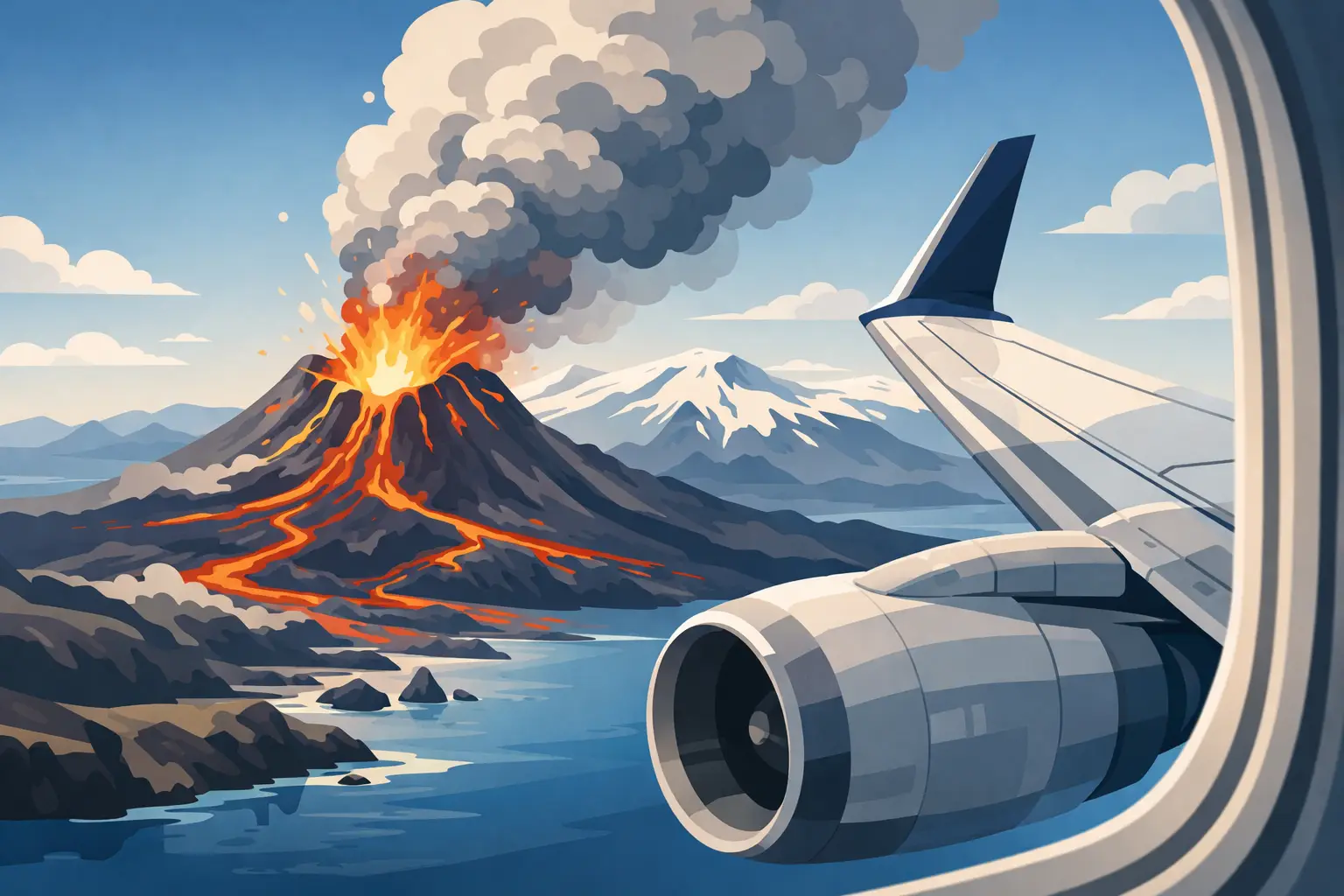
Some volcanoes look impressive from the road. Others only make full sense from the air, when you can see the crater line, the lava fields, the black sand coast, and the glacier edges all in one sweep. That is why the best volcano viewing flights in Iceland are not simply scenic add-ons. They are the clearest way to understand the scale, geology, and raw contrast that make this country unlike anywhere else.
For travelers who want more than a bus stop photo, an aerial volcano flight changes the experience completely. You cover far more ground, avoid long overland detours, and gain access to angles that are impossible from below. The right flight is not just about getting airborne. It is about route design, weather judgment, aircraft positioning, and local knowledge of which volcanic areas are truly worth seeing on a given day.
What makes the best volcano viewing flights worth it
A premium volcano flight should do more than circle one landmark and head home. The strongest itineraries combine active or recently active volcanic terrain with the surrounding features that explain Iceland’s landscape as a whole. That can mean seeing lava fields against the Atlantic coast, tracing fissure systems across the Reykjanes Peninsula, or pairing a volcano route with glaciers, waterfalls, or highlands that sharpen the contrast.
This is where helicopter flying stands apart from fixed sightseeing routes. A well-planned helicopter experience gives you flexibility in both routing and perspective. If the weather shifts, the route can often be adapted. If visibility opens over a better section of volcanic terrain, the flight can focus there. Depending on conditions and the tour setup, a landing may also be possible in select locations, turning a sightseeing flight into a much more immersive experience.
There is a practical side too. Iceland’s most dramatic volcano landscapes are not always close to where visitors are staying, and ground travel can consume most of a day. Flying lets you spend your time seeing the terrain instead of commuting to it.
Best volcano viewing flights for different travelers
Not every guest wants the same experience, and the best volcano viewing flights depend partly on what you value most.
For first-time visitors
If this is your first trip to Iceland, the ideal flight usually balances volcanic drama with other iconic scenery. You may want to see fresh lava fields or crater systems, but you also want the broad Icelandic picture – ridgelines, glaciers, rivers, and coast. A route that layers these elements together often feels more complete than a volcano-only circuit.
For photographers
Photographers tend to care less about ticking off names and more about light, terrain contrast, and aircraft positioning. Early or late departures can deliver stronger texture across lava fields and crater rims. Cloud cover can either soften the scene beautifully or close it down entirely. For this kind of traveler, custom planning matters more than a standard sightseeing slot, because the best results depend on conditions rather than a fixed schedule.
For private groups and luxury travelers
For couples, families, or private parties, exclusivity is usually the priority. The flight should feel tailored, not crowded or rushed. That may mean a direct departure from a preferred base, a longer airborne window, or a custom route that combines volcanoes with a glacier landing, remote waterfall, or highland detour. When guests are investing in a premium experience, flexibility is part of the value.
For travelers short on time
If your Iceland itinerary is already full, a helicopter volcano tour can be the most efficient option available. Instead of losing a full day to driving, parking, and changing weather at ground level, you can reach the landscape quickly and see far more within a shorter time frame. That efficiency is often what turns a volcano flight from a splurge into a smart use of limited travel time.
Where the best volcano viewing flights usually go
Iceland has several volcanic regions, but they do not all deliver the same kind of aerial experience.
The Reykjanes Peninsula is one of the strongest choices for visitors based in or near Reykjavík. Recent eruptions have made this area especially compelling from above, with fresh lava fields, fissure systems, and stark coastal surroundings that read beautifully from the air. It is one of the clearest examples of why a volcano landscape is easier to grasp from altitude than from the ground.
South Iceland offers a different kind of drama. Here, volcano views often gain power from their relationship to glaciers and broad lowlands. Areas associated with famous volcanic systems can be especially striking when combined with black sand plains, braided rivers, and ice. This is less about one isolated crater and more about seeing how volcanoes have shaped an entire region.
The highlands can add another layer for guests booking custom or longer flights. Volcanic terrain here often feels more remote, more abstract, and less visited. The trade-off is that these routes can be more dependent on weather, visibility, and flight time. For the right traveler, though, they offer some of the most memorable scenery in the country.
How to choose the right flight
The simplest way to choose is to start with your real priority. If you want a concise, high-impact experience, a shorter volcano-focused flight may be enough. If you want Iceland’s biggest visual contrasts in one trip, a longer scenic route with volcanoes as one element will often deliver more.
Aircraft type and operator experience matter as much as itinerary length. Icelandic flying is shaped by fast-changing weather, mountain winds, and visibility windows that can shift quickly. A local aviation team that knows the terrain intimately is not a luxury extra. It is central to both safety and experience quality.
Customization is another important dividing line. Some flights are designed as straightforward retail tours. Others can be built around specific requests, whether that means photography goals, private timing, a preferred departure point, or combining volcano sightseeing with another destination. HeliAir operates from both Reykjavík and Ólafsfjörður, which gives guests more flexibility than a single-base model when planning around broader Iceland itineraries.
Timing, weather, and what to expect
The best volcano viewing flights are always weather dependent. That is not a drawback. It is part of flying well in Iceland.
Clear visibility is ideal, but partial cloud can still create dramatic conditions if the route is chosen carefully. Wind, however, can be more limiting than travelers expect, especially around exposed ridges and open volcanic terrain. This is why fixed expectations do not work particularly well here. The strongest operators plan around what the day is actually offering rather than forcing the same route in every condition.
Season also changes the character of a flight. Summer brings longer daylight and easier scheduling, while winter can offer extraordinary light and snow contrast across lava and crater systems. The trade-off is that winter conditions can be less predictable. Neither season is universally better. It depends on whether you prioritize flexibility, lighting, snow cover, or overall ease of travel.
Guests should also set the right expectations around volcanic activity. Not every famous volcano is actively erupting, and the most rewarding flight does not require visible lava. Iceland’s volcanic landscapes remain spectacular even in quieter periods. Craters, fissures, hardened lava fields, geothermal coloration, and the surrounding terrain often create a richer visual story than a single active vent would on its own.
Why private planning often leads to a better experience
At the premium end of the market, the difference between a good volcano flight and an exceptional one usually comes down to planning. Private departures allow more control over timing, passenger mix, and route priorities. That matters when one guest wants photography, another wants comfort, and the group as a whole wants to make the most of limited time in Iceland.
It also matters for travelers who want to combine objectives. A volcano tour can be paired with an airport transfer, a scenic landing, a proposal setup, or a broader day trip into remote terrain. This is where helicopter travel becomes more than sightseeing. It becomes a way to shape the day around exactly what you want to see and how you want to experience it.
The best flights feel effortless to the guest because the complexity has been handled in advance – route logic, weather judgment, timing, and practical access. That is the real value of working with an experienced local operator rather than choosing on price alone.
If you are deciding whether a volcano flight is worth it, the better question is what kind of Iceland you want to remember. From the ground, volcanoes can feel distant and fragmented. From the air, they finally connect – and that is when the landscape becomes unforgettable.