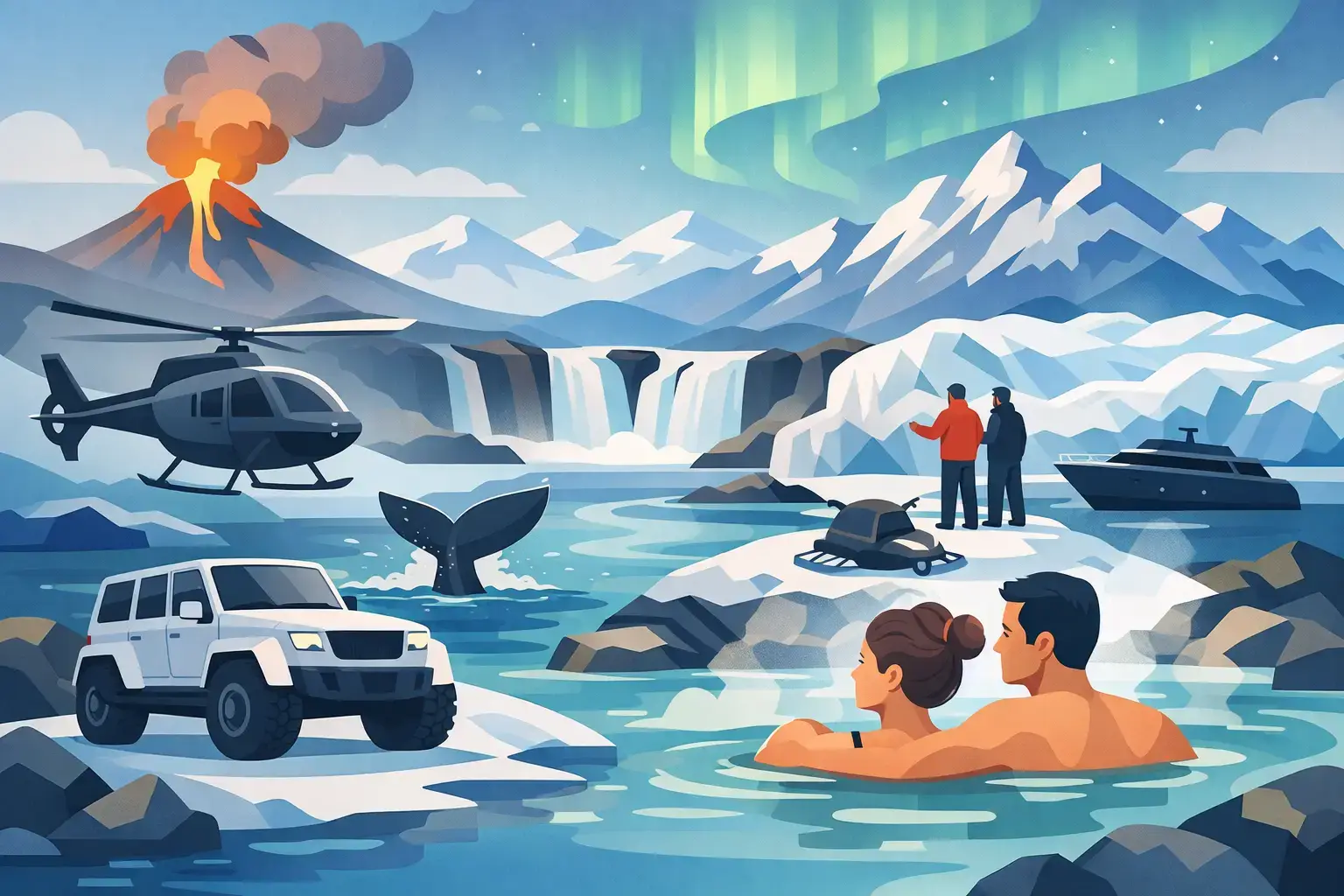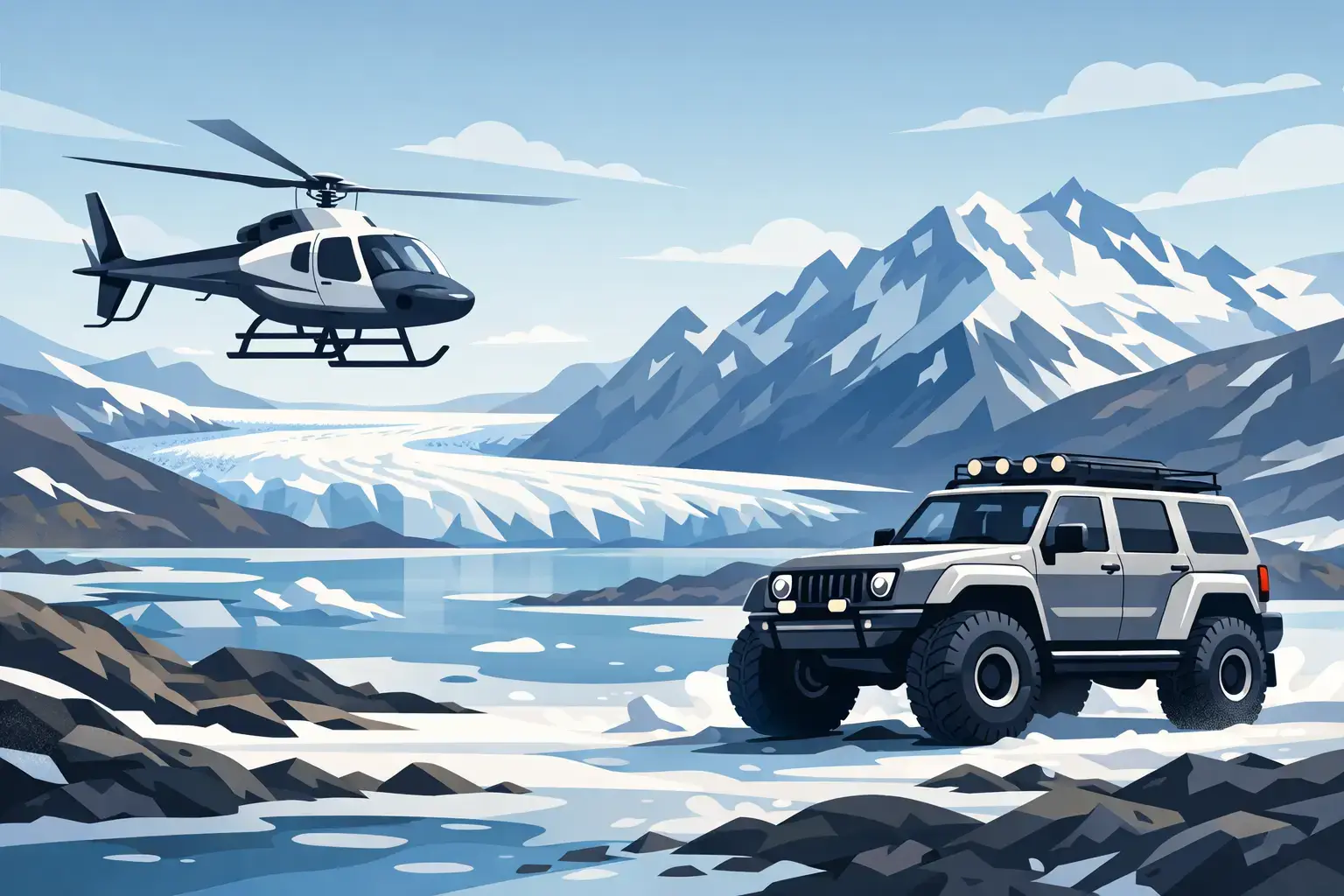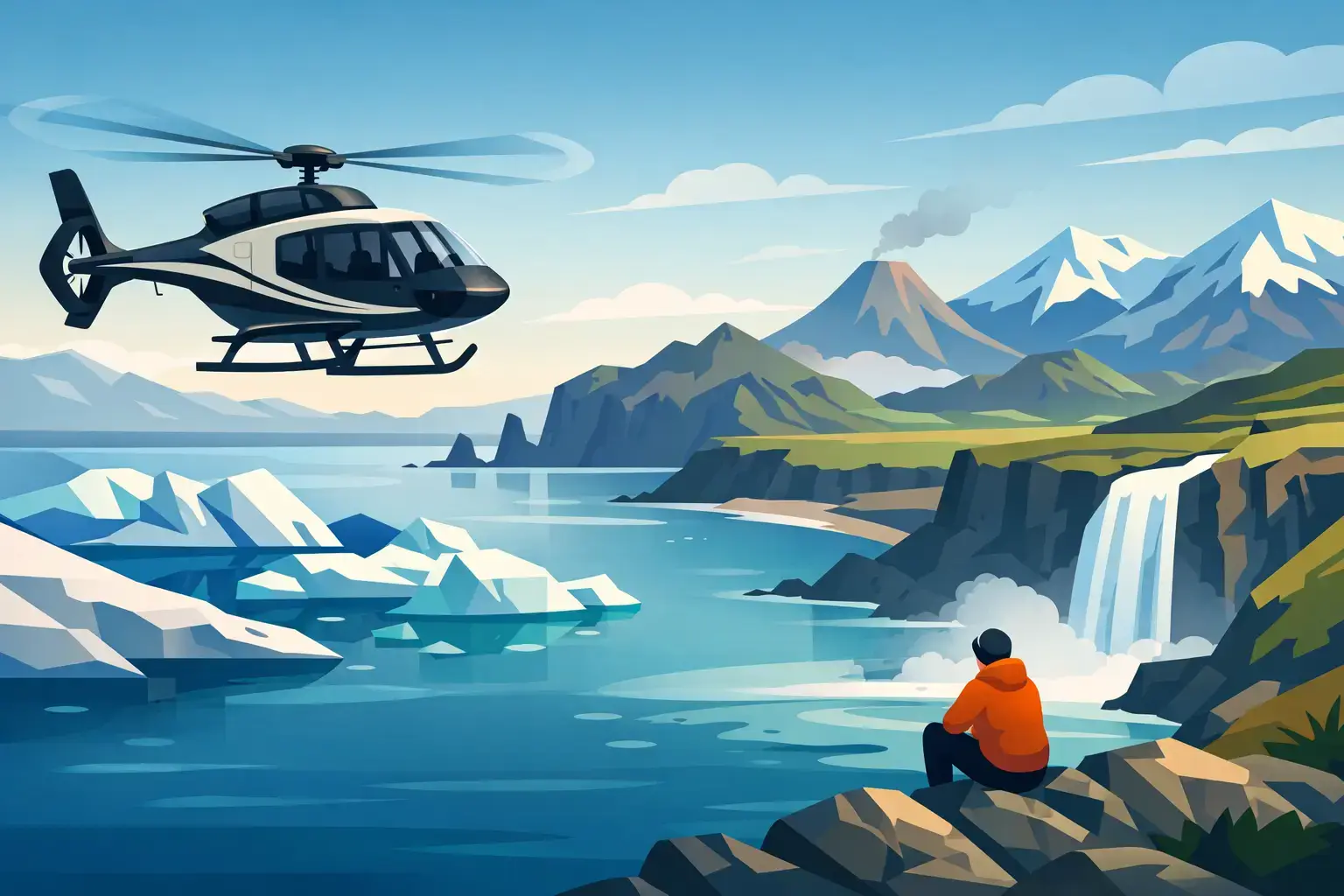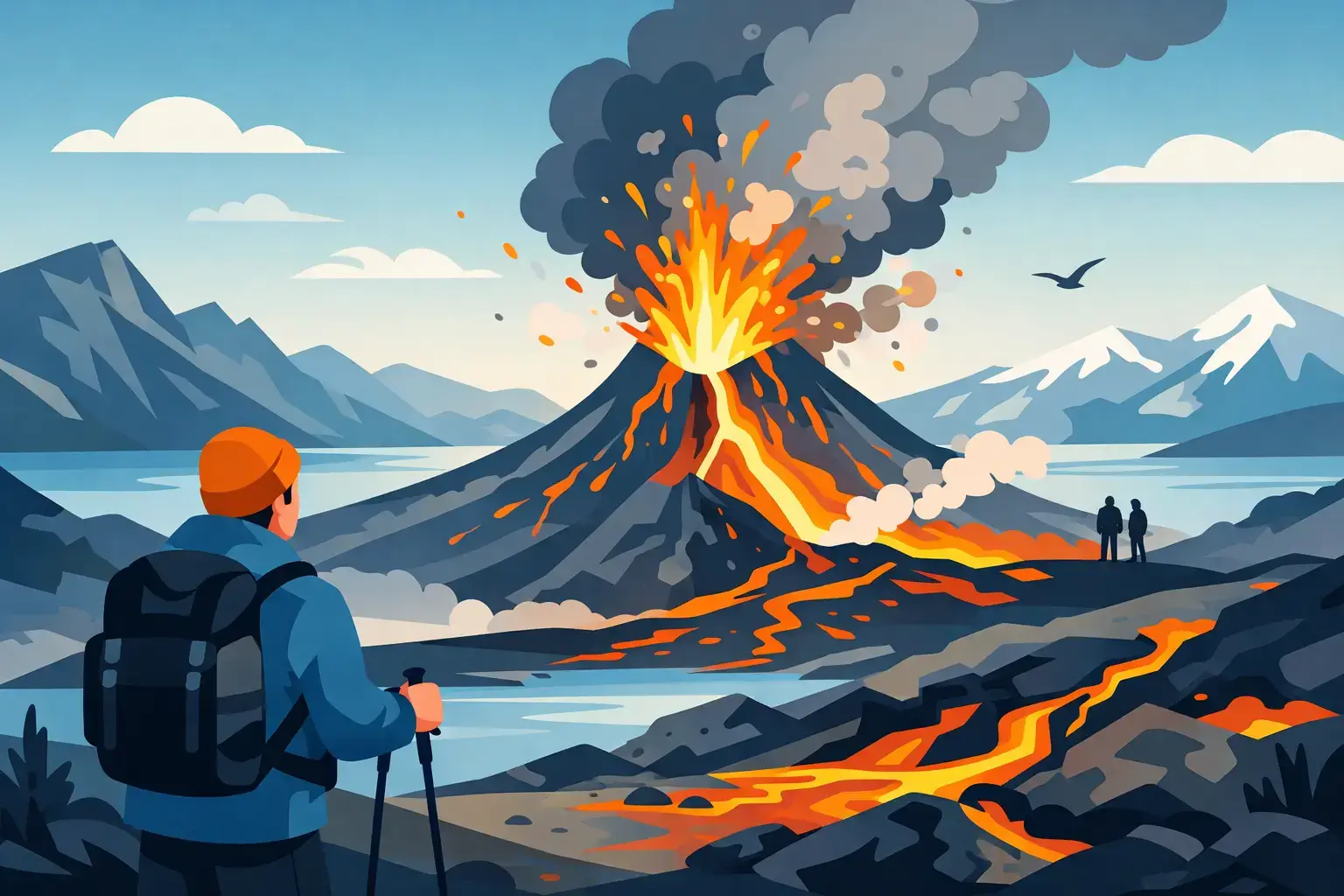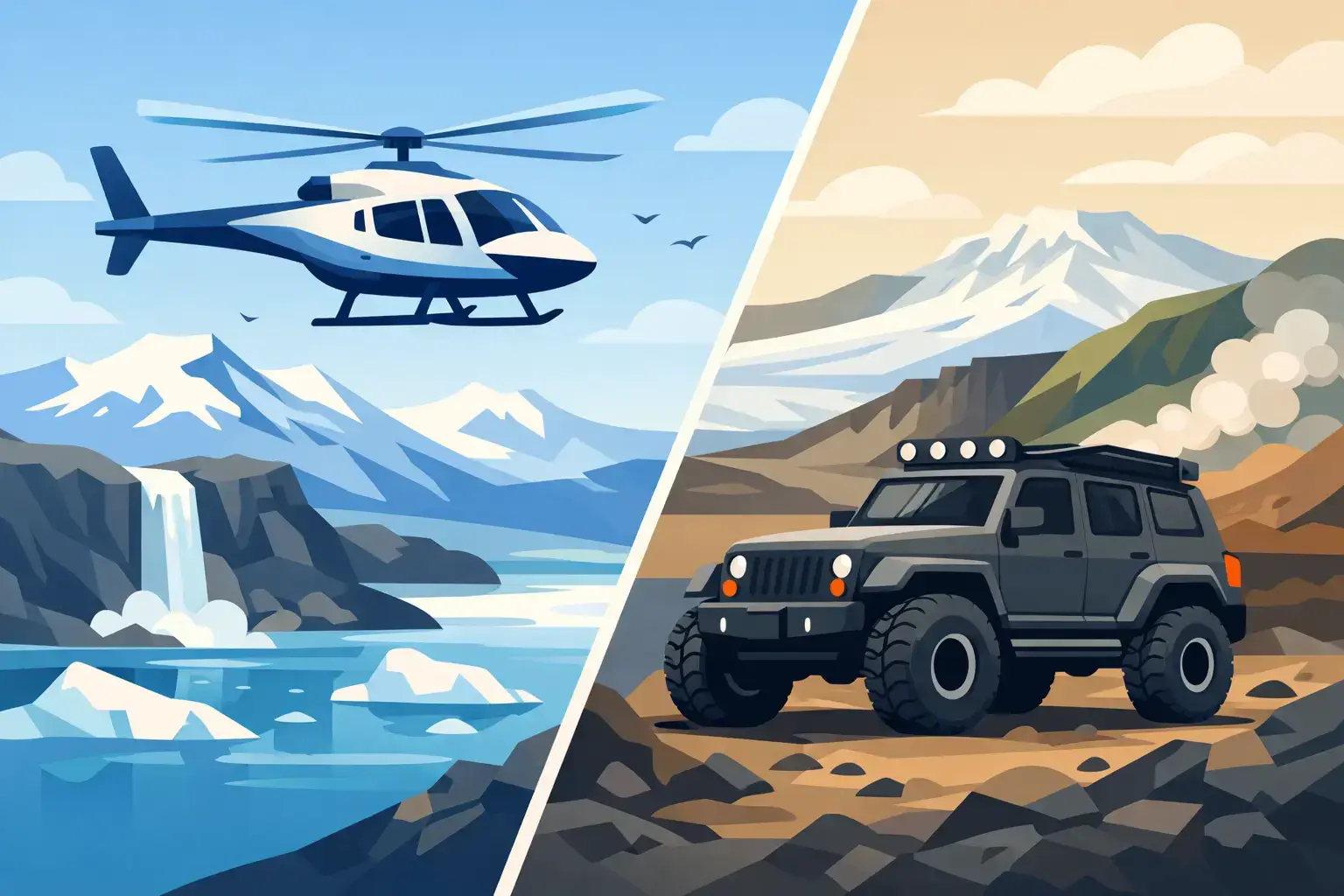
The choice between helicopter tours vs super jeeps usually comes down to one question: do you want to see Iceland from the inside of the landscape, or from above it? Both can take you beyond the standard sightseeing route. Both can turn a good day in Iceland into the trip people keep talking about for years. But they deliver very different experiences, and the right fit depends on how you travel, what you want to reach, and how much time you want to spend getting there.
For travelers planning one standout day, this is not a small decision. Iceland’s best scenery is often far from the main road, and the journey itself can take longer than visitors expect. That is why the gap between a helicopter and a super jeep is not just about style. It is about access, pace, comfort, flexibility, and the kind of memory you want to create.
Helicopter tours vs super jeeps: the real difference
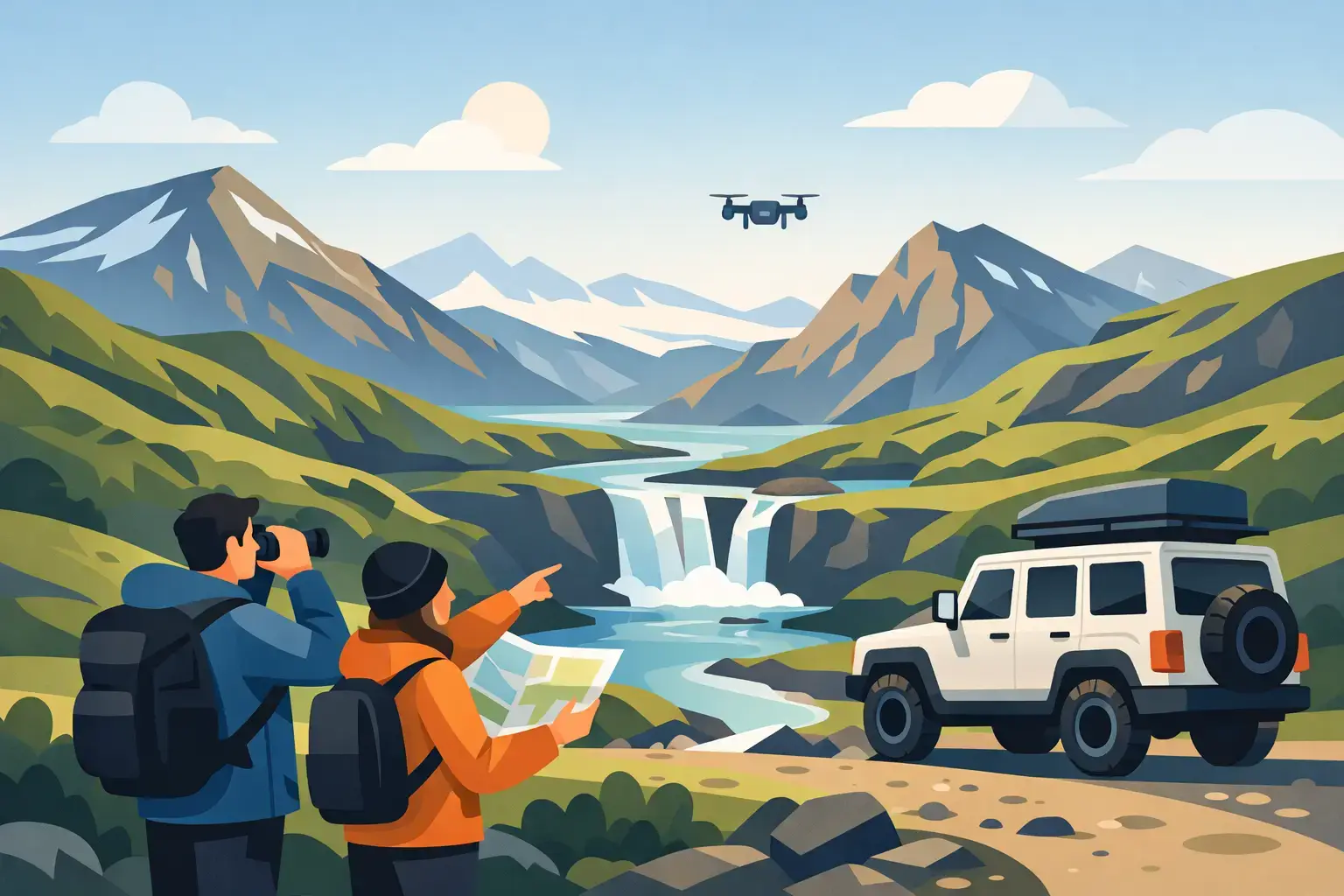
A super jeep keeps you connected to the terrain. You feel the rough tracks, river crossings, black sand, snowfields, and changing weather at ground level. It is adventurous in a very direct way. You are moving through Iceland’s conditions rather than rising above them.
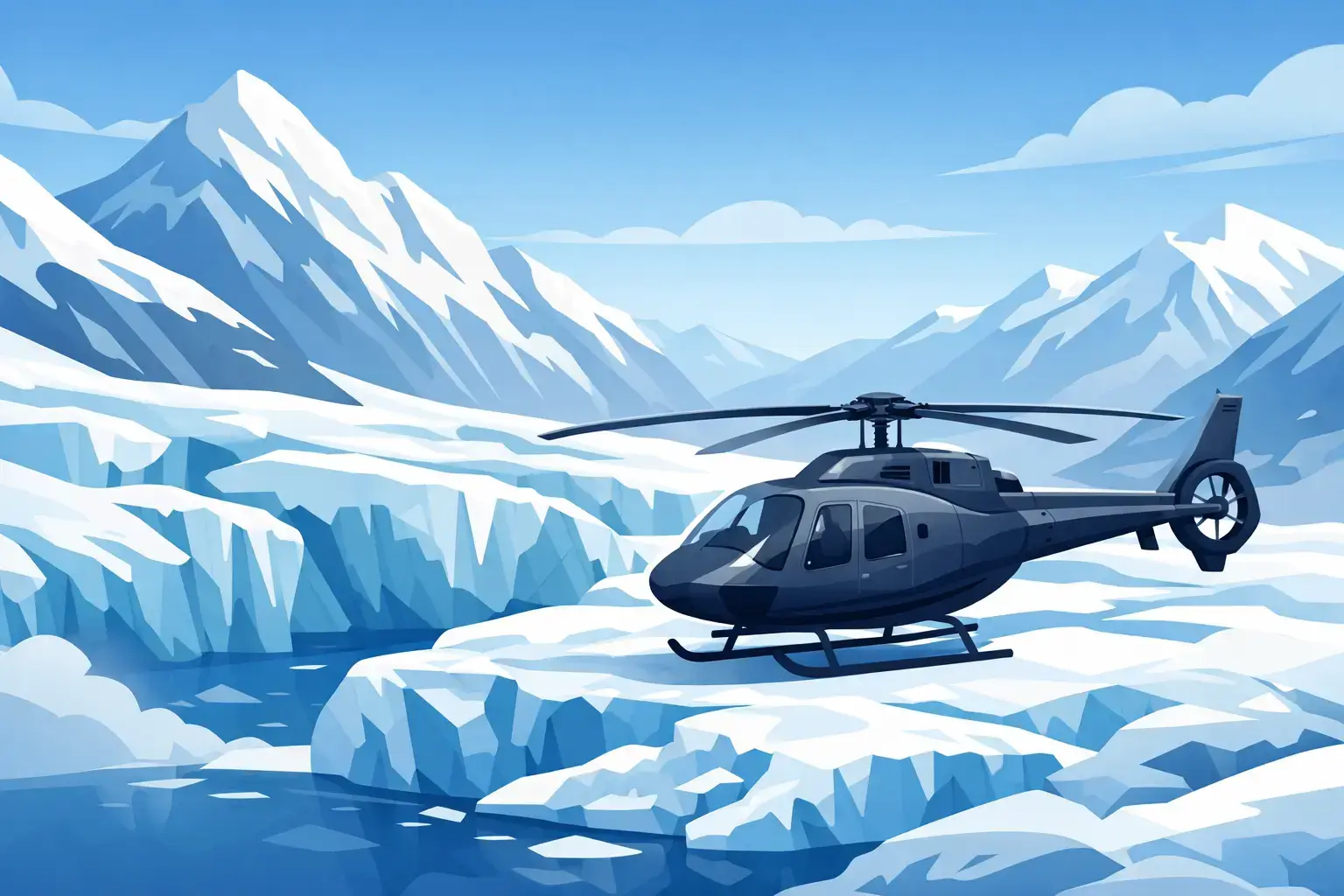
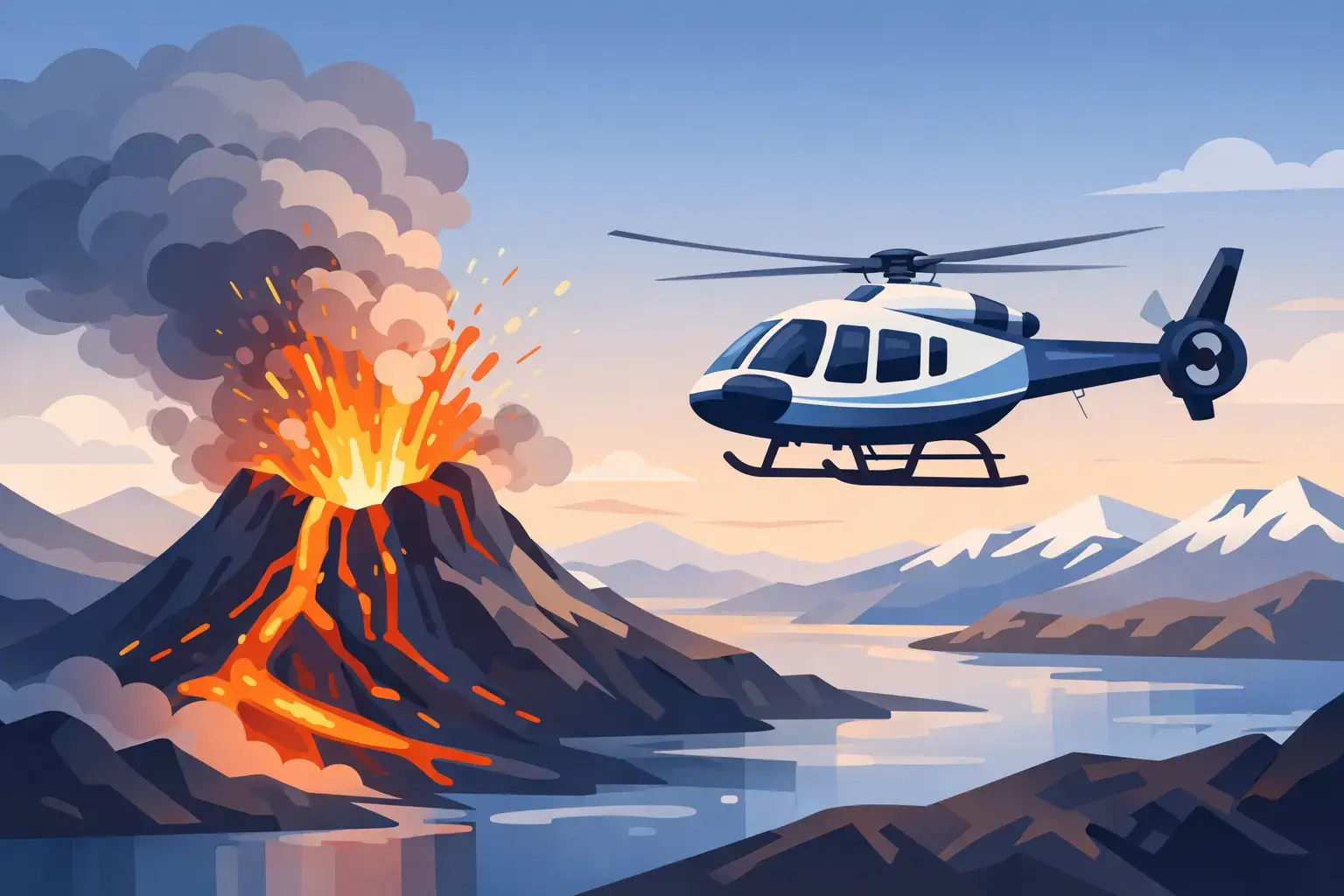
A helicopter changes the scale of the experience immediately. Instead of spending hours driving toward a glacier, highland valley, or volcanic area, you lift off and watch the geography unfold in minutes. Lava fields, braided rivers, crater systems, ridgelines, and waterfalls all become part of a much bigger picture. You do not just reach a destination. You understand how the landscape fits together.
That difference matters more than many visitors realize. If your goal is immersion in the route itself, a super jeep has a strong case. If your goal is reaching dramatic places quickly and seeing Iceland from an angle very few travelers ever do, the helicopter is in another class.
When a super jeep makes more sense
There are trips where a super jeep feels exactly right. If you enjoy the overland side of adventure travel, the vehicle is part of the appeal. You are close to the terrain, often stopping along the way to walk, take photos, and experience the landscape in gradual stages.
This works especially well for travelers who want a full-day road-and-trail atmosphere rather than an aviation experience. Some people love the progression of it – leaving town, crossing into rougher country, watching roads disappear, and earning the view mile by mile. For groups who want a more grounded, rugged outing and do not mind long travel times, a super jeep can be a satisfying fit.
It can also be a practical choice if flying is not appealing to everyone in the group. Some travelers simply prefer to keep their adventure on land. In those cases, the super jeep offers access beyond standard vehicles without changing the nature of the journey too much.
Still, there is a trade-off. Even the best modified vehicle is limited by roads, tracks, river conditions, and the physical pace of overland travel. In Iceland, distance can look manageable on a map and still take much longer than expected.
When a helicopter is in a different league
A helicopter is the premium option for a reason. It compresses travel time, opens up remote areas, and turns the transfer itself into a highlight. For visitors on a short Iceland itinerary, that time savings is often the deciding factor. You can spend your day over glaciers, volcanoes, waterfalls, or the highlands instead of using most of it to get in and out.
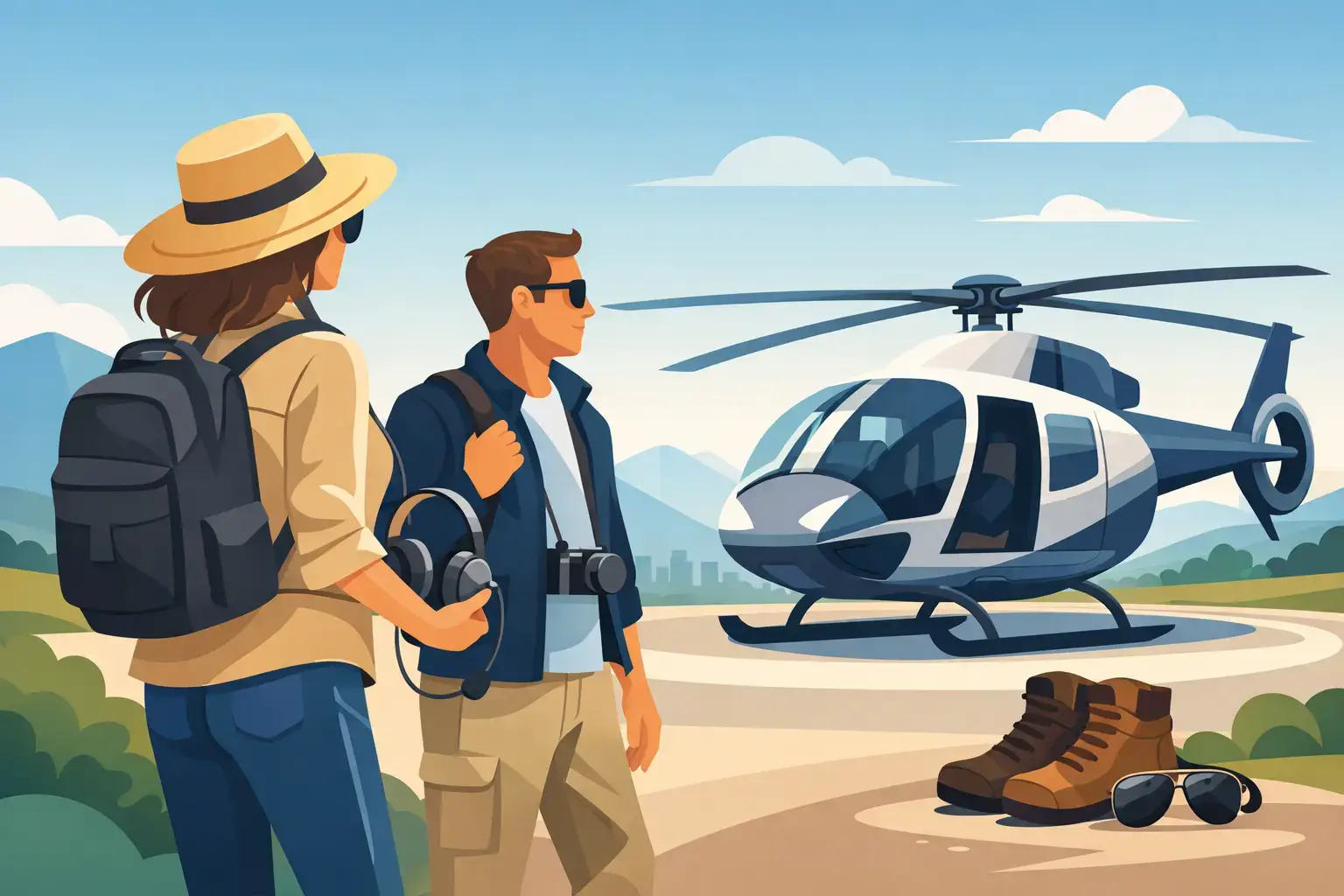
It is also the clearest choice when exclusivity matters. A private helicopter journey feels tailored from the first minute. The route can center on what matters most to you, whether that is a volcano, a glacier landing, a scenic photography flight, or a remote location that would be difficult to reach efficiently by road.
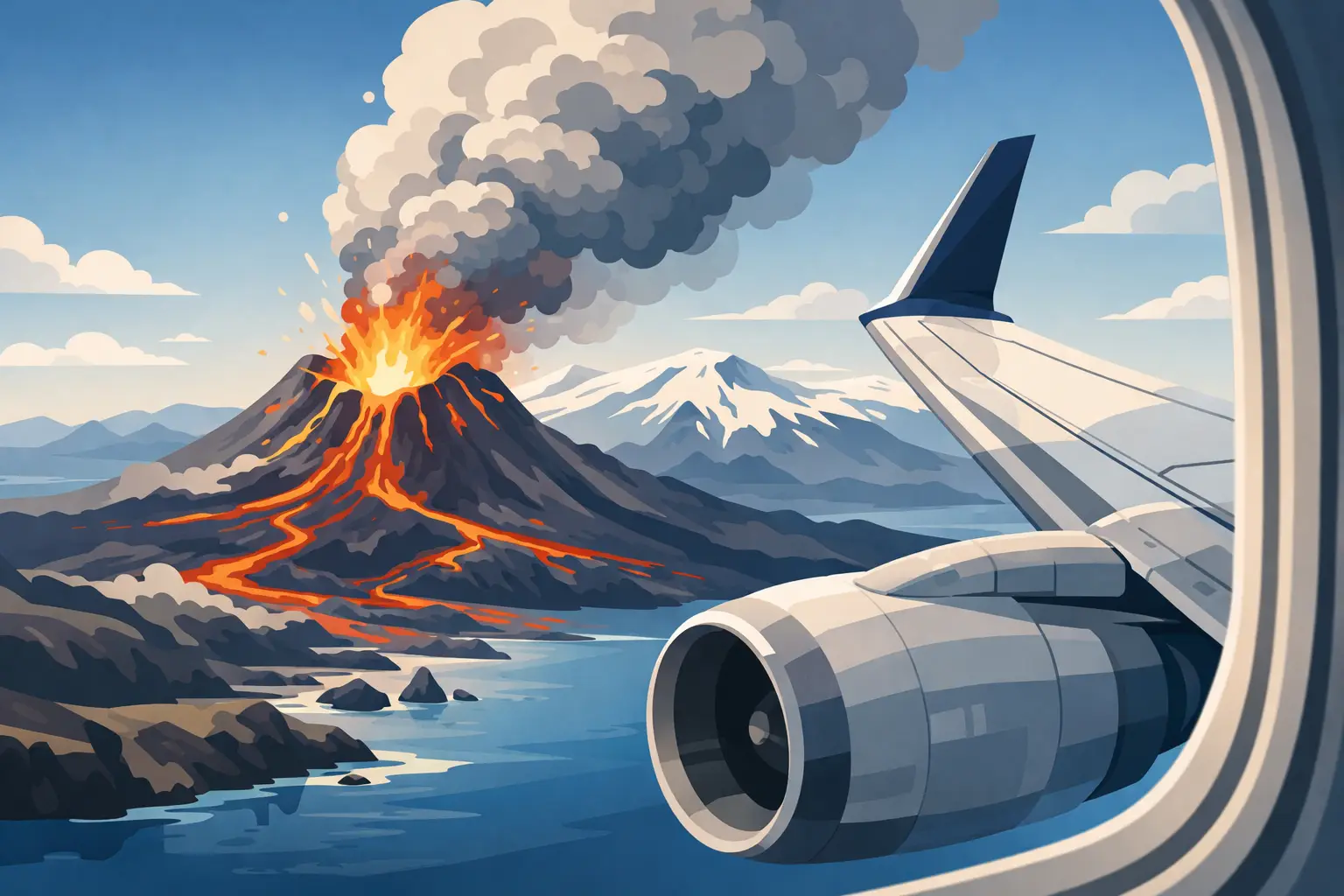
The visual impact is different too. Iceland is one of the rare destinations where the aerial perspective is not just beautiful, it is revelatory. You see the fault lines, the volcanic systems, the glacial tongues, and the way rivers cut through black sand plains. The country makes sense in a new way from above.
That is why travelers celebrating something significant often lean toward a helicopter. It delivers drama, privacy, and a sense of access that is hard to match on the ground.
Access: where each option wins
If the destination sits near rough mountain tracks or highland roads that a modified vehicle can handle, a super jeep may be fully capable of getting there in season. But capability does not always equal efficiency. Reaching the interior can still involve long hours on uneven routes, and some areas remain highly dependent on road opening dates and surface conditions.
A helicopter bypasses that entire equation. It is not trying to navigate around the landscape. It moves directly across it. That opens up a different category of trip, especially for guests who want multiple landmarks in one outing or hope to land somewhere remote without turning the day into a long expedition by road.
For photographers, this point is especially important. Ground access can be rewarding, but aerial access offers composition, scale, and angles that simply do not exist from below. If the priority is capturing Iceland at its most dramatic, a helicopter often gives you more in less time.
Comfort, pace, and who enjoys each experience
Super jeeps are adventurous by nature. That is part of their character, but also part of their limit. The ride can be long, bumpy, and physically tiring, especially for travelers who are not used to rough overland travel. For some, that is exciting. For others, it means the destination has to work harder to justify the effort.
A helicopter is smoother in a different sense of the word. The experience feels elevated from start to finish – fast boarding, direct routing, exceptional views, and no long return drive after the highlight. If you are traveling as a couple, with family, with older relatives, or with guests who want adventure without hours of vehicle fatigue, the helicopter tends to suit the day better.
This is also where luxury travelers often make their choice. The question is not only what costs more. It is what feels like the best use of a premium travel day in Iceland. If time is limited and expectations are high, flying usually wins.
Helicopter tours vs super jeeps for weather and flexibility
Iceland’s weather always has a say. No serious operator pretends otherwise. Both helicopters and super jeeps work within real conditions, and both can be affected by wind, visibility, seasonal access, and safety limits.
The difference is in how those limits show up. A super jeep may continue in conditions that would not be suitable for a sightseeing flight, but road and track conditions can introduce their own delays or route changes. A helicopter, on the other hand, is highly efficient when conditions are right, but aviation decisions must stay conservative.
For travelers, the practical takeaway is simple: flexibility matters either way. If your schedule allows room to adjust and your goal is to create the best possible Iceland experience rather than force a fixed plan, you will get more value from either option.
This is one area where working with an experienced local operator matters. A strong helicopter provider can help shape a plan around weather windows, scenery priorities, and the kind of landing or route that suits your group, rather than selling a one-size-fits-all outing.
So which one should you book?
If you want a rugged overland adventure, enjoy long scenic drives, and see the route as part of the reward, a super jeep can be the right call. It keeps you in close contact with Iceland’s surface and delivers that expedition feel many travelers are after.
If you want maximum scenery, efficient access, and a more exclusive way to experience remote Iceland, book the helicopter. For many high-end travelers, it is not really a contest once they consider what they are buying back in time, reach, and perspective.
That is especially true for private groups, milestone trips, photographers, and visitors trying to fit a lot into a short stay. A helicopter can turn a distant landmark into part of a broader custom journey. In Iceland, that matters because the country is full of places that look close and take hours to reach by land.
HeliAir works with travelers who want more than a standard tour – people who want to shape the day around a glacier, a volcano, a remote waterfall, or a route that simply would not make sense from the road. That is where helicopter travel shows its real value.
The best choice is the one that fits how you want to feel at the end of the day. If you want dust on your boots and the satisfaction of crossing Iceland the hard way, take the super jeep. If you want the rare feeling of lifting into the landscape and landing where few people do, take the helicopter and let Iceland open up beneath you.