How to Book Private Helicopter Flights

A private helicopter is not the kind of trip you book the same way you reserve a standard tour. If you are searching for how to book private helicopter service in Iceland, the real question is usually this: what do you want the aircraft to do for you? Land beside a glacier for champagne and photos, lift you from Reykjavík to a remote lodge, or build a full day around waterfalls, volcanoes, and places you cannot sensibly reach by road.

That distinction matters because private helicopter booking is less about picking a seat and more about shaping an itinerary. The best flights start with a clear plan, then leave enough room for weather, routing, and local flying conditions to refine the details.

How to book private helicopter service the right way

The fastest way to book well is to start with your goal, not the aircraft type. Most travelers do not need to know rotor diameter or technical performance on day one. They need to know how much time they have, where they want to go, how many people are flying, and whether the trip is purely scenic or also practical.

If your priority is the classic Iceland experience, you may want a sightseeing charter with one or more landings. If the helicopter is solving a logistics problem, the brief changes. Airport transfers, point-to-point travel, filming support, heli-skiing access, and utility work all involve different planning, operating limits, and pricing structures.

A strong booking inquiry usually includes your travel dates, ideal departure point, group size, destination wish list, and any non-negotiables. That gives the operator enough to propose a realistic plan instead of sending a vague estimate that will change later.

Start with the type of flight you need

Private helicopter bookings usually fall into three categories.

The first is scenic travel. This is the choice for couples, families, photographers, and private groups who want Iceland from above with the freedom to customize the route. You might want to circle volcanic terrain, land near a glacier, or combine several dramatic features in one flight. This is the most flexible option, but it still works best when the operator knows what matters most to you.

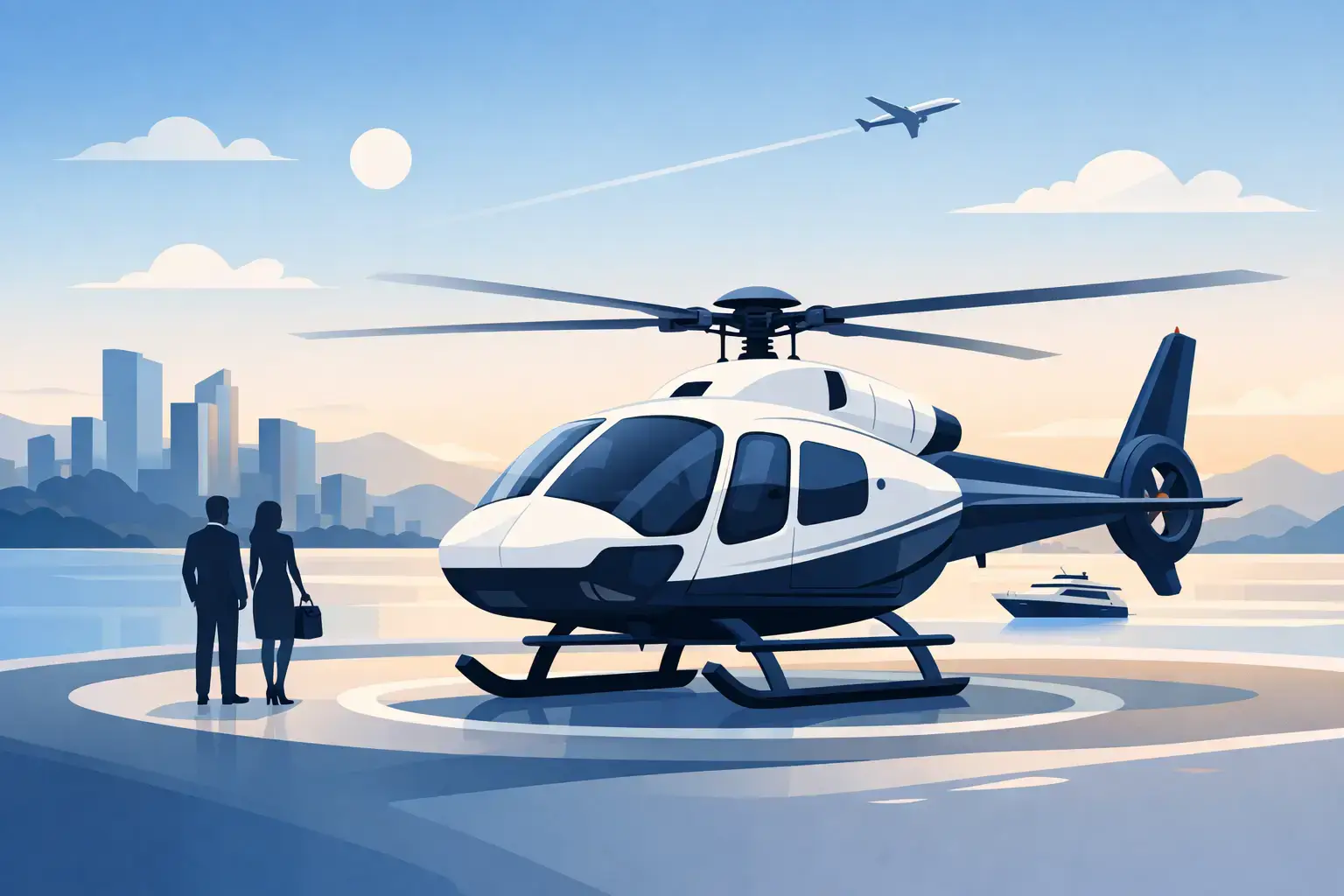
The second is transfer-based travel. This is about efficiency. You may want to move between Keflavík, Reykjavík, a lodge, a yacht, or a remote destination without committing to a long overland drive. In this case, luggage, landing access, and timing are just as important as scenery.

The third is specialist flying. Aerial filming, sling work, heli-skiing support, and production logistics require more operational planning and often a more technical discussion up front. If this is your purpose, say so immediately. It affects aircraft selection, crew planning, permits, and the schedule.

What to ask before you book private helicopter flights

If you want to know how to book private helicopter flights without surprises, ask the questions that shape the experience and the price.

Start with duration. Helicopter time is the backbone of the booking, and a 45-minute scenic flight is a very different product from a half-day charter with multiple landings. If you are trying to fit the trip around a proposal, cruise schedule, private dinner, or photography window, say that early.

Next, ask about landing opportunities. Many travelers picture a private helicopter experience as a continuous scenic loop, but the landing is often what makes it unforgettable. In Iceland, a remote touchdown beside a glacier edge, volcanic landscape, or highland viewpoint can define the whole day. That said, landings depend on conditions, access, and operating approvals.

Then ask how flexible the route is. Some customers want a fixed itinerary. Others care more about seeing the best conditions on the day. The second approach can be smarter in Iceland, where weather shifts quickly and local knowledge matters.

Finally, ask what is included. The quote may cover flight time, crew, and standard planning, but extras such as extended waiting time, repositioning, special equipment support, or custom ground arrangements can change the total.

Timing matters more than most people expect

The best private helicopter bookings are usually not last-minute impulse purchases, especially in peak travel periods. If you are visiting Iceland in summer or booking around a special occasion, more lead time gives you better aircraft availability and more freedom to shape the day.

That said, helicopter charters can also be excellent for short-notice plans if the operator has availability and the mission is straightforward. A private transfer or a compact scenic charter may be possible on a tighter timeline than a heavily customized day with multiple moving parts.

Season also affects what you should ask for. Summer offers long daylight and broad sightseeing potential. Winter can deliver extraordinary light, snow-covered terrain, and access to experiences that feel more cinematic, but weather sensitivity is higher. Shoulder seasons can be a sweet spot if you value both atmosphere and availability.

Pricing depends on more than distance

One of the most common mistakes is assuming helicopter pricing works like a car service. It does not. The quote is typically shaped by aircraft time, route complexity, landing requirements, positioning, waiting time, and the nature of the mission.

A scenic charter with a simple departure and return may price cleanly. A custom day that includes multiple landings, remote coordination, or a pickup far from base is more layered. Group size matters too, but not in the way many people expect. A larger helicopter can accommodate more passengers, yet that does not always mean the trip becomes proportionally cheaper per person. It depends on the aircraft needed and how the route is built.

This is why a tailored quote is often the only useful quote. The more precise your brief, the more accurate the pricing.

Weather is part of the booking, not an afterthought

In Iceland, weather is not a footnote. It is one of the main planning variables. Even on a premium private charter, the flight must operate within safe conditions. That is not a drawback. It is part of flying well in a place defined by wind, visibility, and fast-changing terrain conditions.

When you book, ask how weather decisions are handled and when the final go or no-go call is made. Also ask what alternatives exist if the original route is not suitable. In many cases, a skilled local operator can adjust the direction, timing, or destination and still deliver a remarkable flight.

The clients who enjoy private helicopter travel the most are usually the ones who arrive with clear priorities and a little flexibility. If your goal is to experience Iceland from above rather than to force one exact landing point regardless of conditions, the day tends to work in your favor.

How to prepare once your flight is confirmed

After the booking is in place, preparation is simple but worth taking seriously. Confirm passenger names, weights if requested, baggage limits, and your departure instructions. Helicopter operations are precise, and small details matter.

Dress for the landing environment, not just for the city. If your charter includes a remote stop, sturdy shoes and practical outerwear are more useful than travel-day fashion. For photographers, ask in advance about doors-on versus doors-off possibilities, equipment handling, and any limitations inside the aircraft.

If this is a special occasion, mention it. A proposal, anniversary, private picnic, or surprise route element can often be planned into the experience when discussed early. Premium helicopter travel works best when the operator understands the emotional purpose of the day, not just the coordinates.

Choosing the right operator

Knowing how to book private helicopter flights also means knowing who should fly you. Look for an operator that is local, experienced in the terrain, and comfortable handling both scenic experiences and operational realities. Iceland rewards expertise. A company that understands weather windows, landing areas, regional geography, and custom planning will usually create a better day than one that only sells a generic flight.

This is where a high-touch booking process is a benefit, not a nuisance. A quick call or email exchange often does more than an online calendar ever could. You are not just reserving transport. You are arranging access to places that are difficult, and sometimes impossible, to experience any other way.

For travelers building a luxury itinerary, private groups trying to maximize limited time, or production teams with exacting needs, that level of planning is what turns a helicopter from an expensive add-on into the smartest part of the trip. Operators like HeliAir understand that the best charter is not simply airborne – it is built around what you came to Iceland to see.

If you are ready to book, come prepared with your must-haves, stay open to local advice, and let the route take shape around the conditions. That is usually where the most memorable flight begins.
Iceland Aerial Sightseeing Guide

The difference starts the moment you leave the ground. Roads in Iceland are part of the adventure, but they also impose distance, weather delays, and a fixed perspective. An Iceland aerial sightseeing guide matters because the country was shaped on a scale that often makes the best terrain difficult to grasp from ground level. From the air, you see how lava fields run into glacier tongues, how river systems cut through black sand, and how remote highland basins sit far beyond the reach of an ordinary day trip.

For travelers planning one standout experience, aerial sightseeing is less about checking off landmarks and more about choosing what kind of Iceland you want to experience. Some flights are about iconic scenery near Reykjavík. Others are built around landings on mountain ridges, glacier edges, or volcanic terrain that would otherwise take a long overland journey to access. The right choice depends on your time, budget, weather flexibility, and whether you want a classic scenic tour or a fully tailored charter.

How to use this Iceland aerial sightseeing guide

The first decision is simple: do you want a scheduled sightseeing experience or a custom helicopter day built around your priorities? A shorter tour works well if you want a premium highlight without giving up an entire day. It gives you strong scenery, efficient logistics, and a clear route. A custom charter is better when the destination matters as much as the flight itself, especially for photographers, private groups, proposals, family celebrations, or travelers trying to reach several remote sites in one day.

Departure point also shapes the experience. Flights from Reykjavík are ideal for visitors already based in the capital or arriving on a tight itinerary. Northern departures, including routes from Ólafsfjörður, open a different side of Iceland, with dramatic mountain coastlines, snow conditions in season, and access that suits heli-skiing support or bespoke exploration away from the busiest visitor corridors.

What many travelers underestimate is how much time a helicopter saves. A place that could take half a day by vehicle, assuming roads are open and conditions cooperate, may become a practical stop within a much broader aerial route. That efficiency is a major part of the value, especially for luxury travelers trying to experience Iceland deeply in limited time.

What you can actually see from the air

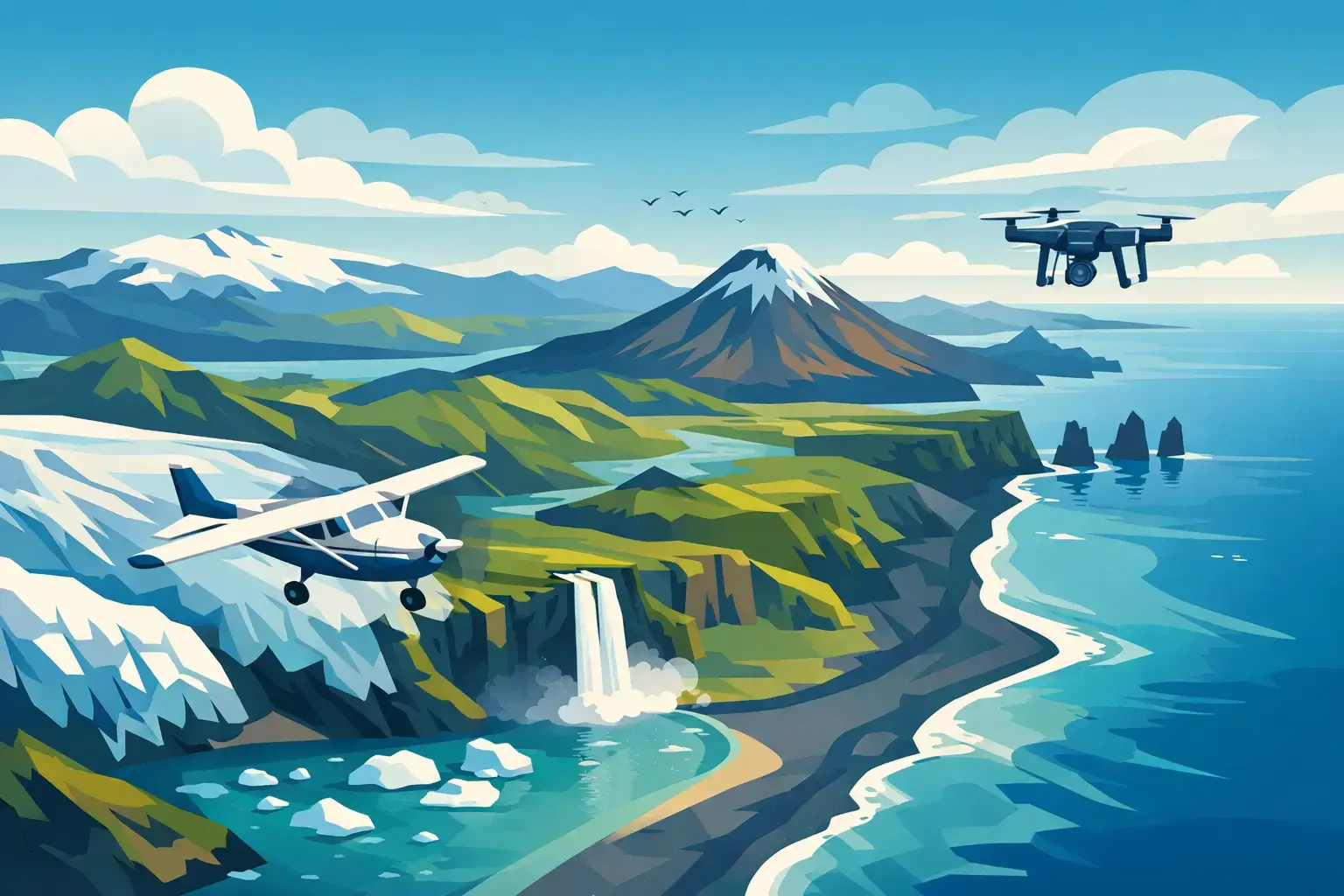
Iceland rewards altitude. Waterfalls that look impressive from a viewing platform become part of larger canyon systems. Glaciers reveal their fractured surfaces and long ice flows. Volcanic zones stop looking like isolated attractions and start to read as active landscapes, with craters, fissures, lava fields, and ash-colored ridges connected across miles.

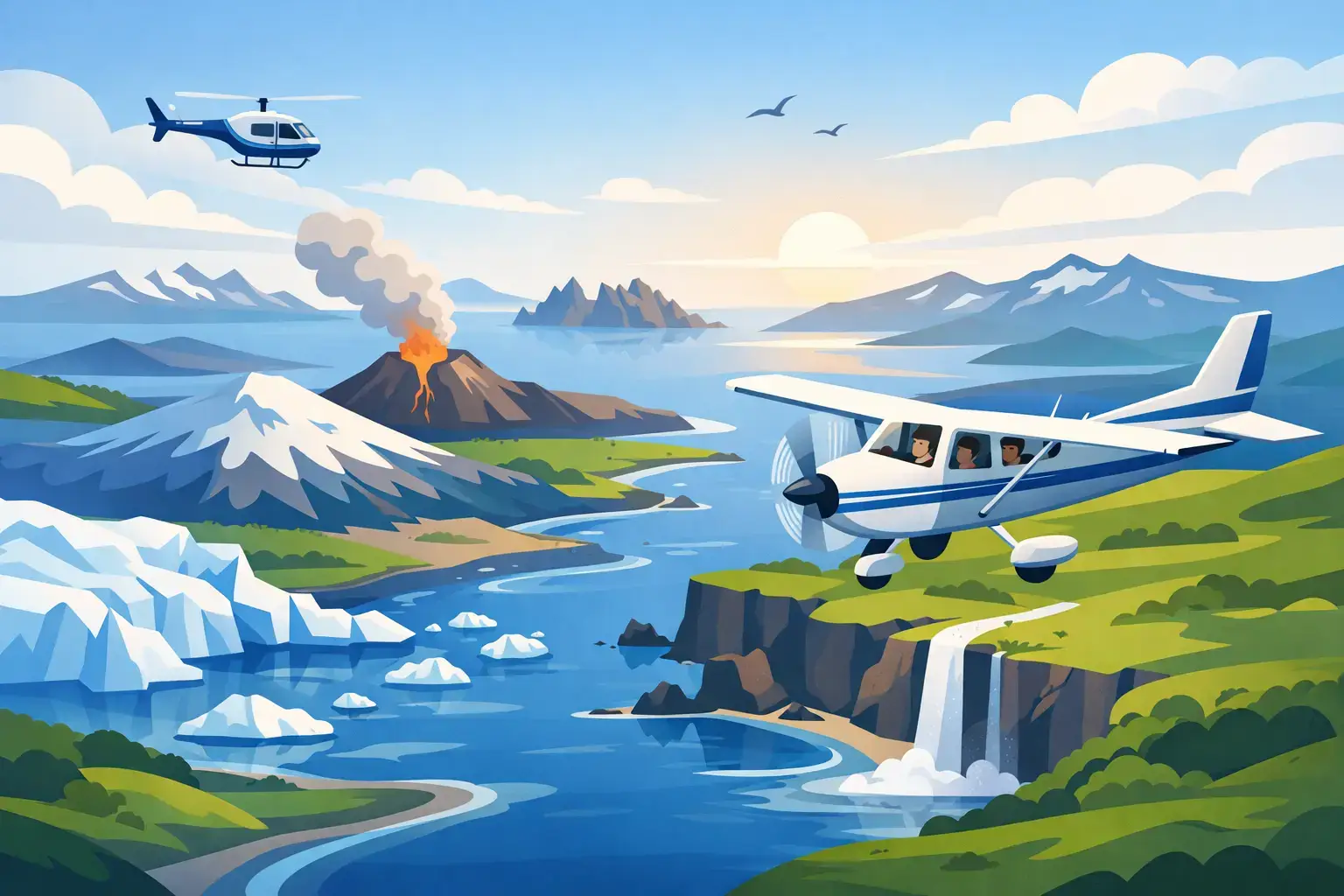
For many guests, the strongest routes combine contrast. A single flight might include green coastal lowlands, dark lava terrain, braided glacial rivers, and snow-covered heights. That variety is why aerial sightseeing feels so different here compared with a standard scenic flight elsewhere. Iceland changes fast, and from above the transitions are immediate.

Landings can elevate the experience further, but they are not always the main point. Some travelers want uninterrupted scenic time in the air. Others want the chance to step out in a place that feels otherwise unreachable. A mountain landing for photos, a glacier-edge stop, or a remote highland touch-down adds privacy and scale in a way that ground touring rarely matches.

Choosing the right flight length

Shorter scenic flights are often the smartest fit for first-time visitors. You get a strong sense of Iceland’s topography, you avoid a major time commitment, and you still have room in the day for other plans. This works especially well for couples on a premium city-based itinerary, cruise guests with limited time, or families wanting one exceptional activity without a full-day logistics chain.

Mid-length flights tend to offer the best balance. They allow enough time to move beyond the immediate outskirts of a departure base and into more dramatic territory. They also create room for route flexibility if weather conditions shift. For many guests, this is the sweet spot between price and access.

Longer scenic flights and full-day helicopter experiences are where customization really shows its value. If your goal is to combine several major landscapes in one outing, add landings, or build the day around photography and privacy, extra flight time matters. The trade-off is obvious: a longer charter costs more, and weather planning becomes even more important. But for travelers who want a once-in-a-lifetime experience rather than a standard excursion, this is often where Iceland feels most exclusive.

Weather, season, and the reality of flying in Iceland

Any honest Iceland aerial sightseeing guide has to say this plainly: weather decides more than marketing does. Conditions can change quickly, and good operators plan around that reality rather than pretending it is a minor detail. Cloud ceiling, wind, visibility, and landing-site conditions all affect what is possible on the day.

That does not mean helicopter sightseeing is unreliable. It means flexibility matters. If aerial touring is high on your priority list, do not place it in the final unmovable hour of your trip. Build some margin into your schedule when possible. Morning conditions may differ from afternoon conditions, and one region may fly better than another.

Season changes the look of the country, but there is no single best time for everyone. Summer offers long daylight hours and broad access to highland terrain. Shoulder seasons can deliver dramatic light, fewer visitors, and strong visual contrast. Winter brings snow coverage, low-angle light, and a sharper, more alpine feel, especially in the north. The trade-off is that winter conditions can be more restrictive, and your route may need to adapt.

For photographers, this matters even more than for general sightseers. Snow can simplify the landscape in beautiful ways, while summer reveals geological texture and color. If your priority is image-making rather than general sightseeing, the ideal season depends on what you want your Iceland to look like.

Scenic tour or private charter?

A scenic tour is the right option when you want a polished route, clear timing, and a straightforward decision. It is efficient, premium, and easy to fit into a wider Iceland itinerary. For many travelers, that is exactly the point.

A private charter makes sense when the day needs to revolve around you rather than the route. That could mean a custom proposal landing, a family celebration, a volcano-focused flight, a transfer folded into sightseeing, or a plan that reaches several remote highlights without returning to the road in between. It is also the better choice for travelers who value privacy, have a specific destination in mind, or want to combine scenic flying with practical transport.

This is where an operator like HeliAir stands apart. The value is not just in offering set tours, but in being able to shape a helicopter journey around where you actually want to go, whether that is a glacier, a waterfall, a remote highland site, or an airport transfer that becomes part of the experience rather than dead time.

Who gets the most out of aerial sightseeing in Iceland

This experience is best for travelers who value access and perspective more than volume. If you prefer to cover ten low-cost stops by car, a helicopter is not the logical fit. If you want one extraordinary window into Iceland’s scale, and you want to reach places that would otherwise consume most of a day, it makes immediate sense.

It is especially strong for couples celebrating something meaningful, private groups, families with limited time, photographers, and luxury travelers who want Iceland to feel both cinematic and personal. It also works well for people who are comfortable paying more for less friction. Avoiding long drives, changing road conditions, and crowded viewing areas has real value when the trip itself is meant to feel exceptional.

Commercial and specialist users come to aerial operators for a different reason. For them, sightseeing may be secondary to logistics. Aerial filming, mountain access, heli-skiing support, point-to-point flights, and sling work all require local knowledge and aviation capability that go well beyond standard tourism. The best operators can handle both worlds without making either feel improvised.

What to ask before you book

The most useful questions are practical ones. Ask whether the route is fixed or adaptable, whether a landing is included or weather-dependent, how many passengers the aircraft can accommodate, and what kind of flexibility exists if conditions change. If you are booking a private experience, ask what can realistically fit into your time window rather than assuming every wish list can be combined in one flight.

It is also worth being clear about your priorities. If seeing a volcano matters more than photographing a waterfall, say so. If privacy matters more than total flight duration, say that too. Good aerial planning starts with trade-offs, not assumptions.

The best Iceland flights are rarely the ones that try to include everything. They are the ones built around a clear idea of what will make the day feel unforgettable for you. Choose the perspective first, then let the route follow.

Are Private Helicopter Flights Worth It?

If you have one day in Iceland and a list that includes a glacier, a waterfall, black sand, and a volcano site, the real question is not only cost. It is whether private helicopter flights are worth it for the kind of trip you want to have. For some travelers, the answer is clearly yes. For others, a helicopter is less about transportation and more about choosing a different standard of experience.

A private helicopter flight changes the shape of a day. What would take hours on the road can become a direct route over lava fields, braided rivers, mountain ridges, and remote highlands. That matters in Iceland, where distance on a map rarely reflects travel time on the ground and where weather, road conditions, and daylight can define what is actually possible.

When are private helicopter flights worth it?

They are worth it when time is limited, access matters, and the experience itself is part of the reason you came. If you are visiting Iceland for a short stay, a helicopter can turn a tight schedule into a meaningful one. Instead of spending most of your day driving, you spend it seeing.

They are also worth it when the destination is difficult to reach in any other practical way. Iceland has plenty of spectacular places that are simple to admire in photos but far less simple to fit into a normal itinerary. Remote waterfalls, glacier edges, interior highlands, and landing sites with almost no surrounding infrastructure become realistic when you can approach them by air.

For private groups, couples celebrating something big, families with mixed energy levels, or photographers chasing specific light and terrain, the value often goes beyond luxury. It becomes a question of control. You are not adjusting your expectations to a fixed route. You are building the flight around what matters most.

What you are really paying for

The price of a private helicopter flight is not only about airtime. You are paying for access, efficiency, flexibility, and a perspective that cannot be recreated from the ground.

Access is the most obvious advantage. Iceland rewards travelers who can get beyond the standard viewpoints, but those places often demand long drives, rough routes, or seasonal compromises. A helicopter makes more of the country available within a single outing.

Efficiency is the next factor. On a road trip, a large share of the day can disappear into transit. That may be part of the fun for some travelers. For others, especially on shorter luxury itineraries, it is simply the least memorable part of the trip. A helicopter compresses travel time and expands the part people actually remember.

Then there is flexibility. Private flights are not built around a bus timetable or a packed sightseeing loop. If your priority is a volcano area, a glacier landing, or a custom route that strings together multiple landscapes, a private aircraft creates options that a standard day tour cannot.

And finally, there is perspective. Iceland is dramatic from the road, but from above the geology makes immediate sense. You see how lava fields spread, how rivers cut through sand plains, how glaciers press into mountain valleys, and how isolated many of the country’s most striking features really are. That aerial understanding is part of why the experience stays with people.

Are private helicopter flights worth it for sightseeing alone?

Yes, if sightseeing is not just about checking landmarks off a list.

A private helicopter is not the cheapest way to see Iceland. It is often the best way to see a lot of it well, especially if you care about quality over quantity. From the air, the country feels bigger, wilder, and more layered. You are not standing in one place trying to imagine what lies beyond the next ridge. You are watching the terrain unfold in real time.

That said, worth is personal. If you are happy with a classic self-drive route, enjoy long scenic days in the car, and do not mind crowds at major stops, then the premium may not make sense. But if your goal is a once-in-a-lifetime experience, a helicopter flight delivers something roads simply cannot.

This is especially true for visitors who want to combine spectacle with comfort. You can leave from the city, be over untouched terrain quickly, and return having seen parts of Iceland that many visitors never reach at all. For high-end travel, that is often the difference between a good trip and an unforgettable one.

Where the value is strongest in Iceland

Iceland is one of the clearest cases for why private helicopter flights can justify the cost. The landscape is highly varied, the weather can narrow your window, and some of the most impressive areas are far more practical by air than by road.

Volcano and geothermal regions are a good example. Seeing recent volcanic terrain from above gives scale that is impossible to grasp from a parking area or trailhead. The same goes for glaciers, where crevasses, ice formations, and surrounding mountains become visually dramatic in a way ground access rarely matches.

Waterfalls and highland areas are another strong case. Some locations are famous because they are easy to reach. Others are just as impressive but far less visited because they require time, road knowledge, or specialized access. A helicopter shifts that balance. It can make remote feel immediate.

That is why premium operators in Iceland, including HeliAir, tend to attract travelers who value both scenery and logistics. The flight is not only scenic. It is a practical tool for reaching the best version of the day you had in mind.

When they may not be worth it

There are situations where a private helicopter flight is probably not the right choice.

If your budget is already stretched by flights, hotels, and other activities, a helicopter may add pressure rather than pleasure. Iceland offers extraordinary views from the road, on foot, and on standard tours. You do not need a helicopter to have a strong trip.

It may also be less worthwhile if you prefer slow travel. Some people want the farm roads, the roadside coffee stops, the long transitions, and the feeling of arriving gradually. A helicopter does almost the opposite. It removes friction. That is a benefit for many travelers, but not all.

And then there is weather. Helicopter operations in Iceland are shaped by real conditions, not wishful planning. A good operator will always prioritize safety, which means schedules can change when weather demands it. If your trip has no flexibility at all, that is worth considering before you build a major itinerary moment around a single flight.

Private tour or private transfer?

This is where value becomes more specific.

If your goal is a celebratory experience, photography outing, proposal, family adventure, or premium sightseeing day, the flight itself is the event. In that case, the value comes from the route, the views, and the ability to land in places that feel far removed from standard tourism.

If your goal is to move efficiently between locations, the value comes from time saved and effort avoided. A private helicopter transfer can make sense for airport connections, point-to-point travel, and specialized itineraries where driving would consume half the day. For some visitors, that is not indulgence. It is smart trip design.

Commercial and production clients often see this even more clearly. Aerial filming, heli-skiing support, and technical sling work are not luxury add-ons. They are tasks that require precision aircraft capability and local operating knowledge. In those cases, worth is measured less by emotion and more by outcomes.

How to decide if it is worth it for you

Start with three questions. What is your time worth on this trip? What places do you actually want to reach? And do you want transportation, or do you want an experience that becomes one of the trip’s defining memories?

If the answer includes limited time, remote destinations, privacy, and a strong preference for custom planning, a private helicopter flight usually makes sense. If the answer is mostly curiosity but not priority, then a different kind of tour may be the better fit.

The strongest bookings tend to come from travelers who already know what they value. They are not comparing a helicopter to a rental car mile for mile. They are deciding whether direct access, tailored routing, and an aerial view of Iceland are worth paying for. Often, for the right traveler, they are.

A private helicopter flight is rarely about doing more for the sake of more. It is about seeing Iceland in a way that matches the scale of why you came here in the first place.

Volcano Landing Tour Iceland: What to Expect

The moment the helicopter lifts out of Reykjavík, the scale of Iceland changes. Roads stop mattering, distances shrink, and a volcano landing tour Iceland experience starts to feel less like sightseeing and more like direct access to terrain most visitors only see from far away.

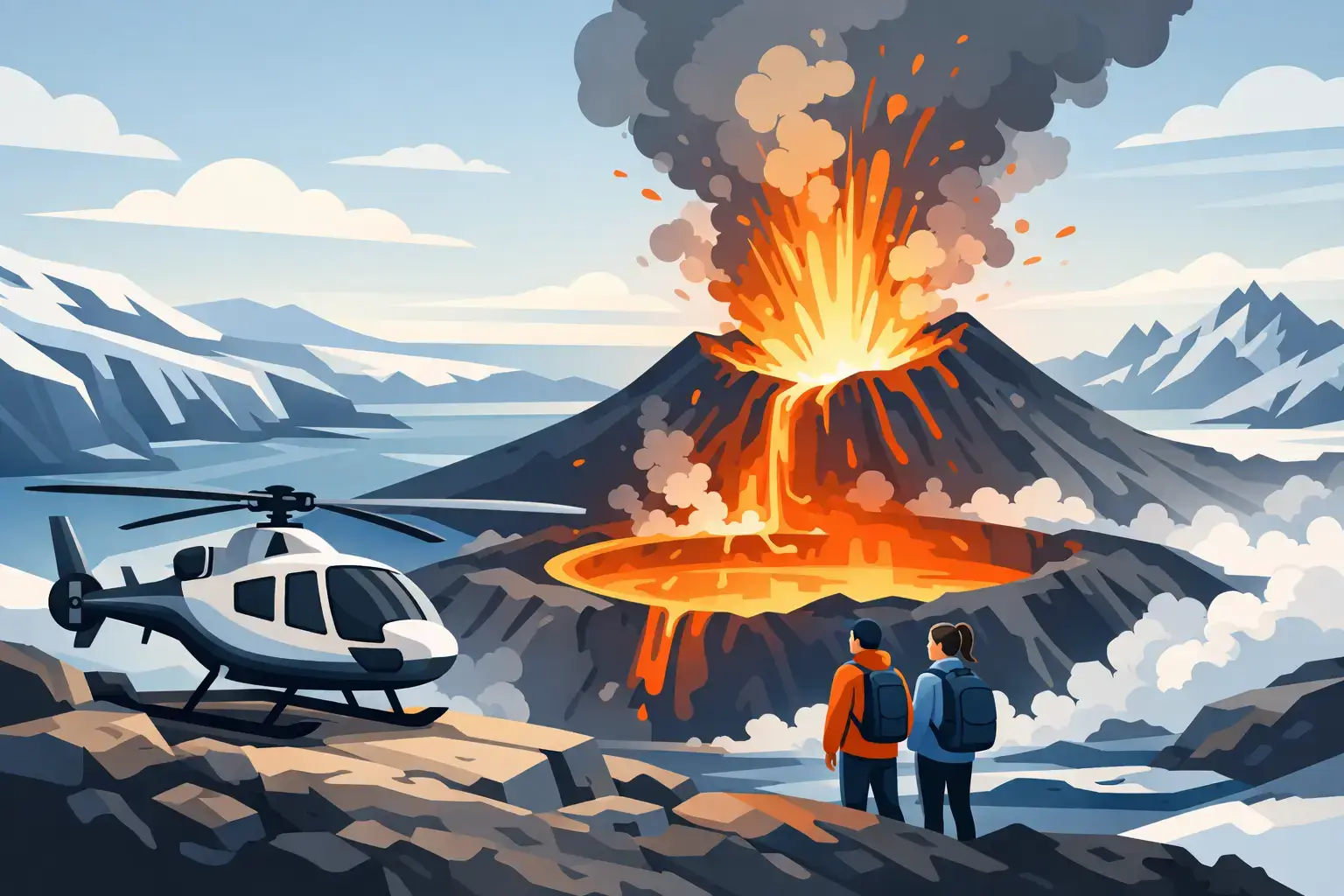
For travelers who want more than a scenic pass over lava fields, landing is the difference. You are not just looking at a volcanic landscape through a window. You are stepping into it, with time to take in the textures, the silence, the wind, and the raw geology that made Iceland famous in the first place.

Why a volcano landing tour Iceland experience stands out

A standard volcano tour can be impressive from the air alone. You see crater systems, lava flows, ridgelines, and black sand plains in a way no overland route can match. But when a tour includes a landing, the experience shifts from visual to physical.

That matters in Iceland, where the terrain is often the story. Fresh lava fields can look abstract from above, almost painted into the landscape. On the ground, they feel massive, irregular, and alive with detail. Older volcanic areas tell a different story, with weathered rock, moss, ash, and layers of eruption history that become far more vivid when you are standing in the middle of them.

For many guests, this is also about time. Reaching dramatic volcanic areas by vehicle and foot can mean a full day of logistics, changing conditions, and limited flexibility. By helicopter, you trade the long approach for access. You spend less time getting there and more time actually experiencing the place.

What the flight is really like

Most premium volcano tours begin with a short safety briefing and a weather check. That may sound procedural, but in Iceland it is part of good planning. Conditions can change fast, and the best operators build the route around what is safe, visible, and worthwhile that day.

Once airborne, the first surprise for many visitors is how quickly the urban edge disappears. Within minutes, the landscape opens into lava fields, coastlines, mountain ridges, and geothermal zones. Depending on route and conditions, a volcano flight may combine several of these elements in a single itinerary, which is part of what makes the helicopter format so compelling.

The landing itself is usually the emotional high point. There is a distinct shift when the rotors slow and the aircraft settles into a place that feels remote, exposed, and unreachable by ordinary travel. You step out into air that feels cleaner, colder, and sharper. Even guests who have spent days touring Iceland often say this is the first time the country feels truly vast.

That does not mean every landing is the same. Some sites feel stark and lunar, shaped by black rock and recent geological activity. Others are broader and more cinematic, with views extending across glaciers, valleys, or the coastline. The route, the season, and the day’s conditions all shape the experience.

Who this kind of tour suits best

A volcano landing tour is not only for extreme adventure travelers. In practice, it appeals to a wider group of guests who want a high-value experience and would rather spend their time in the landscape than in transit.

It works especially well for couples celebrating something significant, families looking for a once-in-a-lifetime Iceland day, photographers who want strong vantage points, and private groups with limited time. It also suits travelers who like comfort but do not want a passive luxury experience. Helicopter access is premium, but the payoff is active and memorable.

There are trade-offs, of course. If someone wants a long technical hike, this is a different kind of day. A helicopter volcano tour is about access, perspective, and curated time in exceptional places. It is less about endurance and more about getting close to Iceland’s most dramatic terrain without spending hours reaching it.

When to book a volcano landing tour in Iceland

There is no single perfect month because volcanic landscapes look different across the year. Summer brings longer daylight, easier visibility, and broader operational flexibility. The colors are more varied, and surrounding highland terrain often adds contrast to the black lava and craters.

Winter can be extraordinary for a different reason. Snow and low sun reshape the volcanic landscape and create sharper contrast from the air. But winter also brings more weather variability, and that can affect routing, timing, and landing options.

Shoulder seasons often strike a useful balance. You may get strong light, fewer crowds in the wider travel market, and dramatic conditions without the peak summer rush. The right answer depends on whether your priority is stable touring conditions, seasonal contrast, photography, or simply fitting the flight into a broader Iceland itinerary.

If you are planning around one specific helicopter experience, it makes sense to keep some flexibility in your schedule. That gives the operator room to choose the best window rather than forcing a flight into marginal conditions.

Weather, safety, and why flexibility matters

In Iceland, weather is not a footnote. It shapes aviation every day. That is not a drawback so much as a reality of operating in a serious landscape.

A well-run volcano landing tour puts safety first without making the experience feel rigid. Routes may be adjusted based on visibility, wind, cloud base, and landing conditions. In practical terms, that means the exact volcanic site or sequence of sights can change. For guests who understand Iceland, that is usually a good sign. You want local pilots making real-time decisions, not following a fixed script when conditions say otherwise.

This is also why premium helicopter touring has such strong value when handled properly. It combines exclusivity with judgment. The aircraft gives access, but the operator’s local knowledge determines whether that access becomes exceptional.

Private tour or shared experience?

It depends on what you want from the day. A shared flight can be a strong option for travelers who mainly want the experience of flying over and landing in volcanic terrain at a more accessible entry point. You still get the drama of the landscape and the core thrill of helicopter access.

A private tour is where the experience becomes more tailored. That may mean shaping the route around photography, pairing the volcano landing with a glacier or waterfall, adjusting departure timing for better light, or simply creating a quieter, more personal atmosphere. For anniversaries, proposals, family travel, and high-end Iceland itineraries, private flights often make the most sense.

For guests already investing in premium accommodation, private guides, or a short Iceland stay, the helicopter often becomes the most efficient way to reach places that would otherwise consume an entire day.

How to prepare without overthinking it

Dress for exposure, not for the city. Even if your day starts in calm conditions, landing sites can be windy and colder than expected. Wear sturdy shoes, layered clothing, and sunglasses if conditions are bright.

Bring a camera, but do not spend the whole landing behind it. Volcanic terrain is one of those places that can become strangely abstract in photos if you never stop to absorb the scale. A few great images matter more than hundreds of rushed ones.

Most of all, approach the tour with the right expectation. This is not a theme-park version of a volcano. It is Iceland on its own terms – weather-shaped, geologically dramatic, and variable from one day to the next. That is exactly what gives it value.

The real value of landing, not just flying over

Aerial sightseeing in Iceland is already special. A landing makes it personal. It creates a pause in the middle of a landscape that usually feels out of reach, and that pause is often what guests remember most.

For travelers considering a volcano landing tour Iceland experience, the question is not simply whether the view is worth it. The view almost certainly is. The better question is whether you want to spend part of your Iceland trip seeing the country from a distance, or standing in a place that very few visitors reach at all.

That is the appeal of flying with a local operator such as HeliAir. The experience is not built around checking off a landmark. It is built around getting you into the right place, at the right time, with the kind of access that changes how Iceland feels. If you want one part of your trip to stay sharp long after the rest begins to blur together, this is usually the one.

10 Best Aerial Views Iceland Has to Offer

Some places in Iceland are impressive from the road. Others only make full sense once you leave the road behind. The best aerial views Iceland offers are the ones that show scale all at once – glacier tongues pushing into black sand, braided rivers cutting through the highlands, crater rims, sea cliffs, and waterfalls that look almost unreal from above.

For travelers planning a premium experience, the real question is not whether Iceland is worth seeing by air. It is which landscapes change most dramatically when viewed from a helicopter, and what kind of flight gives you the right balance of scenery, access, and flexibility. Some areas are famous for a reason. Others are better if you want privacy, strong photography conditions, or a route shaped around your schedule.

Where the best aerial views in Iceland truly stand out

Aerial sightseeing in Iceland is not just about height. It is about access and perspective. From the ground, lava fields can feel endless in one direction. From the air, you see how they fold around mountains, break toward the coast, or spill into valleys. A glacier becomes more than a white surface. You start to see crevasses, ash lines, melt channels, and the sheer size of the ice cap.

That shift in perspective is why helicopter travel suits Iceland especially well. Distances that take hours by vehicle can become part of a single flight plan, and remote places that are difficult to combine in one day suddenly can be. For couples, private groups, and photographers, that matters. You spend less time in transit and more time where the landscape is at its best.

10 best aerial views Iceland travelers should consider

1. The Reykjanes Peninsula volcanic zone

Fresh lava, crater systems, geothermal color, and a coastline shaped by the North Atlantic make Reykjanes one of the most compelling short-flight regions in the country. From above, recent eruption areas reveal texture you simply cannot read from a roadside viewpoint. You see the path of lava, the vents, the old fields beside the new, and the wider volcanic system connecting it all.

This is one of the strongest choices for travelers based in Reykjavik who want dramatic terrain without committing to a full-day itinerary.

2. Landmannalaugar and the southern Highlands

Landmannalaugar is one of Iceland’s great color studies. Rhyolite mountains, black lava, snow patches, and steam vents sit together in a way that feels almost designed for aerial viewing. By road, it is remote and time-consuming. By helicopter, it becomes accessible in a way that still feels exclusive.

This region works particularly well for guests who want something beyond the standard South Coast circuit. It also photographs beautifully in late summer, when the contrast between mineral colors and dark terrain is strongest.

3. Háifoss and the interior canyon country

Háifoss has presence from the ground, but from the air the entire setting comes together. You see the waterfall’s drop, the canyon depth, the surrounding plateau, and the river system feeding it. That bigger frame is what makes the experience. It is less about a single waterfall and more about seeing how water has carved the land over time.

For travelers who want a high-impact stop without the crowds of more accessible locations, this area is often a very smart choice.

4. Eyjafjallajökull and the glacier-volcano landscape

Few places summarize Iceland better than a glacier sitting over a volcano. Eyjafjallajökull is iconic because it combines ice, dark ridgelines, outwash plains, and the memory of eruption in one compact region. From above, the contrasts are sharp and immediate.

The advantage here is variety. In a single flight, you can move from coastline to glacier to volcanic terrain without the visual repetition that some routes can have.

5. The black sand coast near Vík

The South Coast is famous at ground level, but the black sand beaches and sea stacks near Vík are at their best from the air. The geometry is what stands out – waves meeting long arcs of dark sand, cliffs breaking into the ocean, and inland green farmland giving way to volcanic shoreline.

This is a strong route for first-time visitors who want a classic Iceland image, but elevated into something more private and cinematic.

6. Vatnajökull outlet glaciers

Vatnajökull is vast, and that scale is hard to grasp unless you see it from above. The outlet glaciers are especially impressive because they show movement and structure more clearly than the broad ice cap alone. Crevasse fields, blue ice sections, ash bands, and glacial lagoons all become easier to read from the air.

If your priority is glacier scenery, this is among the most rewarding choices in the country. It is also one of the best examples of why flight time matters. A shorter scenic loop can be spectacular, but a longer custom route gives you room to follow the ice into more remote terrain.

7. North Iceland fjords near Ólafsfjörður

North Iceland has a different personality from the South Coast. The landscapes are broader, quieter, and often feel more private. Around Ólafsfjörður, steep mountain walls meet fjord water in a way that creates clean, dramatic lines from above. In the right season, the light here can be exceptional.

For returning Iceland visitors, this is often where the trip becomes more interesting. It trades some of the headline-name landmarks for atmosphere, space, and a stronger sense of discovery.

8. Remote waterfalls beyond the main road

Some of the best aerial views in Iceland are not the most famous names. Remote waterfalls in the interior and less-visited valleys often create the strongest private flight experiences because they are part of a broader route rather than a single crowded stop. From above, waterfalls gain context. You see where they begin, how they drop, and what landscape surrounds them.

This is where a tailored itinerary usually beats a fixed sightseeing checklist.

9. Jökulsárlón and the glacial lagoon region

Jökulsárlón is striking at ground level, but from the air you understand its relationship to the glacier, the coast, and the nearby black sand plain. Icebergs drift in a lagoon that looks almost abstract from above, then narrow channels carry ice toward the sea.

It is one of Iceland’s most photogenic areas, but also one where timing matters. Light, cloud cover, and seasonal ice conditions all shape the result.

10. The central Highlands

If you want the greatest sense of Icelandic wilderness, the central Highlands are hard to beat. Rivers braid across ash plains, moss softens old lava, and mountains rise out of seemingly empty terrain. From above, the region feels enormous and beautifully isolated.

This is not always the first choice for a first-time visitor, but it is often the most memorable for guests who want to feel they have reached the Iceland few people see.

How to choose the best aerial views Iceland offers for your trip

The right route depends on what you value most. If you want headline scenery and efficient access from Reykjavik, volcano zones, the South Coast, and nearby highland edges are obvious starting points. If privacy matters more than checking off famous names, North Iceland and custom interior routes often deliver a stronger experience.

Photography guests usually benefit from planning around light and terrain rather than trying to fit too many landmarks into one itinerary. Midday can be clear and operationally convenient, but early or late light often brings more texture to glaciers, mountains, and black sand. Families and private groups may care less about ideal photography conditions and more about combining a few major landscapes with a smooth flight duration.

That is where helicopter travel has a real advantage over fixed ground touring. You can shape the day around priorities instead of forcing priorities into a rigid day.

What affects visibility, routing, and overall experience

Iceland rewards flexibility. Weather can sharpen a flight or change it entirely. Cloud ceiling, wind, coastal fog, and seasonal snow cover all influence what works best on a given day. That is not a drawback so much as part of operating in a serious natural environment.

The best operators are clear about this. A premium flight experience should feel exciting, but it should also feel professionally handled. Sometimes that means adjusting the route for better conditions. Sometimes it means choosing a different region altogether because the scenery will simply be better there.

This is one reason bespoke planning matters. HeliAir works with guests who want more than a standard sightseeing slot – whether that means a volcano-focused route, a glacier and waterfall combination, or a private transfer that turns travel time into a scenic experience.

Why aerial travel changes the Iceland itinerary itself

Luxury travel in Iceland is often limited by overland time. A place may be worth seeing, but not worth the full-day drive if your trip is short. Helicopter access changes that calculation. You can leave from Reykjavik or North Iceland, cross difficult terrain quickly, and build an itinerary around the landscape rather than the road network.

That matters for honeymoon travelers, private celebrations, multigenerational families, and corporate or production guests alike. The appeal is not only beauty. It is efficiency, range, and the ability to reach places that would otherwise be impractical.

The best aerial views Iceland offers are not just beautiful scenes from a higher angle. They are the landscapes that become more coherent, more dramatic, and more personal once you see them from the air. If you are planning a once-in-a-lifetime trip, it is worth choosing the route that gives Iceland room to surprise you.