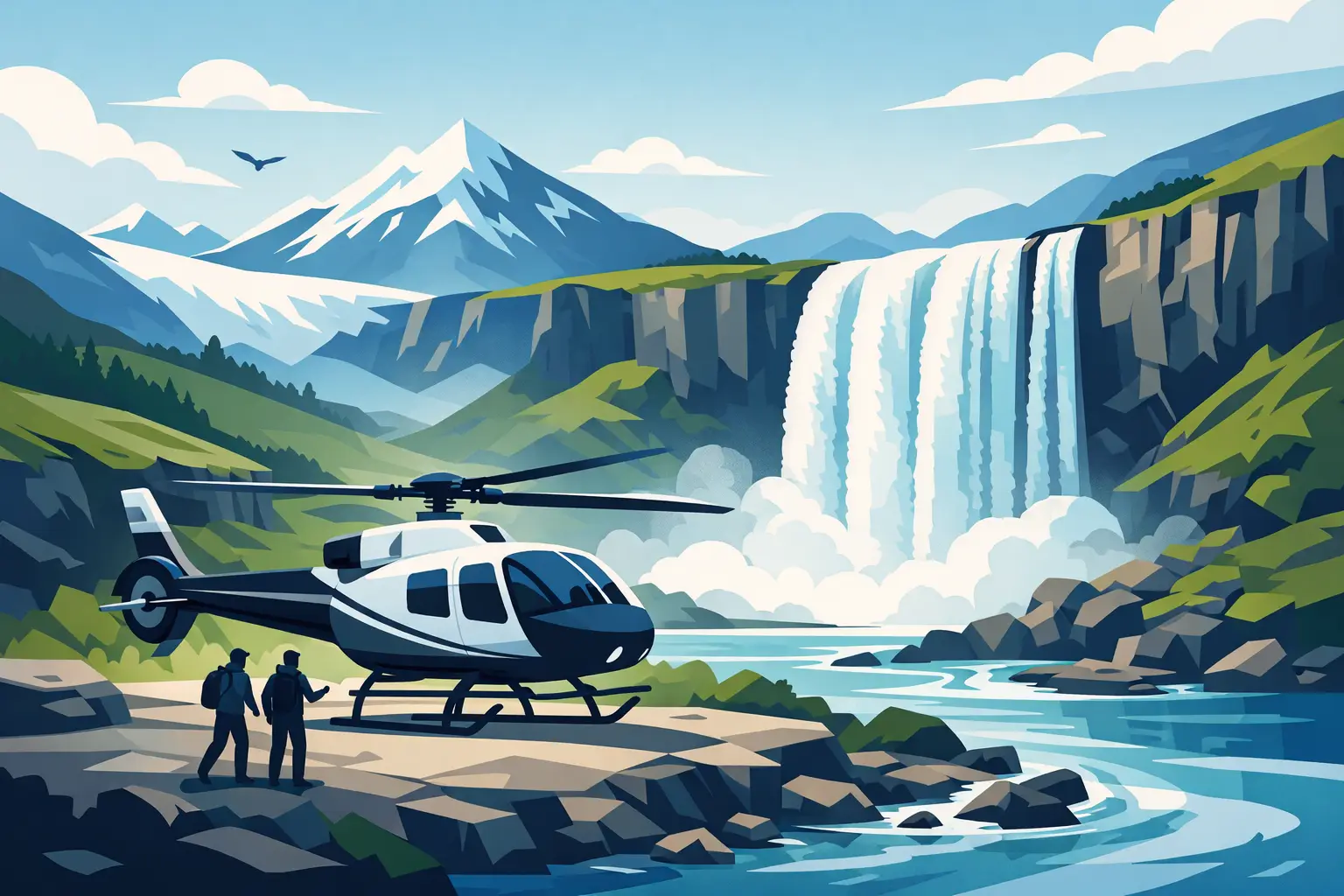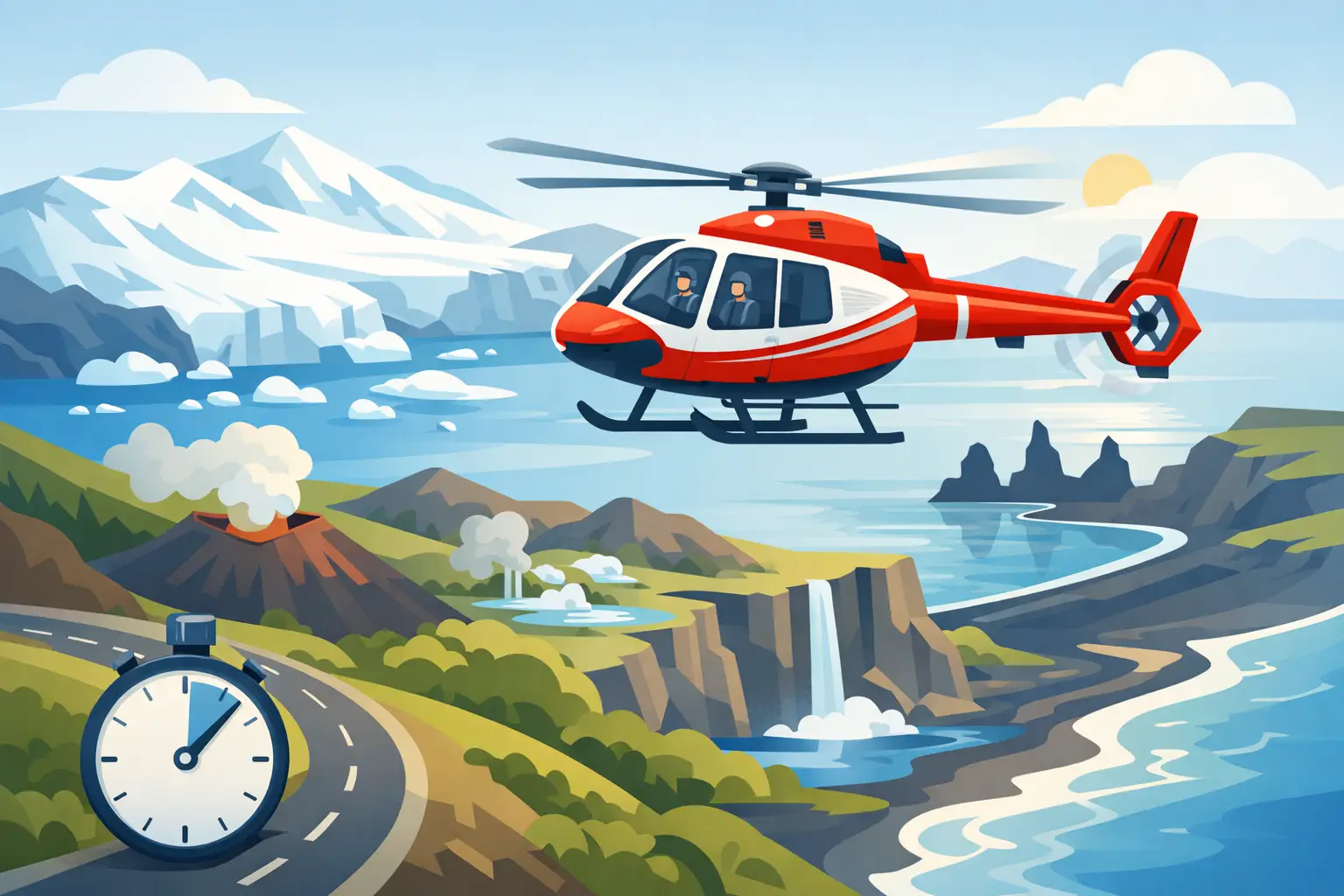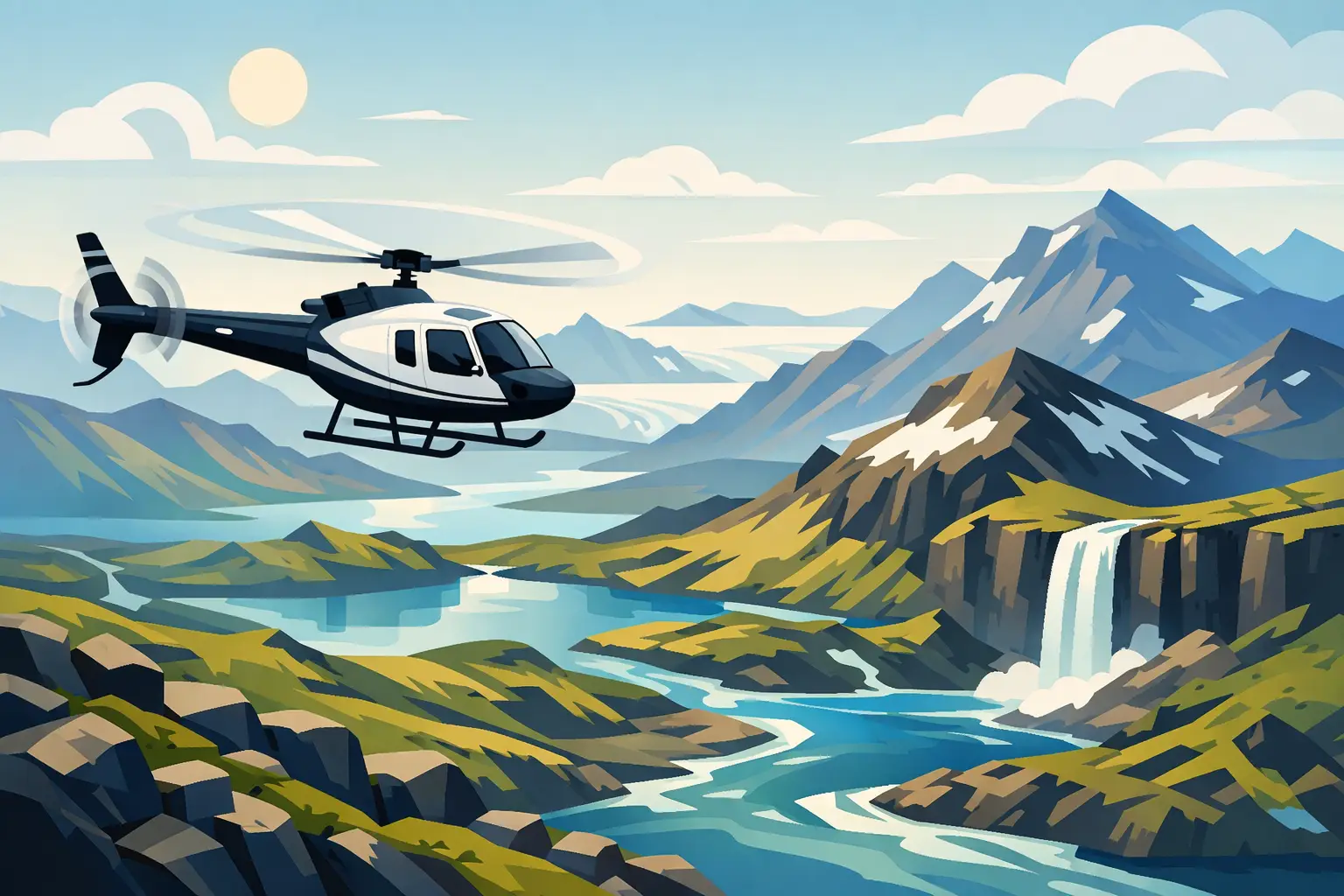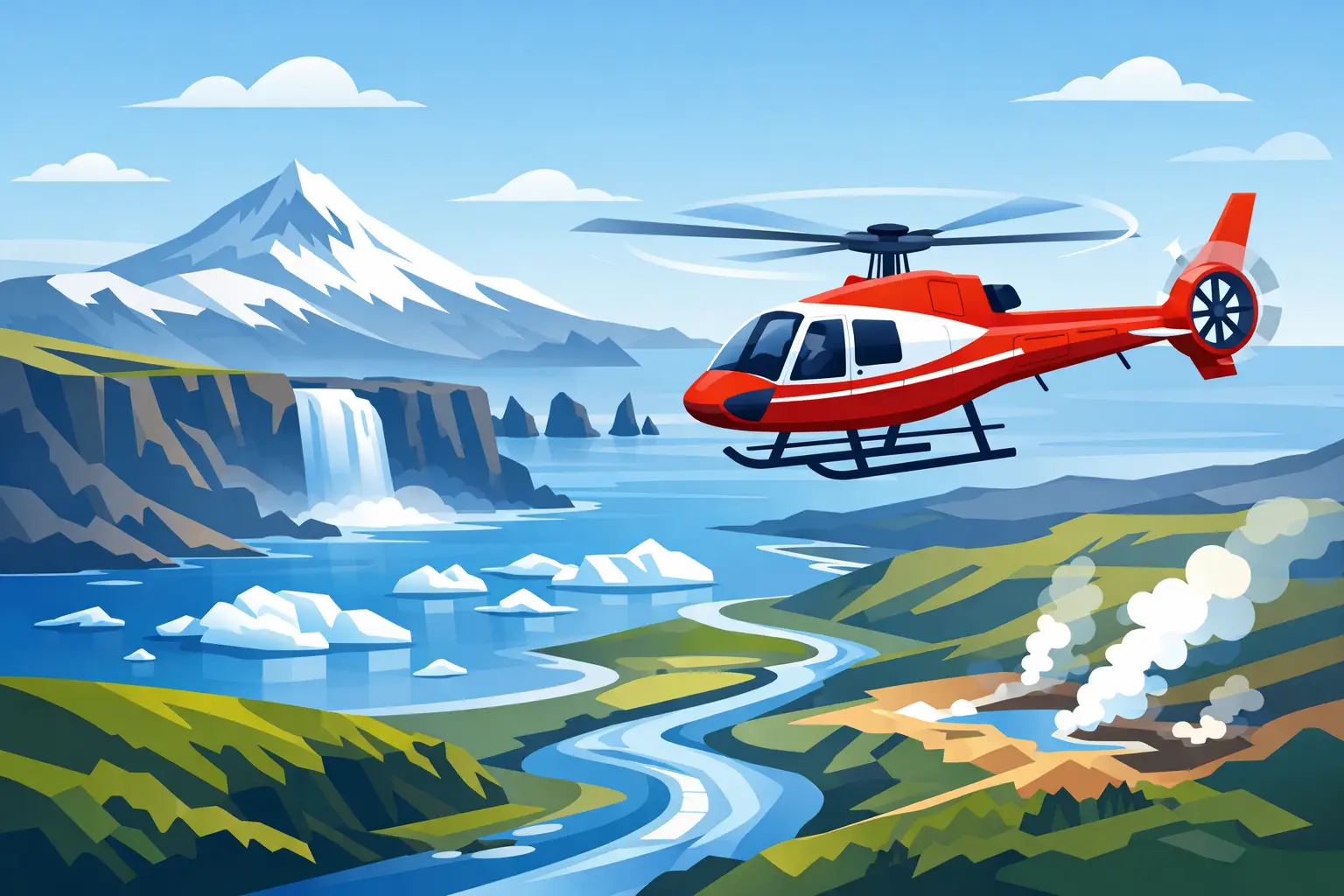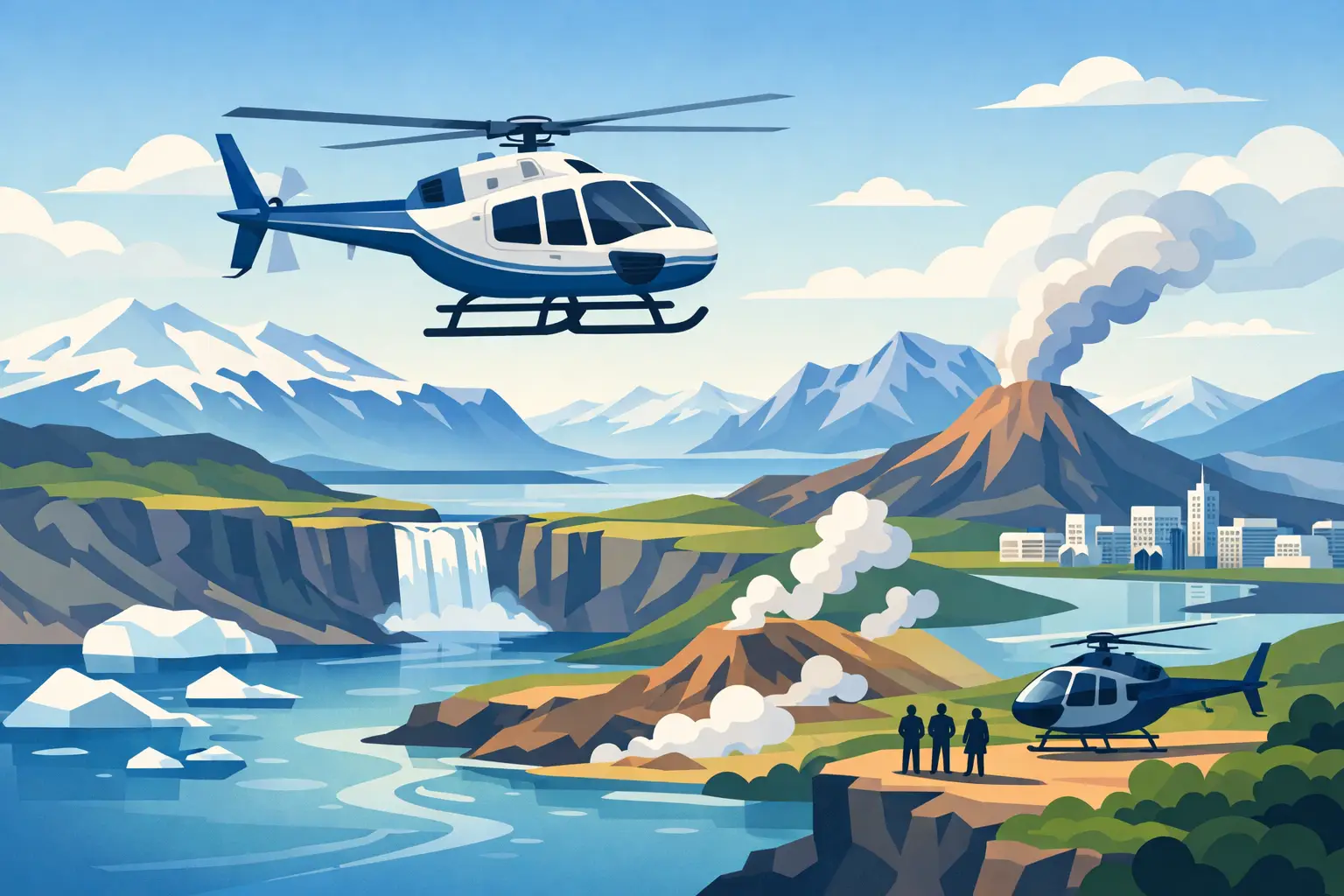
Waterfall Landing Helicopter Experience in Iceland

A waterfall landing helicopter experience changes the scale of an Iceland itinerary. From the air, river valleys, black-sand plains, lava fields, and glacier-fed channels appear as one connected landscape. Then the helicopter touches down at a carefully selected location, and the view becomes personal: wind across the highlands, the sound of falling water, and no long line of vehicles between you and the scenery.

For private travelers, couples, families, and photographers, it is one of the most rewarding ways to spend limited time in Iceland. The point is not simply to see a waterfall from above. It is to reach a perspective that cannot be planned around a roadside parking lot or a fixed coach schedule.

What a Waterfall Landing Helicopter Experience Feels Like

The flight begins with the lift away from Reykjavík or another departure point, when the city and roads quickly give way to open country. Iceland is particularly dramatic by helicopter because its landscapes change in short distances. A green valley can lead toward a volcanic plateau; braided rivers can run from a glacier toward a dark coast; a single waterfall may be part of a much larger system hidden beyond the road network.

A skilled pilot can shape the route around the conditions and the day’s priorities. You may follow a river toward a canyon, circle a waterfall at a respectful distance, or combine the flight with views of glaciers, geothermal terrain, or the highlands. Each route is different because weather, visibility, and landing suitability are real parts of flying in Iceland.

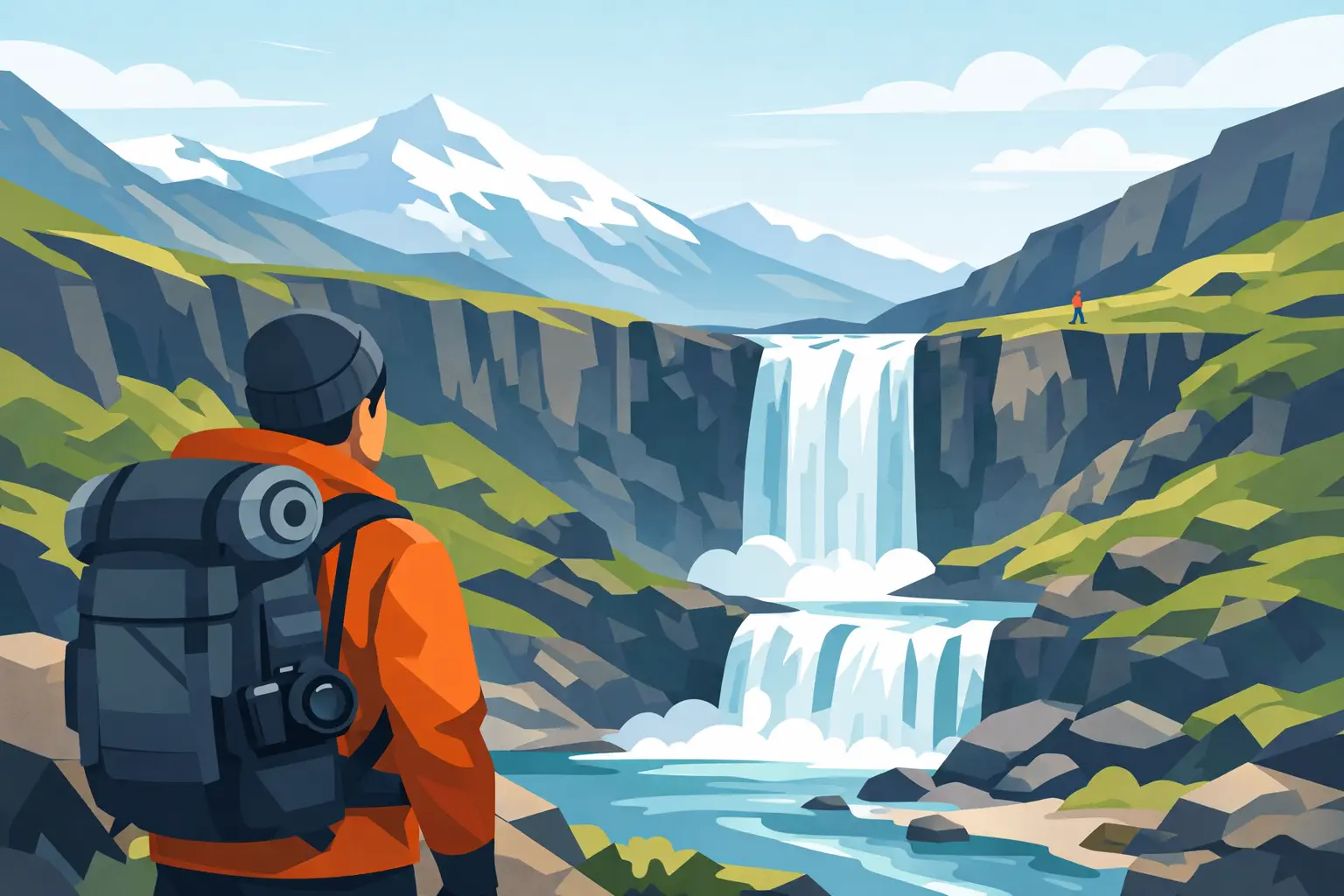
The landing is the moment that gives the experience its depth. Rather than landing on an exposed cliff edge or in a sensitive area, the pilot selects a safe, permitted site that delivers the best available view and conditions. From there, guests can step outside, take photographs, and experience the landscape without the movement and noise of the aircraft.

A landing near a waterfall can be calm or exhilarating. On some days, the air carries mist and the low thunder of the water. On others, the view opens across miles of rugged terrain, with the waterfall appearing as one feature in a vast, remote landscape. Both are unmistakably Iceland.

Why Helicopter Access Makes a Difference

Many of Iceland’s best-known waterfalls are accessible by road, but the road is only one way to encounter them. Overland travel can take hours, and conditions may limit access during certain seasons. A helicopter makes it possible to see distant terrain in a single flight and spend more of the day where the landscape is at its most compelling.

This matters most for travelers who want an experience built around their own pace. A private helicopter itinerary can allow time for a scenic landing, a quiet moment with a camera, or an additional stop if conditions and flight planning permit. Instead of choosing between a waterfall, a glacier, and a volcanic landscape, a tailored route can bring several elements of Iceland into one memorable journey.

There is also a different visual story from above. Waterfalls are shaped by the land around them. From the air, you can see the river that feeds them, the canyon it has cut, and the mountains or ice cap behind it. That wider view is especially valuable for photographers and travelers who want more than a quick stop at an overlook.

Waterfalls Worth Building Into a Private Flight

The best destination depends on your departure base, season, weather, and how much time you want in the air. Some guests prefer a shorter scenic flight with a single landing. Others choose a half-day or full-day private charter that combines several remote sights.

Háifoss is a powerful example of what makes a helicopter approach worthwhile. Set within a striking highland landscape, it offers a scale that is hard to appreciate from ground level alone. The surrounding river, gorge, and open terrain turn the flight into far more than a direct trip to one waterfall.

Other routes may focus on the south coast, remote highland rivers, or waterfalls viewed alongside glaciers and volcanoes. The right itinerary is rarely about checking off the highest number of names. It is about choosing a route that fits the conditions and gives each guest enough time to absorb the place.

Planning the Right Flight for Your Group

Private helicopter travel is highly flexible, but Iceland rewards sensible planning. Start with what you want the day to feel like. A couple planning a proposal or anniversary flight may prioritize a beautiful, quiet landing and a refined pace. A family may want a balanced route with several big visual moments and minimal driving. A photography group may care most about light, angles, and time on the ground.

Flight duration is the next decision. A shorter experience can provide a dramatic aerial introduction and one carefully chosen landing. Longer flights create more room to reach distant regions and adapt the route around cloud cover or wind. Full-day experiences are ideal for guests who want to combine waterfalls with glacier views, volcanoes, black-sand beaches, or remote highland locations.

The size of your group also shapes the plan. Private charters allow the itinerary to be designed around your party rather than a fixed sightseeing route. That can make a meaningful difference for multigenerational families, travelers with a specific destination in mind, or guests who need an airport transfer connected to a scenic flight.

HeliAir can arrange bespoke helicopter journeys from its Reykjavík and Ólafsfjörður bases, giving travelers access to different parts of the country without forcing every itinerary into the same route. Share the landscapes that matter most to you, the time you have available, and any occasion you are celebrating. The flight plan can then be built around what is realistic, beautiful, and safe on the day.

Weather, Landing Conditions, and Flexibility

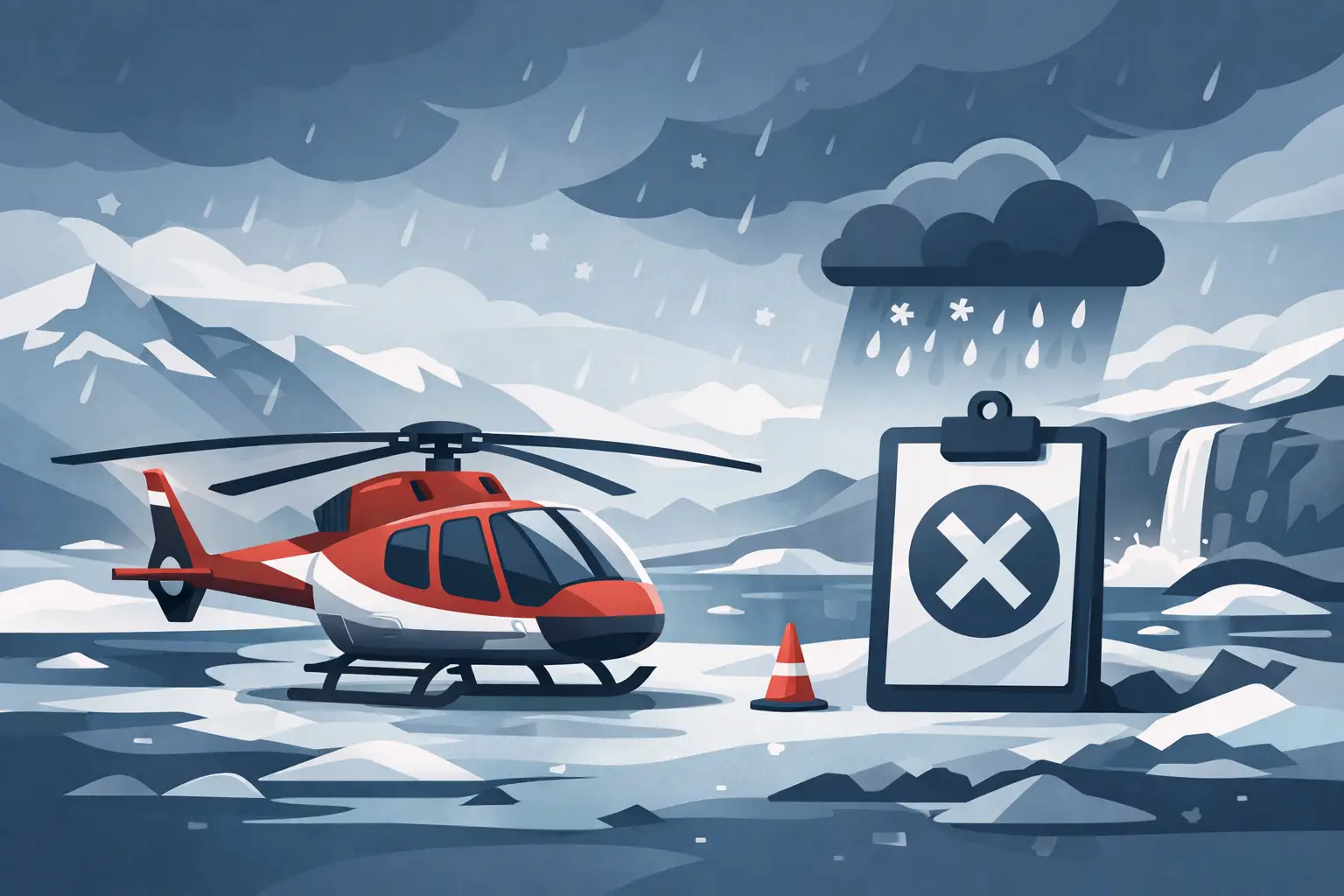
A premium Iceland helicopter experience should feel effortless to the guest, but it is supported by careful operational decisions. Wind, cloud height, precipitation, visibility, and terrain conditions all affect where a helicopter can fly and land. The same waterfall can look entirely different from one day to the next.

That is why flexibility is part of the value, not a compromise. If a planned valley is covered by low cloud, a pilot may recommend a different route with clearer visibility and equally remarkable terrain. If wind makes one landing site unsuitable, another location may offer a better and safer experience. A strong itinerary leaves room for that judgment.

Guests should dress for the landing, not only the aircraft cabin. Warm layers, a weather-resistant outer shell, sturdy footwear, and gloves can make time outdoors far more comfortable, even in summer. Icelandic weather can move quickly, particularly in the highlands and near glaciers.

Make the Landing Time Count

There is no need to rush once the helicopter is on the ground. Take a few minutes before reaching for a camera. Listen to the water, notice the direction of the wind, and look beyond the waterfall itself. The best images often come after the first rush of excitement, when you begin to see the lines of the river and the scale of the terrain.

For photographers, communicate your priorities before departure. You may prefer a broad aerial composition, a side angle on the falls, glacier textures, or a landing with enough room to photograph people within the landscape. The pilot can account for those goals while always keeping conditions and operational requirements first.

A waterfall landing by helicopter is not a replacement for every road trip in Iceland. Ground travel has its own pleasures: villages, quiet roadside stops, and the gradual reveal of the landscape. But when time is limited or the goal is to reach farther, a helicopter flight offers something roads cannot – direct access to the country’s most dramatic geography.

Choose a route with room for the unexpected. The waterfall you expected to see may be extraordinary, but the flight often reveals another valley, ridge, or glacier river that becomes the moment you remember most.

How Helicopter Tours Save Iceland Travel Time

A day in Iceland can disappear quickly from behind a windshield. From Reykjavík, a waterfall that looks close on a map may require hours of driving, while a glacier, volcanic landscape, and remote highland valley can each pull your itinerary in a different direction. That is how helicopter tours save Iceland travel time: they replace long road transfers with direct flight paths and turn the journey itself into part of the experience.

For travelers who have only a few days in the country, the advantage is not simply moving faster. It is having the freedom to spend more of the day where Iceland is at its most remarkable – standing near a glacier tongue, landing beside a dramatic waterfall, or looking across volcanic terrain that would otherwise remain far beyond the day’s driving radius.

How Helicopter Tours Save Iceland Travel Time

Iceland’s landscapes are vast, and its roads follow the realities of the terrain rather than the shortest possible line. A route that appears straightforward can involve coastal detours, mountain passes, one-lane bridges, changing road conditions, and seasonal closures. Even the famous Ring Road is not a shortcut to every place visitors want to see.

A helicopter travels directly over much of that geography. Rather than spending several hours driving from Reykjavík toward the south coast or inland toward the Highlands, guests can leave the city and reach dramatic scenery in a fraction of the overland time. The flight also reveals the scale of the country in a way road travel cannot: black-sand coastlines, braided glacial rivers, lava fields, waterfalls, and ice caps appear as one connected landscape.

This matters most when time is limited. A couple visiting for a long weekend may not want to dedicate an entire day to a single driving circuit. A family may prefer to avoid a long road day with frequent stops. A photographer may need to reach a location when the light is right rather than after an unpredictable transfer. For these travelers, flying can preserve the hours that make a trip feel personal rather than rushed.

From transfer time to time on location

The most meaningful time savings happen after landing. Helicopter travel can bring guests close to locations that have no practical road access or would require lengthy hiking, specialized vehicles, or a full-day expedition. Instead of looking at a distant glacier from a roadside viewpoint, a well-planned flight can create time to land in the surrounding landscape and take it in at ground level.

That distinction is especially valuable in Iceland’s remote interior. The Highlands hold extraordinary contrasts of color and texture, but access depends heavily on season, road conditions, and vehicle capability. Some routes are suitable only for high-clearance 4×4 vehicles, and river crossings can make independent travel impractical or unsafe. A helicopter can make these areas accessible without turning the day into a demanding driving operation.

A scenic flight is therefore not only transportation. It is a more efficient way to experience places that would otherwise require compromises: seeing fewer destinations, spending less time at each one, or skipping remote scenery altogether.

The Iceland Experiences That Benefit Most From Flying

Volcanic landscapes are a clear example. Eruption sites, lava fields, and geothermal areas can be spectacular from the air because their patterns are visible at once – dark lava flowing through green valleys, steam rising from the earth, and broad fields shaped by past eruptions. Conditions and access rules around active volcanic areas can change quickly, so the exact route and landing possibilities always depend on operational guidance at the time of flight.

Glaciers also reward direct access. From the road, Iceland’s ice caps can feel distant, hidden behind valleys or mountain ridges. By helicopter, the transition from Reykjavík’s urban edge to a world of ice, crevasses, and snow-covered peaks can be remarkably quick. The flight creates a perspective that is difficult to replicate on a conventional sightseeing day, particularly for visitors who do not have time for a long glacier excursion.

Waterfalls are another strong use of helicopter time. Iceland has famous roadside falls, but some of its most dramatic cascades sit in landscapes where the journey is as significant as the destination. Aerial views make the rivers, cliffs, and surrounding canyons visible as a whole. In the right conditions, a landing near a remote waterfall adds a quiet, private moment that a crowded roadside stop cannot offer.

For travelers based in northern Iceland, flights from Ólafsfjörður can provide similarly direct access to mountains, fjords, snowfields, and remote terrain. This is particularly compelling for private groups, photographers, and guests building an itinerary around a specific interest rather than following a standard sightseeing route.

A Better Choice for Short, High-Value Itineraries

Helicopter tours are most effective when they solve a real itinerary problem. Perhaps you have one open afternoon in Reykjavík before an international departure. Perhaps you want to combine a premium city stay with wild landscapes without committing to a full-day road journey. Or perhaps your group has different energy levels and would rather spend time enjoying Iceland than managing a complex self-drive schedule.

A flight can also remove the friction of coordinating multiple vehicles, guides, fuel stops, parking, and road navigation. For private groups, that operational simplicity has real value. Everyone travels together, the route can be designed around the group’s priorities, and the experience begins as soon as the aircraft lifts off.

There is a difference, however, between saving time and trying to fit everything into one flight. Iceland deserves room to be experienced. The best itineraries choose a clear focus: a volcano and surrounding lava fields, a glacier and mountain landscape, or a remote waterfall paired with the Highlands. A tailored route gives each landing and aerial view enough time to feel memorable rather than hurried.

What Helicopters Cannot Shortcut

Helicopters offer exceptional flexibility, but they do not bypass Icelandic weather. Wind, cloud cover, visibility, and changing conditions can affect routes, landing locations, departure times, or whether a flight can operate at all. Responsible aviation means making decisions based on current conditions, not forcing a planned route simply because it is on an itinerary.

That is why flexibility matters when planning a premium Iceland experience. If possible, schedule a helicopter experience earlier in your stay, leaving room to adjust should weather require it. Keep the rest of the day light, and view the flight plan as a curated framework rather than an inflexible promise. The landscape, conditions, and pilot’s local judgment shape the best possible route on the day.

Cost is another practical consideration. A helicopter flight is a premium experience, especially as a private charter, and it will not replace every form of travel in Iceland. A relaxed road trip remains the right choice for visitors who want to explore small towns, stop at local restaurants, and move at an unstructured pace. Flying is most valuable when direct access, privacy, and limited time are priorities.

Choosing the Right Flight for Your Plans

A shorter sightseeing flight can be ideal when you want a powerful aerial introduction to Iceland without giving up an entire day. Longer flights create more room for varied terrain and landings, while private charter makes the most sense when a group has a specific destination, a photography goal, or a need to connect locations efficiently.

The planning conversation should begin with what you do not want to miss. Is it the contrast of glacier ice and black volcanic sand? A highland landing far from the road? A proposal, family celebration, filming day, or direct transfer that also deserves to feel extraordinary? Those priorities determine whether a structured scenic tour or a bespoke route will deliver better value.

HeliAir can arrange flights from Reykjavík and Ólafsfjörður, with options ranging from scenic experiences to private charters designed around a particular landscape or schedule. The strongest itineraries are built with realistic weather flexibility and a clear sense of what matters most to the people on board.

When your time in Iceland is precious, the goal is not to race through more places. It is to trade long transfers for the rare feeling of arriving where the roads do not easily take you – with enough time left to look around.

Can You Fly to Iceland’s Highlands by Helicopter?

If you are asking, “can you fly to Iceland highlands?”, the answer is yes – but not in the way most travelers picture a conventional flight. Iceland’s interior has no network of commercial airports connecting visitors to its remote valleys, geothermal fields, glacier edges, and black-sand expanses. To reach these places quickly and privately, a helicopter charter is the practical option.

From above, the Highlands reveal the scale that is easy to miss from the road: braided glacial rivers, ridgelines cut by centuries of weather, volcanic craters, and vast areas with no visible buildings for miles. A helicopter can turn a destination that may require a full day of driving and a capable 4×4 into a tailored excursion with time to land, photograph, and take in the silence.

Can You Fly to Iceland Highlands on a Commercial Flight?

Not generally. Scheduled domestic flights in Iceland serve towns and regional airports around the coast, rather than the uninhabited central interior. They are useful for connecting Reykjavík with destinations such as Akureyri, Ísafjörður, or Egilsstaðir, but they do not provide direct sightseeing access to the Highland landscapes most visitors have in mind.

There are a small number of remote airstrips used for specific operations, but these are not a simple replacement for a private Highland experience. Their availability, surface conditions, aircraft suitability, and access rules vary. They also place you at a fixed point, while many of Iceland’s most striking features are spread across terrain without easy road or runway access.

A private helicopter flight offers a different kind of access. It can depart from Reykjavík or from a northern base near Ólafsfjörður, follow a route designed around your interests, and use approved landing areas where conditions and permissions allow. That distinction matters. Flying over the Highlands is spectacular; landing in the right place transforms the day.

Why a Helicopter Is the Best Way to Reach the Highlands

The Highlands are intentionally difficult to reach. Many roads are seasonal F-roads, often closed well into summer and subject to river crossings, changing surfaces, and weather interruptions. Even experienced drivers need to plan carefully. A route that looks close on a map can take hours overland, particularly when the itinerary includes a waterfall, glacier viewpoint, or volcanic area far from the main tracks.

By helicopter, distance becomes part of the experience rather than the obstacle. You can see the transition from Reykjavík’s coastal surroundings to the interior’s raw volcanic terrain in a matter of minutes. Instead of committing your day to a long out-and-back drive, you can spend it where you came to be: above waterfalls, beside a glacier tongue, or standing in an expansive landscape few visitors reach.

That does not mean helicopter travel ignores Iceland’s realities. Weather remains the deciding factor, and the pilot will select routes and landing sites based on wind, visibility, cloud cover, ground conditions, and operational requirements. Flexibility is a strength, not a compromise. On the best Highland days, it allows the route to follow the clearest skies and most compelling scenery.

What Can You See From a Highland Helicopter Flight?

A custom route can be shaped around one standout destination or built as a fuller aerial journey. The best choice depends on your departure point, how much time you have, the season, and whether you want more flight time, more time on the ground, or a balance of both.

For travelers departing from Reykjavík, a Highland flight may combine dramatic waterfalls with volcanic landscapes, glacier views, and broad interior plateaus. Háifoss, one of Iceland’s tallest waterfalls, is a remarkable example of a destination whose scale is especially powerful from the air. Its river-cut canyon and surrounding terrain make the approach part of the experience, not simply transportation to a viewpoint.

Volcanic landscapes can add another dimension. Depending on conditions and routing, you may see lava fields, geothermal color, craters, and the stark contrast between dark rock, bright moss, snow, and glacial ice. The terrain changes rapidly across short distances, which is one reason aerial travel is so rewarding in Iceland.

Glacier flights can also be incorporated into a Highland itinerary. Aerial views of ice caps and glacier tongues reveal crevasses, ridges, ash patterns, and meltwater channels that are impossible to understand from a roadside stop. For photographers, the shifting shapes, shadows, and colors can make every pass feel distinct.

A private flight is especially valuable for couples, families, and small groups who want to avoid a fixed sightseeing schedule. Rather than choosing between a waterfall tour, a volcano tour, or a glacier experience, you can discuss what matters most and design a route around it. HeliAir can arrange bespoke flights for guests who want their time in Iceland to be as individual as the landscape below.

How Highland Landings Work

Helicopters cannot simply land anywhere that looks beautiful. Iceland’s interior includes protected areas, sensitive terrain, private land, and places where landing may be restricted. A responsible operator plans around these considerations and uses suitable landing locations, with safety and environmental care at the center of the decision.

When a landing is possible, it creates a rare kind of access. You might step out onto a ridge with a view across a glacial valley, pause near a remote waterfall, or walk a short distance through an area that would otherwise take significant time and effort to reach. The flight can include a brief scenic landing or longer ground time, depending on the itinerary and conditions.

For those planning a proposal, private celebration, editorial shoot, or professional production, landing logistics deserve early discussion. The timing, equipment, group size, desired location, and photography needs all affect the best aircraft and route. The more specific the vision, the better the planning can be.

When Is the Best Time to Fly to the Iceland Highlands?

Summer is the most popular season for Highland flights because longer daylight hours and more accessible interior conditions create broader routing options. From late spring through early fall, the contrast of green valleys, exposed volcanic ground, and lingering snow can be extraordinary. It is also the season when many travelers are already considering F-road travel, making a helicopter an appealing alternative to a demanding driving day.

Winter flights offer a very different visual experience. Snow can emphasize the shape of mountains, glaciers, and lava formations, while low-angle light brings depth to the landscape. However, winter weather can be more restrictive, daylight is limited, and landing options may be narrower. A winter charter is best approached with an open schedule and a willingness to let the weather guide the final plan.

At any time of year, book your flight early in your Iceland itinerary when possible. That leaves room to adjust for weather if needed. It also gives your pilot the best chance to select the day with the most favorable conditions for the scenery you want to see.

What to Expect on the Day of Your Flight

Your experience begins with a route discussion and a practical safety briefing. Dress for the conditions at the landing site, not just the temperature in Reykjavík. Even in summer, the Highlands can be cold and windy, so warm layers, sturdy footwear, and a weatherproof outer layer are sensible choices.

Bring a camera, but do not spend the entire flight behind it. The view changes quickly, and there is real value in watching it without a screen between you and the landscape. Your pilot can point out landmarks, explain route choices, and help make the most of the light and conditions available that day.

A Highland helicopter flight is not simply the fastest way into Iceland’s interior. It is a chance to see the country at its most remote, then return with time still left in your day for whatever comes next.

Iceland Scenic Flights Worth Taking by Helicopter

A road trip can take you close to Iceland’s famous landscapes. A helicopter can place a glacier, volcanic crater, black-sand coastline, and highland waterfall into the same afternoon. Iceland scenic flights are for travelers who want to see more of the country’s scale while spending less of their trip behind a windshield.

The difference is not simply altitude. It is access. From above, braided glacial rivers reveal their shifting patterns, lava fields show their true size, and remote valleys become reachable without long drives, rough tracks, or a rigid sightseeing schedule. For couples, families, private groups, and photographers, a well-planned flight turns a spectacular landscape into a deeply personal experience.

Why Choose Iceland Scenic Flights by Helicopter?

Iceland is made for aerial travel. Its most dramatic features are often separated by mountain passes, glacier rivers, unpaved roads, and weather systems that make ground travel slower than a map suggests. Helicopter sightseeing changes the rhythm of the day. Rather than choosing one region and committing several hours to the road, you can build a route around the landscapes that matter most to you.

A shorter flight can offer an extraordinary introduction to the country: Reykjavík’s coastline fading behind you, the moss-covered lava fields of the Reykjanes Peninsula, and wide views toward mountains and ice caps. Longer flights create room to move deeper into the interior, where highland scenery, powerful waterfalls, and glacier edges feel far removed from the usual travel routes.

Helicopters also offer something an airplane cannot always provide: the opportunity to land in carefully selected locations when conditions and permissions allow. Stepping out onto a remote ridge, volcanic landscape, or highland plateau adds a sense of place that is impossible to get from a window alone. The destination is not just viewed. It is experienced.

The Landscapes That Make a Flight Unforgettable

The best route depends on the season, the weather, your departure point, and what you want to see most. Iceland is not a destination where one flight plan suits every guest. A couple with three hours between other plans may prioritize a volcano and glacier panorama. A private group with a full day may want a broader journey through the interior with several landing opportunities.

Volcanoes and lava fields

Volcanic Iceland looks remarkably different from the air. Fresh and historic lava fields spread across the landscape in dark, textured formations, bordered by bright green moss in summer and snow in winter. On the Reykjanes Peninsula, aerial views can reveal the relationship between volcanic systems, fissures, geothermal areas, and the Atlantic coast in a single sweep.

Active volcanic areas require particular care. Access, airspace, and routes can change quickly based on official restrictions and local conditions. An experienced Icelandic operator plans with safety first, then adjusts the experience to make the most of what the day allows.

Glaciers, ice caps, and black sand

From the air, glaciers are not simply white expanses. They are moving landscapes shaped by blue crevasses, ash layers, outlet tongues, and rivers of meltwater. Flights toward areas around Eyjafjallajökull or the southern highlands can pair ice-capped volcanoes with black-sand plains and rugged mountain terrain.

This contrast is one of the reasons private helicopter travel is so compelling in Iceland. Within a relatively short flight, the view can shift from ocean to lava, from green valleys to ancient ice. Ground travel can reveal these places beautifully, but it rarely shows how closely they connect.

Waterfalls and highland rivers

Iceland’s waterfalls become even more impressive when seen in their wider setting. Aerial views show the rivers feeding them, the canyons they cut through, and the vast highlands beyond. Destinations such as Háifoss are especially striking because their scale emerges gradually from the surrounding plateau before the drop opens beneath you.

In the central highlands, glacial rivers twist through broad, uninhabited valleys. These are areas where a helicopter is more than a luxury. It is often the most efficient way to reach a view that would otherwise require significant driving, hiking, or specialized vehicle access.

How Long Should Your Scenic Flight Be?

The right duration is a practical decision as much as an aspirational one. A 1.5-hour flight is ideal for travelers who want a concentrated aerial experience near Reykjavík or another departure base. It can be a memorable addition to a short Iceland stay, a special occasion, or a day already planned around dining, spa time, or city exploration.

A two- to three-hour flight allows greater range and a more varied route. This is often the sweet spot for guests who want to combine multiple landscape types, such as coastal views, volcanic terrain, waterfalls, and glacier panoramas. It also provides more flexibility if conditions favor one direction over another.

For travelers who want Iceland without compromise, a full-day private experience offers the greatest freedom. It can include remote highland destinations, multiple stops, time for photography, and a route designed around a specific interest. This is particularly valuable for milestone trips, multi-generational families, and guests who would rather spend their day in extraordinary places than in transit.

What to Expect on the Day

Premium does not mean rushed. A good scenic flight begins with a clear conversation about your priorities, followed by a safety briefing and an honest assessment of conditions. Icelandic weather is famously changeable, and the most responsible flight plans leave room to adapt.

That flexibility can improve the experience. If low cloud obscures a planned mountain route, a pilot may recommend a clearer coastal or volcanic direction. If the light is exceptional over the highlands, the route may be shaped around that opportunity. The goal is not to follow a fixed line on a map at all costs. It is to create the best possible flight within safe operating limits.

Wear warm layers, even in summer. Helicopter cabins are comfortable, but landing sites can be windy and substantially colder than Reykjavík. Sturdy footwear is useful for uneven ground, and sunglasses can make a meaningful difference when snow, ice, or water reflects bright light. Cameras and phones are welcome, though it is worth spending part of the flight simply looking out rather than documenting every minute.

Weight, group size, luggage, and landing preferences may affect aircraft selection and routing. Share these details when arranging the trip, along with any mobility considerations or photography goals. For guests traveling with children, the operator can advise on age, seating, and the most suitable tour length.

Private Charter or Scheduled Sightseeing?

A scheduled sightseeing tour works well when you have a defined window, a smaller party, and an interest in a proven route. It offers a straightforward way to experience Iceland from above while retaining the excitement of a helicopter landing where available.

Private charter is the better fit when the journey itself needs to be tailored. Perhaps you are arriving from Keflavík and want to turn an airport transfer into a scenic introduction to Iceland. Perhaps you want to depart from Reykjavík, reach a remote lodge, photograph a particular glacier, or build a surprise proposal around a secluded landing. A private charter gives you greater control over timing, route priorities, and the pace of the day.

HeliAir can arrange sightseeing flights from Reykjavík and Ólafsfjörður, as well as custom helicopter journeys shaped around the destinations you have in mind. That local operational knowledge matters when the weather changes or when the places you most want to see are far beyond the standard road-trip circuit.

Planning Around Iceland’s Seasons

Summer brings long daylight hours, green valleys, accessible highlands, and broad visibility when conditions cooperate. It is a strong season for routes that combine waterfalls, rivers, glaciers, and remote interior landscapes. The trade-off is demand, particularly during peak travel months, so private flights are best arranged well ahead of time.

Winter offers a sharper, more elemental version of Iceland. Snow draws clean lines across mountains and lava fields, low sun can create beautiful color, and the country feels quieter. Weather may be more restrictive, daylight is limited, and flexibility is essential. For travelers willing to hold space in their itinerary, winter flights can be exceptionally rewarding.

Spring and fall sit between these extremes. They can bring changing colors, fewer visitors, and excellent light, but they also require realistic expectations about weather. There is no season when Iceland can promise a cloudless sky. There are, however, seasons for different kinds of beauty.

Choose the Flight That Fits Your Iceland

The most memorable aerial journeys are not necessarily the longest or most elaborate. They are the ones built around the way you want to travel: a quiet glacier landing with someone you love, a fast and remarkable look at volcano country, or a full day reaching landscapes few visitors ever see. Leave enough room in your Iceland itinerary for the weather, tell your pilot what matters most, and let the route meet the day that Iceland gives you.

A Guide to Helicopter Charter Uses in Iceland

A road trip from Reykjavík to a remote glacier, highland waterfall, or active volcanic landscape can take most of a day. By helicopter, the journey becomes part of the experience, with views that reveal the scale of Iceland’s black-sand coasts, lava fields, ice caps, and deep valleys. This guide to helicopter charter uses explains where private aviation adds the most value, whether your priority is an extraordinary day out, efficient travel, or specialist aerial support.

A charter is not simply a sightseeing flight with a private cabin. It is a flight arranged around your itinerary, group, timing, and intended destination, subject to weather, landing conditions, aircraft capability, and operational approvals. That flexibility makes helicopter charter especially well suited to Iceland, where dramatic places are often separated by long drives and changeable conditions.

Helicopter Charter Uses for Iceland Travel

Private scenic flights with remote landings

The most memorable charter use is often a tailored scenic journey with landings in places that are difficult or time-consuming to reach by road. A private helicopter can turn a single afternoon into a glacier landing, a pass over volcanic terrain, and time beside a highland waterfall, all without spending hours between destinations in a vehicle.

For couples, families, and private groups, the advantage is control. You can choose the balance between flight time and time on the ground, build the route around specific landscapes, and move at a more personal pace than a scheduled tour allows. A photographer may want the low afternoon light over a glacier tongue. A family may prefer a shorter flight with one remarkable landing. A group celebrating a milestone may want a full-day route that pairs several regions of Iceland in one experience.

The trade-off is that Icelandic weather remains in charge. Clouds, wind, visibility, and conditions at a proposed landing site can require a route adjustment, a different landing, a delay, or cancellation. The best charter plans have a clear wish list, but leave room for the pilot and operations team to recommend the safest and most rewarding option on the day.

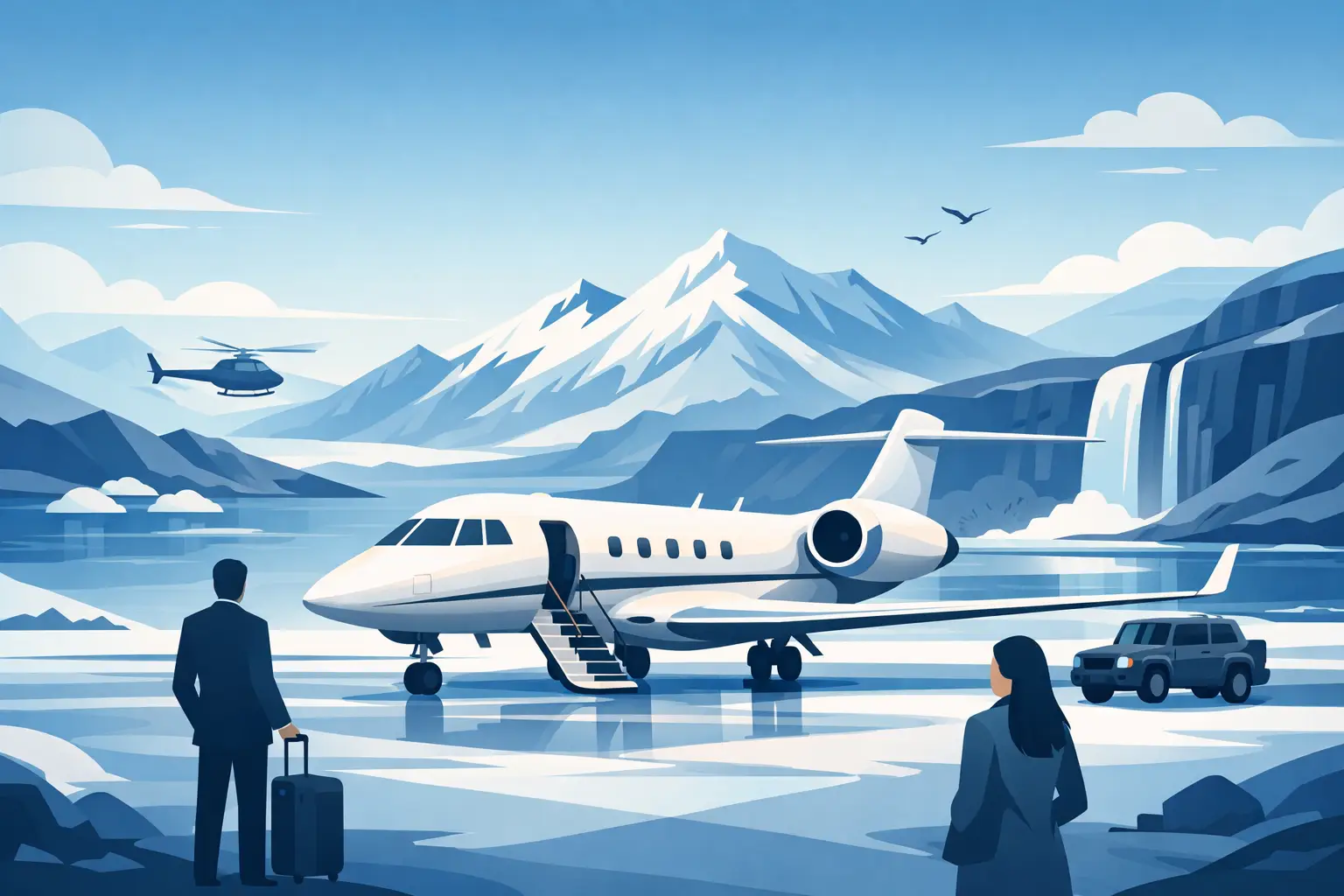
Airport and point-to-point transfers

Helicopters are also a practical answer to limited time. A private transfer from Keflavík International Airport or Reykjavík Domestic Airport can replace a long ground journey and establish an entirely different beginning to an Iceland itinerary. Rather than spending valuable daylight in transit, travelers can arrive close to a remote lodge, connect with an onward excursion, or continue to a destination that would otherwise require several hours of driving.

Point-to-point charter works particularly well for guests combining Reykjavik with the south coast, private highland stays, northern adventures, or locations with limited road access. It can also simplify logistics for groups with a fixed schedule, including a cruise call, an event, or an international departure later the same day.

This option is best judged by the value of time rather than distance alone. For a short route with easy road access, a vehicle may be the sensible choice. For a journey that involves a full day of driving, tight connections, or a destination far from Iceland’s main roads, a helicopter can create meaningful time for the experiences that brought you here.

A Guide to Helicopter Charter Uses Beyond Sightseeing

Aerial filming and photography

Iceland looks different from the air. Rivers braid through black sands, waterfalls cut across green cliffs, and glaciers form blue-white patterns that cannot be understood from a roadside viewpoint. For production teams, commercial projects, documentary crews, and professional photographers, a helicopter provides both perspective and access.

Aerial filming charters need more preparation than a leisure flight. The required shots, camera equipment, passenger positions, intended altitude, timing, and potential ground locations all shape the flight plan. Light conditions matter, but so do safety procedures for working around aircraft and managing gear in exposed terrain.

An experienced operator can help assess what is realistic within the weather window and flight time available. A flexible shot list is usually more productive than a rigid one. Iceland can offer perfect light in one direction while low cloud limits another, so production crews benefit from planning a primary route and alternate locations in advance.

Heli-skiing access

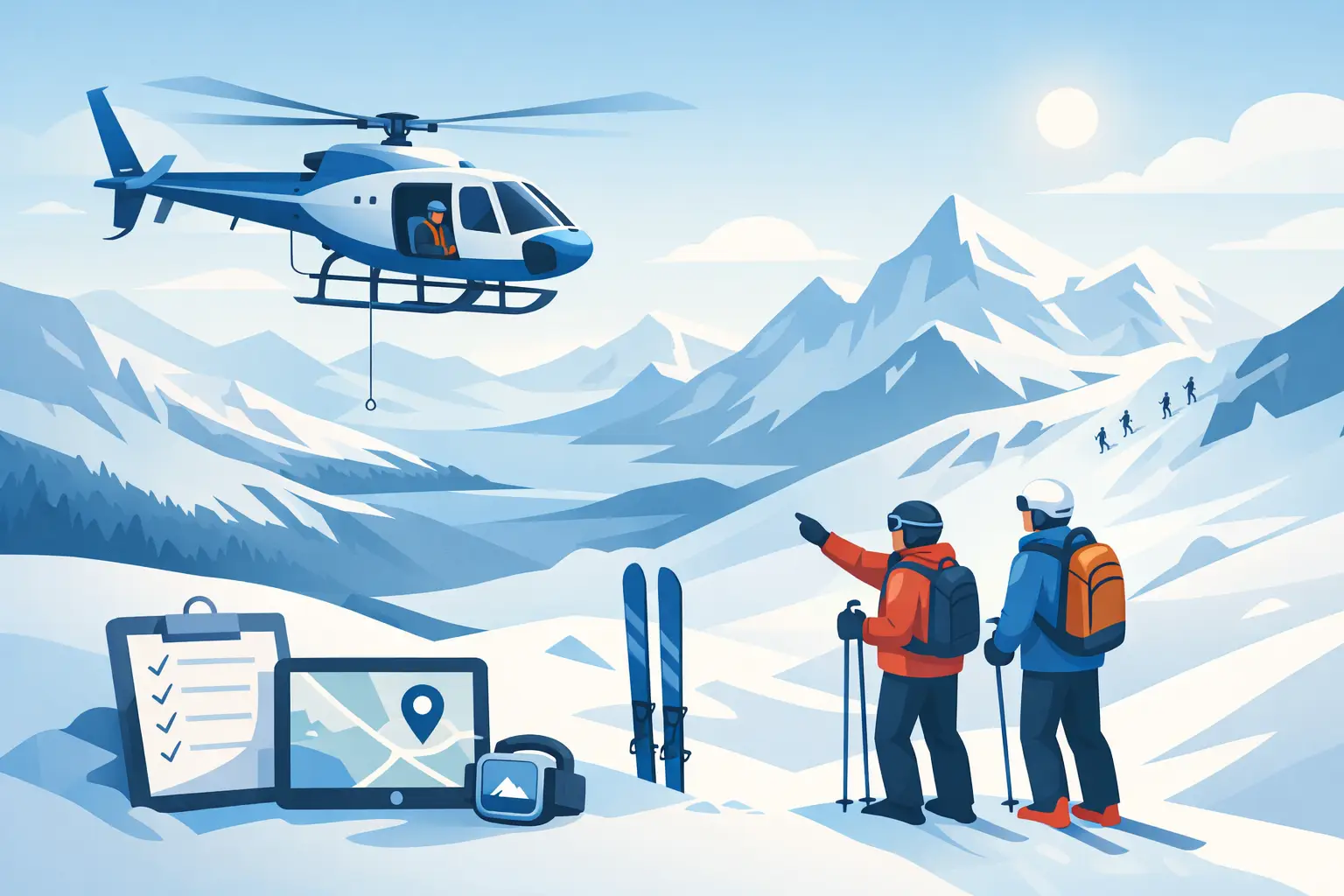
For experienced skiers, helicopter access opens terrain that cannot be reached during an ordinary ski day. It allows teams to travel efficiently to selected mountain areas and make the most of suitable snow and weather windows. The flight itself is only one part of the operation. Mountain knowledge, snow conditions, group ability, equipment, guides, and safety planning are equally central.

Heli-skiing is highly condition-dependent, and no responsible operation promises a particular run or peak before assessing the day. Wind, avalanche risk, visibility, and snow stability determine where it is appropriate to fly and ski. Guests should approach the experience with strong skiing ability, realistic expectations, and a willingness to follow professional guidance throughout the day.

Sling work and technical operations

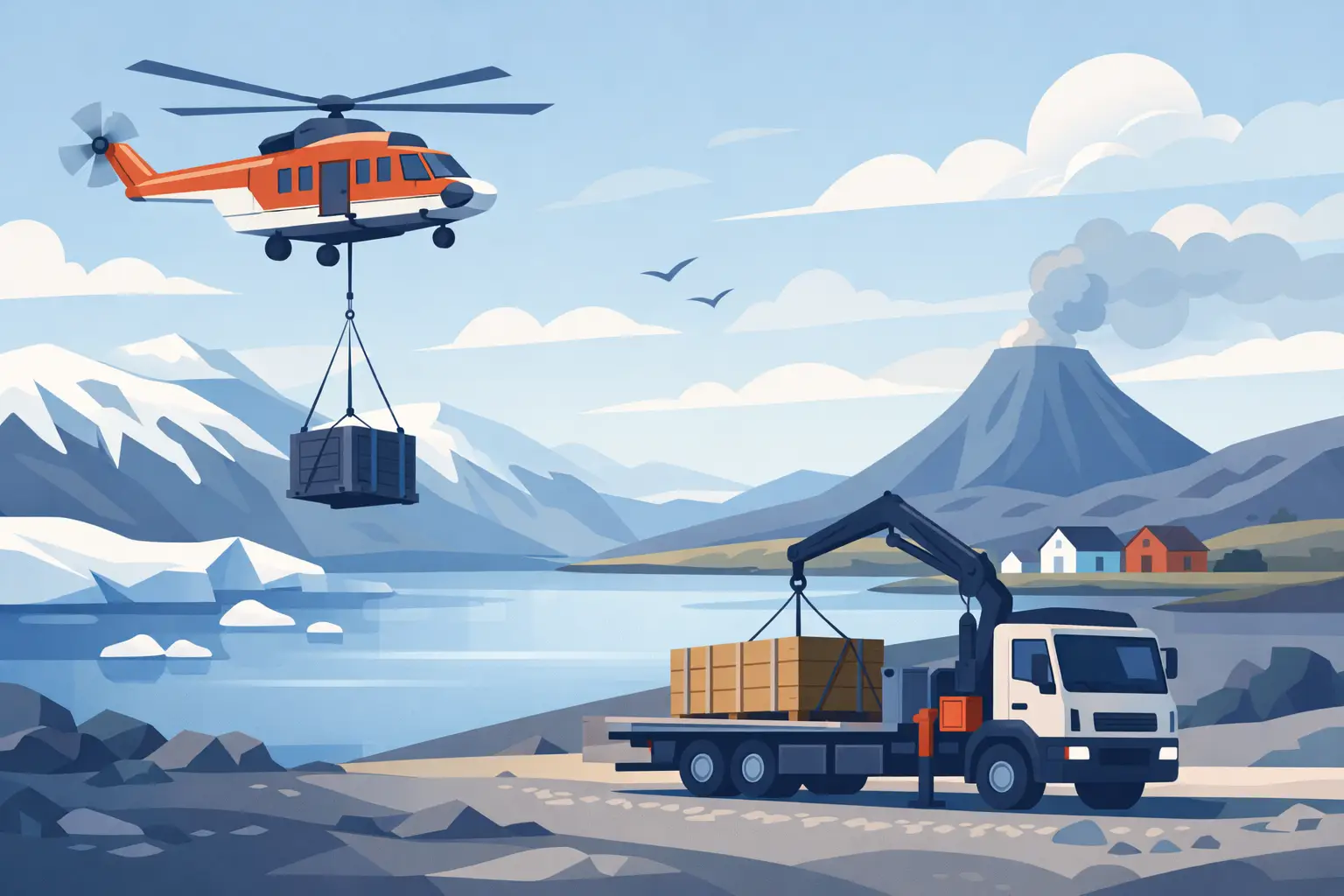
Not every helicopter charter is designed around guests. Utility work can support projects in places where roads are absent, terrain is difficult, or heavy equipment cannot be moved efficiently by ground. Sling operations may be used for carefully planned external-load lifting, equipment placement, and other technical requirements.

These missions require detailed coordination. Load weight and dimensions, pickup and delivery locations, ground crew procedures, weather limits, and site access must all be assessed before flying. The right solution depends on the aircraft, the nature of the task, and the environment. A helicopter may reduce project time dramatically, but it is not automatically the best answer for every load or location.

For corporate and technical customers, early planning makes the greatest difference. Sharing the operational goal, timeline, load details, maps or coordinates, and any site restrictions allows the aviation team to build a practical proposal instead of making assumptions in the field.

How to Plan the Right Charter

Begin with the outcome you want, not a fixed route. Is the goal to see a volcano from above, arrive at a lodge quickly, capture a specific aerial sequence, access ski terrain, or move equipment to a remote worksite? Once that is clear, the charter can be designed around the right aircraft, departure point, flight duration, and contingency options.

It helps to provide your preferred date, number of passengers, approximate luggage or equipment, desired destinations, and any timing commitments. If you are traveling with children, carrying camera gear, or arranging a proposal, private celebration, or business transfer, say so early. Small details can influence timing and the most suitable aircraft configuration.

For leisure charters, consider whether you value range or time on the ground. A longer route can reveal more of Iceland’s contrasts, but a single well-chosen landing may create a stronger memory than rushing between several sites. For specialist work, prioritize operational information over broad descriptions. Clear requirements lead to safer, more accurate planning.

HeliAir can arrange private flights from Reykjavík and Ólafsfjörður, bringing scenic charter, transfer, and technical capability together under one local aviation team. The strongest itineraries pair a clear ambition with local flexibility: identify what would make the day exceptional, then let the conditions guide the final route.

A helicopter charter is at its best when it does more than save time. It gives you access to the Iceland you came to see – the ridge beyond the road, the glacier beyond the valley, and the quiet stretch of landscape where the only schedule is the weather and the light.

Best Luxury Adventure Flights in Iceland

A road trip can show you Iceland’s landmarks. A private helicopter flight can put a glacier, black-sand coastline, geothermal ridge, and hidden waterfall into the same afternoon. The best luxury adventure flights are not simply about seeing more from a higher altitude. They are about reaching the places that make Iceland feel genuinely remote, then having the time and flexibility to experience them on the ground.

For travelers with limited days in Iceland, that difference matters. A destination that requires hours of driving, changing road conditions, or a demanding hike may be a short flight away. The right experience combines extraordinary scenery with thoughtful planning: an experienced local crew, an aircraft suited to the route, landing opportunities where conditions allow, and an itinerary built around what you most want to see.

What Makes a Luxury Adventure Flight Worth It?

Luxury in Iceland is rarely about staying behind glass. It is standing on a highland ridge with no tour buses in sight, hearing the rotor blades fade after landing, and taking in the scale of a glacier valley at your own pace. A premium flight should create access while keeping the day comfortable, personal, and well managed.

The strongest private helicopter experiences begin with a clear priority. Some guests want the dramatic contrast of lava fields and ice caps. Others want a photography-focused route, a proposal in an unforgettable setting, or a full-day journey that includes several landings. Families may prefer a shorter scenic flight with one accessible stop, while experienced adventurers may want to combine aerial sightseeing with a guided glacier, fishing, or heli-skiing program.

It also depends on the weather. Iceland’s conditions are part of the experience, but they require flexibility. Wind, visibility, and changing cloud cover can affect routing and landing choices. A professional operator plans for this reality, using local knowledge to identify the best available conditions rather than forcing a fixed route that no longer makes sense on the day.

The Best Luxury Adventure Flights for Iceland’s Landscapes

Volcanoes, lava fields, and geothermal country

Few aerial views are as striking as Iceland’s volcanic terrain. From above, broad lava fields reveal their textures, fissures cut through dark earth, and geothermal areas show unexpected color against the surrounding mountains. A volcanic flight can be ideal for visitors who want to understand how Iceland was formed, not just photograph its most recognizable sights.

The experience changes with the season and recent volcanic activity. Some areas are best viewed from the air, while others may offer landing possibilities farther from sensitive or restricted terrain. Your pilot should treat active conditions, airspace rules, and safety requirements as central to the route. The most memorable itinerary is not necessarily the one that gets closest to a volcano, but the one that delivers the best perspective safely.

Glaciers and the highlands

Iceland’s interior has a scale that is difficult to appreciate from the road. Glacial rivers braid across black plains, ice caps stretch into the distance, and rugged peaks rise from terrain with few signs of human presence. A helicopter makes it possible to connect these landscapes in a way that would otherwise take a full day or more.

A glacier landing is often the defining moment of a luxury adventure flight. The air is sharper, the horizon wider, and the colors more subdued than visitors expect. In clear weather, it can feel as if the island opens in every direction. But glacier landings are always condition-dependent. Snow cover, wind, visibility, and the selected landing zone all influence what is possible, so guests should see a planned landing as an aspiration supported by expert judgment, not an automatic promise.

For travelers seeking an extended experience, a private highland route can include glacier views, remote valleys, river systems, and a stop near a waterfall or mountain plateau. This is where a custom itinerary earns its value: rather than following a standard loop, the flight can be shaped around light conditions, interests, and the best landscape available that day.

Waterfalls and dramatic canyons

Iceland’s waterfalls are impressive from ground level, but an aerial approach reveals the geography behind them. You can see how rivers gather across the highlands before dropping into deep canyons, and why famous falls appear so sudden against the open landscape.

Háifoss is a particularly powerful example. The waterfall drops from a volcanic plateau into a dramatic gorge, surrounded by terrain that feels far from Iceland’s busier routes. A helicopter flight can turn a long overland detour into a focused, unhurried stop. For couples, families, and private groups, this creates room to enjoy the location rather than spending most of the day in transit.

Waterfall routes also work well for travelers who want a balanced first helicopter experience. They offer broad scenic views, a meaningful landing opportunity when conditions permit, and a clear sense of Iceland’s changing terrain, from green lowlands to stark inland plateaus.

The coast, black sand, and glacial outwash plains

Iceland’s south coast is visually dramatic even before you leave the ground. By helicopter, its patterns become more pronounced: black-sand beaches, surf lines, glacial rivers, moss-covered fields, and mountain walls leading toward the sea. It is an excellent choice for guests who want a cinematic route without committing to a full day in the interior.

This style of flight can be especially compelling for photographers. Side light can bring definition to river channels and lava textures, while low clouds can add atmosphere around mountains and glaciers. That said, photography-focused flights require practical expectations. The clearest blue-sky day is not always the most interesting for images, and the best light may influence the timing and direction of the route.

How to Choose the Right Flight Length

A shorter private scenic flight is a strong option when helicopter time is one part of a larger Iceland itinerary. It can provide an exceptional overview of Reykjavík’s surrounding mountains, geothermal landscapes, and nearby volcanic features, with the possibility of a landing depending on the chosen route and conditions.

A 1.5- to 3.5-hour experience allows the landscape to change more dramatically. This is often the ideal range for travelers who want to move beyond the capital region, reach a glacier or highland destination, and spend meaningful time at a landing site. It balances adventure with comfort, particularly for guests who want the experience to feel expansive without filling their entire day.

A full-day exclusive charter is best for travelers who value choice above all else. It can accommodate multiple destinations, a private lunch arrangement, longer ground time, or a route designed around a special occasion. It is also the right format for groups with different interests, such as a family that wants gentle sightseeing alongside serious photography or a couple combining a scenic flight with a remote celebration.

More time does not automatically mean a better flight. A carefully planned two-hour route in excellent conditions can be more rewarding than an overly ambitious full-day itinerary in unsettled weather. The key is matching the duration to the destination, season, and purpose of the trip.

Details That Separate a Private Charter From a Scenic Ride

The best luxury adventure flights feel effortless because the planning behind them is precise. Before booking, consider where you are staying, how much time you have, who is traveling, and whether anyone has specific mobility, comfort, or photography needs. Weight and baggage details matter for aircraft planning, while timing matters for light and weather patterns.

Departure location can also shape the experience. Starting from Reykjavík is convenient for many visitors, while a northern base near Ólafsfjörður can open access to dramatic mountain terrain and specialized adventures such as heli-skiing. Private airport transfers may be useful when you want to move quickly between Keflavík International Airport, Reykjavík, and your accommodation without giving up valuable vacation time.

Ask for a route built around your priorities, but leave room for your pilot’s recommendations. Local aviation experience is most valuable when conditions change. A crew that knows Iceland’s terrain can often substitute an equally remarkable valley, glacier edge, or mountain landing if the original plan is not suitable.

HeliAir can arrange structured scenic tours and bespoke charters across Iceland, from short sightseeing flights to full-day private journeys and specialist aviation support. The goal is straightforward: spend less time reaching Iceland’s extraordinary places and more time being present in them.

Plan for the Moment, Not Just the Map

The most rewarding flight is usually built around one defining moment. It may be stepping onto a glacier for the first time, watching sunlight cross a black-sand plain, or landing in a highland landscape that few visitors ever reach. Start with that moment, then let the route, duration, and season support it.

Bring warm layers, sturdy footwear, and a camera you can operate easily in wind and cold. More importantly, bring flexibility. Iceland rarely performs the same way twice, and a flight shaped by the day’s real conditions often becomes the story you remember long after the itinerary is over.

Helicopter Charter Versus Plane in Iceland

If your plan includes a glacier landing, a remote waterfall, or a same-day route that would take hours by road, helicopter charter versus plane in Iceland is not a small detail. It changes what kind of trip you can actually have. Both aircraft have real advantages, but they serve very different goals once you get beyond the idea of simply flying from one place to another.

For some travelers, a plane is the right tool – efficient, comfortable, and well suited to longer point-to-point flights between established airstrips. For others, a helicopter is the whole reason to fly in Iceland at all, because it turns the country’s most dramatic places into places you can reach, land in, and experience on your own schedule.

Helicopter charter versus plane in Iceland: the real difference

The simplest distinction is this: planes connect airports and airstrips, while helicopters connect places.

In Iceland, that difference matters more than it does in many destinations. The country’s best scenery is often far from conventional infrastructure. Highlands routes, volcanic zones, ridge lines, black sand expanses, glacier edges, and isolated valleys do not always sit next to an airstrip, and even when they do, the final stretch may still require significant ground travel. A plane can get you closer. A helicopter can often get you there.

That does not make helicopters automatically better. It means the better choice depends on whether your priority is transportation efficiency or direct access to landscape.

When a plane makes more sense

A charter plane is often the smarter option when you are covering a longer distance and your destination is served by an airport or usable airstrip. If you are moving between established towns or regional aviation points, a plane can be a practical, cost-conscious way to reduce travel time while still traveling privately.

Planes also suit travelers who care most about getting from A to B rather than stopping within the landscape itself. If your itinerary already includes a lodge transfer, a vehicle waiting on arrival, or a production team operating near a regional airfield, the fixed-wing option can be straightforward and efficient.

There is also a comfort factor to consider. For some passengers, a plane feels more familiar, especially on longer segments. Cabin expectations, flight profile, and baggage planning may align better with a traditional transfer-style trip.

Still, there is a trade-off. Once you land, you are limited by whatever comes next on the ground. In Iceland, that can mean extra driving, weather-sensitive road conditions, and a lot more time between the runway and the experience you came for.

Best-fit plane scenarios in Iceland

Plane charter is usually the stronger fit for airport-to-airport or airstrip-to-airstrip transfers, longer regional hops, and itineraries where the final destination already has reliable ground support. It can also work well for business travel or logistics where the mission is transit rather than sightseeing.

If the route is clear, the landing point is established, and no off-airport access is required, a plane deserves serious consideration.

When a helicopter is the better choice

A helicopter changes the scale of Iceland. Places that look far away on a map stop feeling remote when you can fly directly over lava fields, river canyons, and mountain ridges and then land near the feature itself.

That is why helicopter charter is often the premium choice for leisure travelers who want more than transportation. It is not only about speed. It is about freedom of routing, access to hard-to-reach terrain, and the ability to build an itinerary around experiences that would otherwise consume an entire day by car.

In Iceland, helicopters are especially compelling for volcano tours, glacier landings, remote highland access, waterfall visits, heli-ski support, aerial filming, and private scenic touring. They are also highly effective for selective transfers where the destination is not a standard airport but a lodge, a mountain area, a remote meeting point, or a place where direct access matters more than cruising efficiency.

A helicopter is also more adaptable to the visual side of the journey. If you are a photographer, traveling as a couple, hosting clients, or planning a once-in-a-lifetime family experience, the aircraft itself becomes part of the day. The route can be designed around what you want to see, not only where you need to end up.

Best-fit helicopter scenarios in Iceland

Helicopters stand out when the plan includes landings in nature, multi-stop scenic touring, hard-to-reach destinations, specialized operations, or tight schedules that leave little room for overland detours. They are often the right answer when the destination is the landscape itself.

Access is where helicopters pull ahead

If you are weighing helicopter charter versus plane in Iceland for a luxury trip, access is usually the deciding factor.

A plane may save time over driving, but a helicopter can eliminate the need for much of the drive altogether. That changes the shape of a day. A couple based in Reykjavík can be standing near a glacier, above a canyon, or beside a remote waterfall in a fraction of the time it would take by road. A private group can combine several landscapes in one outing instead of choosing only one. A film crew can get closer to the terrain that matters, with fewer moving parts on the ground.

This is where premium aviation in Iceland earns its value. You are not paying only for lift. You are paying for directness.

Cost matters, but so does what you are buying

It is reasonable to compare price. A plane can be the more economical charter solution on certain routes, especially when the mission is a simple transfer between established points.

But cost per hour is only one part of the equation. If a helicopter removes six hours of driving, allows multiple landings, and turns a transfer into a private high-end experience, the comparison shifts. The cheaper aircraft on paper is not always the better-value option in practice.

For high-spend travelers, the more useful question is usually this: what outcome do you want? If you want efficient transport, compare routes and operating logic. If you want rare access, stronger scenery, and a custom day built around Iceland’s terrain, helicopter charter often justifies itself quickly.

Weather and operational reality

Iceland rewards ambitious itineraries, but it also demands respect for weather. That applies to both helicopters and planes.

The right operator will not pretend otherwise. Wind, visibility, and changing conditions affect routing and feasibility, and some days require flexibility. In that sense, helicopter versus plane is not a contest where one aircraft simply ignores the environment better than the other. It is a planning decision shaped by the mission, the region, and the conditions on the day.

What matters is working with an operator that knows the terrain intimately and can adapt the flight around safety and real conditions, not wishful timing. That is particularly important for custom charters, glacier operations, volcano sightseeing, and remote landings.

Experience versus transit

One of the clearest ways to decide is to ask whether flying is the method or the experience.

If flying is just the method, a plane may be enough. It gets you across distance efficiently and can fit neatly into a wider itinerary.

If flying is part of why you came to Iceland, the helicopter is hard to match. You are lower to the landscape, more flexible in your route, and far less tied to infrastructure. You can build a day around views, landings, photography, celebrations, or places with no straightforward road approach at all.

That distinction matters for honeymoon travelers, private groups, adventure-focused families, and anyone trying to make limited time in Iceland count for more.

So which should you choose?

Choose a plane when you need an efficient private transfer between established aviation points and the destination works perfectly well from the ground after landing.

Choose a helicopter when access is part of the value, when the landscape is the destination, or when your schedule leaves no room for long drives and indirect routing. For many premium Iceland itineraries, that is the difference between seeing the country and truly stepping into it.

For travelers planning something bespoke, the smartest move is not to start with the aircraft. Start with the day you want to have. A local operator such as HeliAir can then shape the right flight around your route, priorities, and the realities of Icelandic conditions.

The best aircraft is the one that gets you closer to the version of Iceland you came to find.

Helicopter Charter vs Domestic Flight

A domestic flight can get you from one Icelandic airport to another. A helicopter can get you to a glacier edge, a black-sand valley, a remote lodge, or a ridgeline that would otherwise take most of a day to reach. That is the real difference in helicopter charter vs domestic flight – not simply speed in the air, but what kind of trip becomes possible once you land.

For travelers planning a premium Iceland itinerary, the choice is rarely about aviation alone. It is about time, privacy, flexibility, and access. If you are deciding how to move between destinations or whether to build part of your trip around a private scenic transfer, it helps to look past the headline price and compare what each option actually delivers.

Helicopter charter vs domestic flight in Iceland

Domestic flights in Iceland serve an important purpose. They connect key towns and regional centers, and for many travelers they are a practical alternative to a long drive. If your route lines up neatly with the airport network, a domestic flight can be efficient and sensible.

A helicopter charter works differently. It is not tied to the same fixed schedule, airport-only arrival pattern, or standard route map. In the right conditions, a helicopter can depart from a convenient base, follow a custom routing, land in remote terrain, and build the journey around your priorities rather than around the timetable of a public service.

That distinction matters more in Iceland than in many other countries. The landscape is dramatic, but also spread out and often difficult to access by road. Volcano systems, glacial outlets, highland interiors, secluded waterfalls, and mountain landing areas are not part of the domestic airline network. If those places are the reason you came, a helicopter is not just a more premium version of the same transfer. It is a different category of access.

When a domestic flight makes more sense

There are trips where a domestic flight is the better tool. If you simply need to travel between established airports, especially on a route with regular service, scheduled flights can be cost-effective and predictable. For solo travelers or couples with a straightforward itinerary, that matters.

A domestic flight also suits travelers who do not need privacy or routing control. If the destination airport is close enough to where you actually want to stay, and if onward ground transport is easy, the public network may do the job perfectly well. Not every itinerary needs customization.

This is especially true when your travel day is built around one clear objective: reach a town, check in, and continue from there. In that case, the trade-off is simple. You accept the schedule, the airport infrastructure, and the shared nature of the experience in exchange for a lower entry cost.

Where helicopter charter changes the trip

The strongest case for a helicopter charter is not that it is faster in a straight line. It is that it removes layers of friction from the day.

Instead of flying to the nearest airport and then driving onward, you can often get much closer to the destination itself. Instead of shaping your plan around check-in times, baggage handling, and fixed departures, you can shape it around the places you actually want to see. That could mean a direct transfer from Reykjavík to a remote lodge, a custom highlands landing, or combining transportation with sightseeing over geothermal terrain, glacier fields, or volcanic landscapes.

For private groups, families, photographers, and travelers celebrating something significant, that shift is substantial. The flight becomes part of the experience rather than a logistical pause between experiences. You are not just getting somewhere. You are seeing Iceland from above, with the freedom to design the route around scenery, timing, and purpose.

Time savings are real, but context matters

People often assume helicopter charter always saves time. Often it does, but the real comparison depends on the full journey, not just airborne minutes.

A domestic flight may look efficient on paper, yet still involve airport arrival windows, waiting time, baggage procedures, and a long drive after landing. A helicopter charter can shorten the total door-to-destination timeline by reducing those extra steps and landing closer to the point that matters.

That said, not every route will produce dramatic time savings. If your destination sits close to a domestic airport and you are comfortable with the schedule, the time difference may be modest. The advantage becomes much clearer when the final destination is remote, when the day is tightly planned, or when overland access is the true bottleneck.

For high-value itineraries, time in Iceland is rarely just transportation time. It is daylight, photography conditions, dinner reservations, private guide timing, and weather windows. A charter can protect more of that.

Privacy, comfort, and control

This is where helicopter charter vs domestic flight becomes especially clear for luxury travelers.

A domestic flight is a shared transport product. It is designed to move passengers efficiently along a standard route. That is not a flaw. It is simply its purpose.

A helicopter charter is built around your group, your schedule, and your objective. That changes the feel of the day immediately. There is more privacy, more direct communication, and more control over how the trip unfolds. If you are traveling with family, hosting clients, arranging a proposal, planning a film shoot, or coordinating a once-in-a-lifetime experience, that control is often worth more than the raw flight time.

It also makes a difference for travelers who want Iceland to feel exclusive without feeling complicated. A well-planned helicopter itinerary can simplify a day that would otherwise require multiple moving parts.

Access is the biggest differentiator

The single best reason to choose a helicopter in Iceland is access.

Domestic flights connect airport to airport. Helicopters can connect experience to experience. That might mean landing near a glacier, reaching a highland area with no practical scheduled alternative, scouting a location for photography, or creating a point-to-point journey that skips long road sections entirely.

For specialist clients, access matters even more. Aerial filming, heli-skiing support, technical site visits, and sling work all require capabilities that fixed-route domestic service cannot provide. Even on the leisure side, many of Iceland’s most memorable places make more sense by helicopter because the terrain itself is the attraction.

This is where a local operator’s knowledge becomes part of the service. Weather, landing feasibility, routing, and timing are not abstract planning details in Iceland. They shape what is realistically possible on a given day.

What about cost?

A domestic flight will usually be the lower-cost option upfront. A helicopter charter is a premium service, and it is priced accordingly.

But price alone can be misleading if you compare these options as though they offer the same thing. They do not. If a scheduled flight still requires private transfers, significant drive time, overnight positioning, or the loss of a valuable sightseeing day, the cost equation changes. For groups traveling together, the value of a charter can also look different than it does for one passenger traveling alone.

The better question is not which option is cheaper. It is which option better fits the kind of trip you are buying. If the goal is simple transportation between two airport-served locations, domestic air travel may be the right answer. If the goal is exclusive access, time efficiency, privacy, and a memorable experience built into the transfer itself, a helicopter charter can justify itself quickly.

How to choose the right option for your itinerary

Start with the destination, not the aircraft. If your day centers on an airport-served town, a domestic flight may be perfectly adequate. If it centers on a remote landscape, a luxury lodge, a custom sightseeing plan, or a location that has no neat overland alternative, a helicopter deserves serious consideration.

Then think about what your time in Iceland is worth. On a short stay, losing half a day to road transfers and logistics can cost more than it first appears. On a milestone trip, the emotional value of the experience matters too. The memory of landing beside a waterfall or crossing volcanic terrain at low altitude is not interchangeable with a routine airport arrival.

Finally, be honest about flexibility. If you want a fixed, public, lower-cost transport option, book the domestic flight. If you want the journey designed around you, speak with an operator who can plan the route, timing, and objective with Iceland’s terrain and weather in mind. For travelers who want access rather than just arrival, that is where a company like HeliAir is at its best.

The right choice is the one that gives your trip more of what you came to Iceland for – whether that is efficiency, reach, privacy, or the rare feeling of seeing the country exactly as you hoped to.

What Happens During Flight Cancellations?

A canceled flight rarely feels like a small inconvenience when you are trying to reach Iceland on schedule, connect to a private transfer, or make a once-in-a-lifetime aerial tour. If you have ever wondered what happens during flight cancellations, the short answer is this: the airline starts reshuffling aircraft, crews, passengers, and airport resources at the same time you are trying to salvage your plans.

That overlap is why cancellations can feel chaotic from the passenger side even when there is a defined process behind them. Some outcomes are straightforward, like automatic rebooking. Others depend on the cause of the cancellation, the airport, the carrier, weather conditions, crew availability, and how full the next flights are. If your trip includes premium experiences, private bookings, or tight timing, understanding the mechanics helps you react faster and protect the parts of your itinerary that matter most.

What happens during flight cancellations behind the scenes

When an airline cancels a flight, the first decision is operational, not customer-facing. The carrier has to determine whether the problem is isolated or part of a wider disruption. A single aircraft maintenance issue is different from heavy fog, volcanic activity, strong winds, or air traffic restrictions affecting an entire region.

From there, the airline begins reallocating limited resources. Aircraft may be reassigned to higher-priority routes. Crews have legal duty-time limits, so one cancellation can trigger a chain reaction if pilots or cabin crew are no longer positioned where they need to be. Gate space, baggage handling, fueling windows, and maintenance support also come into play. To travelers, it can look like a simple cancelation notice on an app. In practice, it is a rapid restructuring of a network.

This is also why the timing of a cancellation matters. If your flight is canceled early in the day, the airline may have more options to move you. If it happens late at night or during a major weather event, the next workable seat may be much harder to find.

Why flights get canceled in the first place

Weather is the reason most travelers expect, and in Iceland or other North Atlantic destinations, it is a serious one. High winds, icing conditions, low visibility, and storm systems can make flight operations unsafe or unreliable. In those cases, cancellation is not a customer service failure. It is a safety decision.

But weather is only one piece of it. Mechanical issues can ground an aircraft until inspections or repairs are completed. Crew shortages and scheduling breakdowns can force cancellations even when the aircraft itself is ready. Air traffic control restrictions can reduce airport capacity. Occasionally, security events, airport infrastructure problems, or knock-on disruption from another city set the whole thing in motion.

For travelers, the reason matters because it often affects your rights, the airline’s obligations, and how quickly the schedule recovers. A weather cancellation usually creates fewer compensation options but often affects many passengers at once. A staffing or maintenance issue may leave more room for reimbursement claims, depending on the route and carrier policies.

What you can usually expect from the airline

The first outcome is normally rebooking. Many airlines now do this automatically and notify passengers through email, text, or their app. Sometimes the new itinerary is acceptable. Sometimes it is a poor fit, especially if it turns a direct route into a long connection or arrives too late to keep the rest of your plans intact.

If rebooking does not work for you, a refund may be available instead. That sounds simple, but it often depends on whether you choose to travel later, whether part of the ticket has already been used, and whether the cancellation happened on the airline’s side or as part of broader disruption. If you booked through a third party, the process can be slower because the airline and booking platform each control part of the transaction.

You may also be entitled to meal vouchers, hotel accommodation, or ground transportation if the delay stretches overnight. That is not universal. It often depends on local regulations, the reason for the cancellation, and the airline’s terms. Premium cabin status can help with service priority, but it does not change the operational facts if no seats are available.

What happens during flight cancellations if you have connections

Connecting itineraries are where things become more expensive and more personal. If all flights are on one ticket, the airline generally has a responsibility to get you to your final destination, even if the new routing changes significantly. If your trip is split across separate tickets, the protection is much thinner. Missing a second flight because the first one was canceled may leave you dealing with two unrelated reservations.

This matters even more when the trip includes a private driver, a helicopter transfer, a charter departure, a hotel check-in window, or a guided experience with a fixed launch time. Airlines usually focus on transporting you from airport to airport. They do not automatically cover the ripple effect on the rest of your itinerary.

That is why travelers booking premium experiences should build in margin where possible. A same-day connection from an international arrival into a highly tailored experience can work beautifully when operations run on time. It can also become very tight if the inbound segment slips or disappears.

Your baggage does not always follow the same timeline

One of the most frustrating parts of a cancellation is baggage uncertainty. If checked bags were already accepted and loaded before the flight was canceled, they may need to be unloaded, retagged, stored, or rerouted. During heavy disruption, retrieving luggage quickly is not always possible.

If you are rebooked on the next available flight, the bags may travel with you. If your travel plans change more dramatically, baggage can lag behind. Essentials like medication, valuables, travel documents, camera gear, and cold-weather layers should stay in your carry-on for exactly this reason.

For travelers headed into remote parts of Iceland or onto experience-based itineraries, baggage delays are more than an annoyance. They can affect what you are able to do when you arrive. A scenic helicopter landing on a glacier is very different if your outerwear never made the connection.

How to respond without making a bad situation worse

The first move is to confirm the cancellation directly with the airline and review every rebooking option before accepting the first one offered. Automatic rebooking is convenient, but not always optimal. A different departure city, a partner airline, or a later flight with a cleaner arrival time may serve you better.

Then look beyond the ticket. Contact your hotel, transfer provider, or activity operator as early as possible. High-touch travel works best when everyone has accurate timing. If your plans in Iceland involve custom logistics, early communication gives operators a better chance to adapt. Companies used to working in aviation-heavy environments understand that weather and schedule changes are part of the landscape, but they still need notice.

Keep receipts if you pay out of pocket for meals, transport, or accommodation. Document the cancellation reason as stated by the airline, especially if compensation may later depend on it. Screenshots, emails, and app alerts are useful.

Most importantly, separate what is urgent from what is merely annoying. Your immediate priorities are getting confirmed space on a workable route, preserving any high-value bookings, and making sure you have what you need for an overnight disruption if one develops.

Special considerations for Iceland-bound travelers

Iceland rewards ambitious itineraries, but it also rewards realistic planning. Weather can change quickly, and flights into or out of the country can be affected by wind, visibility, and seasonal conditions even when things look manageable elsewhere. That does not mean travel is unreliable. It means flexibility is part of traveling well here.

If your itinerary includes premium aviation services, private touring, or remote landings, a canceled airline flight does not automatically cancel the value of the trip. It may simply shift the order of things. In some cases, moving a tour to the next clear weather window is possible. In others, especially with highly customized bookings, alternatives depend on aircraft availability, daylight, and local conditions. It depends on the exact route, season, and timing.

This is where working with operators who understand Iceland’s terrain and operational realities makes a difference. HeliAir, for example, builds around customization, which is especially useful when travel plans need to be adjusted rather than abandoned.

A canceled flight is frustrating because it interrupts momentum. But cancellations are not random from the operational side, and they do not always have to derail the experience you came for. The travelers who recover best are usually the ones who stay calm, act quickly, and protect the parts of the trip that matter most.

A Guide to Helicopter Day Trips in Iceland

A great helicopter day trip changes your relationship with Iceland in about ten minutes. Roads, distances, and weather stop feeling like obstacles and start feeling like part of the landscape below you. This guide to helicopter day trips is built for travelers who want more than a scenic flight – they want a full day shaped around access, pace, and places that are difficult or impossible to reach efficiently by car.

The biggest advantage is not just the view. It is time. A helicopter can turn a day that would otherwise be spent driving into a day spent landing near a glacier, circling a volcanic area, stopping by a waterfall, or reaching the highlands while there is still time to enjoy them properly. For couples, families, private groups, photographers, and travelers with limited time in Iceland, that shift matters.

What makes helicopter day trips different

A standard sightseeing tour gives you a fixed route and a set duration. A helicopter day trip is different because the day can be shaped around what you actually want to experience. Some travelers care most about volcanic terrain and black sand contrasts. Others want ice, river canyons, and dramatic waterfall landings. Some want a broad survey of Iceland from above, while others want to focus on one region and spend more time there.

That flexibility is especially valuable in Iceland, where the most impressive places are often spread far apart. Driving between them can take hours, and in some areas road access is seasonal or limited. By helicopter, the map changes. Remote highland terrain, glacier edges, and isolated viewpoints become realistic options within a single day.

There is also a difference in how the experience feels. A premium helicopter day trip is not rushed if it is planned well. It should feel intentional from departure to landing, with enough time built in for route adjustments, weather decisions, and the simple pleasure of seeing the landscape from changing altitudes and angles.

A practical guide to helicopter day trips

The right day trip starts with one question: what kind of Iceland do you want to see from above?

If this is your first visit, many travelers want the broadest possible contrast in one day. That usually means combining glaciers, waterfalls, lava fields, and mountain scenery. If you have been to Iceland before, it often makes more sense to focus on harder-to-reach regions such as the interior highlands or specific volcanic systems. Photographers may prioritize light, terrain texture, and landing opportunities over pure distance. Families may want a smoother route with a few standout highlights instead of a packed schedule.

Departure point matters too. Leaving from the Reykjavík area is ideal for travelers based in the capital or connecting from the city. Northern departures can open up a different set of landscapes and make certain routes more efficient. The best plan is usually the one that reduces unnecessary positioning time and keeps the flight focused on scenery rather than transit.

Choosing the right route

There is no single best route for everyone. A volcano-focused day trip suits travelers drawn to Iceland’s raw geology – crater systems, lava fields, recent eruption sites, and stark terrain that looks almost unreal from the air. A glacier route offers a different kind of drama, with ice tongues, crevasses, and sweeping white surfaces that are hard to appreciate fully from the ground.

Waterfall and canyon combinations work particularly well for guests who want variety without committing to one terrain type. You can move from green valleys to river-cut gorges to powerful falls in a relatively short time, especially in summer. Highland routes feel more remote and exclusive. They are often the right choice for travelers who want the sensation of leaving the road system behind altogether.

A custom itinerary is worth considering if you have a specific goal. That might be proposing in a private setting, arranging aerial photography, building a full-day luxury experience around several landings, or simply maximizing what can be seen in one day without spending half of it in a vehicle.

How long should a helicopter day trip be?

Day trips are not all-day in the same way. Some are built around a few hours in the air with one or more landings. Others are true full-day experiences with extended routing and ground time in remote areas. The right length depends on what you value more: range or depth.

If you want a strong aerial overview with one signature landing, a shorter private itinerary may be enough. If you want multiple regions or a more exclusive pace, a longer day delivers much more value. Iceland rewards extra time in the air because the terrain changes so quickly. The difference between a shorter trip and a longer one is often the difference between seeing one landscape well and seeing several landscapes in conversation with each other.

Weather, season, and the reality of planning

Any honest guide to helicopter day trips in Iceland has to address weather early. Helicopter travel here is spectacular precisely because the environment is dramatic, but that also means conditions can change. Wind, visibility, and cloud cover all affect what is possible on a given day.

That is not a drawback so much as a planning reality. The smartest approach is to build some flexibility into your itinerary if the helicopter trip is a priority experience. If you can place it earlier in your stay, you may have more room to adjust if conditions are not right on your first preferred date.

Season also changes the feel of the trip. Summer gives you longer daylight, greener valleys, and easier access to some highland areas. Winter can deliver extraordinary contrast – snow-covered mountains, low-angle light, and a sharper sense of scale – but route options may be shaped more tightly by conditions. Shoulder seasons often offer a balance of texture and light, though each week can feel different.

The best operators will be clear about what the weather means operationally. That clarity matters. Premium service is not pretending conditions do not exist. It is knowing Iceland well enough to make smart decisions around them.

What to expect on the day

The experience should feel efficient from the start. After arrival and briefing, the route, conditions, and timing are typically reviewed before departure. Even on a highly tailored itinerary, there may be some adjustments made to suit the day’s weather or visibility. That is usually a sign of good judgment, not compromise.

Once airborne, the scale of Iceland becomes much easier to understand. Glacial rivers reveal their patterns. Lava fields read like fresh geology rather than dark ground. Mountain ridges, volcanic craters, and isolated waterfalls connect into a landscape that makes more sense from above than it ever can from the roadside.

Landings are often what turn a flight into a true day trip. Stepping out near a remote viewpoint, glacier margin, or mountain plateau changes the rhythm of the experience. You are no longer just observing Iceland. You are in it, in places that most visitors never reach.

Dress for conditions rather than the calendar. Even in summer, remote landing sites can be windy and cool. Good shoes, a warm layer, and practical outdoor clothing are usually the right call. If photography matters, bring the gear you need, but be realistic about how much you want to manage getting in and out of the aircraft.

When a custom helicopter trip is the better choice

For some travelers, a set scenic route is perfect. For others, a custom day trip is the only version that really fits.

That is especially true if you are coordinating a private group, planning around a larger luxury itinerary, needing airport transfer integration, or combining scenic travel with a specific purpose such as filming, photography, or accessing a remote site. A custom plan also makes sense if one person in your group cares deeply about waterfalls while another wants glacier terrain and someone else just wants the strongest possible wow factor. Those goals can often be combined more effectively in a private helicopter itinerary than on a fixed tour.

This is where an experienced local operator stands out. HeliAir, for example, works from two bases in Iceland and handles both premium sightseeing and specialized helicopter operations. That range is useful because it allows the trip to be planned around what is actually practical, not just what looks good on a generic itinerary.

Is it worth it?

For travelers deciding between a helicopter day trip and a luxury ground tour, the trade-off is straightforward. A helicopter experience is a premium choice, but it gives you something a vehicle cannot: direct access, dramatic time savings, and a perspective that completely changes the country.

It is not the right choice for every day of a trip. Some places in Iceland are best appreciated slowly, on foot or by road. But if you want one standout day that feels ambitious, efficient, and deeply tied to the landscape, it is hard to match.

The best helicopter day trips do not try to cover everything. They give you the version of Iceland you came for, with enough flexibility to let the day feel personal. If you plan it well, you do not come back thinking about the distance you covered. You come back thinking about the places that suddenly felt within reach.