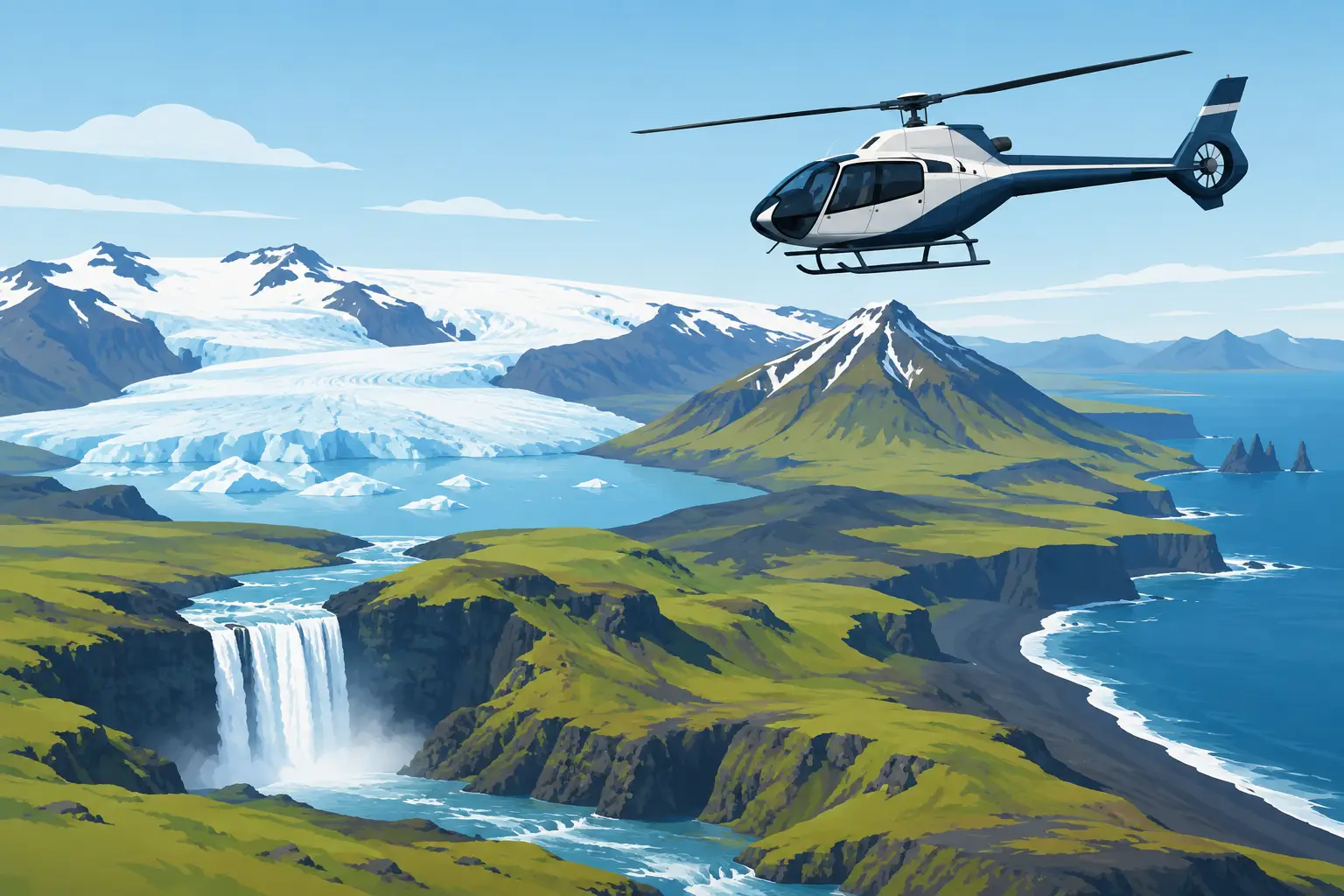
What Clothing for a Glacier Landing in Iceland?

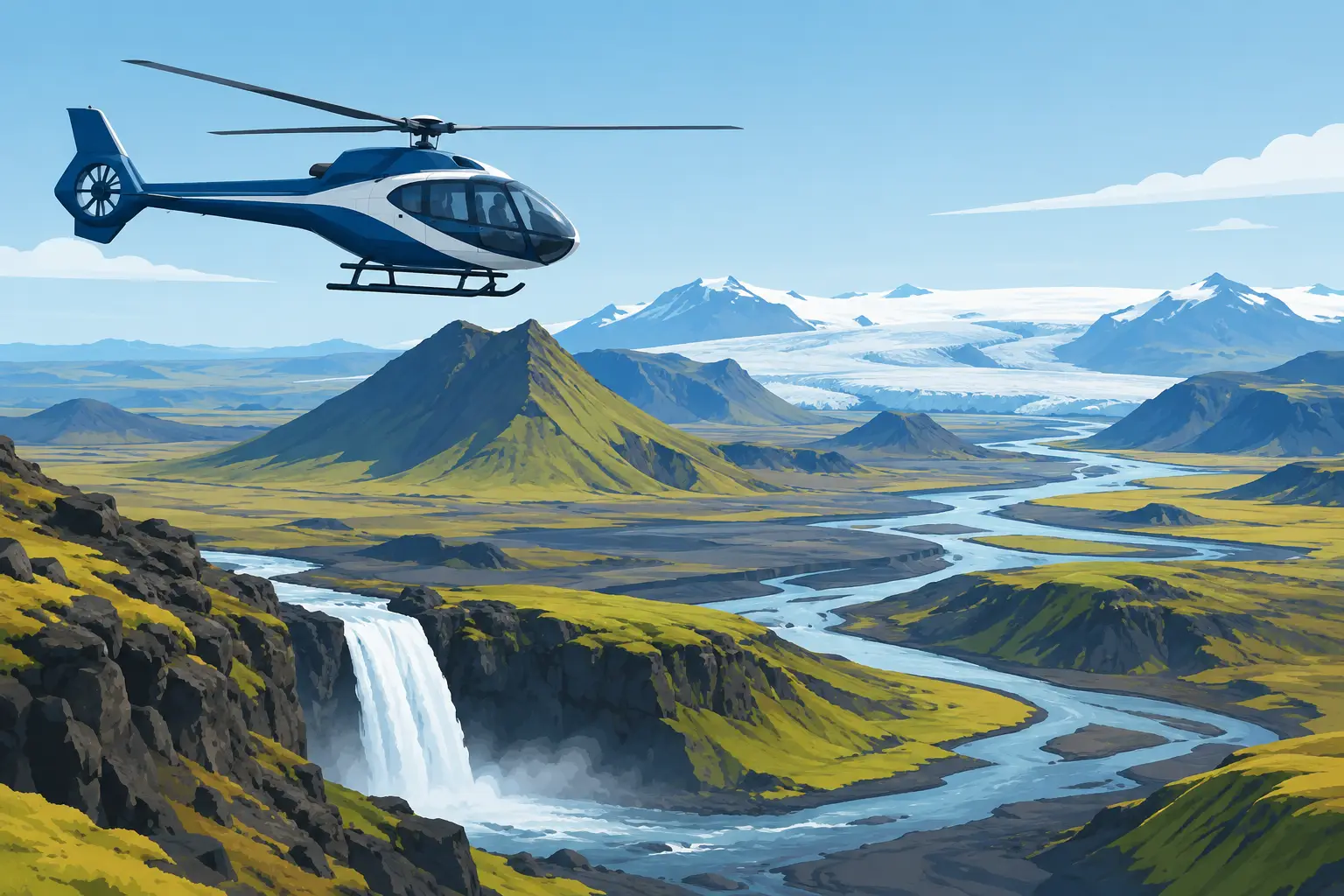
A glacier landing can begin under clear Reykjavík skies and finish in a windchill that feels markedly colder than the forecast. The question of what clothing for a glacier landing is less about looking expedition-ready and more about staying comfortable enough to enjoy the moment: stepping out of the helicopter, hearing the rotors fade, and taking in an immense field of blue ice and volcanic peaks.

Icelandic conditions change quickly, particularly at elevation. A premium helicopter experience removes hours of driving and hiking, but it does not remove the realities of a glacier environment. The right clothing keeps you warm, mobile, and ready for photographs without overpacking or struggling with bulky gear in the cabin.

What clothing for a glacier landing: start with layers

The best approach is a three-layer system that you can adjust before departure, during the flight, and after landing. You may be warm at the departure point, especially on a bright summer day, then feel the temperature drop as the helicopter climbs toward ice and snow.

Start with a lightweight or midweight base layer that moves moisture away from your skin. Merino wool and technical synthetic fabrics are both excellent choices. Avoid cotton for this layer. Cotton can feel comfortable in town, but once it becomes damp from rain, snow, or perspiration, it loses insulating value and can leave you chilled.

Add an insulating mid-layer, such as a fleece, wool sweater, or lightweight insulated jacket. This is often the layer that makes the difference on the glacier. For summer trips, a medium fleece may be enough beneath a proper shell. In spring, fall, or colder conditions, a warmer insulated layer provides more margin for changing weather.

Finish with a windproof, waterproof outer jacket. Wind matters as much as temperature on a glacier landing, and a shell with a hood gives you a useful extra barrier when conditions turn breezy. Choose one that is roomy enough to fit over your insulating layer without restricting your arms or shoulders.

For your lower half, wear hiking pants, soft-shell pants, or other durable trousers that allow easy movement. Waterproof over-pants are a smart addition when rain, wet snow, or strong wind is expected. Jeans are rarely the right choice. They are heavy, slow to dry, and uncomfortable when cold or damp.

Footwear that works on glacier ice and uneven ground

Sturdy, closed-toe footwear is essential. Waterproof hiking boots with a supportive sole are the strongest option for most glacier landings. They help keep your feet warm and dry while providing traction on uneven, snowy, or rocky terrain near the landing area.

Ankle support is helpful, but comfort matters too. Do not make a glacier day the first outing for brand-new boots. Wear footwear that has already been broken in, with enough space for warm socks without squeezing your toes. Tight boots can make feet colder surprisingly fast.

Choose wool or technical hiking socks, ideally with a spare pair available back at your accommodation or in your vehicle. Skip thin fashion socks and smooth-soled sneakers. Even if the helicopter landing is brief and conditions appear calm, glacier surfaces and surrounding moraine can be slick, wet, or irregular.

Depending on the exact destination, season, and ground conditions, your flight crew may provide or recommend additional traction equipment. Follow crew guidance closely. A glacier is a remarkable place to visit, but it is still a dynamic natural environment where local operating decisions come first.

Do not overlook hands, head, and eyes

Small accessories have an outsized effect on your comfort. Bring warm gloves that let you hold a camera or phone while protecting your hands from wind. Thin liner gloves beneath insulated gloves work well if photography is a priority, since you can remove the outer pair briefly without exposing bare fingers.

A beanie or close-fitting wool hat is highly recommended, even in summer. It fits easily into a pocket during the flight and becomes valuable as soon as you step onto the ice. A neck gaiter or scarf can also make windy conditions much more pleasant, though it should be secured so it cannot blow loose around the aircraft.

Sunglasses are not optional on a bright day. Sunlight reflecting off snow and ice can be intense, and UV exposure remains a consideration even when the air feels cold. Polarized sunglasses can improve contrast and help you see the texture of the glacier, but any good-quality pair with UV protection is useful.

Sunscreen belongs in the plan as well. Apply it to exposed skin, including the underside of your chin and nose, where reflected light can reach areas travelers often miss. In Iceland, cool temperatures can disguise how much sun exposure you are receiving.

Dress for the season, not the calendar alone

Summer in Iceland does not guarantee warm glacier conditions. June through August can bring pleasant temperatures at lower elevations, yet a landing on ice may still call for a fleece, shell, gloves, and hat. Summer travelers often make the mistake of dressing for a city walk rather than for the destination at the end of the flight.

During spring and fall, plan for colder temperatures, stronger winds, and more variable precipitation. A warmer insulated jacket, thermal base layer, and waterproof pants become increasingly worthwhile. Winter calls for the most complete cold-weather setup: warm base layers, substantial insulation, waterproof outerwear, insulated gloves, and reliable boots.

The weather on the day is the deciding factor. Iceland’s forecasts are useful, but conditions can differ between the departure location and a glacier landing site. Your flight team will assess operating conditions and can advise on practical expectations for your route. If you have questions before a private itinerary or scenic tour, ask. It is far easier to add a warm layer to your luggage than to wish for one after landing.

Keep aircraft comfort in mind

Helicopter cabins reward practical choices. Avoid oversized coats that are difficult to move in, long loose scarves, or accessories that can interfere with a headset or blow around in rotor wash. A streamlined layered outfit is more useful than a single heavy ski parka, particularly if the day begins indoors or includes a transfer to the departure point.

Wear your outer layers rather than relying on a large bag. Space can be limited, and you will want your jacket, gloves, and sunglasses available immediately. Keep cameras, phones, and small personal items secure. Cold temperatures can reduce phone battery life, so carrying a fully charged device and keeping it in an inside pocket when not in use is sensible.

For photographers, gloves with grip and a jacket with secure pockets are especially helpful. The best images often happen quickly, when light breaks through cloud or the glacier’s crevasses reveal unexpected color. You do not want to spend that moment searching through an overfilled backpack.

A practical glacier-landing outfit

For most travelers, a dependable outfit includes these essentials:

  • Moisture-wicking base layer and warm mid-layer
  • Waterproof, windproof jacket with a hood
  • Hiking pants or soft-shell pants, plus waterproof over-pants if needed
  • Waterproof hiking boots and warm wool socks
  • Gloves, beanie, sunglasses, and sunscreen

This combination is adaptable rather than excessive. If the day is unusually mild, you can remove the mid-layer before the flight. If the wind rises or snow begins, you have the protection to remain present for the experience instead of rushing back toward the cabin.

What not to wear for a glacier landing

Fashion-first clothing can compromise a memorable landing. Avoid open-toe shoes, sandals, high heels, leather-soled boots, thin leggings worn alone, cotton hoodies as your only warm layer, and jeans in wet or cold conditions. These items may work for Reykjavík restaurants or hotel lounges, but they are poorly suited to ice, wind, and shifting weather.

You also do not need a full mountaineering wardrobe for a standard helicopter glacier landing. Technical climbing gear, crampons, and specialist equipment are only appropriate when specifically required for a guided activity. For a scenic landing, well-chosen layers and proper footwear are usually the right balance of comfort, safety, and ease.

A glacier seen from above is unforgettable. Dressed for the conditions, you can step onto the ice with confidence and give the landscape your full attention – exactly as it deserves.

How to Sling Load Cargo: Plan a Safe Flight

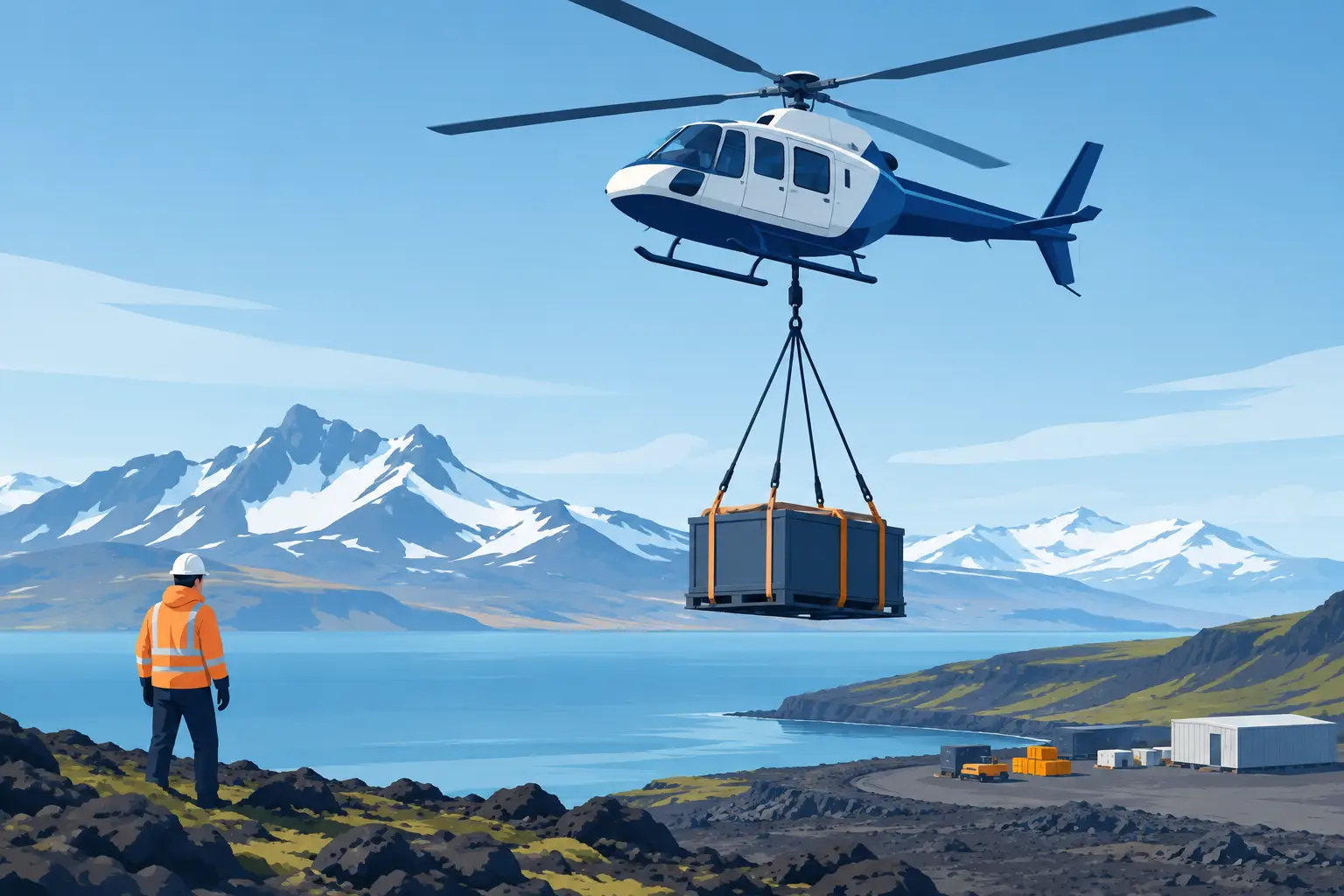
A remote worksite in Iceland can be close on a map and still be unreachable by road. A bridge may be out, a glacier route may be impassable, or a mountain site may need equipment delivered before a short weather window closes. Knowing how to sling load cargo starts with understanding that this is not simply freight attached beneath a helicopter. It is a carefully planned aviation operation in which the aircraft, load, terrain, weather, and ground team must work as one.

For production teams, construction contractors, lodge operators, utility crews, and specialist expeditions, helicopter sling work can reduce days of difficult ground transport to a focused aerial lift. It also carries serious operational responsibility. The right result is not merely getting a load from one point to another. It is delivering it efficiently, without compromising the aircraft, people on the ground, or Iceland’s sensitive landscapes.

How to Sling Load Cargo Begins Before Takeoff

Every safe sling operation begins with a detailed lift assessment. An operator needs to know exactly what is being moved, its verified weight, its dimensions, its center of gravity, and whether it contains fuel, batteries, pressurized items, loose materials, or other restricted cargo. Estimates are not enough. A small change in weight or a poorly secured item can alter the entire lift plan.

The route matters just as much as the cargo. Iceland’s terrain creates real operational variables: steep valleys, uneven lava fields, glacial outwash plains, high winds around ridgelines, and rapidly changing visibility. A load that is straightforward to lift from a level yard may require a different approach at a remote mountain landing area.

The aircraft’s available lifting capability is assessed for the actual conditions on the day, not a brochure figure. Altitude, air temperature, fuel requirements, distance, terrain clearance, and forecast weather all affect what can be carried safely. Sometimes the best plan is one larger lift. At other times, splitting the cargo into smaller, stable loads is the safer and more efficient choice.

The Load Must Be Ready for Flight

A helicopter can only carry a load that has been properly prepared by qualified personnel. Cargo should be packaged, contained, and secured so that nothing can shift, detach, or create debris during flight. Long, broad, or irregular items deserve particular attention because airflow can make them behave very differently from compact equipment.

The rigging system is selected and inspected for the specific cargo and operation. Approved lifting points, compatible slings, hardware, and protective measures are essential. The goal is to create a stable, balanced load that remains predictable from pickup through setdown. If a load is not suitable for external carriage in its current form, it may need a crate, frame, lifting net, or other engineered solution before the flight can proceed.

This is where experienced planning prevents costly delays. A generator, equipment crate, building material bundle, camera platform, or remote-site supply package each presents different handling considerations. The cargo supplier and ground crew should provide accurate specifications early, allowing the operator to identify requirements before the helicopter arrives on site.

Ground Crew Coordination Is Part of the Lift

Sling loading is a team operation. The pilot cannot safely manage the external load, aircraft position, obstacles, and ground activity alone. A trained ground crew is needed at both the pickup and delivery locations, with a clear understanding of roles, communication methods, exclusion zones, and stop-work authority.

Before the aircraft approaches, the site should be checked for loose objects, people, vehicles, animals, overhead wires, unstable footing, and obstacles that could affect the lift. Rotor wash is powerful. It can move lightweight materials, create dust or snow clouds, and make unsecured items hazardous. The loading area should be controlled well before the helicopter arrives.

Only designated, trained personnel should work near the aircraft during load attachment or release. Everyone else should remain outside the established safety area. Crews must also be prepared to pause immediately if communications are unclear, the load is not behaving as expected, or weather conditions begin to deteriorate. A delayed lift is always preferable to a rushed one.

Weather and Terrain Decide What Is Possible

Iceland is extraordinary from the air because it is dynamic on the ground. Weather can change quickly between Reykjavík, the Highlands, the south coast, and northern fjords. Wind direction at the departure point may bear little resemblance to conditions at a remote drop site.

For sling operations, wind affects more than comfort. It can influence load movement, approach options, rotor wash, and the ability to maintain safe separation from terrain. Visibility, precipitation, turbulence, cloud base, and surface conditions must also be evaluated. Snow, volcanic sand, wet ground, and loose gravel can each affect the safety of a pickup or delivery zone.

A professional operator builds flexibility into the schedule. That can mean selecting an alternate landing area, moving at a different time of day, staging cargo closer to the site, or waiting for a safer weather opportunity. Clients should view that flexibility as part of the service, not a setback. In demanding environments, sound decisions are often the difference between an efficient project and an avoidable interruption.

Match the Operation to the Cargo

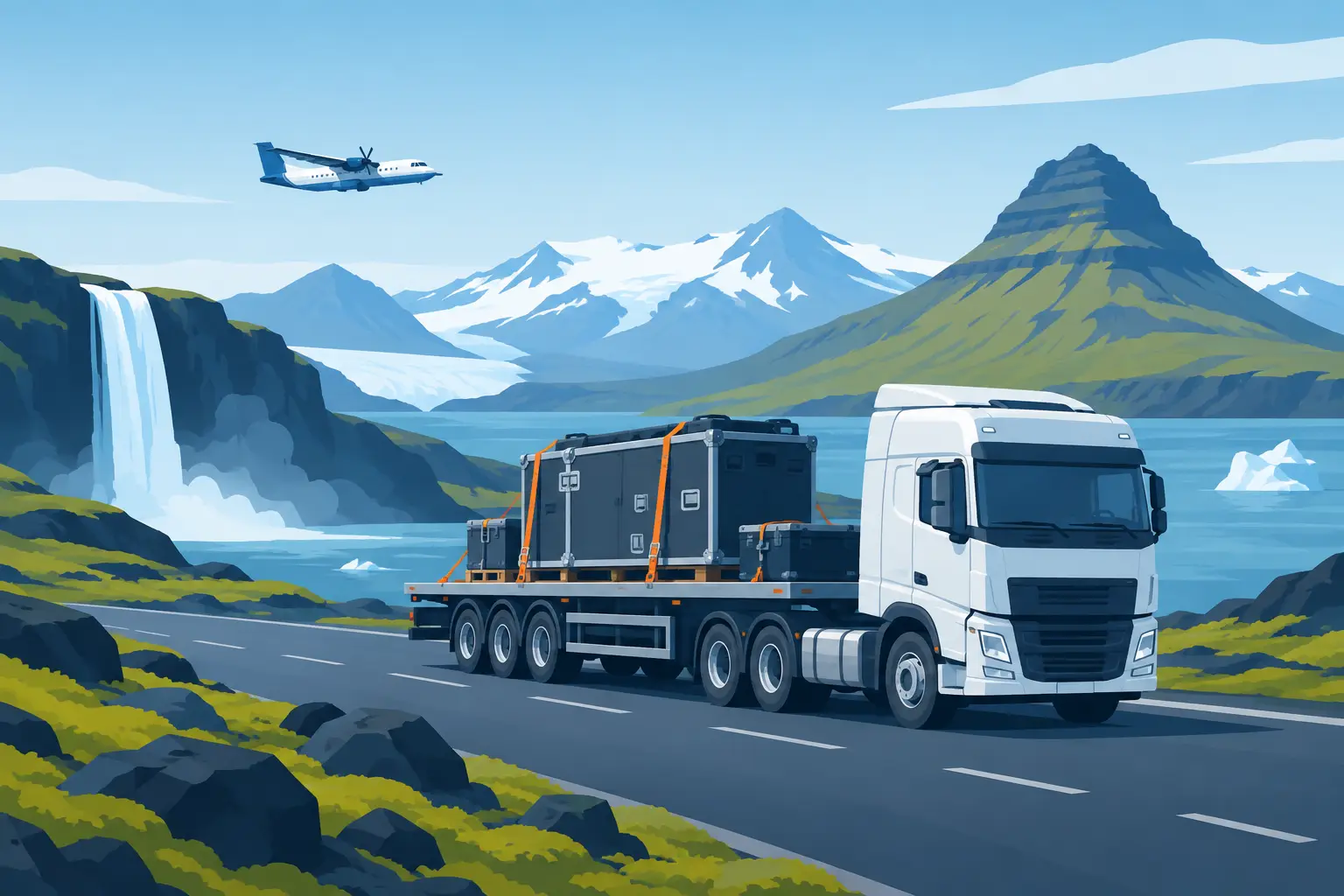
Not every shipment belongs on a sling. Fragile items, sensitive electronics, unusually aerodynamic objects, hazardous materials, or cargo that cannot be safely rigged may be better suited to internal carriage, road transport, fixed-wing freight, or a combination of methods. The fastest-looking option is not always the best operational choice.

External loads are especially valuable when access is the challenge. They can support remote construction work, utility projects, field research, filming logistics, mountain operations, and deliveries to locations where roads do not exist or would require significant time and disruption. They can also reduce ground impact in areas where driving heavy equipment across fragile terrain is undesirable.

The trade-off is that sling work requires more site preparation and coordination than a conventional passenger flight. Clear cargo information, trained personnel, suitable weather, and approved lift procedures are all non-negotiable. That preparation protects the timeline as much as it protects the people involved.

What Clients Should Prepare Before Requesting a Lift

The most useful first conversation includes the cargo type, confirmed weight, dimensions, photos, pickup point, delivery point, preferred dates, and any site restrictions. It also helps to explain whether the cargo needs to be placed precisely, whether crews will be present at both ends, and whether the job involves multiple rotations.

For commercial projects, allow time for an operational review rather than treating the flight as a last-minute transport booking. Remote locations may require site reconnaissance, weather contingencies, cargo modifications, permissions, or additional ground support. A tailored plan can be built around the project schedule, but it must leave room for aviation realities.

HeliAir supports specialized helicopter operations across Iceland, where each lift is planned around the aircraft, the site, and the purpose of the cargo. Whether the requirement is a single piece of equipment for a remote property or repeated lifts for a technical project, the planning process should be specific to the operation rather than copied from a standard template.

A Better Way to Think About Sling Work

The question is not only how to move cargo beneath a helicopter. The better question is how to create a controlled lift that respects the load, the landscape, and the conditions of the day. When the cargo is properly prepared and the operation is led by qualified aviation professionals, sling work becomes a practical way to reach places that Iceland’s roads cannot.

Bring accurate cargo details to the first planning call, be ready to adapt to the weather, and let the flight team determine the safest configuration. That is how a remote delivery becomes a well-executed part of the project rather than its biggest uncertainty.

7 Best Helicopter Picnic Sites in Iceland

A private picnic in Iceland should feel earned: rotor blades fade into the distance, the air turns utterly quiet, and your table is set where no road can take you. The best helicopter picnic sites are not simply the country’s most photographed places. They are landing areas that combine extraordinary scenery with the practical realities of terrain, wind, seasonal access, land permissions, and a safe approach.

For couples, families, private groups, and photographers, a helicopter picnic creates time that Iceland’s long driving routes often take away. A morning can include a glacier landing, a waterfall valley, and a highland meal, with the route adjusted for the conditions of the day. The right destination depends on whether the priority is dramatic scale, privacy, easy terrain, or a particular landscape on your Iceland wish list.

What Makes a Great Helicopter Picnic Landing?

A spectacular view is only the starting point. Iceland’s weather changes quickly, and the most beautiful ridge is not necessarily an appropriate place to land. A professional operator assesses wind direction, cloud ceiling, visibility, surface conditions, nearby terrain, passenger comfort, and the current rules governing the area before confirming a landing.

The finest picnic experiences also leave room for the moment itself. A 10-minute stop may be enough for photographs, but a genuine picnic needs a landing area where guests can step out comfortably, take in the view without rushing, and enjoy food and drinks protected from the wind where possible. On a private charter, the route can be designed around this balance rather than following a fixed sightseeing circuit.

Iceland also rewards flexibility. A low cloud layer over one glacier or strong winds in a valley may mean shifting to another remarkable location nearby. That is not a compromise. It is how experienced local flight planning finds the best conditions available on the day.

7 Best Helicopter Picnic Sites in Iceland

1. Langjökull glacier and the western highlands

Langjökull delivers the classic Iceland helicopter picnic scene: a broad white glacier, dark volcanic mountains, and a horizon that seems to run without end. In favorable conditions, a snow or ice landing can be an exceptional choice for travelers who want the contrast of champagne-colored light, crisp air, and the immense blue-white surface of the glacier.

This is best for guests who want a distinctly Arctic experience and do not mind colder temperatures. Even in summer, glacier conditions require warm layers, sturdy footwear, and realistic expectations about wind. The reward is a setting few visitors experience beyond a distant viewpoint.

2. Háifoss and the Þjórsárdalur region

Háifoss is one of Iceland’s great waterfall landscapes, dropping into a deep gorge surrounded by highland terrain. From the air, the scale becomes clear: braided rivers, mossy slopes, lava formations, and the waterfall’s vertical force all appear in one frame. A carefully selected nearby landing can create a memorable picnic stop without placing guests in fragile or exposed terrain.

This is a strong choice for travelers who want a waterfall setting with less of the crowd pressure found at Iceland’s most visited roadside attractions. Conditions matter greatly here, particularly wind around the gorge and the season’s ground stability, but the visual payoff is immense.

3. Kerlingarfjöll geothermal mountains

Kerlingarfjöll looks almost painted from above. Rhyolite mountains bring shades of rust, gold, ocher, and red, while steam rises from geothermal areas and snow often lingers in sheltered folds well into summer. It is one of the most visually distinctive highland destinations for a private landing.

A picnic here is best approached as a highland expedition with polished service, rather than a casual stop. The terrain is remote, the weather can turn sharply, and sensitive geothermal features must be respected. When conditions allow, it is an extraordinary option for guests seeking color, solitude, and a landscape unlike the familiar black-sand coast.

4. A volcanic landscape near Eyjafjallajökull

The Eyjafjallajökull region gives a helicopter picnic an unmistakably Icelandic sense of drama. Glaciers, volcanic ridges, river plains, and views toward the south coast can all be part of the route. Depending on conditions and permissions, a landing in the wider area offers a powerful place to pause above terrain shaped by fire and ice.

This region works especially well for guests who have limited time but want to see several Icelandic elements in a single flight. The experience can pair aerial views of waterfalls and coastline with a more secluded inland landing. Exact landing locations should always be selected on the day, as weather around glacier-covered volcanoes deserves close attention.

5. Þórsmörk’s mountain valleys

Þórsmörk, or Thórsmörk, lies between glaciers in a landscape of steep mountains, glacial rivers, and birch-covered slopes. It is a compelling alternative to an exposed glacier picnic because the surrounding valleys can feel intimate and sheltered, while still delivering monumental views.

For a family group or travelers who prefer a greener setting, this can be one of the most comfortable helicopter picnic choices. The terrain is still wild, and river channels and mountain weather shape flight planning, but the contrast between lush vegetation and glacier-capped peaks makes the area particularly inviting in summer.

6. Remote black-sand coast near the south shore

Iceland’s south coast is often seen from crowded overlooks, but a helicopter reveals its true scale. Long black beaches, surf lines, glacial outwash plains, and sea stacks make a striking setting for a private coastal stop where an approved landing is available.

A beach picnic is not always the best choice in high wind, and tidal conditions must be respected. When the weather is settled, however, it offers a more relaxed and cinematic atmosphere than a high-altitude landing. This is an excellent option for proposals, milestone celebrations, or editorial-style photography, especially in the softer light of early morning or late evening.

7. Tröllaskagi and the mountains of North Iceland

For guests departing from Ólafsfjörður, the Tröllaskagi Peninsula offers deep valleys, sharp peaks, snowfields, and a sense of remoteness that feels far from the main tourist routes. The mountain terrain around North Iceland can provide beautiful options for a tailored picnic, from elevated viewpoints to quieter valley locations selected for the day’s conditions.

This area is ideal for travelers already exploring the north, as well as private groups interested in combining scenic flying with heli-skiing support, fishing access, or a custom journey farther into the highlands. Seasonal snow, wind, and cloud can all influence the route, but the peninsula’s varied terrain gives an experienced crew useful alternatives.

Plan the Picnic Around the Season, Not Just the View

Summer offers longer days, greener valleys, and easier access to many highland regions. It is often the best season for a leisurely picnic with a broader choice of ground conditions. The trade-off is that popular areas can be busier, while afternoon winds may influence timing.

Winter brings low-angle light, snow-covered mountains, and a more private feel, but daylight is limited and weather windows can be narrower. A winter helicopter picnic can be exceptional, particularly in North Iceland or on a glacier, yet it should be planned with flexibility rather than a fixed schedule.

Spring and fall are often underrated. They can offer fewer visitors, dramatic color, and crisp visibility, though changing ground conditions may limit where a helicopter can land. The most successful private itineraries prioritize a desired landscape type – glacier, waterfall, coast, geothermal highlands, or mountains – then allow the captain to choose the precise site safely.

Details That Make the Experience Feel Effortless

For a premium helicopter picnic, small choices matter. Ask for a realistic amount of time on the ground, not simply the longest flight. A 20- to 40-minute landing can be ideal for a relaxed toast, light meal, photography, and time to absorb the landscape without turning the day into a race against the weather.

Dress for the landing, not the departure point. Windproof outer layers, warm mid-layers, gloves, sunglasses, and closed-toe footwear are sensible year-round. A helicopter cabin may be comfortable, but a glacier or highland viewpoint has its own climate.

Food should suit the setting. A well-packed picnic with local flavors, warm drinks in colder months, and minimal waste is more practical than an elaborate spread that struggles in the wind. If there is a celebration involved, share that early in the planning process so the timing, landing duration, and service details can be arranged properly.

HeliAir can tailor private flights from Reykjavík or Ólafsfjörður around the landscape, occasion, and time available. The goal is not to force a picnic into a predetermined stop. It is to create a landing that feels as if Iceland opened just for your group.

The best site is the one that meets the day on its own terms: safe to reach, beautiful in the present light, and quiet enough that the memory holds long after the helicopter has lifted away.