How Long Is an Iceland Helicopter Tour?

Some guests want a fast scenic flight between other plans. Others want to land on a glacier, circle a volcano, and turn the day into a private expedition. If you are asking how long is an Iceland helicopter tour, the honest answer is that it can be anything from a short sightseeing experience to a full-day custom journey, depending on where you want to go, how many landings you want, and what Iceland’s weather allows that day.

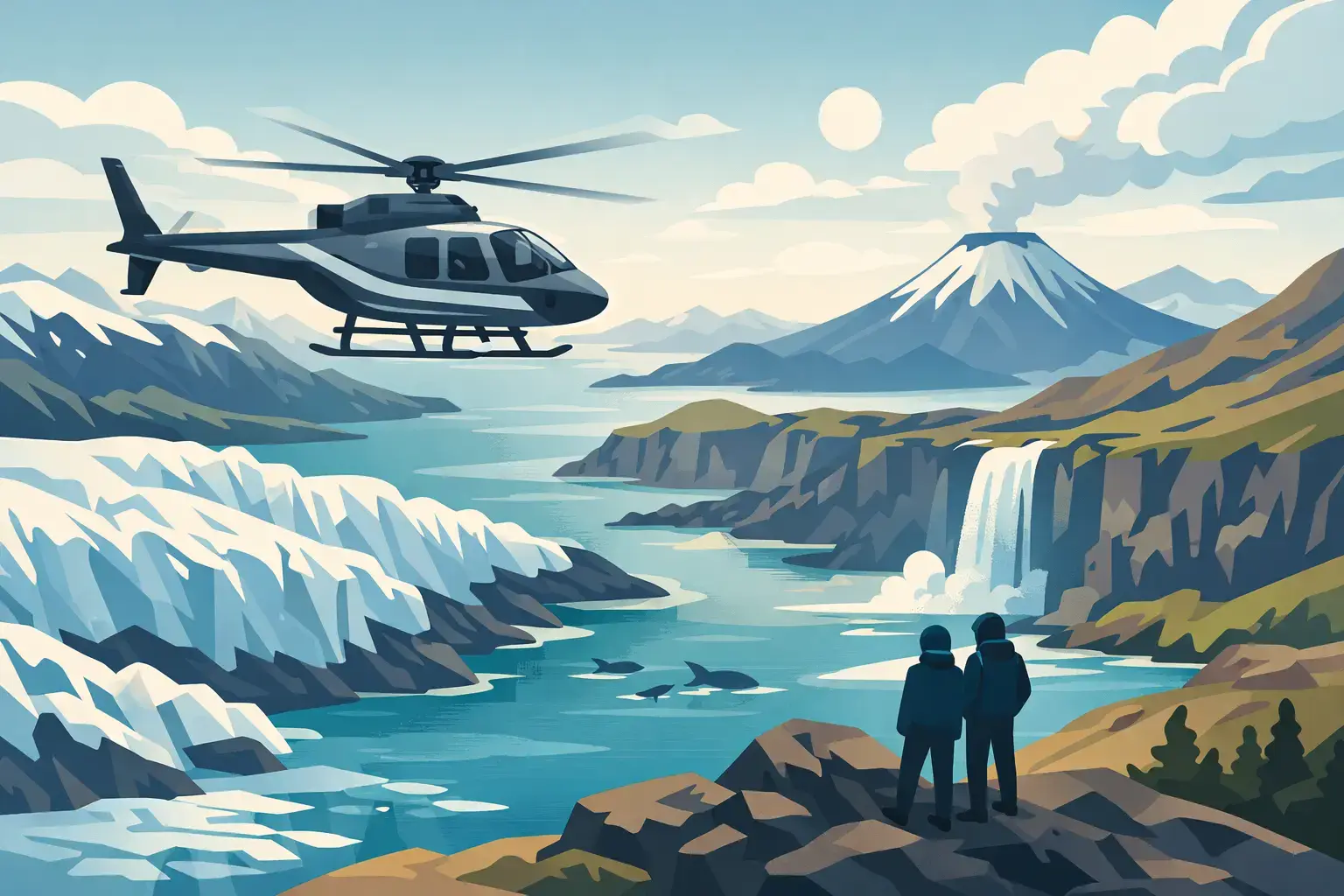
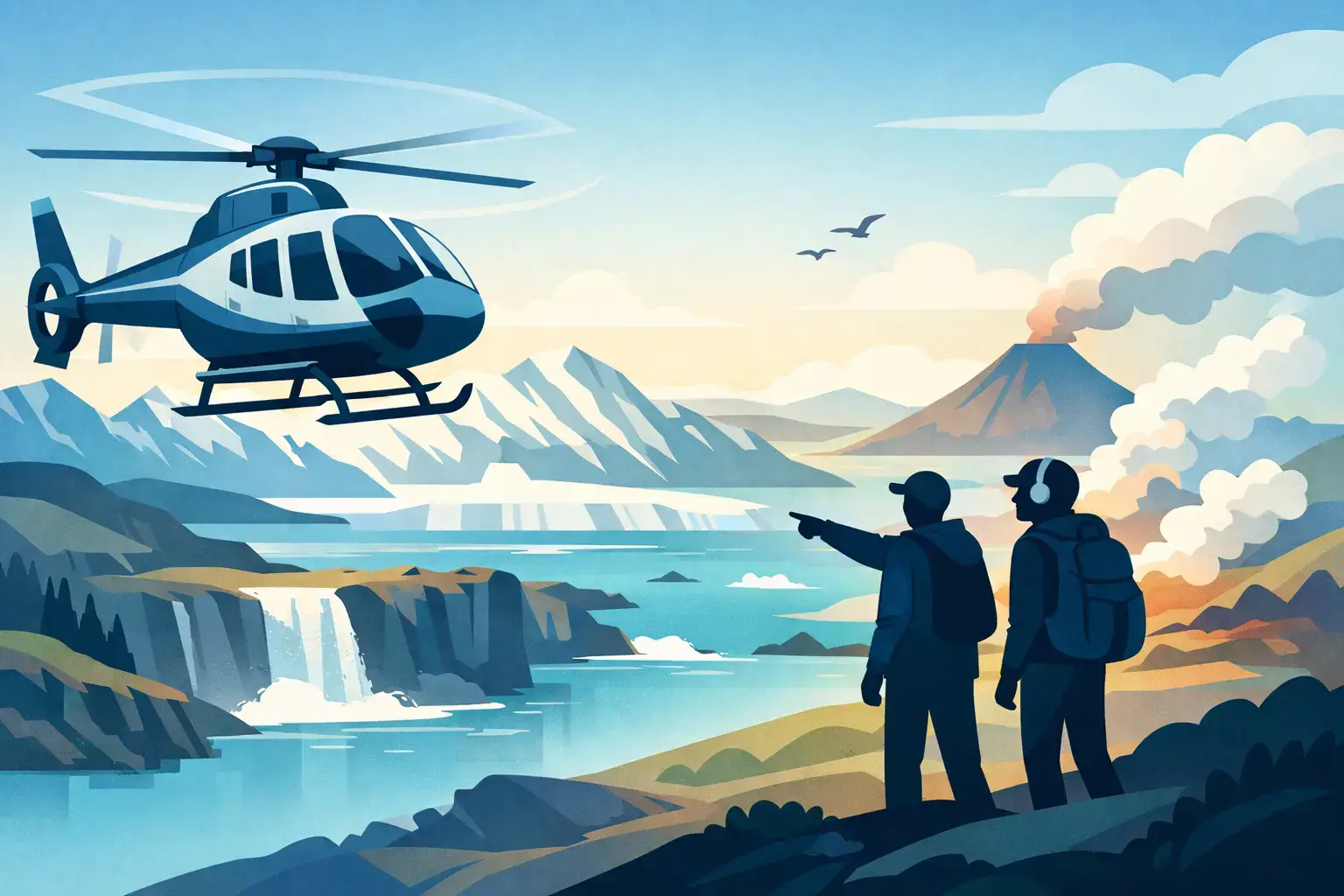
That range is part of the appeal. Helicopters open up Iceland in a way that road travel simply cannot. Instead of spending hours driving to reach one viewpoint, you can lift off from Reykjavík or North Iceland and spend your time above waterfalls, lava fields, black sand coastlines, glaciers, and remote highland terrain that most visitors never reach.

How long is an Iceland helicopter tour, really?

Most Iceland helicopter tours fall into a few broad timing categories. Short scenic flights are often around 30 to 45 minutes. Mid-length experiences usually run about 1.5 to 2 hours. Longer premium sightseeing tours can stretch to 3.5 hours. Private charters and custom itineraries can last half a day or a full day when the goal is not just to fly, but to land in several locations and shape the day around photography, proposals, family travel, or access to a very specific destination.

The key detail is that advertised duration usually refers to total tour time, not only time in the air. If your itinerary includes a mountaintop landing, time on the ground for photos, or a stop near a geothermal area, that stop is part of the experience and part of the total timing. For guests comparing options, this matters more than the headline number.

A 40-minute flight can be thrilling if your priority is a quick aerial view. A 2-hour tour with one or two landings often feels far more immersive. A 3.5-hour itinerary starts to feel like a serious Iceland expedition, especially if the routing includes multiple landscapes in one trip.

What affects helicopter tour length in Iceland?

Distance is the most obvious factor, but it is not the only one. Iceland looks compact on a map until you factor in mountains, glaciers, weather systems, and the simple fact that many of the most dramatic places are far from main roads.

If you are flying close to Reykjavík for a volcanic landscape or coastal sightseeing route, the experience can stay relatively short while still delivering major views. If you want to reach deeper highland areas, larger glacier systems, or more remote northern terrain, the total time naturally increases.

Landings also change the structure of the day. Some guests want a pure scenic flight with continuous views from takeoff to landing. Others want the full premium experience – stepping out beside a glacier, standing above a waterfall basin, or taking photos from a ridge that would otherwise require a long overland approach. Every landing adds depth, but it also adds time.

Then there is weather. Iceland rewards flexibility. Wind, visibility, and cloud cover can affect routing, available landing spots, and exact flight time. That is not a drawback of helicopter touring here. It is simply the reality of operating safely in a landscape shaped by the North Atlantic. An experienced local operator plans around that reality and adjusts the itinerary to deliver the best possible flight for the conditions.

Typical tour lengths by experience type

A short helicopter tour is ideal if you want a premium add-on rather than a full-day commitment. These flights are often chosen by couples, families, and first-time visitors who want to see Reykjavík’s surroundings, volcanic terrain, or nearby mountain views from above without giving up the rest of the day. They are efficient, visually dramatic, and often enough to understand why Iceland changes completely when seen from the air.

A 1.5-hour to 2-hour tour is where many guests find the balance they want. It gives enough time to move beyond the immediate city area, take in a wider mix of landscapes, and often include a landing. This is a strong choice if you want the helicopter experience to feel substantial rather than introductory.

A 3-hour to 3.5-hour tour is better suited to travelers who see the flight as a central part of the trip, not a side activity. At that length, you can combine several regions or visual contrasts in one outing – lava and ice, waterfalls and black sand, highlands and coast. For photographers and private groups, this extra time makes a real difference because the experience has room to breathe.

Full-day helicopter experiences are in a category of their own. These are not standard sightseeing loops. They are custom aviation days built around access. You might fly to a remote highland valley, continue to a glacier edge, stop near a waterfall, and tailor the schedule around a special occasion or creative project. For guests who value exclusivity and want to reach places that feel genuinely removed from the usual Iceland circuit, a full-day itinerary is hard to match.

How much actual flight time should you expect?

This is where expectations matter. If a tour is sold as 90 minutes, not every minute will necessarily be spent airborne. There is often a short briefing before departure, and if the route includes a landing, some of that time will be on the ground. That is not lost time. It is part of what turns the experience from a sightseeing ride into a private encounter with Iceland’s terrain.

If your main priority is maximizing airborne minutes, say so when planning. If your priority is standing in a place that few visitors ever reach, then a slightly longer total itinerary with planned stops may be the better fit. Neither option is better in the abstract. It depends on whether you value pure flight time or the broader shape of the experience.

Is a longer helicopter tour worth it?

Often, yes – but not for everyone. A longer flight gives you greater range, more variety, and a stronger sense of Iceland’s scale. You notice how quickly landscapes shift from green valleys to raw volcanic plateaus, from braided rivers to snow-covered peaks. That contrast is one of the reasons helicopter touring here feels exceptional.

Still, a shorter tour can be the smarter choice if your schedule is packed or if this is one premium experience among several. Some guests simply want the exhilaration of takeoff, sweeping views, and one unforgettable aerial perspective. They do not need a half-day charter to feel that.

For milestone travel, private celebrations, and travelers who want to avoid long drives, longer custom flights usually deliver more value. They can turn what would be a complicated day on the ground into a smooth, high-access experience built around exactly what you want to see.

Choosing the right tour length for your trip

If you are visiting Iceland for a short stay, a 30 to 90-minute helicopter experience can fit cleanly into the trip while still feeling special. If you are planning a luxury itinerary and want one signature activity, the 1.5-hour to 3.5-hour range is often the sweet spot. It offers enough time to reach more dramatic terrain and include a landing without committing the entire day.

If you already know you want something specific – a glacier landing, a volcano route, aerial photography time, a proposal setting, or point-to-point access with sightseeing folded in – a custom charter is usually the right answer. That is where a company like HeliAir can shape the timing around the destination rather than forcing the destination into a preset schedule.

The best way to decide is to start with what you want to experience, not with the clock. Do you want a quick taste of Iceland from above, or do you want to build a day around remote access and unforgettable landings? Once that is clear, the right duration usually becomes obvious.

A final word on timing and expectations

When people ask how long is an Iceland helicopter tour, they are usually trying to judge whether it will fit the itinerary and whether it will feel worth the investment. Both are fair questions. The answer is that helicopter tours in Iceland are flexible by design, and that flexibility is the luxury. You can keep it short and spectacular, or stretch it into a tailored journey across parts of the country that few visitors ever get to see.

If you are planning well, think less about the shortest possible flight and more about the experience you want to come away with. In Iceland, a little more time in the air often means access to a completely different world.

A Guide to Aerial Glacier Sightseeing

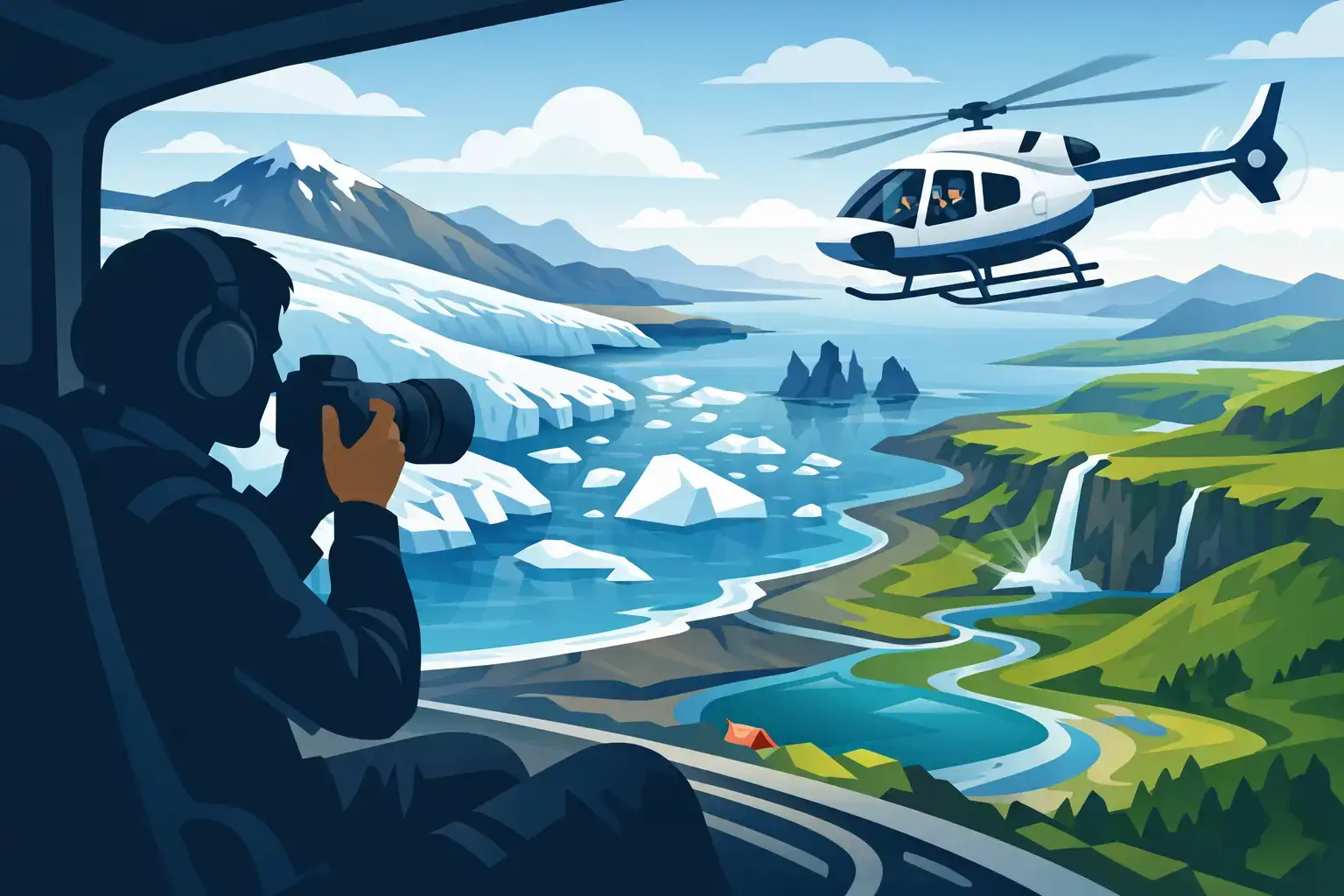
A glacier looks slow and distant from the road. From the air, it becomes something else entirely – a moving landscape of crevasses, ash streaks, blue ice, and meltwater rivers that shows you how Iceland is still being shaped in real time.

That is the real value of a guide to aerial glacier sightseeing. It is not just about booking a scenic flight. It is about understanding what you can actually see from above, how weather changes the experience, and why a helicopter often gives you a more flexible and rewarding day than a long overland route.

Why aerial glacier sightseeing is different

Iceland’s glaciers cover enormous, rugged terrain. From ground level, even a famous glacier can feel partially hidden by distance, terrain, or weather. From the air, the scale finally makes sense. You can trace the cracked white surface into black volcanic ridges, see where glacial tongues push down toward valleys, and follow braided rivers as they spread across the sand plains.

This perspective matters because glaciers in Iceland are not isolated postcard views. They sit inside a larger system of volcanoes, mountains, waterfalls, and highland routes. Aerial sightseeing reveals those relationships in a way ground travel cannot. In a single flight, you may understand how ice meets lava fields, how snowpack changes across elevation, and how remote many of these areas truly are.

For travelers who want more than a quick photo stop, the air route is often the most efficient use of time. What takes many hours by vehicle can become a focused, high-value experience with far broader visibility.

A practical guide to aerial glacier sightseeing in Iceland

The first question is not simply which glacier to see. It is what kind of experience you want. Some guests want a pure sightseeing flight with sweeping views and minimal transit time. Others want a custom helicopter day that combines glaciers with volcano craters, waterfalls, black sand coastlines, or remote highland landings.

That distinction shapes the whole trip. A shorter scenic flight usually works well if glacier viewing is one part of a packed Iceland itinerary. A longer private charter makes more sense if the glacier itself is the centerpiece and you want route flexibility based on weather and visibility.

Helicopters are especially well suited to glacier sightseeing because they offer access and adaptability. Fixed routes can be excellent, but Iceland’s conditions change quickly. With the right planning, a helicopter experience can be built around the day’s best visibility and the landscapes that are presenting well.

What you will actually see from the air

People often imagine glaciers as broad white sheets. In reality, the most memorable aerial views usually come from contrast. Fresh snow can soften the surface, but exposed glacier ice shows texture, depth, and movement. You may see dark volcanic ash layered into the ice, deep fractures opening into blue channels, and outwash plains spreading far beyond the glacier edge.

If conditions are clear, the surrounding geography becomes part of the spectacle. Peaks rise out of the ice cap. River systems cut through valleys. In some parts of Iceland, glacial areas are closely tied to volcanic systems, which adds another visual layer entirely.

This is why the best flights are rarely about one isolated moment. They are about sequence – departing the city or regional base, crossing changing terrain, approaching the ice field, circling key features, and seeing how the landscape opens up when you are no longer confined to a road.

Helicopter or plane?

For glacier sightseeing, it depends on your priorities. Airplanes can cover long distances efficiently and can be ideal for broader scenic circuits. Helicopters, however, are often the premium choice for travelers who want a more intimate and flexible experience.

A helicopter can fly lower where conditions allow, approach terrain with greater precision, and in some cases include landings that turn a scenic flight into a multi-part experience. If your goal is simply to say you saw a glacier from above, either can work. If you want access, customization, and the possibility of combining several dramatic locations in one outing, a helicopter is usually the stronger option.

When to go for the best glacier views

Season affects what you see, but there is no single perfect month for every traveler. Summer offers longer daylight hours and easier trip planning, especially if you want to combine glacier sightseeing with other activities. The landscapes can look more varied as snow recedes and meltwater systems become more visible.

Winter can be extraordinary for contrast and atmosphere. Low light, fresh snow, and sharper seasonal definition can create unforgettable views. The trade-off is that weather can be more restrictive, and flexibility matters more.

Shoulder seasons often appeal to experienced travelers because they can offer a balance of light, texture, and fewer crowds. The right answer depends on what you value most – maximum daylight, strong seasonal drama, or the best chance to build a broader custom itinerary.

Weather is part of the experience

In Iceland, weather is not a side note. It directly shapes flight quality, visibility, and routing. Clouds can sit low on mountain shoulders while nearby areas remain clear. Wind can affect access to certain regions. Conditions may improve quickly, or they may require a complete change of plan.

That is why aerial glacier sightseeing works best with an operator who knows local flying conditions and treats weather decisions as part of good service, not as a complication. Premium aviation in Iceland is not about forcing a fixed plan. It is about reading the day well and making smart choices that protect both safety and the quality of the experience.

For guests, the practical takeaway is simple: leave room for flexibility. If your Iceland schedule allows a little movement, you improve your chances of getting the right day rather than just the booked day.

How to choose the right flight experience

A good guide to aerial glacier sightseeing should help you avoid a common mistake: choosing based only on duration. Flight length matters, but route design matters more.

A shorter flight with immediate access to strong glacier terrain can be more impressive than a longer one with extended transit. On the other hand, if you want a once-in-a-lifetime day, a longer private itinerary often delivers the best value because it can combine multiple headline landscapes in one smooth experience.

Couples may prefer a private scenic charter with a landing component. Families often appreciate a route that balances excitement with comfort and clear sightseeing value for every age group. Photographers usually need timing, window positioning, and route planning to be treated as priorities rather than afterthoughts.

This is where a bespoke approach stands out. In Iceland, the best flights are often the ones shaped around your actual goals instead of a generic sightseeing checklist.

Questions worth asking before you book

Ask what kind of glacier views the route typically delivers, whether the itinerary can adapt to conditions, and whether there are landing options. Ask how much of the total time is true sightseeing versus transit. If photography matters, ask about seating and window considerations.

You should also be realistic about comfort and expectations. Helicopter sightseeing feels exclusive and efficient, but it is still real aviation in a country known for active weather. The best operators are transparent about that.

Getting more from the flight

If you want the experience to feel polished rather than rushed, dress for changing conditions even if you are not planning a landing. Dark clothing can help reduce window reflections in photos. A phone camera can work well, but if you bring dedicated gear, keep it simple enough that you spend time looking out rather than managing equipment.

It also helps to decide before takeoff whether this is a photography flight or a pure sightseeing one. Trying to do both equally can leave you slightly dissatisfied with each. Some guests want the shot. Others want the memory of seeing Iceland’s ice fields from above without interruption. Neither choice is wrong, but knowing your priority improves the experience.

For travelers looking at premium options in Iceland, HeliAir is positioned for exactly this kind of planning – combining scenic access with the flexibility to shape a route around conditions, timing, and the wider landscape you want to see.

Why glacier sightseeing from above stays with people

Some luxury travel experiences are about comfort first. Aerial glacier sightseeing is different. Yes, it is exclusive. Yes, it saves time. But what people remember is the perspective shift. You stop seeing Iceland as a series of stops on a map and start seeing it as one connected, elemental landscape.

That is why the best aerial glacier days are rarely the most scripted ones. They are the ones where the route, the light, and the terrain come together and you realize the glacier is not just a destination. It is part of a much larger story unfolding below you.

If you are going to make room for one truly elevated experience in Iceland, make it the one that changes how you see the whole country.

Private Flight Versus Driving Iceland

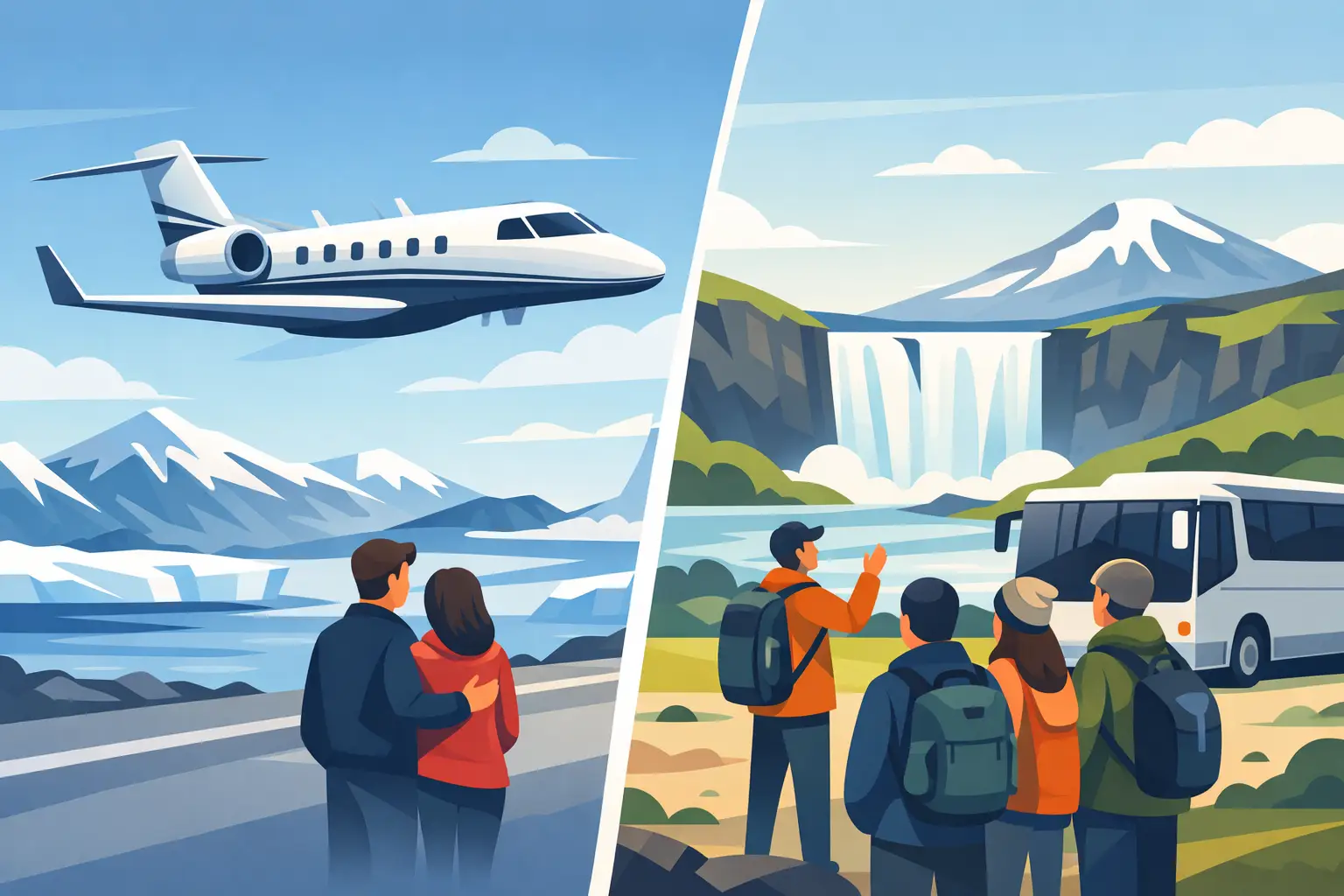
A five-hour drive in Iceland can feel short on a map and very long in real life. Roads narrow, weather shifts quickly, and a destination that looks close enough for a casual detour can still take most of the day to reach. That is why private flight versus driving Iceland is not really a question of style alone. It is a question of how you want to spend your time, what you want to see, and how much ground you want to cover without turning the trip itself into the main obstacle.

For some travelers, driving is part of the appeal. For others, especially couples, families, private groups, photographers, and visitors working within a tight luxury itinerary, the better choice is often the one that replaces long overland stretches with direct access and a view that starts the moment you lift off.

Private flight versus driving Iceland: what changes most

The biggest difference is not speed by itself. It is the shape of the day.

When you drive, Iceland unfolds one road at a time. That can be rewarding if you want to stop often, stay flexible, and build the trip around cafés, roadside viewpoints, and a slower pace. But even a well-planned self-drive day comes with limits. A glacier, a black sand coast, a remote waterfall, and the highlands may all be technically possible on the same itinerary, yet the hours between them quickly become the dominant part of the experience.

A private flight changes that equation. Instead of spending the day getting to Iceland’s most dramatic places, you spend more of it actually being there. You can leave from Reykjavík or another practical departure point, fly directly toward volcanoes, glaciers, highland valleys, or coastal features, and turn travel time into sightseeing time. The route itself becomes part of the experience rather than dead space between highlights.

That matters most for visitors who want Iceland to feel expansive, not compressed into a windshield view and a series of parking lots.

Time is the real luxury

In Iceland, distance is deceptive. A route may look manageable until road conditions, single-lane sections, gravel stretches, and weather add friction. Add photo stops, restroom breaks, meals, and the simple fact that many visitors do not want to rush on unfamiliar roads, and a day can disappear quickly.

This is where private aviation becomes practical, not just premium. A flight can turn what would have been a full-day driving commitment into a half-day experience with room for more. That could mean pairing an aerial sightseeing tour with a long lunch in Reykjavík, adding a remote landing site to a proposal or family celebration, or reaching multiple landscapes in one outing without sacrificing comfort.

For high-spend travelers, the value is not only measured in minutes saved. It is measured in energy preserved. You arrive focused on the landscape, not fatigued from navigation, traffic, or hours behind the wheel.

Access is where driving starts to lose ground

Driving works well on Iceland’s primary routes and for classic road-trip circuits. But some of the country’s most memorable terrain sits beyond the easy rhythm of paved touring. Highland areas, isolated ridges, glacier edges, inland valleys, and dramatic landing locations are exactly the places that make Iceland feel rare. They are also the places where ground access becomes slow, seasonal, restricted, or simply impractical for visitors.

That is the clearest answer in any private flight versus driving Iceland comparison. A helicopter or private flight can reach places that roads do not serve well, if at all. It can also make use of Iceland’s geography in a way a car cannot, crossing rivers, lava fields, ridgelines, and broad stretches of uninhabited interior in minutes instead of hours.

For photographers and private groups, this is often the difference between seeing Iceland and truly accessing it. You are not limited to what is near the road. You can build the day around the view you came for.

The experience itself is completely different

Driving gives you immersion at ground level. You feel the scale of lava fields, the closeness of cliffs, the long transition between one region and the next. There is value in that, especially for travelers who enjoy the process as much as the destination.

A private flight offers something else entirely. Iceland’s landscapes make immediate sense from above. Glacial tongues, braided rivers, volcanic fissures, waterfalls dropping into deep folds of terrain, and coastlines cut by black sand and surf all become part of a single visual story. You stop thinking in road segments and start seeing how the country fits together.

For many guests, that perspective is the point. Aerial travel is not just faster transportation to a scenic area. It is often the most memorable part of the day. The flight itself delivers the sense of scale that makes Iceland exceptional.

That is especially true for travelers celebrating something important or looking for a once-in-a-lifetime experience rather than a standard excursion. A private helicopter journey feels personal in a way self-driving rarely does. The route, timing, and focus can be shaped around your group instead of a fixed coach schedule or the compromises of the road.

Weather affects both options, just in different ways

Icelandic weather has the final say more often than itineraries do. That applies whether you are flying or driving.

Driving can feel more dependable because a car is always there, but that confidence can be misleading. Wind, rain, fog, ice, and changing visibility can turn an easy route into a tiring one. Winter road conditions can shorten plans fast, and even in milder seasons, overland travel often takes longer than expected.

Flights operate with their own weather limits, and any professional aviation operator will treat those limits seriously. That is a strength, not a drawback. It means decisions are made around safety, local conditions, and realistic timing rather than optimism. The trade-off is simple: a flight may need to be adjusted, delayed, or reworked, but when conditions are right, it opens up a version of Iceland that roads cannot match.

For travelers with a premium budget, the smartest approach is often flexibility. Build space into the itinerary and work with a local operator who knows when a route will shine, when it should shift, and how to get the most from the conditions available.

Cost matters, but value matters more

A rental car is cheaper on paper. For many visitors, that settles the question immediately.

But for private groups, families, and travelers already investing in premium hotels, dining, and guided experiences, the comparison is more nuanced. The real question is not whether private flight costs more than driving. It does. The question is what that added cost buys you.

It buys direct access, less transit fatigue, more itinerary range, and an experience that feels distinctly Icelandic rather than interchangeable with any scenic road trip. It can also remove hidden ground-travel costs such as extra nights needed to support long routes, specialist vehicles for rough conditions, or the opportunity cost of spending a full day in transit when you could have been at your next destination.

For the right traveler, private aviation is not replacing a cheap option. It is replacing wasted time.

Who should drive, and who should fly?

If you love independent travel, want several days on the road, and enjoy discovering places gradually, driving is still a strong way to experience Iceland. It suits travelers who see the journey as equal to the destination and are comfortable with long days, changing conditions, and a more self-managed pace.

If you want to see more in less time, reach places that feel genuinely remote, or turn a single day into a major highlight of the trip, a private flight is usually the better fit. It is particularly well suited to milestone travel, luxury itineraries, family groups with mixed energy levels, photographers chasing specific conditions, and visitors who would rather spend their Iceland hours looking outward than watching the next curve in the road.

A company like HeliAir is built for exactly that kind of traveler: guests who want expert local handling, custom routing, and direct access to the landscapes that define Iceland.

Choosing the better way to experience Iceland

The best answer in a private flight versus driving Iceland decision depends on what kind of trip you are trying to create. If you want a road story, drive. If you want reach, perspective, and a day that feels tailored rather than logistical, fly.

Iceland rewards both approaches, but they deliver different versions of the country. One gives you mileage. The other gives you access. If your time is limited and your expectations are high, that difference is not small. It is the whole trip.

A Guide to Iceland Aerial Transfers

A long drive in Iceland can be part of the trip. It can also eat half your day before you reach the place you actually came to see. This guide to Iceland aerial transfers is for travelers and private groups who would rather spend that time above black sand coasts, glacier tongues, and highland routes than behind the wheel.

In Iceland, aerial transfer does not always mean a simple airport hop. It can mean arriving from Keflavik and continuing directly toward a remote lodge, a glacier edge, a volcano viewing area, or a private landing site arranged around your itinerary. For some guests, it is about comfort and speed. For others, it is the only practical way to combine multiple regions in one day without reducing the experience to a series of rushed ground connections.

What Iceland aerial transfers actually include

The phrase covers more ground than many visitors expect. At the most basic level, it includes helicopter transfers between major arrival points such as Keflavik International Airport and Reykjavik Domestic Airport, as well as onward private flights to destinations around the country. But the real value is flexibility.

Aerial transfers can be arranged as direct point-to-point transportation, or they can be built as part of a larger day. You might depart from Reykjavik, land near a glacier for time on the ground, continue over waterfalls and highland terrain, and finish at a lodge or private property. That is different from a scheduled sightseeing seat. It is transportation shaped around where you need to be and what you want to experience on the way.

For leisure travelers, that often means replacing long overland travel with a premium arrival. For production teams, event planners, or specialist groups, it may mean moving people and equipment efficiently across terrain where roads, timing, and weather can complicate the plan.

Why travelers choose a guide to Iceland aerial transfers

Most guests looking at helicopter transfers are not simply shopping for a faster vehicle. They are trying to solve a planning problem. Iceland is visually compact on a map, but the country opens up slowly on the ground. Weather shifts. Road conditions matter. Distances that seem manageable can consume an entire day.

An aerial transfer changes the shape of the itinerary. A honeymoon couple can arrive in the capital and reach a remote landscape in a fraction of the time. A family can avoid a demanding full-day drive and still stand at a dramatic waterfall or volcanic site. A photographer can position for light instead of losing it to transit. A private group can combine destinations that would otherwise require an overnight stop.

There is also the experience factor, and it matters. Flying over Iceland is not dead time between two points. It is often one of the most memorable parts of the trip. Lava fields read differently from above. River systems carve through the interior in a way you never fully appreciate from a road. Glaciers, craters, and coastal cliffs become part of a larger picture.

When an aerial transfer makes more sense than driving

It depends on your priorities. If your trip is built around slow travel, roadside stops, and flexibility at ground level, a vehicle may still be the right fit. But if your priority is access, efficiency, or a one-day private experience with ambitious geography, aerial transfer usually wins.

This is especially true when your schedule is short. Many luxury visitors in Iceland have two to four days on the ground. In that window, every hour has a cost. Spending six or seven of them in a car to reach and return from one region may not be the best use of time, particularly if the goal is a premium, private experience.

It also makes sense for travelers staying in high-end properties outside the capital, for groups celebrating a milestone, or for anyone who wants to combine transport with a custom route. In those cases, the flight is not an add-on. It becomes the backbone of the day.

How to plan Iceland aerial transfers well

The best transfer plans start with the destination, not the aircraft. First decide what the day needs to accomplish. Are you trying to reach a hotel quickly after international arrival? Do you want to visit a remote waterfall and continue to another region? Are you balancing sightseeing with a fixed dinner, event, or departure time?

Once the goal is clear, routing becomes much easier to shape. This is where a local operator matters. Icelandic terrain is dramatic, but it is also practical. Landing possibilities, weather windows, timing between regions, and seasonal conditions all affect what makes sense.

Departure base matters too. Flights from Reykjavik are ideal for many South Coast and nearby highland itineraries, while northern departures can open up a different range of landscapes with better efficiency for that region. An operator with more than one base can often build a smarter route than one limited to a single starting point.

It also helps to be honest about what kind of day you want. Some guests want a clean transfer with minimal stops. Others want the transfer to feel like a private scenic expedition. Both are possible, but they are different products in terms of flight time, routing, and planning.

Airport transfers versus custom point-to-point flights

Airport transfers are usually the easiest entry point. They solve a simple issue: you have arrived in Iceland and want to continue without wasting time on a long ground handoff. For high-spend travelers, this can set the tone for the entire trip. Instead of moving through a standard arrival process and then settling into hours of road travel, the journey starts immediately.

Custom point-to-point flights are where things become more tailored. These are useful when the destination itself is off the standard tourist path, when privacy is essential, or when the schedule includes several fixed elements. A private group may want pickup in one place, a landing near a natural site, and drop-off somewhere entirely different. A production crew may need transport coordinated with filming conditions. A ski group may require mountain access and support planning rather than a conventional transfer.

The trade-off is cost versus efficiency. A private aircraft is not the cheapest way to move across Iceland. It is the most direct and often the most rewarding when time, privacy, and access are the priority.

Weather, timing, and the realities of flying in Iceland

Any honest guide to Iceland aerial transfers has to say this clearly: weather has the final word. That is not a flaw in the service. It is part of operating responsibly in Iceland.

The advantage of working with an experienced local aviation team is not that weather disappears. It is that the planning accounts for it. Routes can sometimes be adjusted. Departure times can sometimes shift. Alternate solutions may be possible depending on the mission and the conditions. But flexibility matters.

This is one reason travelers should avoid building an Iceland itinerary so tightly that one weather change causes the whole trip to collapse. If a helicopter transfer is central to the experience, leave room for operational judgment and schedule movement. The result is usually a better day, not a compromised one.

Who benefits most from aerial transfers in Iceland

Luxury travelers are the obvious fit, but they are not the only one. Couples planning a proposal or anniversary flight often choose aerial transfers because the movement itself feels elevated and private. Families use them to cut down on long road hours and keep younger travelers engaged. Photographers value the access, perspective, and timing.

Then there are clients with more technical needs. Production teams may need aerial filming support or multi-location access. Corporate groups may want executive transport with a stronger sense of place than a standard transfer can offer. Specialist operations such as heli-ski support or sling work require a different level of planning altogether, but they sit within the same broader aviation framework.

For all of these clients, the right operator does more than provide a helicopter. The operator helps shape what is realistic, worthwhile, and safe.

Choosing the right operator for Iceland aerial transfers

Look for local knowledge first. Iceland is not a place where generic charter logic is enough. You want an operator that understands the terrain, the landing options, the regional differences, and the kind of itineraries that actually work in changing conditions.

You should also look for flexibility in service. A company that handles both premium sightseeing and practical charter work tends to be better at building custom solutions. That range matters because not every request fits neatly into a standard scenic package.

HeliAir, for example, sits in that space comfortably. The company combines high-end tourism flights with airport transfers, private charters, filming support, heli-skiing, and utility operations, which gives clients a wider planning range from the start.

If you are comparing options, ask direct questions. Can the route be tailored? Are there multiple departure points? Is the flight purely transport, or can it include landings and sightseeing elements? What happens if weather changes? Premium service is not about saying yes to everything. It is about giving you a clear, workable plan.

The best aerial transfer in Iceland is the one that fits the trip you actually want. Sometimes that means a swift airport connection. Sometimes it means turning a transfer into the most memorable hours of your time in Iceland. If you start with the experience you want and work backward with an expert team, the route tends to reveal itself.

When Are Volcano Flights Available in Iceland?

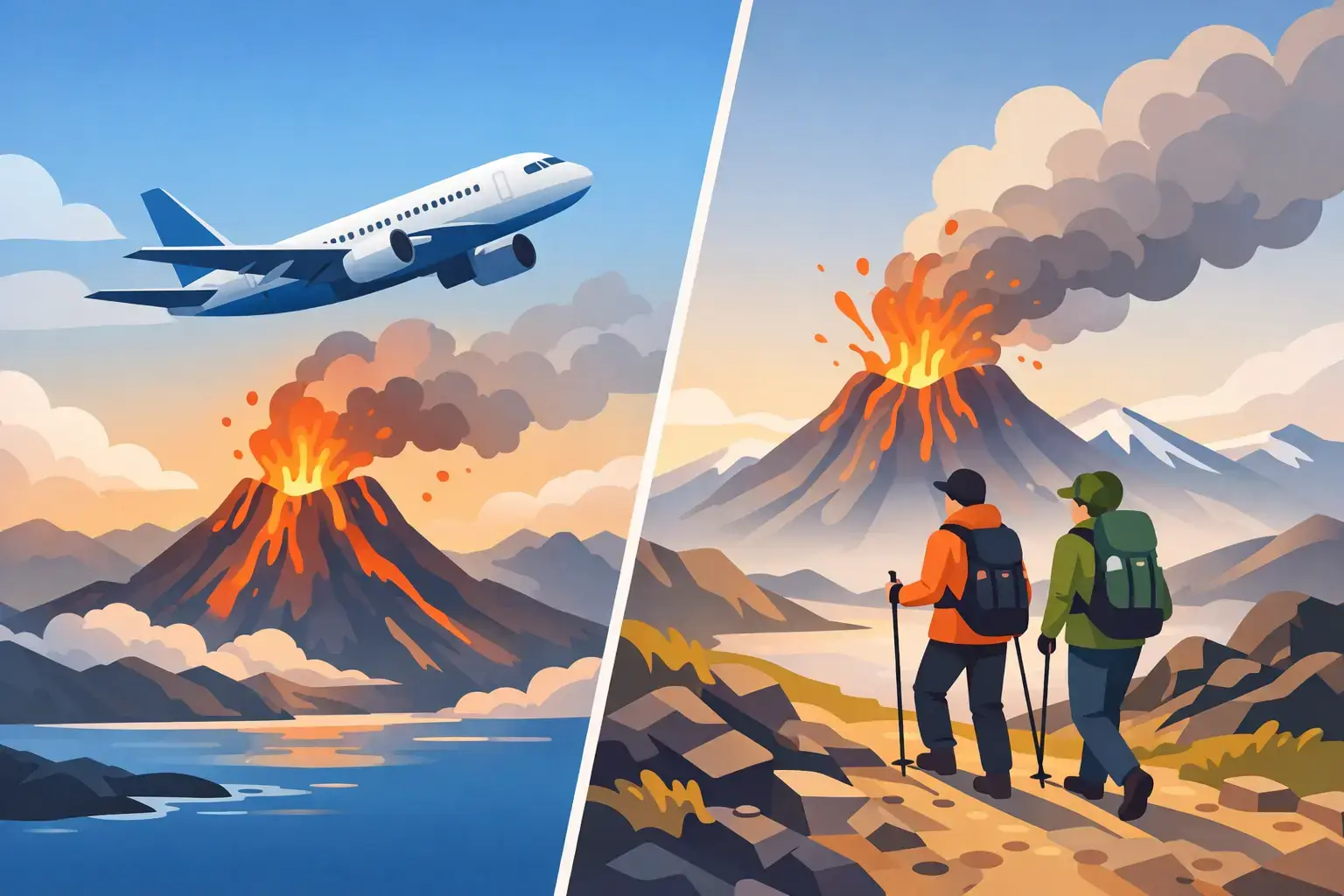
A volcano flight is not something you book the same way you book a city tour three months out and forget about. In Iceland, when are volcano flights available depends on the volcano itself, the weather, airspace restrictions, visibility, and whether conditions allow safe helicopter operations near the site. That is exactly what makes the experience so extraordinary – and why timing matters.

When are volcano flights available?

The short answer is that volcano flights are available when there is active or recently active volcanic activity worth seeing and when aviation conditions allow safe access. That means availability can be highly seasonal in some cases, but it is even more event-driven than season-driven.

If a new eruption opens, demand rises immediately and flight planning becomes dynamic. Routes may change day by day. Authorities can adjust exclusion zones. Weather can create excellent visibility in the morning and shut down operations by afternoon. Unlike fixed sightseeing products, volcano flights sit at the intersection of nature and aviation, so flexibility is part of the experience.

For travelers visiting Iceland with a specific volcano in mind, that distinction matters. There are periods when lava fields, craters, fissures, and geothermal scars are still spectacular from the air even after eruptive activity slows. There are also periods when a volcano is simply not suitable for sightseeing flights, either because conditions are too restricted or because there is no meaningful aerial experience to offer at that moment.

What actually determines volcano flight availability

Volcanic activity is the obvious factor, but it is not the only one. An eruption can make headlines worldwide, yet helicopter access may still be limited for practical reasons. Aviation operators have to work within official safety guidance, current airspace controls, and the real conditions on the ground and in the air.

Weather is the biggest operational variable. Icelandic wind, cloud cover, icing conditions, and visibility can all affect whether a flight can depart, how long it can operate, and which route makes sense. A volcano may be active, but if the site is buried in low cloud, the experience will not justify the flight.

Then there is ash, gas, and thermal activity. Even when an eruption is visually impressive, pilots must account for plume direction, gas concentration, and how close an aircraft can safely approach. Good operators do not chase drama. They plan around what is safe, legal, and worthwhile for passengers.

Demand also shapes availability. During a high-profile eruption, flight slots can fill quickly, especially for premium private departures. Shared sightseeing options, if offered, may have stricter time windows. Private charters usually provide the most flexibility because routing, departure timing, and overall experience can be adjusted around conditions.

Volcano flights are often availability windows, not fixed seasons

Many visitors assume there is a standard volcano season in Iceland. In reality, volcano flights do not follow a simple calendar the way northern lights tours or summer highland travel often do.

Some volcano-related flights become available during an active eruptive period and remain available for as long as the site delivers a safe and compelling aerial experience. That could mean days, weeks, or much longer. In other cases, flights focus on the aftermath – fresh lava fields, new craters, changed terrain, and the scale of the event viewed from above.

This is why the best answer to when are volcano flights available is often: when current volcanic and flying conditions align. If you are planning far ahead, it is smart to think in terms of opportunity rather than guarantee.

Best times of year for visibility and comfort

Although volcano flights are event-led, the time of year still affects the experience. Summer and early fall usually offer the easiest planning window for most travelers. Longer daylight hours create more flexibility, conditions can be more forgiving, and the landscape is easier to read from the air. Fresh lava against green moss, black sand, and open highlands is especially dramatic in clear light.

Winter flights can be exceptional, but they are more weather-sensitive. Short daylight windows and fast-moving systems mean plans may need to shift. The upside is contrast. Snow, ice, and dark volcanic terrain can create an extraordinary visual experience from the helicopter, especially for photographers.

Spring is often underrated. It can bring strong visibility and fewer peak-season crowds, though conditions remain changeable. Fall has a similar advantage, with softer light and often excellent color contrast across the terrain.

For premium travelers with some schedule flexibility, the best strategy is usually to leave room in the itinerary rather than lock the experience to one narrow time slot.

Booking ahead versus waiting until you are in Iceland

This is where practical planning matters. If there is no current eruption or no active volcano flight program at the time you book, reserving a standard volcano flight months in advance may not be possible. That does not mean you should wait passively.

A better approach is to build flexibility into your Iceland trip and stay in contact with a local helicopter operator that can advise on current conditions. If volcanic activity begins close to your travel dates, you will be in a much stronger position to secure a flight quickly.

If there is ongoing activity during your trip, book as early as you can once availability opens. Premium helicopter experiences can sell out fast when demand spikes, especially for couples, families, and private groups who want a tailored departure rather than a generic excursion.

For travelers who want certainty, a custom scenic helicopter itinerary is often the smartest choice. If volcanic conditions are favorable, the route can include the volcano. If not, Iceland still offers glaciers, waterfalls, black sand coastlines, geothermal areas, and remote highland landscapes that are no less impressive from the air.

Private charters offer the most flexibility

For guests planning a high-end Iceland itinerary, private helicopter charter is usually the best fit for volcano sightseeing. The advantage is not just privacy. It is operational flexibility.

A private flight can often be timed around the clearest weather window of the day. The route can be adapted to current restrictions, visual conditions, and your priorities, whether that is photography, a proposal, a family experience, or adding another landmark to the same flight. If the volcano is not the right call that day, the experience can be redirected toward a glacier landing, a waterfall route, or a remote interior destination.

That flexibility is especially valuable in Iceland, where a rigid plan can be the weakest plan. An experienced local operator can tell you whether waiting two hours improves the flight, whether another departure base makes more sense, or whether a different route will deliver a better overall experience.

What to expect if conditions change

Volcano flights are premium experiences, but they still operate within the realities of Icelandic aviation. That means schedules can shift, routes can be modified, and in some cases flights can be delayed or canceled.

That is not a sign of poor planning. It is a sign that safety standards are being taken seriously. The best operators are transparent about this. They will not promise access that current conditions cannot support, and they will not force a flight that delivers poor visibility or unnecessary risk.

For guests, the most useful mindset is to treat the volcano as the priority but not the only reason to fly. Iceland from above is extraordinary even when nature edits the original plan. In many cases, travelers who come for the volcano end up remembering the entire aerial journey just as much – the lava fields, coastlines, glaciers, rivers, and scale of the landscape all in one flight.

So, when should you plan your trip?

If your trip is built around seeing an active eruption, travel timing needs to stay flexible. Come when activity is current, be prepared to move quickly on booking, and allow space in your itinerary for weather shifts.

If your goal is broader volcano sightseeing rather than a live eruption, summer through early fall usually gives you the easiest planning conditions and the widest range of scenic flying options. If you are comfortable with more variables and want dramatic winter contrast, colder months can still be worthwhile.

For many guests, the smartest move is simple: plan an Iceland trip with room for a helicopter day, then let current conditions shape the exact route. That is often how the best flights happen. At HeliAir, that local judgment is what turns a hopeful idea into the right journey on the right day.

If volcanoes are on your Iceland wish list, give yourself flexibility, choose an operator that knows the terrain intimately, and be ready when the window opens.