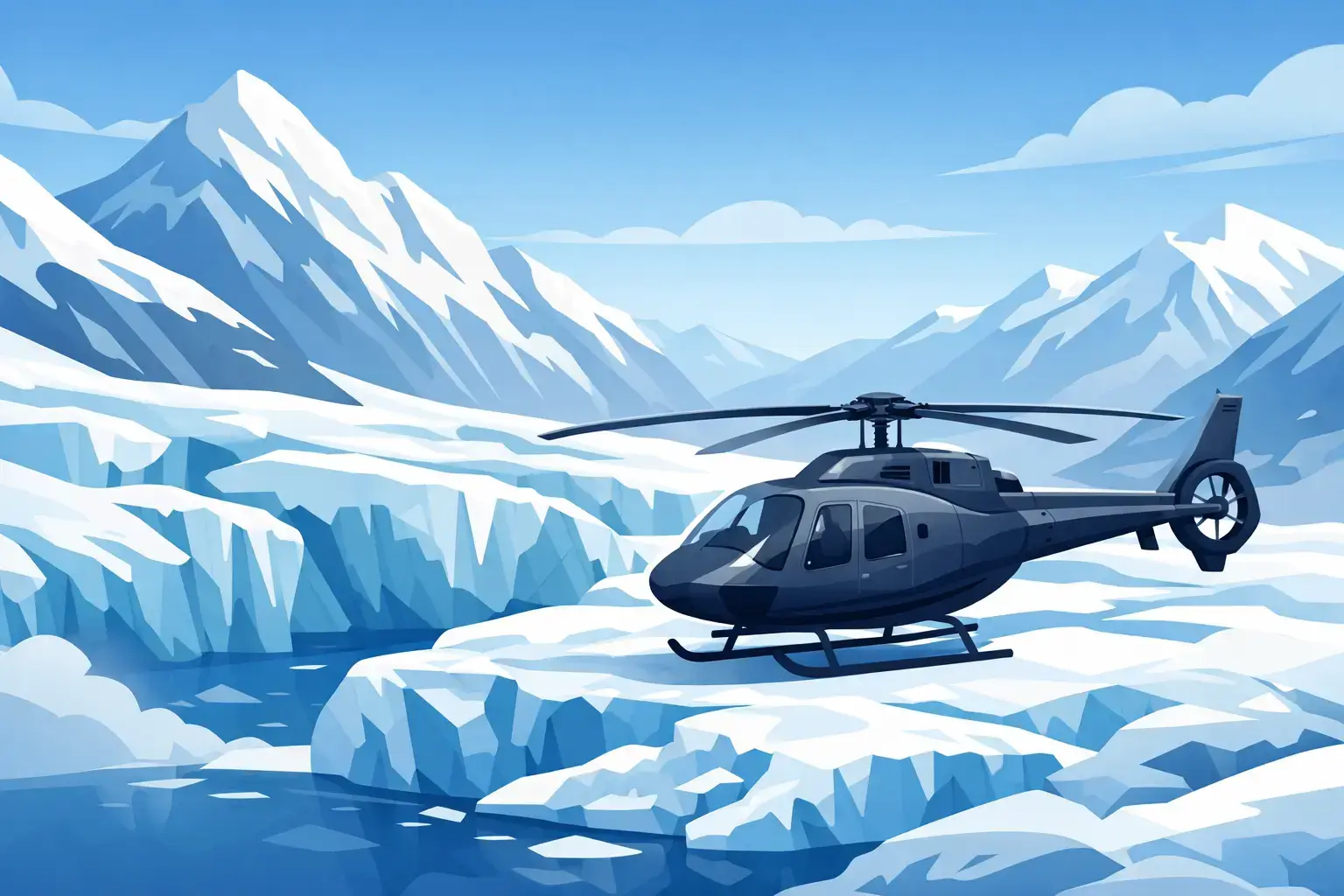
A glacier landing looks effortless from the cabin window – a smooth approach, a gentle touchdown, white ice stretching in every direction. In reality, can helicopters land on glaciers? Yes, they can, and in places like Iceland, glacier landings are a real and extraordinary part of helicopter flying. But they are never casual. Every glacier landing depends on aircraft performance, snow and ice conditions, weather, altitude, visibility, and the pilot’s judgment in that exact moment.
For travelers, that means a glacier stop is possible and often unforgettable. For operators, it means precision, planning, and a constant respect for changing mountain conditions.
Can helicopters land on glaciers safely?
They can, when the landing site and conditions support it. A glacier is not just a frozen parking spot. It is a moving natural surface shaped by wind, temperature, snowfall, melt, and underlying terrain. What looks flat from the air may hide hard ridges, soft snow, ice undulations, crevasses, or areas where rotor wash can create visibility problems.
That is why glacier landings are handled by experienced pilots who know how to read the surface from above and evaluate whether a landing should happen at all. In commercial operations, safety is not built around the idea that a glacier landing must happen. It is built around the idea that the pilot can decline, delay, or adjust the plan if conditions are not right.
In Iceland, that matters even more. Weather can shift quickly, and glacier environments are affected by wind, cloud, fresh snow, and seasonal change. A premium helicopter experience includes the flexibility to work with those realities rather than push against them.
What makes a glacier landing possible?
The short answer is suitability. The helicopter must have the performance for the conditions, the pilot must have the training and local knowledge, and the glacier site must offer a safe landing area.
Aircraft performance is the first piece. Helicopters do not land by magic – they land within performance limits that account for weight, temperature, elevation, and wind. Colder air can help performance, but glaciers are often in mountainous terrain where wind behavior becomes more complex. Passenger count, fuel load, and route planning all affect what is practical.
The landing area is the next piece. Pilots look for a surface with acceptable slope, enough room for approach and departure, and no visible hazards such as crevasse patterns, unstable snow buildup, or debris. On some glacier sites, a landing may be routine under good conditions. On others, the answer may be no on that particular day, even if the location is normally used.
Then there is visibility. On snow and ice, depth perception can become unreliable, especially in flat light. If the horizon disappears into cloud or the surface loses contrast, a landing that seemed straightforward can become unsuitable very quickly. That is one reason experienced glacier flying is so dependent on local judgment rather than a simple checklist.
Why glacier landings are different from regular landings
A standard landing on a prepared surface offers consistency. A glacier offers none. Even when an operator is familiar with a location, the glacier itself is always changing.
Snow depth can vary from one day to the next. Wind can harden one section and soften another. Melt and refreeze cycles can alter the surface texture. Rotor wash can lift loose snow into a white cloud, reducing visibility just as the aircraft settles. In mountain terrain, wind can spill over ridgelines or change direction near the touchdown zone.
That is why glacier landings are not just scenic. They are specialized. The pilot is managing not only the helicopter, but also a dynamic landing environment that offers fewer visual references and less margin for assumption.
Can all helicopters land on glaciers?
Not every helicopter is appropriate for every glacier operation. The aircraft type matters, but the bigger question is whether that specific helicopter, with that specific load, can operate safely in those exact conditions.
A helicopter used for tourism may be fully capable of glacier landings when flown within limits and supported by proper operational planning. The same aircraft might not be suitable if the weather deteriorates, the landing area becomes unstable, or the mission requires a heavier load than conditions allow.
This is where commercial standards matter. Reputable operators do not sell the idea of a glacier landing as a guaranteed stunt. They present it as an experience that is possible when conditions align. That approach may sound conservative, but for guests, it is exactly what you want.
What passengers should expect on a glacier landing tour
From a guest perspective, a glacier landing is usually far more comfortable than people expect. The dramatic part is the landscape, not the flying style. A well-executed landing feels controlled and deliberate.
What you should expect is flexibility in the itinerary. The route may shift for weather. The pilot may choose a different glacier area than originally planned. On some days, a scenic overflight may replace a landing if the surface or visibility is not right. That is not a downgrade in standards. It is the standard.
Dress for cold, even if conditions in Reykjavík or at sea level feel mild. Glaciers create their own environment, and wind on the ice can make temperatures feel sharper. Good footwear matters too, especially if you will be stepping onto snow or uneven frozen ground for photos.
If you are traveling for photography, glacier landings can be exceptional because they combine aerial perspective with access to remote terrain that would take hours or days to reach on foot. But photographers should also understand that time on the ground is often managed carefully around aircraft safety, weather exposure, and departure planning.
The Iceland factor
Iceland is one of the most compelling places in the world to experience glacier flying because the scenery is so varied within a short range – ice caps, black sand, volcanic ridges, braided rivers, and highland terrain can all sit within the same flight. That visual contrast is part of what makes a glacier landing here feel less like a stop and more like access to a different world.
It also means operations demand real local knowledge. Icelandic weather does not always build gradually. It can change by the hour, and mountain conditions do not always mirror what travelers see from the city or coastline. A helicopter operator planning glacier landings in Iceland must understand the terrain intimately, read changing conditions quickly, and build each flight around what the day actually allows.
That is where a tailored operator has a clear advantage. When a company is used to planning custom routes across glaciers, volcanoes, waterfalls, and remote highlands, it can shape the experience around conditions rather than forcing a fixed script. For guests, that often results in a better flight and a smarter one.
When a glacier landing may not happen
This is the part worth saying plainly. Even if a tour includes the possibility of landing on a glacier, the final decision is always operational.
Low cloud can block the approach. Fresh snow can obscure surface detail. Strong winds can affect touchdown and departure. A previously suitable landing area may no longer meet the standard that day. There may also be regulatory, routing, or timing considerations depending on the mission and region.
For high-end travelers, this should be seen as part of the value, not a disappointment built into the system. You are not buying a theme-park ride. You are booking access to real aviation in real landscapes, led by people whose job is to make the right call. The best operators protect the experience by protecting the margins around it.
So, can helicopters land on glaciers?
Yes – and when done properly, it is one of the most remarkable ways to experience remote ice landscapes. But the real answer is more precise: helicopters can land on glaciers when the aircraft, pilot, weather, and landing surface all support a safe operation.
That distinction matters. It is the difference between a dramatic photo opportunity and a professionally managed flight experience.
For travelers considering a glacier landing in Iceland, the best approach is to choose an operator that treats the moment on the ice as part of a bigger standard of planning, local expertise, and flexibility. HeliAir builds those flights around Iceland as it really is – vast, changeable, and at its best when seen from above. If the conditions line up, stepping onto a glacier by helicopter is not just possible. It is the kind of memory that resets your idea of what access can feel like.
And if the route changes with the weather, you are still exactly where you should be – in the hands of pilots who know the landscape well enough to make the day worth flying.