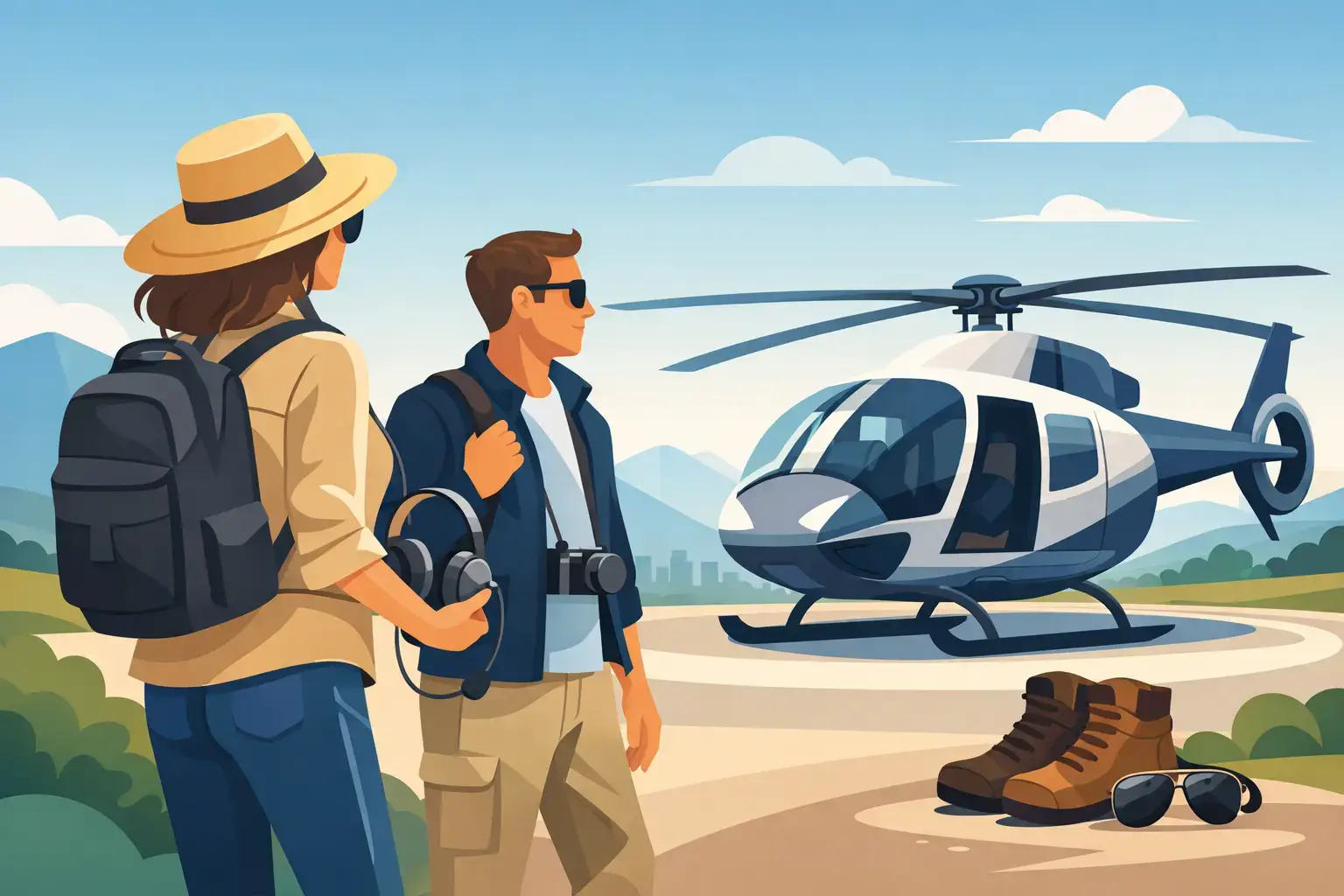
You do not need to dress for a helicopter tour as if you are climbing a mountain. You do need to dress for changing weather, strong rotor wash, and the fact that stepping out at a remote landing site in Iceland feels very different from standing in downtown Reykjavík. If you are wondering what to wear helicopter tour days require, think in layers, keep everything secure, and choose comfort over fashion-first pieces.
A helicopter experience is premium, but that does not mean formal. The right outfit helps you stay warm, move easily, and enjoy every minute in the air without fussing with a slipping scarf, cold hands, or shoes that were made for hotel lobbies rather than uneven ground.
What to wear for a helicopter tour in Iceland
The simplest answer is this: wear practical layers and closed-toe shoes. That works for most scenic flights, volcano tours, glacier landings, and custom sightseeing trips. Conditions can shift quickly, especially when your itinerary includes multiple elevations or remote locations.
Start with a comfortable base layer. A light long-sleeve top or fitted shirt works well year-round, and in colder months a thermal layer is the smarter choice. Over that, add a fleece, sweater, or light insulated mid-layer. Your outer layer should protect against wind and light moisture. A weather-resistant jacket is usually enough for sightseeing flights, while a warmer insulated shell makes more sense in winter or on longer landings.
For bottoms, choose pants that let you move easily and keep you warm. Travel pants, hiking pants, or well-fitted jeans can all work depending on season and itinerary. In colder weather, lined pants or thermal leggings underneath make a noticeable difference. Shorts are rarely the best choice in Iceland, even in summer, because the wind at a landing site can surprise people.
Footwear matters more than many first-time passengers expect. Wear closed-toe shoes with a stable sole. Hiking shoes, boots, or sturdy sneakers are usually ideal. If your tour includes a landing near lava fields, snow, loose gravel, or wet ground, extra grip is worth having. High heels, sandals, and anything backless are poor choices for both comfort and safety.
Dress for the landing, not just the flight
Inside the helicopter, you are sheltered. Outside, you may be standing near a glacier edge, black sand, volcanic terrain, or an exposed ridge where the wind has no interest in your vacation photos. That is why the best answer to what to wear helicopter tour planning depends on where you will land, how long you will be outside, and what season you are visiting.
If your flight is a short scenic tour with minimal time on the ground, lighter layering is usually fine. If your itinerary includes multiple stops or a private custom landing in the highlands, build in more weather protection. Premium travelers often focus on the experience itself, which makes sense, but comfort at the destination is what keeps the day feeling effortless.
There is also a difference between looking polished and being overdressed. Smart outdoor clothing photographs well in Iceland. Neutral tones, dark layers, and clean silhouettes look good against snow, rock, and mossy terrain. You do not need technical expedition gear unless the specific flight calls for it.
The best layers for each season
Summer in Iceland is milder than many visitors expect, but it is not reliably warm by US vacation standards. A breathable base layer, light fleece, and windproof jacket are often enough. You may not need gloves for the full flight, but packing a pair is still wise.
Spring and fall call for more insulation. This is when layering matters most because the temperature can shift quickly between the city and a remote landing site. A thermal base, insulating middle layer, and protective shell give you flexibility without bulk.
Winter requires a more deliberate outfit. Think thermal layers, insulated outerwear, warm socks, gloves, and a hat that fits securely. The helicopter cabin may be comfortable, but time outside in snow or cold wind feels much shorter when you are dressed well.
What not to wear on a helicopter tour
The wrong clothing usually falls into two categories: loose items and underprepared items. Anything that flaps, flies off, or distracts you in the rotor wash should stay behind. Long scarves are a common mistake. So are floppy hats, unsecured jewelry, and very wide or overly delicate outer layers.
On the other side, some guests dress as if they are taking a city transfer rather than heading into Icelandic nature. Thin fashion sneakers, dress shoes, short skirts, and light jackets may look fine at departure, but they can feel out of place fast if your tour includes a scenic landing.
This does not mean you need to look overly rugged. It means every item should earn its place. If it keeps you comfortable, secure, and ready to step out into the landscape, it belongs.
Accessories that actually help
A few small additions make a real difference. Sunglasses are useful year-round, especially with snow glare or bright light reflecting off water and ice. Gloves are worth bringing even when you are unsure you will need them. A fitted beanie or warm cap is helpful in colder months, as long as it is secure.
For photographers, dress with movement in mind. You may be leaning, turning, and stepping in and out with gear. Jackets with zip pockets, slim gloves that allow button control, and layers that do not restrict your shoulders are often better than heavier, bulkier options.
A crossbody bag is not always ideal around aircraft movement. A small backpack or compact bag that closes fully is usually easier to manage, but keep it minimal. Less to carry means less to think about.
Comfort, safety, and photos all matter
People often ask whether they should prioritize warmth, style, or practicality. The honest answer is all three, but in that order. The good news is that for helicopter touring in Iceland, they tend to work together. Clean, fitted outdoor layers look better than clothing that is either too bulky or too delicate.
Black, navy, gray, olive, and earth tones tend to photograph well against Iceland’s landscapes. Bright colors can also work, especially in winter, but avoid anything you will feel self-conscious wearing all day. The best outfit is one you stop thinking about once the rotors start turning.
There is also the cabin experience to consider. You will be seated, wearing a headset, and watching through large windows. Soft, flexible clothing is more comfortable than stiff denim or anything overly tailored. If your tour is part of a larger luxury itinerary, you can still dress well without sacrificing function.
Practical outfit examples
For a summer sightseeing flight, a long-sleeve shirt, light fleece, weather-resistant jacket, hiking pants, and sturdy sneakers usually works well. For a fall volcano tour, step up to a thermal base, insulated mid-layer, shell jacket, heavier pants, and hiking boots.
In winter, a strong combination is thermal top and bottoms, fleece or insulated layer, warm waterproof jacket, lined pants, wool socks, boots, gloves, and a secure hat. If you tend to get cold easily, dress for the ground stop rather than the cabin.
If you are booking a private or custom experience, ask about the expected landing conditions before your flight. A glacier touchdown, a highland picnic stop, and a short city-to-scenery tour can call for slightly different choices. That local guidance is part of what makes a tailored operator like HeliAir valuable.
A few final decisions before you leave
The night before your flight, lay everything out and remove one or two unnecessary items. If your jacket is hard to zip, your shoes are not comfortable on uneven ground, or your hat blows off in a light breeze, change it. The goal is not to pack for every possibility. It is to arrive ready for Iceland as it actually is.
When in doubt, choose layers, closed shoes, and secure essentials. That formula works because helicopter travel gives you extraordinary access, but the landscapes are still wild, exposed, and real. Dress for that, and the day feels easy from takeoff to landing.
The best helicopter tours leave you thinking about volcanoes, glaciers, waterfalls, and the shape of the land below you – not whether you should have brought a warmer jacket.