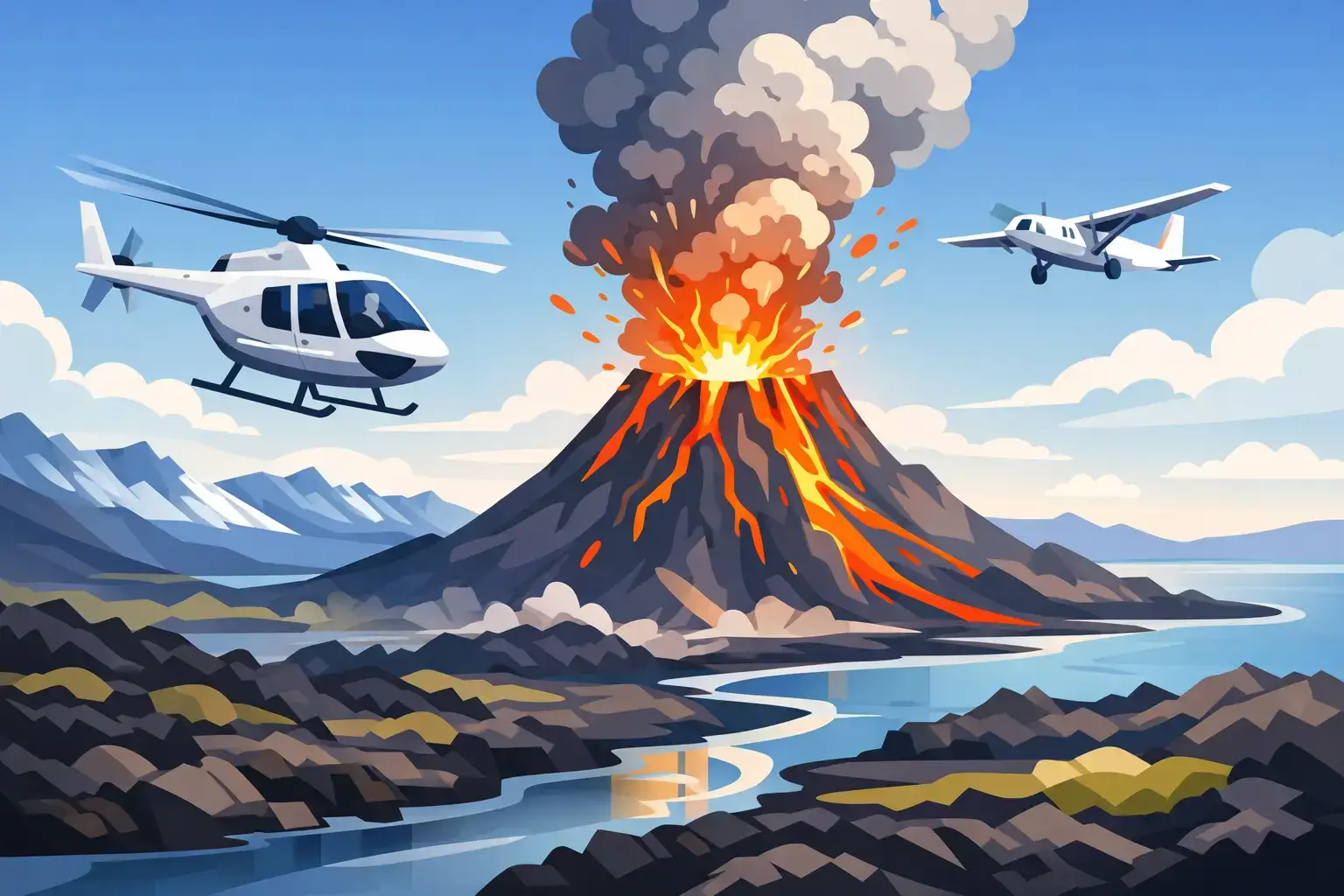
A volcano flight is not something you book the same way you book a city tour three months out and forget about. In Iceland, when are volcano flights available depends on the volcano itself, the weather, airspace restrictions, visibility, and whether conditions allow safe helicopter operations near the site. That is exactly what makes the experience so extraordinary – and why timing matters.
When are volcano flights available?
The short answer is that volcano flights are available when there is active or recently active volcanic activity worth seeing and when aviation conditions allow safe access. That means availability can be highly seasonal in some cases, but it is even more event-driven than season-driven.
If a new eruption opens, demand rises immediately and flight planning becomes dynamic. Routes may change day by day. Authorities can adjust exclusion zones. Weather can create excellent visibility in the morning and shut down operations by afternoon. Unlike fixed sightseeing products, volcano flights sit at the intersection of nature and aviation, so flexibility is part of the experience.
For travelers visiting Iceland with a specific volcano in mind, that distinction matters. There are periods when lava fields, craters, fissures, and geothermal scars are still spectacular from the air even after eruptive activity slows. There are also periods when a volcano is simply not suitable for sightseeing flights, either because conditions are too restricted or because there is no meaningful aerial experience to offer at that moment.
What actually determines volcano flight availability
Volcanic activity is the obvious factor, but it is not the only one. An eruption can make headlines worldwide, yet helicopter access may still be limited for practical reasons. Aviation operators have to work within official safety guidance, current airspace controls, and the real conditions on the ground and in the air.
Weather is the biggest operational variable. Icelandic wind, cloud cover, icing conditions, and visibility can all affect whether a flight can depart, how long it can operate, and which route makes sense. A volcano may be active, but if the site is buried in low cloud, the experience will not justify the flight.
Then there is ash, gas, and thermal activity. Even when an eruption is visually impressive, pilots must account for plume direction, gas concentration, and how close an aircraft can safely approach. Good operators do not chase drama. They plan around what is safe, legal, and worthwhile for passengers.
Demand also shapes availability. During a high-profile eruption, flight slots can fill quickly, especially for premium private departures. Shared sightseeing options, if offered, may have stricter time windows. Private charters usually provide the most flexibility because routing, departure timing, and overall experience can be adjusted around conditions.
Volcano flights are often availability windows, not fixed seasons
Many visitors assume there is a standard volcano season in Iceland. In reality, volcano flights do not follow a simple calendar the way northern lights tours or summer highland travel often do.
Some volcano-related flights become available during an active eruptive period and remain available for as long as the site delivers a safe and compelling aerial experience. That could mean days, weeks, or much longer. In other cases, flights focus on the aftermath – fresh lava fields, new craters, changed terrain, and the scale of the event viewed from above.
This is why the best answer to when are volcano flights available is often: when current volcanic and flying conditions align. If you are planning far ahead, it is smart to think in terms of opportunity rather than guarantee.
Best times of year for visibility and comfort
Although volcano flights are event-led, the time of year still affects the experience. Summer and early fall usually offer the easiest planning window for most travelers. Longer daylight hours create more flexibility, conditions can be more forgiving, and the landscape is easier to read from the air. Fresh lava against green moss, black sand, and open highlands is especially dramatic in clear light.
Winter flights can be exceptional, but they are more weather-sensitive. Short daylight windows and fast-moving systems mean plans may need to shift. The upside is contrast. Snow, ice, and dark volcanic terrain can create an extraordinary visual experience from the helicopter, especially for photographers.
Spring is often underrated. It can bring strong visibility and fewer peak-season crowds, though conditions remain changeable. Fall has a similar advantage, with softer light and often excellent color contrast across the terrain.
For premium travelers with some schedule flexibility, the best strategy is usually to leave room in the itinerary rather than lock the experience to one narrow time slot.
Booking ahead versus waiting until you are in Iceland
This is where practical planning matters. If there is no current eruption or no active volcano flight program at the time you book, reserving a standard volcano flight months in advance may not be possible. That does not mean you should wait passively.
A better approach is to build flexibility into your Iceland trip and stay in contact with a local helicopter operator that can advise on current conditions. If volcanic activity begins close to your travel dates, you will be in a much stronger position to secure a flight quickly.
If there is ongoing activity during your trip, book as early as you can once availability opens. Premium helicopter experiences can sell out fast when demand spikes, especially for couples, families, and private groups who want a tailored departure rather than a generic excursion.
For travelers who want certainty, a custom scenic helicopter itinerary is often the smartest choice. If volcanic conditions are favorable, the route can include the volcano. If not, Iceland still offers glaciers, waterfalls, black sand coastlines, geothermal areas, and remote highland landscapes that are no less impressive from the air.
Private charters offer the most flexibility
For guests planning a high-end Iceland itinerary, private helicopter charter is usually the best fit for volcano sightseeing. The advantage is not just privacy. It is operational flexibility.
A private flight can often be timed around the clearest weather window of the day. The route can be adapted to current restrictions, visual conditions, and your priorities, whether that is photography, a proposal, a family experience, or adding another landmark to the same flight. If the volcano is not the right call that day, the experience can be redirected toward a glacier landing, a waterfall route, or a remote interior destination.
That flexibility is especially valuable in Iceland, where a rigid plan can be the weakest plan. An experienced local operator can tell you whether waiting two hours improves the flight, whether another departure base makes more sense, or whether a different route will deliver a better overall experience.
What to expect if conditions change
Volcano flights are premium experiences, but they still operate within the realities of Icelandic aviation. That means schedules can shift, routes can be modified, and in some cases flights can be delayed or canceled.
That is not a sign of poor planning. It is a sign that safety standards are being taken seriously. The best operators are transparent about this. They will not promise access that current conditions cannot support, and they will not force a flight that delivers poor visibility or unnecessary risk.
For guests, the most useful mindset is to treat the volcano as the priority but not the only reason to fly. Iceland from above is extraordinary even when nature edits the original plan. In many cases, travelers who come for the volcano end up remembering the entire aerial journey just as much – the lava fields, coastlines, glaciers, rivers, and scale of the landscape all in one flight.
So, when should you plan your trip?
If your trip is built around seeing an active eruption, travel timing needs to stay flexible. Come when activity is current, be prepared to move quickly on booking, and allow space in your itinerary for weather shifts.
If your goal is broader volcano sightseeing rather than a live eruption, summer through early fall usually gives you the easiest planning conditions and the widest range of scenic flying options. If you are comfortable with more variables and want dramatic winter contrast, colder months can still be worthwhile.
For many guests, the smartest move is simple: plan an Iceland trip with room for a helicopter day, then let current conditions shape the exact route. That is often how the best flights happen. At HeliAir, that local judgment is what turns a hopeful idea into the right journey on the right day.
If volcanoes are on your Iceland wish list, give yourself flexibility, choose an operator that knows the terrain intimately, and be ready when the window opens.