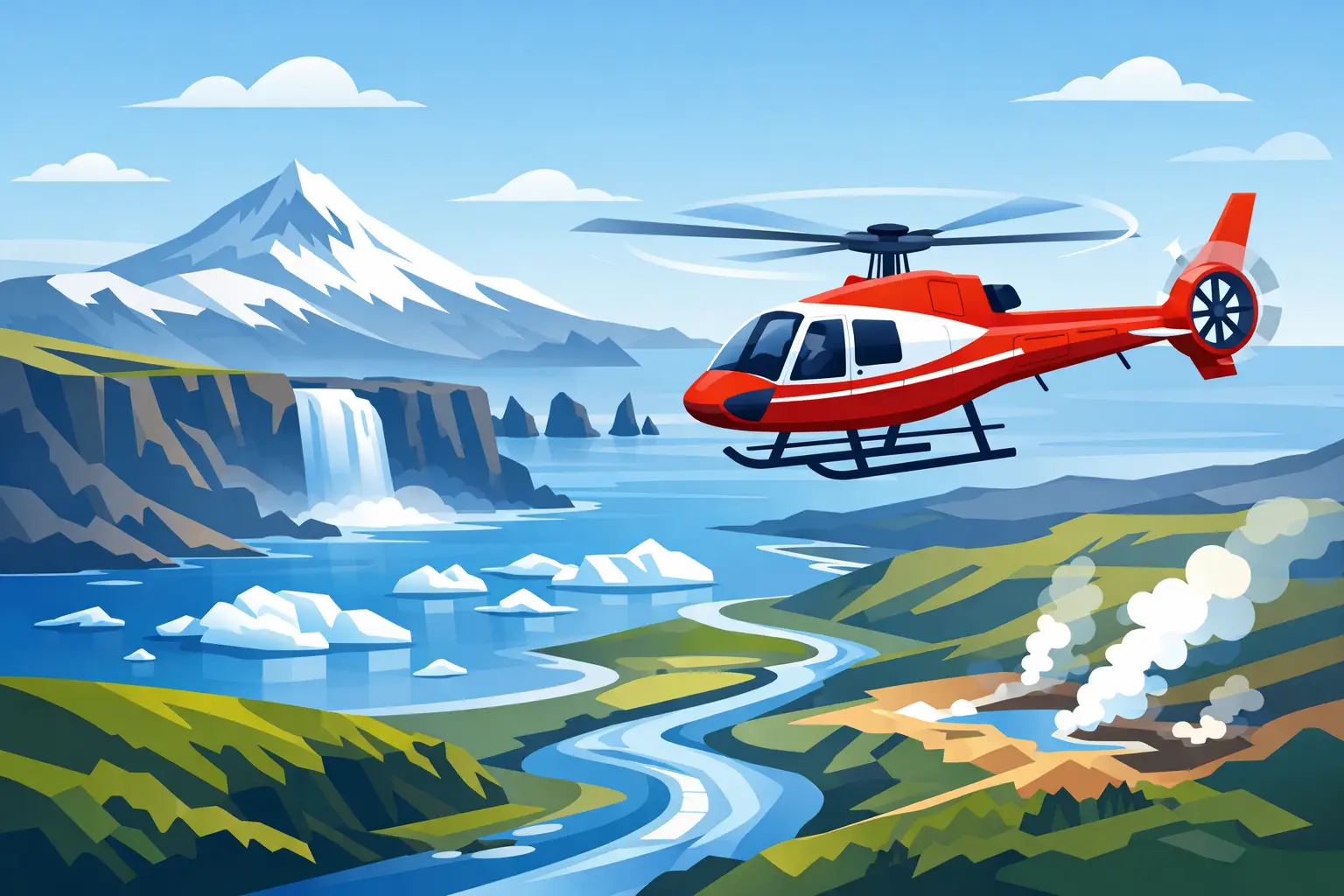
A road trip can take you close to Iceland’s famous landscapes. A helicopter can place a glacier, volcanic crater, black-sand coastline, and highland waterfall into the same afternoon. Iceland scenic flights are for travelers who want to see more of the country’s scale while spending less of their trip behind a windshield.
The difference is not simply altitude. It is access. From above, braided glacial rivers reveal their shifting patterns, lava fields show their true size, and remote valleys become reachable without long drives, rough tracks, or a rigid sightseeing schedule. For couples, families, private groups, and photographers, a well-planned flight turns a spectacular landscape into a deeply personal experience.
Why Choose Iceland Scenic Flights by Helicopter?
Iceland is made for aerial travel. Its most dramatic features are often separated by mountain passes, glacier rivers, unpaved roads, and weather systems that make ground travel slower than a map suggests. Helicopter sightseeing changes the rhythm of the day. Rather than choosing one region and committing several hours to the road, you can build a route around the landscapes that matter most to you.
A shorter flight can offer an extraordinary introduction to the country: Reykjavík’s coastline fading behind you, the moss-covered lava fields of the Reykjanes Peninsula, and wide views toward mountains and ice caps. Longer flights create room to move deeper into the interior, where highland scenery, powerful waterfalls, and glacier edges feel far removed from the usual travel routes.
Helicopters also offer something an airplane cannot always provide: the opportunity to land in carefully selected locations when conditions and permissions allow. Stepping out onto a remote ridge, volcanic landscape, or highland plateau adds a sense of place that is impossible to get from a window alone. The destination is not just viewed. It is experienced.
The Landscapes That Make a Flight Unforgettable
The best route depends on the season, the weather, your departure point, and what you want to see most. Iceland is not a destination where one flight plan suits every guest. A couple with three hours between other plans may prioritize a volcano and glacier panorama. A private group with a full day may want a broader journey through the interior with several landing opportunities.
Volcanoes and lava fields
Volcanic Iceland looks remarkably different from the air. Fresh and historic lava fields spread across the landscape in dark, textured formations, bordered by bright green moss in summer and snow in winter. On the Reykjanes Peninsula, aerial views can reveal the relationship between volcanic systems, fissures, geothermal areas, and the Atlantic coast in a single sweep.
Active volcanic areas require particular care. Access, airspace, and routes can change quickly based on official restrictions and local conditions. An experienced Icelandic operator plans with safety first, then adjusts the experience to make the most of what the day allows.
Glaciers, ice caps, and black sand
From the air, glaciers are not simply white expanses. They are moving landscapes shaped by blue crevasses, ash layers, outlet tongues, and rivers of meltwater. Flights toward areas around Eyjafjallajökull or the southern highlands can pair ice-capped volcanoes with black-sand plains and rugged mountain terrain.
This contrast is one of the reasons private helicopter travel is so compelling in Iceland. Within a relatively short flight, the view can shift from ocean to lava, from green valleys to ancient ice. Ground travel can reveal these places beautifully, but it rarely shows how closely they connect.
Waterfalls and highland rivers
Iceland’s waterfalls become even more impressive when seen in their wider setting. Aerial views show the rivers feeding them, the canyons they cut through, and the vast highlands beyond. Destinations such as Háifoss are especially striking because their scale emerges gradually from the surrounding plateau before the drop opens beneath you.
In the central highlands, glacial rivers twist through broad, uninhabited valleys. These are areas where a helicopter is more than a luxury. It is often the most efficient way to reach a view that would otherwise require significant driving, hiking, or specialized vehicle access.
How Long Should Your Scenic Flight Be?
The right duration is a practical decision as much as an aspirational one. A 1.5-hour flight is ideal for travelers who want a concentrated aerial experience near Reykjavík or another departure base. It can be a memorable addition to a short Iceland stay, a special occasion, or a day already planned around dining, spa time, or city exploration.
A two- to three-hour flight allows greater range and a more varied route. This is often the sweet spot for guests who want to combine multiple landscape types, such as coastal views, volcanic terrain, waterfalls, and glacier panoramas. It also provides more flexibility if conditions favor one direction over another.
For travelers who want Iceland without compromise, a full-day private experience offers the greatest freedom. It can include remote highland destinations, multiple stops, time for photography, and a route designed around a specific interest. This is particularly valuable for milestone trips, multi-generational families, and guests who would rather spend their day in extraordinary places than in transit.
What to Expect on the Day
Premium does not mean rushed. A good scenic flight begins with a clear conversation about your priorities, followed by a safety briefing and an honest assessment of conditions. Icelandic weather is famously changeable, and the most responsible flight plans leave room to adapt.
That flexibility can improve the experience. If low cloud obscures a planned mountain route, a pilot may recommend a clearer coastal or volcanic direction. If the light is exceptional over the highlands, the route may be shaped around that opportunity. The goal is not to follow a fixed line on a map at all costs. It is to create the best possible flight within safe operating limits.
Wear warm layers, even in summer. Helicopter cabins are comfortable, but landing sites can be windy and substantially colder than Reykjavík. Sturdy footwear is useful for uneven ground, and sunglasses can make a meaningful difference when snow, ice, or water reflects bright light. Cameras and phones are welcome, though it is worth spending part of the flight simply looking out rather than documenting every minute.
Weight, group size, luggage, and landing preferences may affect aircraft selection and routing. Share these details when arranging the trip, along with any mobility considerations or photography goals. For guests traveling with children, the operator can advise on age, seating, and the most suitable tour length.
Private Charter or Scheduled Sightseeing?
A scheduled sightseeing tour works well when you have a defined window, a smaller party, and an interest in a proven route. It offers a straightforward way to experience Iceland from above while retaining the excitement of a helicopter landing where available.
Private charter is the better fit when the journey itself needs to be tailored. Perhaps you are arriving from Keflavík and want to turn an airport transfer into a scenic introduction to Iceland. Perhaps you want to depart from Reykjavík, reach a remote lodge, photograph a particular glacier, or build a surprise proposal around a secluded landing. A private charter gives you greater control over timing, route priorities, and the pace of the day.
HeliAir can arrange sightseeing flights from Reykjavík and Ólafsfjörður, as well as custom helicopter journeys shaped around the destinations you have in mind. That local operational knowledge matters when the weather changes or when the places you most want to see are far beyond the standard road-trip circuit.
Planning Around Iceland’s Seasons
Summer brings long daylight hours, green valleys, accessible highlands, and broad visibility when conditions cooperate. It is a strong season for routes that combine waterfalls, rivers, glaciers, and remote interior landscapes. The trade-off is demand, particularly during peak travel months, so private flights are best arranged well ahead of time.
Winter offers a sharper, more elemental version of Iceland. Snow draws clean lines across mountains and lava fields, low sun can create beautiful color, and the country feels quieter. Weather may be more restrictive, daylight is limited, and flexibility is essential. For travelers willing to hold space in their itinerary, winter flights can be exceptionally rewarding.
Spring and fall sit between these extremes. They can bring changing colors, fewer visitors, and excellent light, but they also require realistic expectations about weather. There is no season when Iceland can promise a cloudless sky. There are, however, seasons for different kinds of beauty.
Choose the Flight That Fits Your Iceland
The most memorable aerial journeys are not necessarily the longest or most elaborate. They are the ones built around the way you want to travel: a quiet glacier landing with someone you love, a fast and remarkable look at volcano country, or a full day reaching landscapes few visitors ever see. Leave enough room in your Iceland itinerary for the weather, tell your pilot what matters most, and let the route meet the day that Iceland gives you.