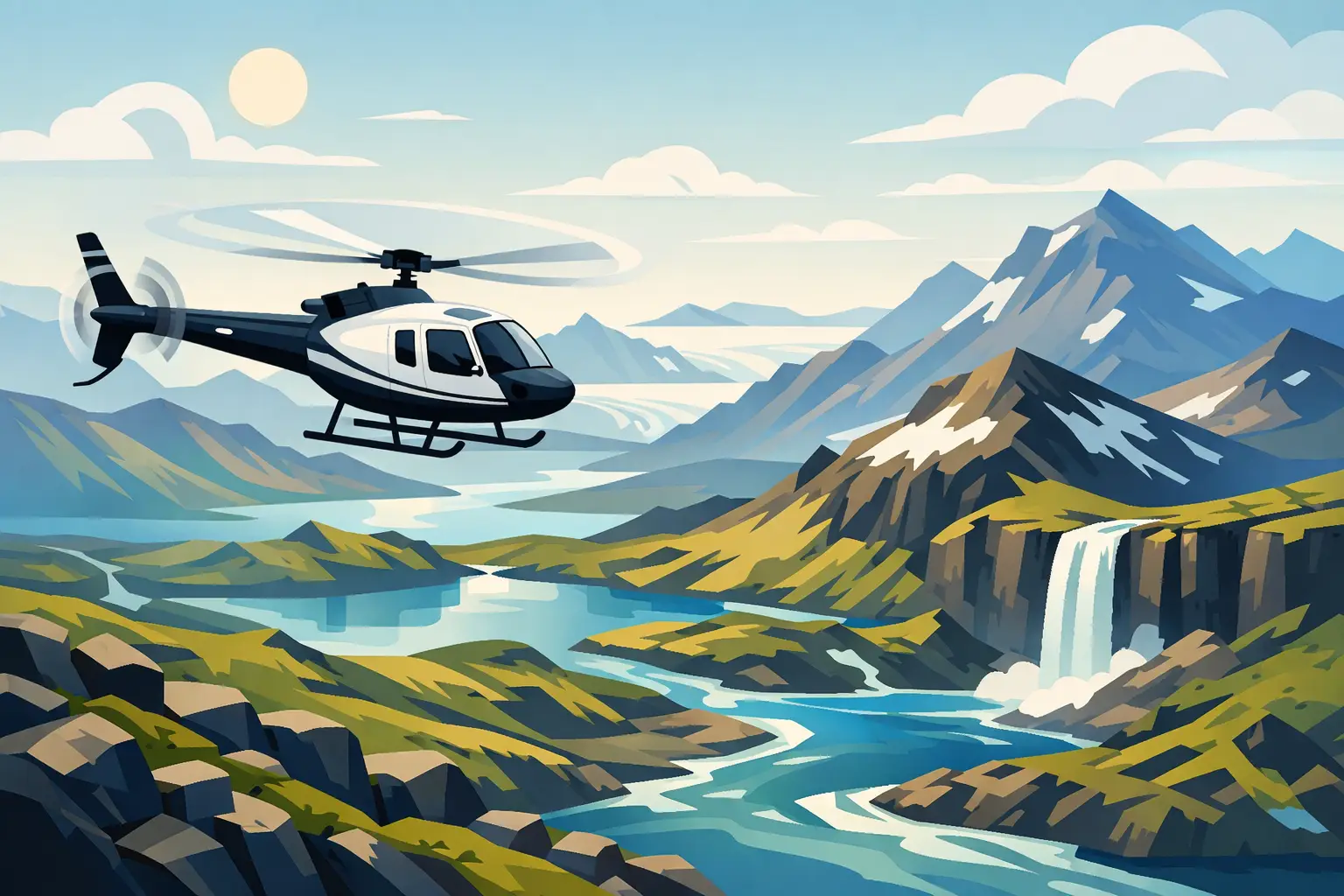
If you are asking, “can you fly to Iceland highlands?”, the answer is yes – but not in the way most travelers picture a conventional flight. Iceland’s interior has no network of commercial airports connecting visitors to its remote valleys, geothermal fields, glacier edges, and black-sand expanses. To reach these places quickly and privately, a helicopter charter is the practical option.
From above, the Highlands reveal the scale that is easy to miss from the road: braided glacial rivers, ridgelines cut by centuries of weather, volcanic craters, and vast areas with no visible buildings for miles. A helicopter can turn a destination that may require a full day of driving and a capable 4×4 into a tailored excursion with time to land, photograph, and take in the silence.
Can You Fly to Iceland Highlands on a Commercial Flight?
Not generally. Scheduled domestic flights in Iceland serve towns and regional airports around the coast, rather than the uninhabited central interior. They are useful for connecting Reykjavík with destinations such as Akureyri, Ísafjörður, or Egilsstaðir, but they do not provide direct sightseeing access to the Highland landscapes most visitors have in mind.
There are a small number of remote airstrips used for specific operations, but these are not a simple replacement for a private Highland experience. Their availability, surface conditions, aircraft suitability, and access rules vary. They also place you at a fixed point, while many of Iceland’s most striking features are spread across terrain without easy road or runway access.
A private helicopter flight offers a different kind of access. It can depart from Reykjavík or from a northern base near Ólafsfjörður, follow a route designed around your interests, and use approved landing areas where conditions and permissions allow. That distinction matters. Flying over the Highlands is spectacular; landing in the right place transforms the day.
Why a Helicopter Is the Best Way to Reach the Highlands
The Highlands are intentionally difficult to reach. Many roads are seasonal F-roads, often closed well into summer and subject to river crossings, changing surfaces, and weather interruptions. Even experienced drivers need to plan carefully. A route that looks close on a map can take hours overland, particularly when the itinerary includes a waterfall, glacier viewpoint, or volcanic area far from the main tracks.
By helicopter, distance becomes part of the experience rather than the obstacle. You can see the transition from Reykjavík’s coastal surroundings to the interior’s raw volcanic terrain in a matter of minutes. Instead of committing your day to a long out-and-back drive, you can spend it where you came to be: above waterfalls, beside a glacier tongue, or standing in an expansive landscape few visitors reach.
That does not mean helicopter travel ignores Iceland’s realities. Weather remains the deciding factor, and the pilot will select routes and landing sites based on wind, visibility, cloud cover, ground conditions, and operational requirements. Flexibility is a strength, not a compromise. On the best Highland days, it allows the route to follow the clearest skies and most compelling scenery.
What Can You See From a Highland Helicopter Flight?
A custom route can be shaped around one standout destination or built as a fuller aerial journey. The best choice depends on your departure point, how much time you have, the season, and whether you want more flight time, more time on the ground, or a balance of both.
For travelers departing from Reykjavík, a Highland flight may combine dramatic waterfalls with volcanic landscapes, glacier views, and broad interior plateaus. Háifoss, one of Iceland’s tallest waterfalls, is a remarkable example of a destination whose scale is especially powerful from the air. Its river-cut canyon and surrounding terrain make the approach part of the experience, not simply transportation to a viewpoint.
Volcanic landscapes can add another dimension. Depending on conditions and routing, you may see lava fields, geothermal color, craters, and the stark contrast between dark rock, bright moss, snow, and glacial ice. The terrain changes rapidly across short distances, which is one reason aerial travel is so rewarding in Iceland.
Glacier flights can also be incorporated into a Highland itinerary. Aerial views of ice caps and glacier tongues reveal crevasses, ridges, ash patterns, and meltwater channels that are impossible to understand from a roadside stop. For photographers, the shifting shapes, shadows, and colors can make every pass feel distinct.
A private flight is especially valuable for couples, families, and small groups who want to avoid a fixed sightseeing schedule. Rather than choosing between a waterfall tour, a volcano tour, or a glacier experience, you can discuss what matters most and design a route around it. HeliAir can arrange bespoke flights for guests who want their time in Iceland to be as individual as the landscape below.
How Highland Landings Work
Helicopters cannot simply land anywhere that looks beautiful. Iceland’s interior includes protected areas, sensitive terrain, private land, and places where landing may be restricted. A responsible operator plans around these considerations and uses suitable landing locations, with safety and environmental care at the center of the decision.
When a landing is possible, it creates a rare kind of access. You might step out onto a ridge with a view across a glacial valley, pause near a remote waterfall, or walk a short distance through an area that would otherwise take significant time and effort to reach. The flight can include a brief scenic landing or longer ground time, depending on the itinerary and conditions.
For those planning a proposal, private celebration, editorial shoot, or professional production, landing logistics deserve early discussion. The timing, equipment, group size, desired location, and photography needs all affect the best aircraft and route. The more specific the vision, the better the planning can be.
When Is the Best Time to Fly to the Iceland Highlands?
Summer is the most popular season for Highland flights because longer daylight hours and more accessible interior conditions create broader routing options. From late spring through early fall, the contrast of green valleys, exposed volcanic ground, and lingering snow can be extraordinary. It is also the season when many travelers are already considering F-road travel, making a helicopter an appealing alternative to a demanding driving day.
Winter flights offer a very different visual experience. Snow can emphasize the shape of mountains, glaciers, and lava formations, while low-angle light brings depth to the landscape. However, winter weather can be more restrictive, daylight is limited, and landing options may be narrower. A winter charter is best approached with an open schedule and a willingness to let the weather guide the final plan.
At any time of year, book your flight early in your Iceland itinerary when possible. That leaves room to adjust for weather if needed. It also gives your pilot the best chance to select the day with the most favorable conditions for the scenery you want to see.
What to Expect on the Day of Your Flight
Your experience begins with a route discussion and a practical safety briefing. Dress for the conditions at the landing site, not just the temperature in Reykjavík. Even in summer, the Highlands can be cold and windy, so warm layers, sturdy footwear, and a weatherproof outer layer are sensible choices.
Bring a camera, but do not spend the entire flight behind it. The view changes quickly, and there is real value in watching it without a screen between you and the landscape. Your pilot can point out landmarks, explain route choices, and help make the most of the light and conditions available that day.
A Highland helicopter flight is not simply the fastest way into Iceland’s interior. It is a chance to see the country at its most remote, then return with time still left in your day for whatever comes next.