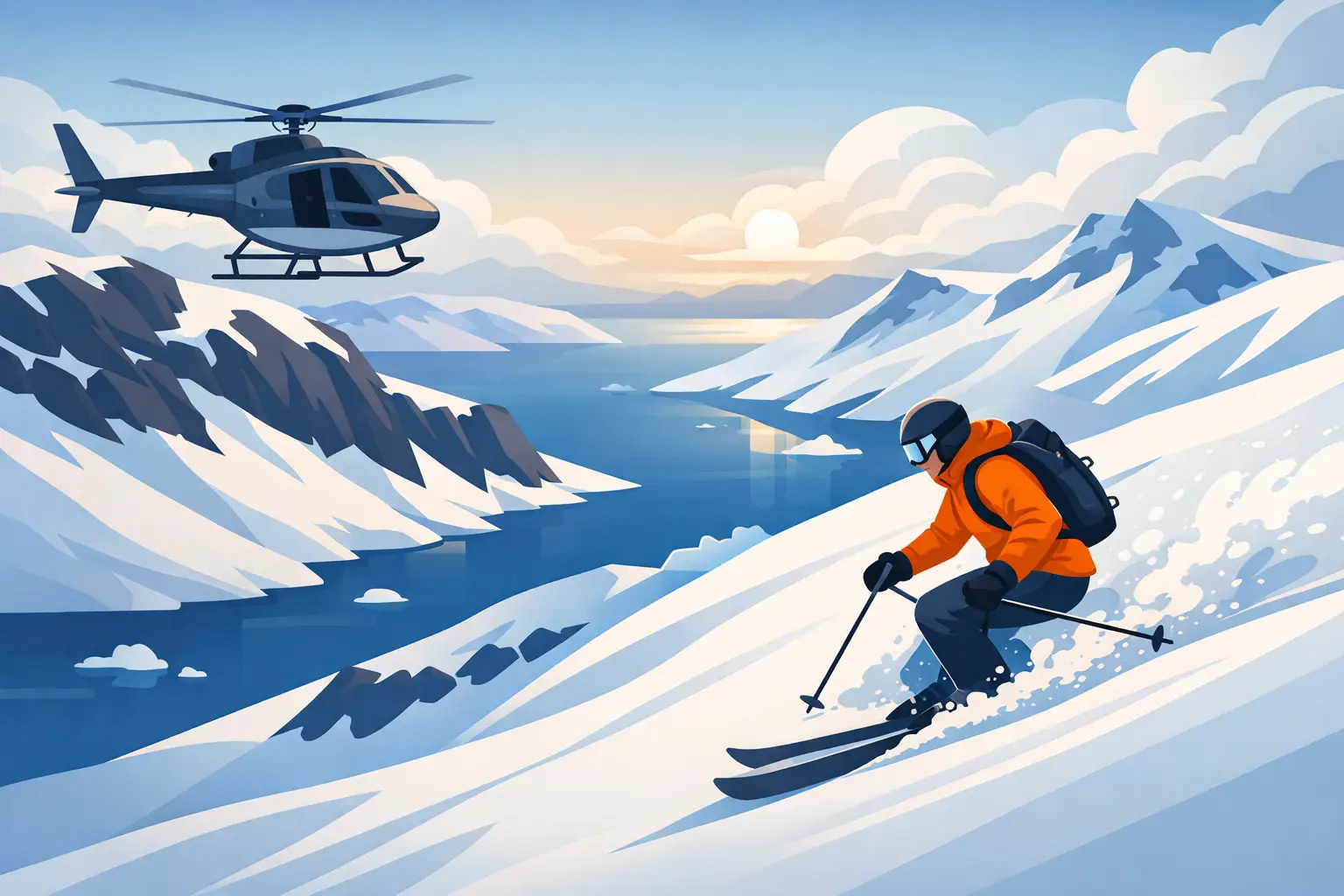
The first turn after a helicopter landing is remarkably quiet. Rotor noise fades across the ridgeline, skis settle into fresh snow, and the terrain opens toward the Arctic Ocean. Heli skiing in Iceland is not about racing through a fixed itinerary. It is a private mountain day shaped by conditions, ability, and the rare freedom to reach lines far beyond the road.
For travelers who want Iceland’s winter landscape at its most immediate, heli-skiing offers a different kind of access. Remote peaks, broad bowls, steep couloirs, and long descents become possible in a single day, without hours of driving, lifts, or crowded trails. The experience is premium by nature, but the real value is time: more of it spent in the mountains, with an experienced team making careful decisions along the way.
What Heli Skiing in Iceland Is Really Like
A heli-ski day starts long before the first flight. Guides assess the weather, visibility, wind, recent snowfall, avalanche conditions, and the group’s skiing or riding experience. Iceland’s mountains are beautiful precisely because they are exposed to the North Atlantic. Conditions can change quickly, so a good day is never built around a rigid promise of one particular peak.
After a safety briefing and equipment check, the group flies toward terrain selected for the day. The flight is part of the experience: snowy ridges rise above deep valleys, black volcanic rock appears beneath winter cover, and the coastline can stretch into the distance. In northern Iceland, the mountains around the Troll Peninsula are particularly known for combining serious ski terrain with ocean views that feel almost unreal from above.
At the landing zone, the pace becomes deliberate. The guide confirms the route, reviews spacing and regrouping points, and leads the descent. Some runs may be wide, rolling, and ideal for confident powder skiing. Others may involve steeper pitches, variable snow, or a more technical line. The best itinerary is not necessarily the most aggressive one. It is the one that puts the group on terrain that is safe, enjoyable, and well suited to the snow that day.
Helicopter access also changes the rhythm between runs. Rather than retracing a lift route or hiking for hours, the group can move efficiently to another aspect or elevation. That flexibility is especially valuable when sun, wind, or snow quality favors one side of a mountain over another.
Who Gets the Most From a Heli-Ski Day?
Heli-skiing is best suited to strong, confident skiers and snowboarders who are comfortable in off-piste terrain. You do not need to be a professional athlete, but you should be able to make controlled turns in deep or uneven snow and maintain a steady pace through a full day in the mountains.
The right experience level depends on the group, snowpack, and objectives. A private day gives guides more room to tailor terrain choices than a large mixed-ability group. Couples, families with experienced adult children, close friends, and private groups often appreciate that flexibility. One group may want long powder descents and a full day of skiing. Another may prefer a more measured day that balances skiing with the views, photography, and the novelty of arriving by helicopter.
Snowboarders are welcome in many heli-ski settings, although powder-specific equipment and comfort in deep snow make a major difference. If anyone in the group is unsure whether their level is appropriate, the most useful approach is to describe their real experience honestly. A strong guide can plan well only with an accurate picture of how everyone skis or rides.
Iceland’s Snow Is Part of the Adventure
Iceland does not offer a copy of a high-volume resort experience in the Alps or the Rockies. That is exactly the point. Its terrain is raw, compact, coastal, and changeable. A single day may bring light snow at higher elevations, wind-affected surfaces on exposed ridges, and soft corn snow in spring conditions.
The heli-ski season is commonly associated with late winter through spring, when the days become longer and the snowpack has had time to build. Spring can be especially compelling in the north: early starts may bring winter snow high on the mountain, while later runs benefit from the sun-softened surface on the right aspect. Timing, however, is never guaranteed. Weather remains the deciding factor.
This is one of the most important expectations to bring to Iceland. A helicopter is an extraordinary tool, but it does not override wind, cloud, or poor visibility. Responsible operators will delay, reroute, or cancel flights when conditions are not suitable. That operational discipline protects the experience as much as it protects the group. A day with fewer runs in excellent snow is often far more memorable than forcing a plan when the mountains are asking for patience.
Safety Is the Foundation, Not an Add-On
The freedom of heli-skiing depends on preparation. Before heading into the backcountry, guests receive a briefing on helicopter procedures, mountain travel, avalanche awareness, and the use of essential safety equipment. Guides select terrain based on current observations, forecast information, and the group’s capability. They also make decisions continuously, not just at the first landing.
Guests should expect to carry and understand the basic equipment provided or required for the day, typically including an avalanche transceiver, probe, and shovel. An airbag backpack may also be used depending on the operation. This equipment matters, but it is only one layer of safety. Conservative terrain choices, clear communication, appropriate spacing, and professional guiding are equally central.
Travel insurance is also worth considering carefully. Standard travel policies do not always include helicopter-assisted skiing or off-piste activity, and coverage can vary by provider. Confirm what your policy covers before arriving in Iceland, including medical evacuation and trip interruption where relevant.
What to Wear and Bring
The mountains can feel significantly colder than the helicopter base, particularly when wind picks up at altitude. Dress for a full day outdoors rather than for a short scenic flight. A waterproof shell, insulated layers, warm gloves, goggles with lenses for changing light, and a helmet are sensible essentials.
Your ski setup should match your ability and the expected snow. Powder skis make deep conditions easier and more enjoyable, while all-mountain skis may be appropriate when snow is firmer or more variable. Touring-style equipment is sometimes useful for short traverses or unexpected changes in access, but requirements vary by operation and day plan.
Bring a small amount of personal comfort equipment as well: sunscreen, lip balm, a neck gaiter, an extra pair of gloves, water, and any medication you may need. Cold fingers and fogged goggles can turn a spectacular run into a frustrating one. Small details matter when the nearest warming hut is a helicopter flight away.
Build the Experience Around Your Iceland Itinerary
For luxury travelers, heli-skiing works especially well as a centerpiece rather than an isolated activity. A private ski day can be paired with a northern Iceland stay, relaxed recovery time, exceptional dining, or a wider journey through glaciers, geothermal landscapes, and coastal villages. It also makes an unforgettable addition to a custom group trip, particularly when some guests want adventure while others prefer aerial sightseeing or a tailored landing experience.
Because travel in Iceland is weather-sensitive, flexibility should be built into the schedule. Avoid placing a heli-ski day immediately before an inflexible international departure if possible. Give the experience room to move within your itinerary, and treat a favorable weather window as something worth protecting.
HeliAir can help arrange helicopter logistics around private mountain objectives and the broader shape of a custom Iceland journey. The most effective planning begins with a conversation about dates, group size, skiing background, and what you want the day to feel like – high-performance skiing, scenic adventure, or a considered balance of both.
A great heli-ski day is not measured only by vertical feet or the number of landings. It is remembered in the pause at the top of a silent mountain, the line you chose with confidence, and the view of Iceland’s wild coast waiting at the bottom.