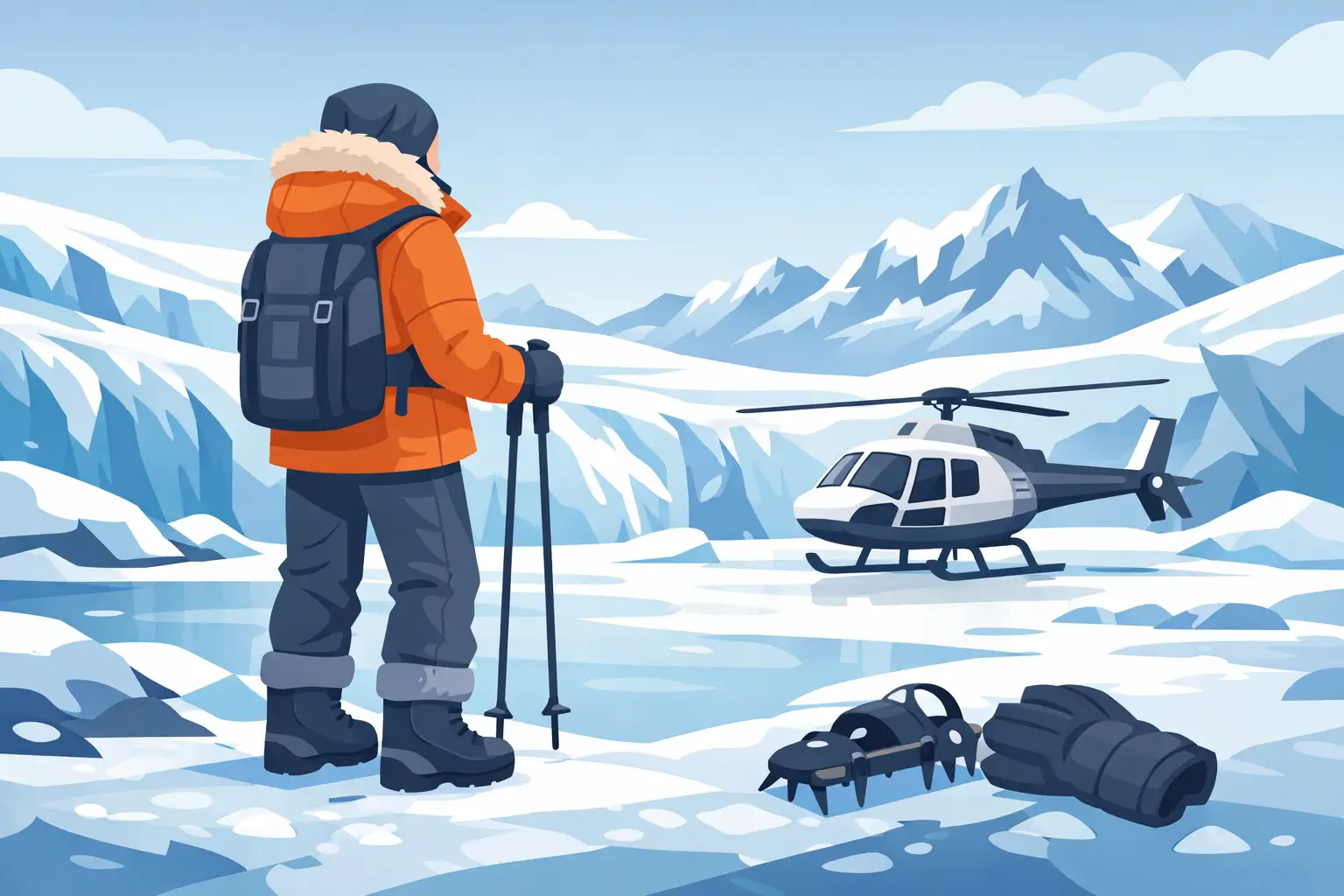
A glacier landing can begin under clear Reykjavík skies and finish in a windchill that feels markedly colder than the forecast. The question of what clothing for a glacier landing is less about looking expedition-ready and more about staying comfortable enough to enjoy the moment: stepping out of the helicopter, hearing the rotors fade, and taking in an immense field of blue ice and volcanic peaks.
Icelandic conditions change quickly, particularly at elevation. A premium helicopter experience removes hours of driving and hiking, but it does not remove the realities of a glacier environment. The right clothing keeps you warm, mobile, and ready for photographs without overpacking or struggling with bulky gear in the cabin.
What clothing for a glacier landing: start with layers
The best approach is a three-layer system that you can adjust before departure, during the flight, and after landing. You may be warm at the departure point, especially on a bright summer day, then feel the temperature drop as the helicopter climbs toward ice and snow.
Start with a lightweight or midweight base layer that moves moisture away from your skin. Merino wool and technical synthetic fabrics are both excellent choices. Avoid cotton for this layer. Cotton can feel comfortable in town, but once it becomes damp from rain, snow, or perspiration, it loses insulating value and can leave you chilled.
Add an insulating mid-layer, such as a fleece, wool sweater, or lightweight insulated jacket. This is often the layer that makes the difference on the glacier. For summer trips, a medium fleece may be enough beneath a proper shell. In spring, fall, or colder conditions, a warmer insulated layer provides more margin for changing weather.
Finish with a windproof, waterproof outer jacket. Wind matters as much as temperature on a glacier landing, and a shell with a hood gives you a useful extra barrier when conditions turn breezy. Choose one that is roomy enough to fit over your insulating layer without restricting your arms or shoulders.
For your lower half, wear hiking pants, soft-shell pants, or other durable trousers that allow easy movement. Waterproof over-pants are a smart addition when rain, wet snow, or strong wind is expected. Jeans are rarely the right choice. They are heavy, slow to dry, and uncomfortable when cold or damp.
Footwear that works on glacier ice and uneven ground
Sturdy, closed-toe footwear is essential. Waterproof hiking boots with a supportive sole are the strongest option for most glacier landings. They help keep your feet warm and dry while providing traction on uneven, snowy, or rocky terrain near the landing area.
Ankle support is helpful, but comfort matters too. Do not make a glacier day the first outing for brand-new boots. Wear footwear that has already been broken in, with enough space for warm socks without squeezing your toes. Tight boots can make feet colder surprisingly fast.
Choose wool or technical hiking socks, ideally with a spare pair available back at your accommodation or in your vehicle. Skip thin fashion socks and smooth-soled sneakers. Even if the helicopter landing is brief and conditions appear calm, glacier surfaces and surrounding moraine can be slick, wet, or irregular.
Depending on the exact destination, season, and ground conditions, your flight crew may provide or recommend additional traction equipment. Follow crew guidance closely. A glacier is a remarkable place to visit, but it is still a dynamic natural environment where local operating decisions come first.
Do not overlook hands, head, and eyes
Small accessories have an outsized effect on your comfort. Bring warm gloves that let you hold a camera or phone while protecting your hands from wind. Thin liner gloves beneath insulated gloves work well if photography is a priority, since you can remove the outer pair briefly without exposing bare fingers.
A beanie or close-fitting wool hat is highly recommended, even in summer. It fits easily into a pocket during the flight and becomes valuable as soon as you step onto the ice. A neck gaiter or scarf can also make windy conditions much more pleasant, though it should be secured so it cannot blow loose around the aircraft.
Sunglasses are not optional on a bright day. Sunlight reflecting off snow and ice can be intense, and UV exposure remains a consideration even when the air feels cold. Polarized sunglasses can improve contrast and help you see the texture of the glacier, but any good-quality pair with UV protection is useful.
Sunscreen belongs in the plan as well. Apply it to exposed skin, including the underside of your chin and nose, where reflected light can reach areas travelers often miss. In Iceland, cool temperatures can disguise how much sun exposure you are receiving.
Dress for the season, not the calendar alone
Summer in Iceland does not guarantee warm glacier conditions. June through August can bring pleasant temperatures at lower elevations, yet a landing on ice may still call for a fleece, shell, gloves, and hat. Summer travelers often make the mistake of dressing for a city walk rather than for the destination at the end of the flight.
During spring and fall, plan for colder temperatures, stronger winds, and more variable precipitation. A warmer insulated jacket, thermal base layer, and waterproof pants become increasingly worthwhile. Winter calls for the most complete cold-weather setup: warm base layers, substantial insulation, waterproof outerwear, insulated gloves, and reliable boots.
The weather on the day is the deciding factor. Iceland’s forecasts are useful, but conditions can differ between the departure location and a glacier landing site. Your flight team will assess operating conditions and can advise on practical expectations for your route. If you have questions before a private itinerary or scenic tour, ask. It is far easier to add a warm layer to your luggage than to wish for one after landing.
Keep aircraft comfort in mind
Helicopter cabins reward practical choices. Avoid oversized coats that are difficult to move in, long loose scarves, or accessories that can interfere with a headset or blow around in rotor wash. A streamlined layered outfit is more useful than a single heavy ski parka, particularly if the day begins indoors or includes a transfer to the departure point.
Wear your outer layers rather than relying on a large bag. Space can be limited, and you will want your jacket, gloves, and sunglasses available immediately. Keep cameras, phones, and small personal items secure. Cold temperatures can reduce phone battery life, so carrying a fully charged device and keeping it in an inside pocket when not in use is sensible.
For photographers, gloves with grip and a jacket with secure pockets are especially helpful. The best images often happen quickly, when light breaks through cloud or the glacier’s crevasses reveal unexpected color. You do not want to spend that moment searching through an overfilled backpack.
A practical glacier-landing outfit
For most travelers, a dependable outfit includes these essentials:
- Moisture-wicking base layer and warm mid-layer
- Waterproof, windproof jacket with a hood
- Hiking pants or soft-shell pants, plus waterproof over-pants if needed
- Waterproof hiking boots and warm wool socks
- Gloves, beanie, sunglasses, and sunscreen
This combination is adaptable rather than excessive. If the day is unusually mild, you can remove the mid-layer before the flight. If the wind rises or snow begins, you have the protection to remain present for the experience instead of rushing back toward the cabin.
What not to wear for a glacier landing
Fashion-first clothing can compromise a memorable landing. Avoid open-toe shoes, sandals, high heels, leather-soled boots, thin leggings worn alone, cotton hoodies as your only warm layer, and jeans in wet or cold conditions. These items may work for Reykjavík restaurants or hotel lounges, but they are poorly suited to ice, wind, and shifting weather.
You also do not need a full mountaineering wardrobe for a standard helicopter glacier landing. Technical climbing gear, crampons, and specialist equipment are only appropriate when specifically required for a guided activity. For a scenic landing, well-chosen layers and proper footwear are usually the right balance of comfort, safety, and ease.
A glacier seen from above is unforgettable. Dressed for the conditions, you can step onto the ice with confidence and give the landscape your full attention – exactly as it deserves.