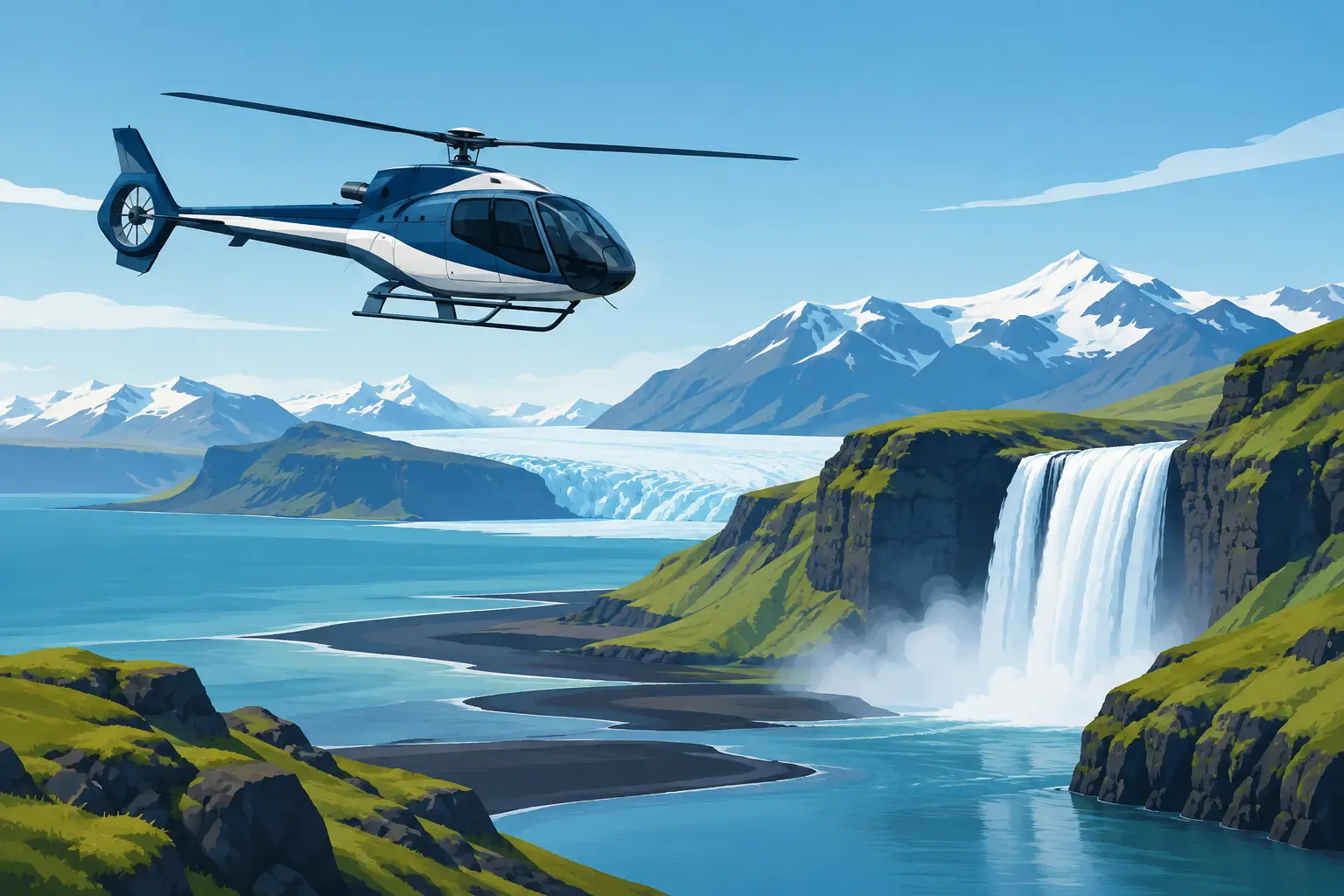
A glacier landing before lunch, a volcanic landscape viewed without a full day on the road, and a private route shaped around the light rather than a bus schedule: Iceland helicopter travel trends are moving toward time-rich experiences with far less time spent getting there. For premium travelers, the aircraft is no longer just a spectacular way to see the country. It is becoming a practical way to reach the parts of Iceland that make a visit feel truly personal.
The appeal is easy to understand. Iceland’s major sights can be spread across long distances, weather can alter a day’s plans quickly, and some of the most remarkable landscapes sit well beyond the standard touring route. Helicopter travel offers a different rhythm: depart from Reykjavík or northern Iceland, fly above the terrain that would otherwise take hours to cross, and land where the landscape itself becomes the destination.
Iceland Helicopter Travel Trends: More Time at the Destination
For years, many visitors treated an aerial tour as a short add-on to a ground itinerary. That is changing. Travelers are increasingly building a day around a flight, particularly when they have limited time in Iceland or want to avoid sacrificing a full day to driving.
This does not always mean choosing the longest flight available. A well-planned 90-minute to three-hour experience can create more meaningful access than a much longer road journey. From the air, river systems, black-sand plains, lava fields, ice caps, and highland valleys reveal the scale that is impossible to grasp from a roadside pullout. With a suitable landing location and conditions, guests can step out into an environment that feels entirely removed from the busy attractions closer to the capital.
The trend is less about collecting more stops and more about choosing the right ones. A couple may prioritize a glacier and a quiet mountain landing. A family may want a volcano-focused route with enough time to enjoy the experience without an overly ambitious schedule. A photographer may plan around low-angle light, cloud texture, and a specific stretch of coastline. The best itinerary depends on what the day is meant to deliver.
Private Charter Is Becoming the Preferred Luxury Format
Scheduled sightseeing flights remain an excellent choice for travelers looking for a defined scenic experience. At the same time, private charter is increasingly central to premium Iceland travel because it allows the flight to fit the trip rather than the other way around.
A private group can choose a departure time that works with a hotel stay, private guide, dinner reservation, or onward flight. The route can be designed around a clear priority, whether that is waterfalls in the south, the volcanic terrain of the Reykjanes Peninsula, glacier landscapes near Eyjafjallajökull, or remote northern scenery. It also creates room for practical decisions on the day, subject to weather, operating conditions, and safe landing options.
This is particularly valuable for multigenerational groups and travelers celebrating a milestone. A helicopter is not simply transportation in these cases. It creates a shared moment, while avoiding the long drives and repeated packing that can make a high-end itinerary feel more tiring than it needs to be.
Customization has limits, and a credible operator should be clear about them. Icelandic weather, wind, visibility, and changing conditions determine what is sensible and safe. The most successful private trips are planned with a wish list rather than a rigid demand list. If one route is unsuitable, an experienced local team can often recommend another area with equally memorable terrain.
Remote landings matter more than flight time
Travelers are placing greater value on where they can land, not only how long they remain airborne. A landing turns a scenic flight into a physical encounter with Iceland: the crunch of volcanic gravel, the cold air moving off an ice cap, the sound of a waterfall in a valley that has no roadside parking lot.
That shift favors thoughtful route design. A short flight with an exceptional landing can feel more exclusive than a longer route that remains entirely in the air. It also means expectations should be set properly. Remote is not the same as unrestricted. Landing locations must be selected responsibly, with respect for safety, weather, permissions, terrain, and the fragile environments that make Iceland worth protecting.
The Rise of the Efficient Iceland Itinerary
Another defining trend is the use of helicopters to connect key moments in an itinerary. Visitors arriving for a short luxury stay often want Reykjavík’s restaurants and design scene, a remote natural experience, and time to relax at their hotel or spa. Ground travel can force compromises. A private flight can make the day feel spacious.
Airport transfers are part of this shift. For travelers who value privacy and efficiency, a helicopter transfer between Keflavík International Airport, Reykjavík Domestic Airport, and selected destinations can reduce friction at the beginning or end of a trip. It is especially appealing when a group has a tight schedule, an event to attend, or a charter flight planned beyond Reykjavík.
Point-to-point aviation is also useful outside leisure travel. Production teams may need aerial access for filming. Corporate visitors may need to reach a site quickly. Specialist groups heading toward ski terrain or remote operations require an operator that understands both passenger experience and technical aviation logistics. The trend is not that every Iceland itinerary needs a helicopter. It is that more travelers and professionals are recognizing where it makes practical sense.
Photography Is Shaping How Guests Fly
Iceland has always attracted photographers, but the expectations have become more sophisticated. Guests are no longer satisfied with a quick image through a window. They want routes designed for texture, contrast, scale, and a sense of place.
From above, Iceland offers graphic patterns that ground travel rarely reveals: braided glacial rivers, moss-covered lava, geometric fields of black sand, and coastlines cut by surf. Seasonal conditions alter the palette dramatically. Summer brings long daylight hours and vibrant greens, while winter can add snow, low light, and striking contrast. Neither season is automatically better. The choice depends on the desired visual result and tolerance for changing conditions.
For aerial photography, flexibility is more useful than overplanning. Cloud layers can create extraordinary depth, but they can also obscure a planned route. Pilots and local flight teams assess what is workable in real time. Guests who arrive with a few visual priorities, rather than one non-negotiable shot, tend to have the strongest experience.
Weather-Smart Travel Is a Luxury Expectation
Experienced luxury travelers increasingly understand that Iceland’s weather is part of the experience, not a flaw in the itinerary. The premium difference lies in how the trip is handled when conditions shift.
A responsible operator will not promise a specific landing or view regardless of the forecast. Instead, the planning process should include alternative routes, flexible timing where possible, and honest communication. Sometimes a valley that is unsuitable in one wind direction is perfect in another. Sometimes waiting for a weather window is the best decision. Sometimes a route needs to change completely.
This approach protects more than the schedule. It preserves the quality of the trip. Flying only when conditions support a safe, enjoyable experience is fundamental. For visitors, the practical takeaway is simple: leave room in the itinerary, especially for a private charter that matters to you. Booking a helicopter flight on the only possible hour of the only possible day can limit the options unnecessarily.
What travelers should ask before booking
Premium helicopter travel works best when the conversation begins with the purpose of the flight. Ask whether the experience is private or shared, where departures are available, how long the flight and landing time are likely to be, and what alternatives may be available if weather changes the original plan.
It is also worth discussing the makeup of the group. Young children, guests with limited mobility, large camera equipment, winter clothing, and special occasions can all influence the right aircraft, route, and timing. A good operator will make the planning feel straightforward while being transparent about operational realities.
HeliAir can arrange structured sightseeing flights as well as bespoke journeys from Reykjavík and Ólafsfjörður, making it possible to match a flight to the places, pace, and priorities of a particular trip.
The Next Best Route May Not Be the Famous One
The most visible Iceland helicopter travel trend is a move away from the idea that luxury means following the same famous route in greater comfort. For many visitors, real exclusivity now means choosing the landscape that fits their story: a highland plateau, a hidden waterfall, a glacier edge, a volcanic ridge, or simply an hour away from the road.
Bring a clear sense of what you want to feel when you land, then allow Iceland’s conditions to guide the exact route. That balance of ambition and flexibility is where an exceptional helicopter day begins.