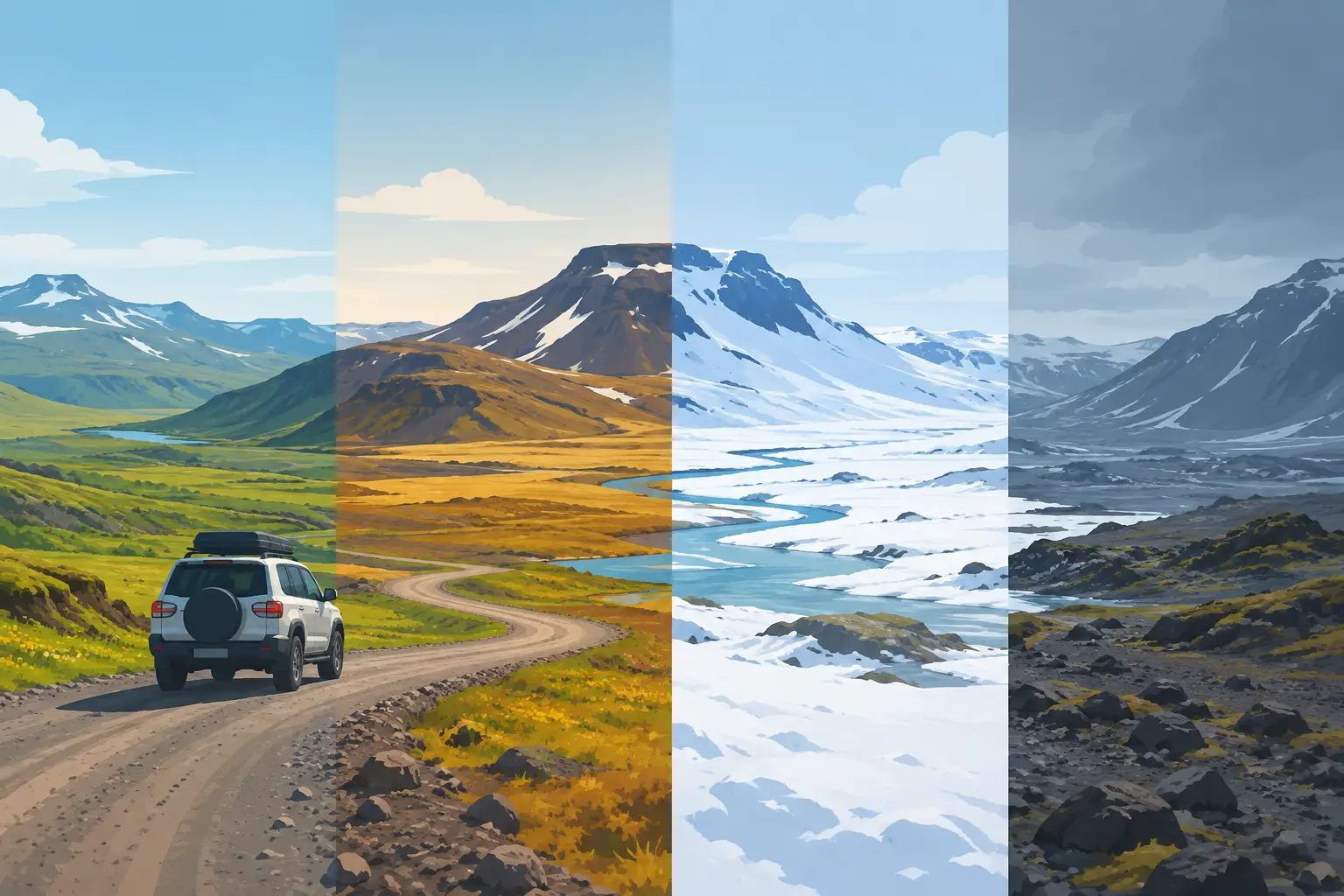
The short answer to are Iceland highlands accessible year round is no – not by ordinary road travel. For much of the year, snow, river crossings, wind, and road closures make Iceland’s interior a place to admire from afar. In summer, it becomes one of Europe’s most extraordinary landscapes: black-sand plains, geothermal valleys, glacier-fed rivers, and vast horizons with almost no sign of civilization.
For travelers who want the Highlands without surrendering days to uncertain driving conditions, timing and transport make all the difference. A private helicopter flight can offer a remarkably direct way to experience remote terrain, while still respecting Iceland’s weather, aviation rules, and changing ground conditions.
Are Iceland Highlands Accessible Year Round by Road?
No. Iceland’s central Highlands are not a year-round driving destination. Most highland routes are F-roads, mountain tracks that typically require a capable 4×4 vehicle, experience on loose surfaces, and confidence around unbridged rivers. They are generally closed through winter and do not operate on a fixed opening date.
The main highland season usually begins between late June and early July, depending on snowmelt and road inspections. Some routes may open earlier in favorable years, while higher or more remote tracks can remain closed until later in the summer. Closures often return in September, though exact timing varies with weather and road conditions.
Even during the open season, access is never guaranteed. A clear morning in Reykjavík does not mean a passable route near Landmannalaugar, Askja, or the interior edge of Vatnajökull. Rain can raise rivers quickly. Early snow can change a route overnight. Wind and low visibility can turn a long, demanding drive into a poor decision.
That unpredictability is part of the Highlands’ appeal, but it is also why they reward careful planning rather than a rigid itinerary.
Why Winter Changes Everything
In winter, Iceland’s roads are concentrated around the coast and populated regions. The central interior is largely snowbound, with limited services and no ordinary tourist road access. F-roads are closed to protect both travelers and fragile landscapes during thawing and severe conditions.
Winter travel in Iceland can still be spectacular. Glaciers, frozen waterfalls, northern lights, and snow-covered volcanic landscapes create a very different kind of adventure. But travelers should not expect to drive independently into the Highlands in a rental vehicle simply because a destination appears close on a map.
Distance in Iceland is deceptive. A mountain range, a river system, or a weather front can make a seemingly nearby location effectively unreachable by road. This is especially true for guests with limited time who are hoping to combine Reykjavík, the South Coast, and the Highlands in a short stay.
The Summer Window Is Short but Exceptional
When the F-roads open, the Highlands become a destination unlike anywhere else in Iceland. Landmannalaugar draws visitors to colorful rhyolite mountains and geothermal bathing. Kerlingarfjöll offers steaming slopes and high-altitude hiking. Askja presents a stark volcanic caldera landscape, while routes toward Sprengisandur and the interior reveal the scale of Iceland’s empty heartland.
Driving there is rewarding for travelers who enjoy self-sufficient adventure. It is also slow. River crossings require sound judgment, routes can be rough for hours, and a full day may be needed to reach one remote region and return. A 4×4 is essential on designated F-roads, but having one does not make every crossing safe or every route appropriate.
For some visitors, that is exactly the point. For others, particularly couples, families, photographers, and private groups on a premium itinerary, the time commitment can feel out of proportion to the experience they want. They may prefer to spend their day above the terrain rather than behind a wheel, watching road conditions and navigating river crossings.
Helicopter Access to Iceland’s Remote Interior
A helicopter does not make Iceland weather-proof, and responsible operators will never present it that way. Aviation decisions depend on visibility, wind, precipitation, cloud base, and conditions at both departure and landing areas. Routes and landing sites must also comply with local regulations, safety procedures, and environmental considerations.
What helicopter travel can do is remove the need to wait for highland roads to open. It can transform an all-day overland journey into a focused scenic flight, bringing glacier tongues, volcanic ridges, waterfalls, and remote valleys into a single private experience. From above, Iceland’s interior is not a route to endure. It is the destination.
This matters beyond convenience. Aerial access gives photographers more time with dramatic light, private groups more flexibility in how they use the day, and travelers with limited mobility a way to see landscapes that would otherwise demand strenuous hiking or long off-road travel. It also allows a route to be shaped around what is most compelling on the day, rather than around the limitations of one road.
HeliAir can arrange bespoke helicopter experiences designed around the season, the weather window, and the landscapes a group most wants to see. A summer itinerary may prioritize a highland landing, geothermal color, and glacial rivers. In colder months, the best flight may focus on volcanoes, ice formations, coastal mountains, or accessible glacier scenery instead of a deep interior landing.
What “Accessible” Really Means in Iceland
The word accessible can be misleading in a country defined by fast-moving conditions. A place may be accessible by road but unpleasant or unsafe to visit that day. It may be inaccessible to rental cars yet possible to reach by air. Or it may be unsuitable for any visit because conditions do not support safe operations.
The best Iceland travel plans leave room for that reality. Rather than fixating on one exact point in the Highlands, build an experience around the kind of scenery you want: geothermal ground, untouched black desert, glaciers, waterfalls, volcanic craters, or a private mountaintop view. An experienced local flight team can then evaluate the conditions and create the strongest possible route within the available weather window.
That approach is particularly valuable for custom trips. A private charter can connect a remote sightseeing experience with an airport transfer, a lodge itinerary, a filming schedule, or another destination elsewhere in Iceland. The result is not just faster transportation. It is a more considered way to use limited time in a landscape where conditions set the terms.
When Should You Plan a Highlands Experience?
Choose July and August if your priority is the broadest possible choice of road-based highland destinations. These months usually offer the most reliable F-road access, long daylight, and the best chance to combine driving, hiking, and scenic stops. They are also popular, so private arrangements can be especially valuable for travelers seeking a quieter, more personal experience.
June and September can be excellent for visitors who accept more uncertainty. The landscapes are often less crowded, the light can be beautiful, and conditions may support outstanding flights or selected road routes. Flexibility is essential, especially if a particular highland landing is central to your plans.
From October through May, treat the central Highlands as an aerial possibility rather than a self-drive destination. A helicopter charter may provide access to remarkable winter scenery when conditions allow, but no responsible operator can promise a specific remote landing weeks in advance. The smarter promise is a private, carefully planned experience built around the best conditions available.
Plan for the Landscape, Not Just the Map
Iceland’s Highlands are not open year round in the conventional sense. Their roads follow the rhythm of snow, thaw, and weather, and that is precisely what keeps the interior so wild. The privilege of visiting comes with a responsibility to adapt.
If the Highlands are part of your dream trip, plan the season honestly, allow room for weather decisions, and choose a form of travel that matches your priorities. The most memorable route may not be the one you first traced on a map. It may be the flight that lifts above the road, follows a glacial river into the interior, and lands where Iceland feels entirely your own.