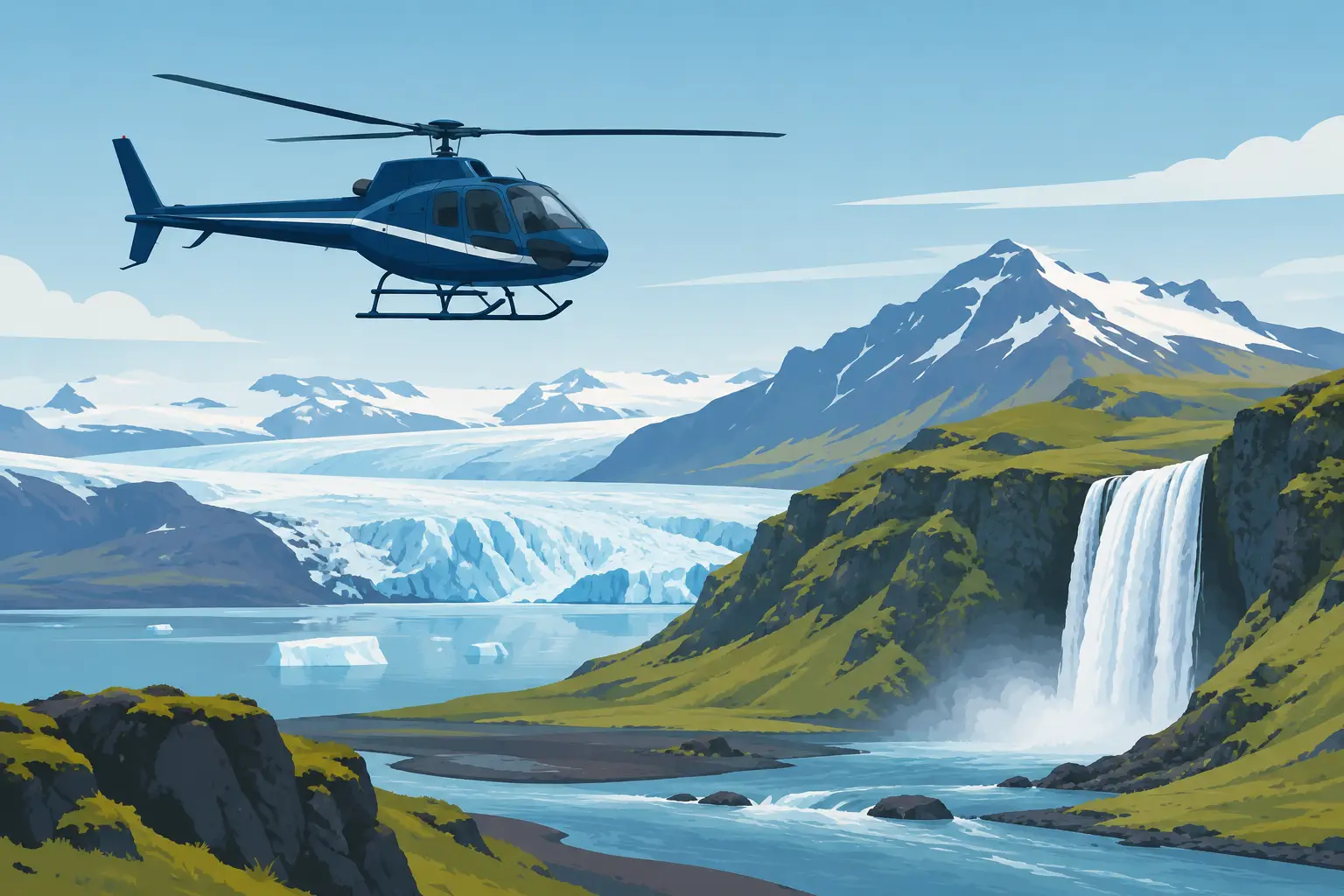
A waterfall with no road beside it, a black-sand ridge above a glacier, a steaming highland valley that would take hours to reach by 4×4 – these are the moments that make the top remote places by helicopter in Iceland so compelling. A helicopter changes the scale of the country. Instead of spending most of a day driving between viewpoints, you can cross lava fields, rivers, and ice caps in minutes, then land where the landscape feels entirely your own.
For private travelers, the value is not simply speed. It is access, flexibility, and the ability to shape a day around the places that matter most to you. Iceland’s weather and landing conditions always guide the final plan, but with the right route and an experienced local crew, the country’s less-reached landscapes become possible in a way no standard road itinerary can match.
The top remote places by helicopter in Iceland
The best destination depends on the season, departure point, weather, and the kind of experience you want. Some guests want a dramatic glacier landing and a short, high-impact flight from Reykjavík. Others have a full day available and want to combine waterfalls, volcanoes, and the interior. These are the places that consistently reward the journey from above.
Landmannalaugar and the colorful highlands
Landmannalaugar is one of Iceland’s most recognizable highland landscapes, but its remoteness is part of its appeal. Rhyolite mountains layer the horizon in rust, gold, green, and charcoal, while geothermal activity sends steam into the cold air. From the ground, reaching this area can involve long drives, rough tracks, and river crossings during the accessible season.
By helicopter, the route itself is part of the experience. You see the roadless interior unfold beneath you: braided rivers, vast lava fields, and ridges that reveal how quickly Iceland’s terrain can change. A landing near the highlands allows time to take photographs, walk a short distance, and absorb the silence before continuing to another destination.
Landmannalaugar is particularly strong for travelers who want color and geology rather than a single landmark. Conditions can be changeable, so it is best approached as part of a flexible custom itinerary rather than a fixed promise of one exact landing spot.
Háifoss and the canyon country of the interior
Háifoss drops nearly 400 feet into a broad canyon cut by the Fossá River. It is among Iceland’s tallest waterfalls, yet it can feel far removed from the better-known stops along the South Coast. From the air, the setting becomes even more striking: the waterfall, neighboring Granni, and the river canyon appear as one dramatic composition against the highland plateau.
This is an excellent choice for couples, families, and photographers who want a powerful waterfall experience without the crowds and drive time associated with more accessible sites. The approach also creates an ideal contrast in a scenic flight, moving from green lowlands toward bare interior terrain before arriving at the falls.
A helicopter cannot always land at the same point, and pilots select suitable sites based on conditions and operational requirements. That variability is not a compromise. It is part of flying responsibly in a landscape where safety, land access, and weather set the rules.
Eyjafjallajökull and Iceland’s volcanic edge
Eyjafjallajökull is known around the world for the 2010 eruption that disrupted air travel across Europe. From above, it is much more than a famous name. Its ice-covered volcanic mass rises between the South Coast and the highlands, with black volcanic terrain, outlet glaciers, and views toward the Atlantic on clear days.
A flight in this region can show Iceland’s elemental contrasts within a short distance: ice over fire, green farmland meeting ash-dark slopes, and glacial rivers threading toward the coast. It works especially well for travelers based in Reykjavík who want a substantial scenic experience but have limited time for a full-day expedition.
Visibility is decisive here. A clear forecast can deliver exceptional views, while cloud may obscure the very peaks that make the route special. An experienced operator will assess the conditions honestly and recommend an alternative route when that produces a better flight.
Vatnajökull’s glacier landscapes
Vatnajökull is Europe’s largest glacier by volume, and its scale is difficult to understand from a roadside viewpoint. From a helicopter, the glacier becomes a living map of ice formations, crevasse fields, volcanic ridges, and outlets pushing toward lower ground. On favorable days, a glacier landing offers one of Iceland’s most memorable private travel experiences.
This is a destination for guests who want grandeur rather than convenience. Depending on the departure base and routing, it may require a longer flight and a larger time commitment. The reward is a sense of true distance from the populated coast, with very few signs of roads or towns in view.
Glacier landings require conservative decision-making. Wind, visibility, snow cover, and surface conditions all matter, and a planned landing may be moved or replaced if it is not appropriate on the day. Travelers who embrace that flexibility tend to get the best experience because the crew can follow the strongest available conditions.
Askja and the highland caldera
Askja sits deep within Iceland’s interior, surrounded by stark volcanic desert. Its caldera and the blue waters of Víti crater create a scene that feels almost extraterrestrial, especially when dark lava and lingering snow frame the basin. By road, Askja is a serious highland undertaking. By helicopter, it becomes an extraordinary destination for a full-day private journey.
Askja is not the right choice for every visitor. It is best for guests with time, a strong interest in geology, and a willingness to let weather determine the route. But when conditions align, few places convey Iceland’s raw volcanic character with the same intensity.
The Troll Peninsula for winter access and heli-skiing
Northern Iceland’s Troll Peninsula offers a different type of remoteness. Its steep mountains rise directly from narrow fjords, and winter snow can create exceptional terrain for heli-skiing with qualified guides and appropriate operational support. In summer, the same region is ideal for scenic flights over sharp ridgelines, secluded valleys, and the waters of Eyjafjörður.
A northern departure can be especially valuable for travelers who are already exploring the region. Rather than retracing a long route to Reykjavík, they can begin close to the mountains and build a private experience around the conditions of the day. This is where local knowledge is especially useful, as wind direction and cloud can vary significantly from one valley to the next.
How to choose remote places by helicopter
The most successful helicopter day is built around priorities, not a rigid checklist. If your goal is a proposal, anniversary, or family celebration, a private landing with a beautiful but accessible flight profile may be the best choice. If you are a photographer, you may prefer a longer charter with time to wait for light and reroute around cloud. If you are visiting Iceland on a short luxury itinerary, combining an airport transfer or point-to-point flight with a scenic landing can make better use of the day.
Share the details that affect the itinerary: where you are staying, how much time you have, the season, the size of your party, and the landscapes you most want to see. Volcanoes, waterfalls, glaciers, geothermal areas, and highland solitude each call for different routing. A custom flight should feel designed around your trip, not squeezed into a generic map.
HeliAir can arrange scenic and private helicopter experiences from Reykjavík and northern Iceland, with routing tailored to your destination, timing, and conditions. For complex plans, including aerial photography, heli-skiing support, or travel between locations, the same direct planning approach matters even more.
What to expect on the day
Dress for the landing, not just the departure point. The temperature can be lower on a glacier or exposed plateau, and wind can make even a short stop feel cold. Warm layers, sturdy footwear, gloves, and sunglasses are practical choices. Your crew will provide a safety briefing and advise on any destination-specific needs.
Weather is central to every Iceland helicopter flight. It may affect visibility, route selection, duration, and landing locations. That is why a premium experience is not defined by insisting on an unsafe plan. It is defined by having the judgment and flexibility to find the best available landscape for the conditions.
Leave room in your Iceland itinerary for that flexibility. The right weather window can turn a planned flight into the moment you remember most clearly: stepping onto a remote ridge, looking across ice and lava, and realizing there is no road to where you are standing.