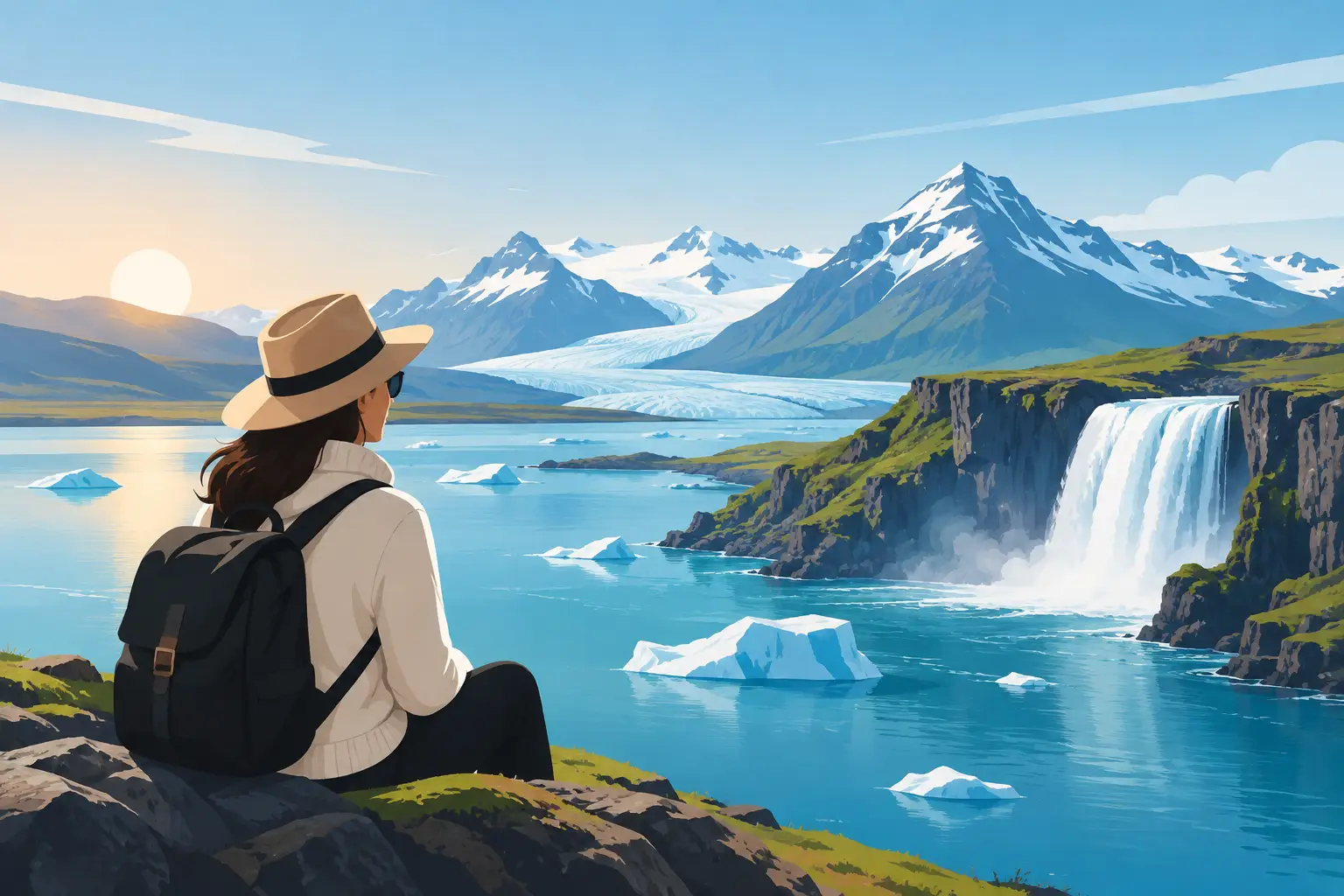
A day in Iceland can begin with clear views across a glacier and end with low cloud over the highlands. That reality is shaping Iceland tourism trends as much as any new attraction: travelers are placing a higher value on access, flexibility, and experiences that make every hour in the country count.
For luxury visitors and private groups, the appeal is no longer simply checking off the Golden Circle or driving the Ring Road. It is seeing a volcano field without spending half the day in a vehicle, landing near a remote waterfall, or building an itinerary around the conditions that make Iceland extraordinary on a given day. The best trips are becoming less standardized and more intentional.
Iceland Tourism Trends Are Moving Beyond the Standard Route
Iceland’s famous sights remain famous for a reason. Waterfalls, black-sand beaches, glacier lagoons, geothermal areas, and dramatic coastlines deserve their place on a first itinerary. But experienced travelers are increasingly looking beyond the most predictable stops, especially when their time is limited.
This does not mean avoiding the iconic places altogether. It means seeing them differently. A private aerial route can place a familiar landmark within a much larger landscape – rivers threading through lava, ice caps meeting volcanic terrain, and highland valleys that have no easy road access. From the air, Iceland feels less like a series of separate attractions and more like one powerful geological story.
There is a practical reason for this shift, too. Overland travel in Iceland is rewarding, but distances are substantial and conditions can change quickly. A route that looks simple on a map may involve several hours of driving, changing visibility, road closures, or a limited window at the destination. Travelers with one or two days in Reykjavík are increasingly choosing a focused, high-quality experience over an ambitious road itinerary that leaves little room for spontaneity.
Privacy and Time Are Becoming the Real Luxury
Premium travel in Iceland is not only about flying privately or staying somewhere exclusive. It is about control of the day. Couples, families, and small groups want to travel at their own pace, spend longer where the light is right, and avoid building a once-in-a-lifetime trip around fixed bus schedules.
Private helicopter travel answers that need particularly well. It can turn a long transfer into part of the experience, connect a Reykjavík itinerary with a remote landscape, or create a full-day journey built around specific interests. A photographer may prioritize early light, contrasting terrain, and time on location. A family may prefer shorter flight sectors and a comfortable pace. A group celebrating a milestone may want a glacier landing, a secluded picnic setting, or a route that combines waterfalls, volcanic ground, and sweeping coastal views.
Customization does not mean conditions can be ignored. Icelandic weather remains the final decision-maker. The strongest private itineraries are designed with alternatives from the start: a preferred route, a second landscape with different weather exposure, and enough flexibility in the schedule to make a good operational call. That approach protects the experience rather than treating a weather adjustment as a disappointment.
The Highlands Are Gaining Attention
Iceland’s interior has long held a special appeal for travelers who want distance, scale, and a sense of genuine remoteness. As visitors look for less crowded experiences, the highlands are drawing more interest – but they are not a place to approach casually.
Road access is seasonal, routes can be rough, and many areas require considerable time and capable vehicles. This is where aerial travel changes what is possible. Landscapes that would require a full day of driving, or may not be reachable by road at all, can become part of a carefully planned flight from Reykjavík or northern Iceland.
The value is not simply speed. It is perspective. The highlands reveal Iceland’s contrasts at their clearest: braided glacial rivers, dark volcanic deserts, mossy ridges, geothermal color, and wide expanses with almost no built environment. A helicopter can also make a landing where appropriate, giving guests time to step into the silence rather than only viewing it through a window.
For travelers considering the highlands, season matters. Summer brings the broadest access and long daylight, while shoulder seasons can offer beautiful light and fewer visitors but more variable conditions. Winter creates its own dramatic possibilities, although the range of suitable destinations and landing options depends heavily on weather, daylight, and operational assessment.
Volcanic Landscapes Remain a Powerful Draw
Active volcanic systems have made Iceland’s geology feel immediate for many international visitors. Interest in volcano tours has grown because these landscapes are not abstract history. Fresh lava fields, crater rows, fissures, and steam rising from the ground offer a rare view of a country still being formed.
Yet volcanic travel requires clear expectations. Activity levels, access restrictions, air quality, wind direction, and safety guidance can change. A responsible aviation operator will never promise a specific close approach to an active site when conditions or official restrictions do not allow it.
That does not reduce the experience. Iceland offers remarkable volcanic terrain well beyond an active eruption. A flight over older lava fields, volcanic ridges, glaciers shaped by past eruptions, and geothermal areas can be every bit as memorable. The difference is that the day should be built around the best landscape available, not a single image seen online.
Shorter Stays Call for Smarter Itineraries
Many US travelers pair Iceland with a longer European trip, a stopover, or a brief escape from the East Coast. They may have only three or four nights on the ground. That is creating demand for experiences that deliver depth without requiring a week behind the wheel.
A scenic flight of 90 minutes to several hours can offer a meaningful introduction to Iceland’s scale, particularly when paired with time in Reykjavík, a private transfer, or a custom day trip. Longer exclusive flights allow more room for landings and a more varied route. Neither is automatically better. The right choice depends on the season, the group’s interests, tolerance for weather changes, and how much of the trip should be spent in transit versus at the destination.
This is also why airport transfers are becoming more relevant for high-value itineraries. For some guests, a direct flight between Keflavík, Reykjavík, and another part of the country creates time for an experience that would otherwise be lost to logistics. For others, a road transfer is the better fit because they want to absorb the landscape gradually. Premium planning is not about choosing air travel for every mile. It is about using it where it creates the greatest value.
Photography Is Influencing How Guests Travel
Iceland has always attracted photographers, but visual storytelling now shapes travel decisions for nearly every visitor. Guests want the dramatic wide shot, certainly, but they also want an experience that feels personal rather than copied from a crowded viewpoint.
Aerial photography offers angles that ground-based travel cannot. It reveals the patterns of river systems, ice formations, coastlines, and lava fields. It also requires discipline. Weather, low light, reflections, aircraft positioning, and safety procedures all affect what can be captured. The best results come from communicating creative priorities before the flight, then allowing the pilot and operations team to choose the safest, most effective way to pursue them.
For professional productions, the requirements go further. Equipment needs, shooting windows, door-off considerations where available and appropriate, permissions, payload limits, and contingency planning should be discussed early. A scenic flight and an aerial production flight may share the same landscape, but they are planned differently.
What This Means for Planning an Iceland Trip
The most meaningful trend is not a destination or a season. It is a change in mindset. Travelers are moving from collecting sights to designing days around what they most want to feel: solitude, scale, adventure, comfort, or time together in a landscape unlike anywhere else.
HeliAir works with guests who want that kind of access, from structured scenic flights to fully custom helicopter journeys across Iceland. The conversation should begin with the places that matter most, the time available, and the flexibility built into the trip. From there, a route can be shaped around the conditions rather than forced against them.
Iceland rewards travelers who leave room for the unexpected. Plan for the landscape you hope to see, then let an experienced local team guide you toward the one that will be at its best when it is time to fly.