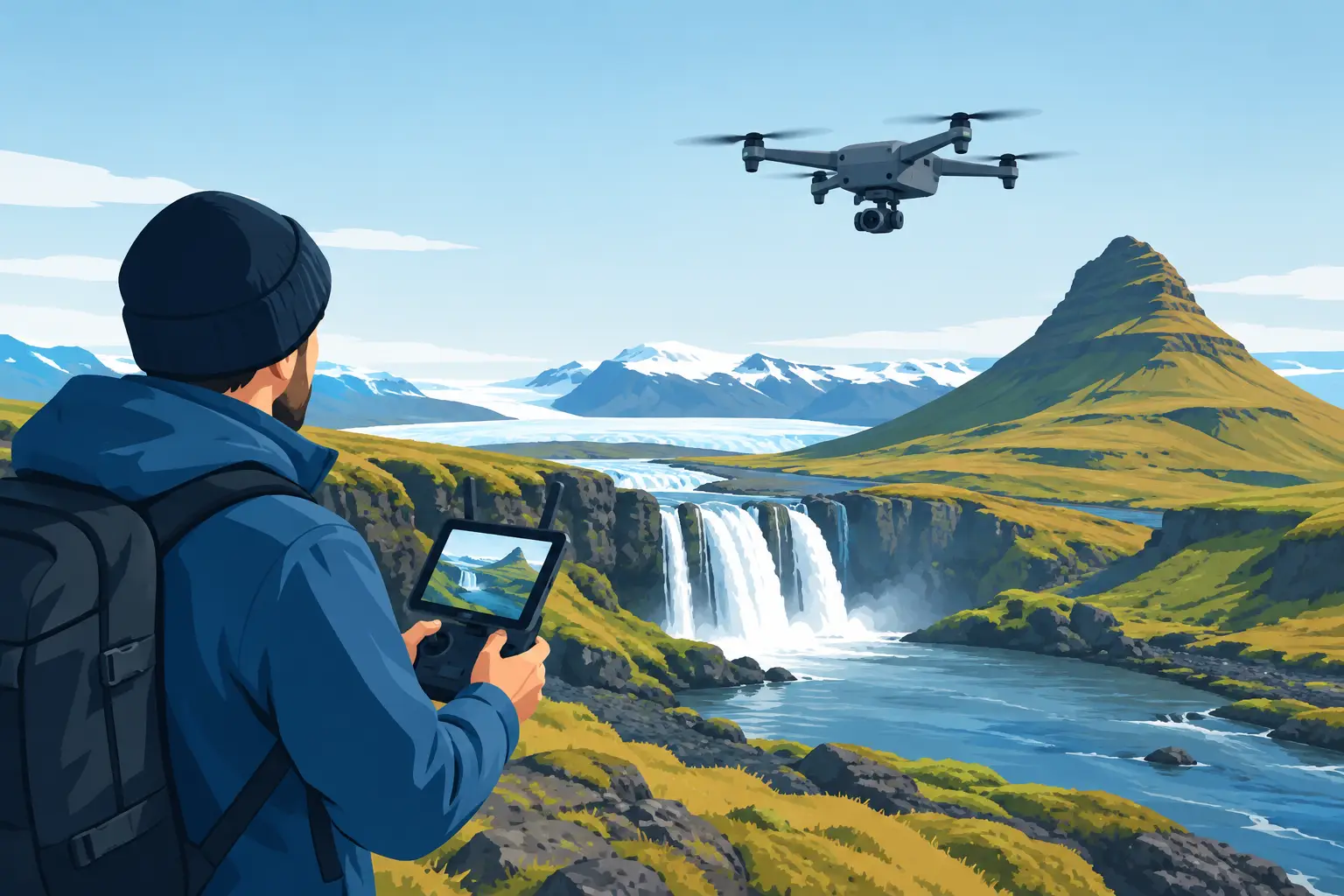
A helicopter shot can turn a difficult-to-reach waterfall, black-sand coastline, or volcanic ridge into the defining image of a production. But Iceland does not reward loose planning. Weather moves quickly, landing options vary by location, and a route that looks simple on a map may require careful timing and local knowledge. Knowing how to arrange aerial filming begins with a clear creative brief and a flight plan built around real operating conditions.
Start With the Shot, Not the Aircraft
Before selecting a helicopter or setting a filming date, define what the camera needs to capture. A wide establishing pass over a glacier has different requirements than a low, directional tracking shot along a canyon. The more specific the brief, the more effectively the flight can be planned.
Share your preferred locations, intended use of the footage, production dates, crew size, camera system, and desired style. Reference images, a shot list, and an indication of whether sound will be recorded are especially useful. Helicopter cabins are loud, so dialogue and clean natural sound usually need to be captured separately.
It also helps to identify the shots that are essential and those that are optional. Iceland offers extraordinary visual variety within a relatively compact area, but conditions can make one location more suitable than another on a given day. A strong plan protects the priority shots while leaving room to adapt.
Choose the Right Aerial Filming Setup
The right aircraft depends on the scale of the production, the equipment weight, the number of people traveling, and the shooting method. A compact crew using handheld or stabilized cameras may have very different needs from a commercial production carrying cinema cameras, specialist operators, and additional support gear.
Discuss whether the filming will take place through an open window, from a configured camera position, or with a handheld setup inside the cabin. Each option involves trade-offs. Open-window work can provide a cleaner image, but it is more exposed to wind and cold. Cabin-based filming offers greater protection for crew and equipment, though reflections and limited angles may affect the result.
Weight and balance are operational considerations, not afterthoughts. Camera equipment, batteries, mounts, personal gear, and the number of passengers all affect aircraft loading. Provide accurate equipment details early, including any unusually large lenses, stabilizers, or rigging requirements.
For productions that need landing access as well as aerial coverage, plan this from the outset. A helicopter can open access to remote locations, but not every dramatic landscape is an appropriate or permitted landing site.
How to Arrange Aerial Filming Permits and Access
Aerial filming in Iceland may involve permissions beyond the helicopter booking itself. Requirements can depend on the location, the type of production, whether you intend to land, the size of the crew, and whether the work is commercial. Protected areas, private land, sensitive wildlife zones, and popular natural attractions may have their own rules.
Your aviation operator can help identify the practical questions early, but production teams should allow adequate time to confirm access with relevant landowners, site managers, and authorities. Do not assume that a location visible from the air is automatically available for a landing or repeated filming passes.
Commercial crews should also consider insurance documentation, aircraft safety procedures, and site-specific production requirements. If a ground unit is supporting the helicopter operation, establish where vehicles, crew, and equipment can safely stage. Remote Icelandic locations may have limited roads, no services, and uneven communications coverage.
A respectful approach matters. Iceland’s landscapes are both visually powerful and environmentally sensitive. Avoiding unnecessary disturbance, following local access conditions, and working with an experienced local operator protects the location and keeps the production moving.
Build a Route Around Light, Weather, and Distance
Iceland’s weather is a creative variable as much as an operational one. Low cloud can hide a summit, wind can change the character of a coastal shot, and passing rain can create dramatic texture across lava fields and glaciers. The goal is not always perfect blue sky. It is to match the conditions to the visual story you want to tell.
Build flexibility into the schedule wherever possible. A production with one fixed hour and no backup option may miss the best available conditions. A wider filming window allows the pilot and crew to choose the most suitable time, route, and direction of travel.
Light deserves equal attention. Early and late daylight can bring long shadows and more shape to the terrain, while overcast skies can reduce contrast and create a softer, more even look. In summer, long daylight hours create generous shooting opportunities. In winter, lower sun angles can be beautiful, but shorter days and more variable conditions require tighter planning.
Distance also affects what can be achieved in a flight. A route should account for transit time, filming passes, possible landing time, fuel planning, and a weather margin. Trying to include too many distant landmarks often produces less useful footage than focusing on two or three areas with distinct visual character.
Plan the Flight Path With the Pilot
The pilot is an essential part of the filming team. A clear pre-flight discussion should cover the desired direction of travel, shot duration, turns, altitude preferences, and any repeated passes. Describe the shot in practical terms: approach from the ocean side, reveal the waterfall after the ridge, track along the river, or hold a wide profile of the glacier.
The pilot will then assess what is safe and suitable based on wind, terrain, cloud, visibility, airspace, and other aircraft activity. In mountainous terrain, wind can behave differently from one valley to the next. A route that is visually ideal may need to be adjusted to maintain safe operating margins.
Keep communication simple during the flight. One designated person should call for shot adjustments, reducing confusion in the cabin. If the camera operator needs a second pass, say so promptly, but understand that repeat passes depend on conditions, aircraft position, and available flight time.
Prepare Your Crew and Equipment for Iceland
Aerial filming days move quickly. Charge every battery, format media, secure straps, and confirm camera settings before arriving at the helicopter base. Loose items are a safety issue and can also distract from the work once the aircraft is airborne.
Dress for the temperature outside, not the comfort of the vehicle that brought you there. Layers, gloves that still allow camera control, eye protection, and weather-resistant cases are practical choices. If filming includes landings on snow, lava, or exposed highlands, footwear should be suitable for uneven and potentially wet ground.
Bring only what is necessary into the aircraft. Extra equipment can complicate loading and restrict movement. A smaller, well-prepared kit often delivers better results than a cabin crowded with options that cannot be used safely in flight.
Book Enough Time for Useful Footage
Aerial filming is rarely just the minutes spent recording. Allow time for a safety briefing, loading, camera setup, route discussion, and weather assessment. If a shoot requires multiple locations, crew changes, or a landing sequence, a short scenic flight may not be the right format.
For bespoke productions, a private charter gives the greatest flexibility to prioritize the route, pace, and filming objectives. HeliAir can help shape a flight around Iceland’s glaciers, waterfalls, volcanoes, highlands, and coastal landscapes, while keeping the operation grounded in current conditions and practical aviation planning.
Be open about your budget and your must-have footage. The best plan may be a focused flight during the strongest light rather than a longer route that spends too much time in transit. For larger productions, consider reserving a weather contingency period instead of treating the first scheduled departure as the only opportunity.
A well-arranged aerial filming flight should feel prepared, not over-scripted. Bring a clear visual objective, trust the operational judgment of the pilot, and leave space for Iceland to offer the unexpected conditions that make footage memorable.