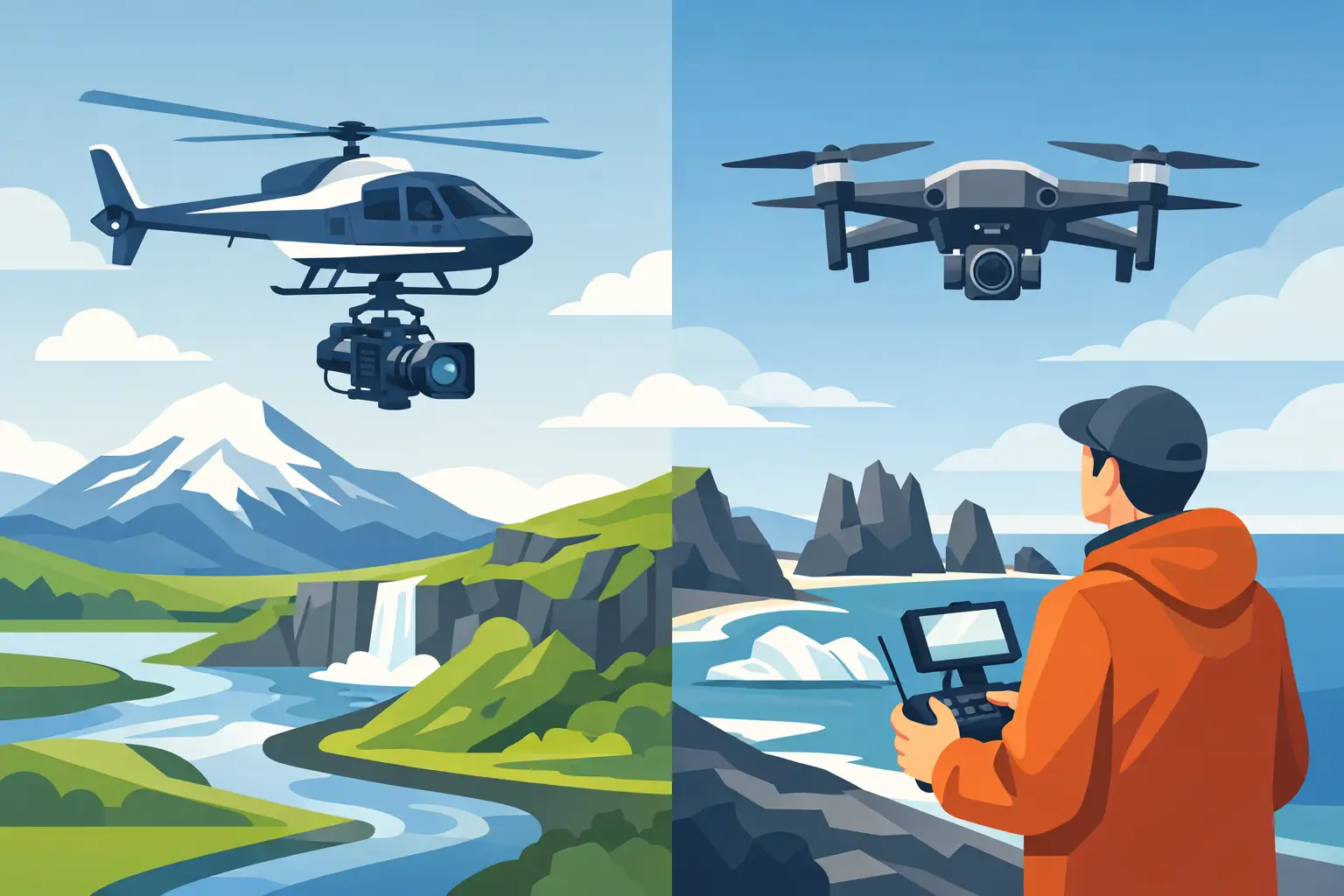
A waterfall can look close enough to touch from a drone screen, then disappear behind a sudden ridge of wind, mist, or restricted airspace. That is why aerial filming versus drone filming is not simply a question of camera quality in Iceland. It is a production decision that affects your schedule, shot design, crew access, sound, safety planning, and the scale your final film can achieve.
For a luxury travel campaign, a feature production, a commercial, or a private creative project, both platforms have a place. The right choice depends on what must be captured, where it is located, and how much certainty the shoot requires when Icelandic conditions change.
Aerial Filming Versus Drone Filming: The Core Difference
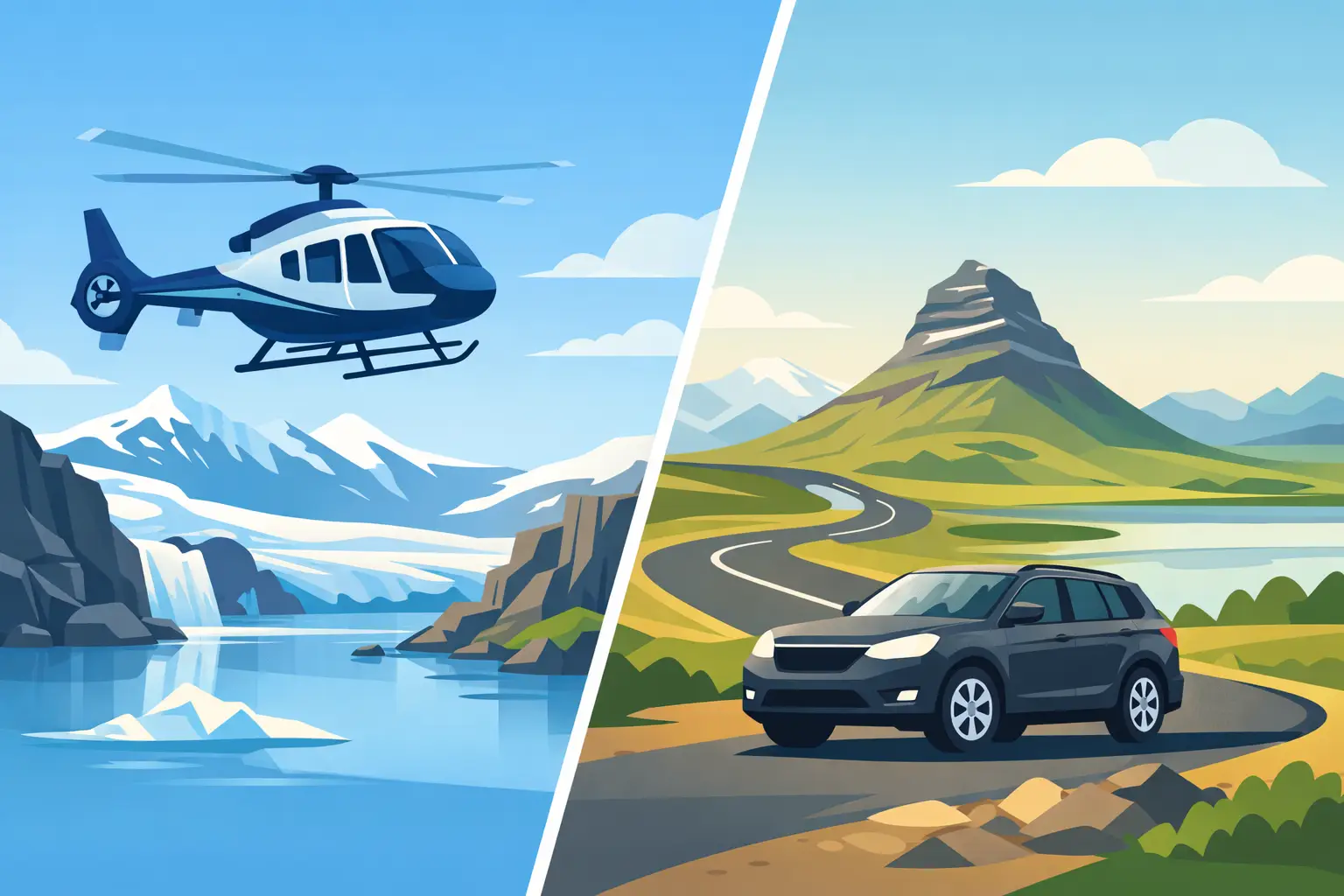
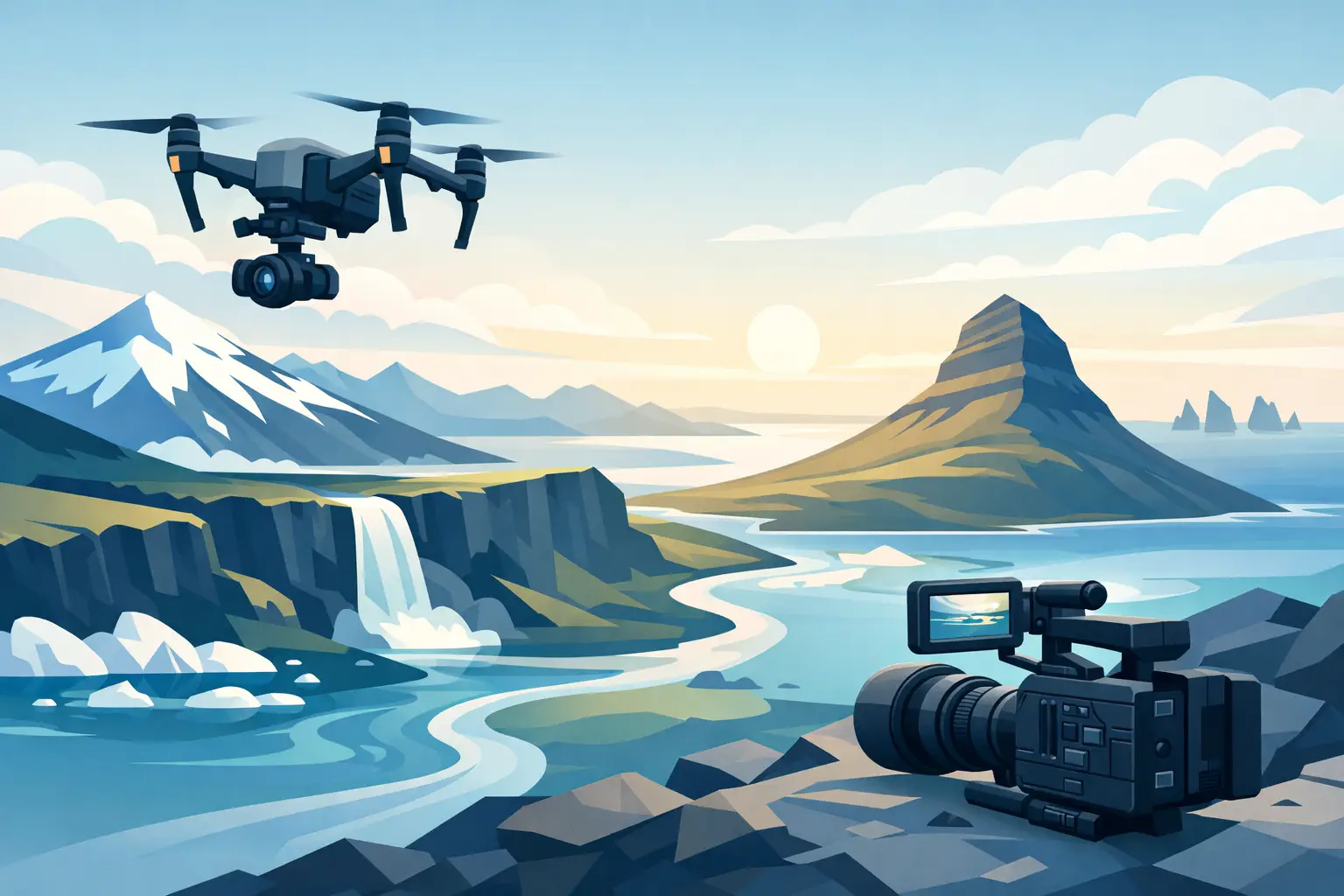
Drone filming is an agile, close-range tool. It excels at revealing a location slowly, moving through a carefully selected foreground, or creating an intimate orbit around a subject where a full-size aircraft would be impractical. It can be an efficient way to capture a single destination when the weather is cooperative and the flight area is suitable.
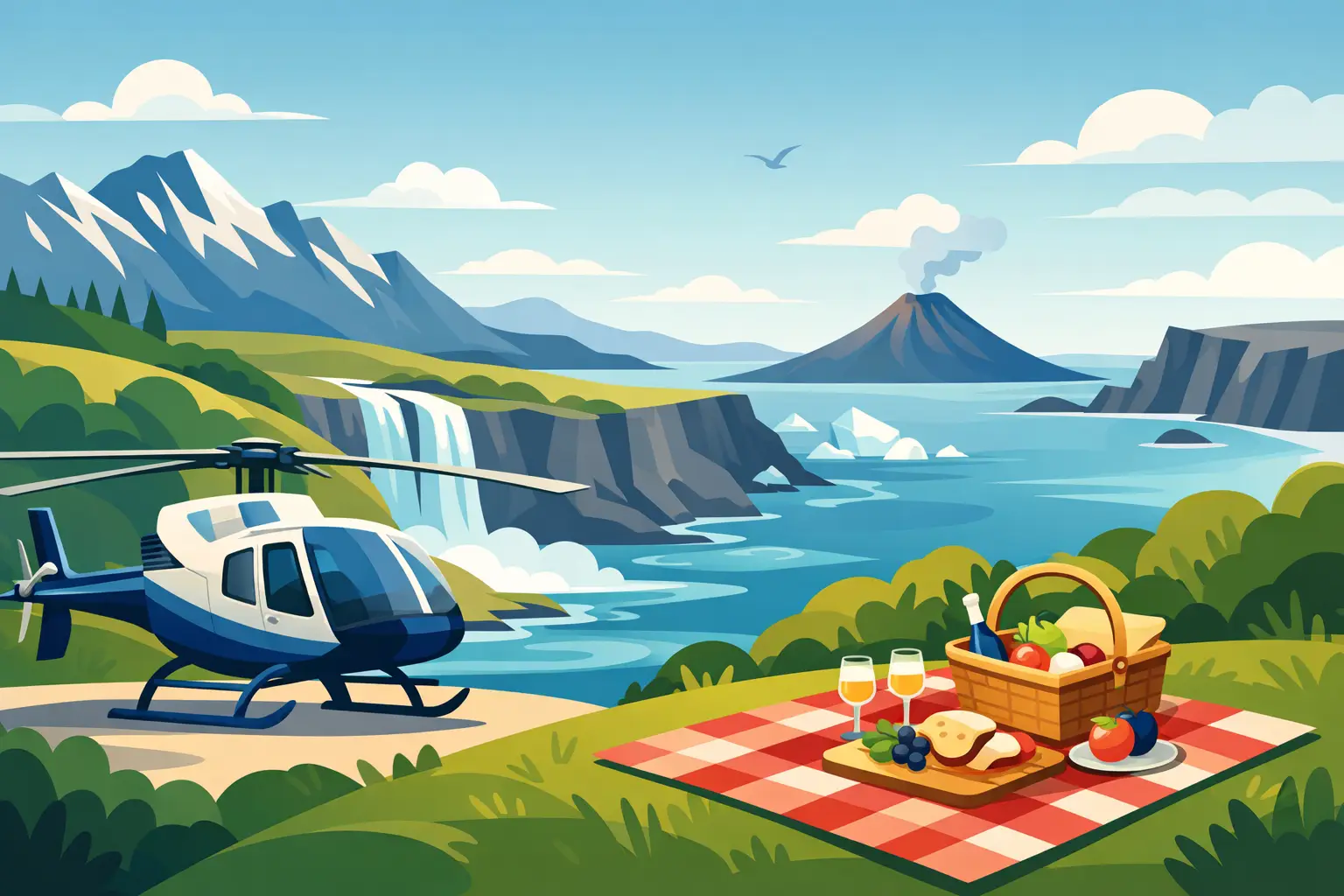
Helicopter aerial filming is a location-access and movement platform as much as a camera platform. It allows a production to cover substantial distance, follow the line of a glacial river, reveal an entire volcanic landscape, or transition from black-sand coast to highland interior in one flight. A helicopter also gives filmmakers the ability to reach places that may take hours to approach by road, if roads exist at all.
The difference is felt in the footage. A drone often creates a detailed, low-altitude sense of place. A helicopter can create scale, pace, and geography. One may show the texture of a waterfall’s edge; the other can show why that waterfall belongs to a vast valley, glacier, or mountain system.
When a Drone Is the Better Tool
A drone is often the sensible option when the shot is tightly defined. Perhaps you need a quiet sunrise reveal of a lodge, an overhead view of a private group on a beach, or a controlled pass along a rock formation. With the right operator, weather window, permissions, and safety setup, drones can deliver cinematic angles at a comparatively modest operating cost.
They are particularly valuable for shots that benefit from flying near the ground or close to a static subject. A drone can hover and repeat a small movement with precision. That makes it useful for product work, establishing footage around a property, and selected adventure scenes where the operator can maintain a clear, safe flight path.
But small does not mean simple. Iceland’s coastal wind, rain, cold temperatures, spray, and rapidly shifting cloud can shorten a drone flight or eliminate the window altogether. Battery performance and visibility matter. So do the exact rules governing the location. National parks, protected landscapes, populated areas, aviation zones, and private land can all require advance planning or restrict operations.
A drone also has natural limits in range, endurance, speed, and payload. Long moving shots across remote terrain may require multiple launches, repositioning of the crew, or a compromise in the route. If the production needs to cover several distant locations in one day, the time spent driving between them can become the real cost.
Where Helicopter Filming Changes the Possibilities
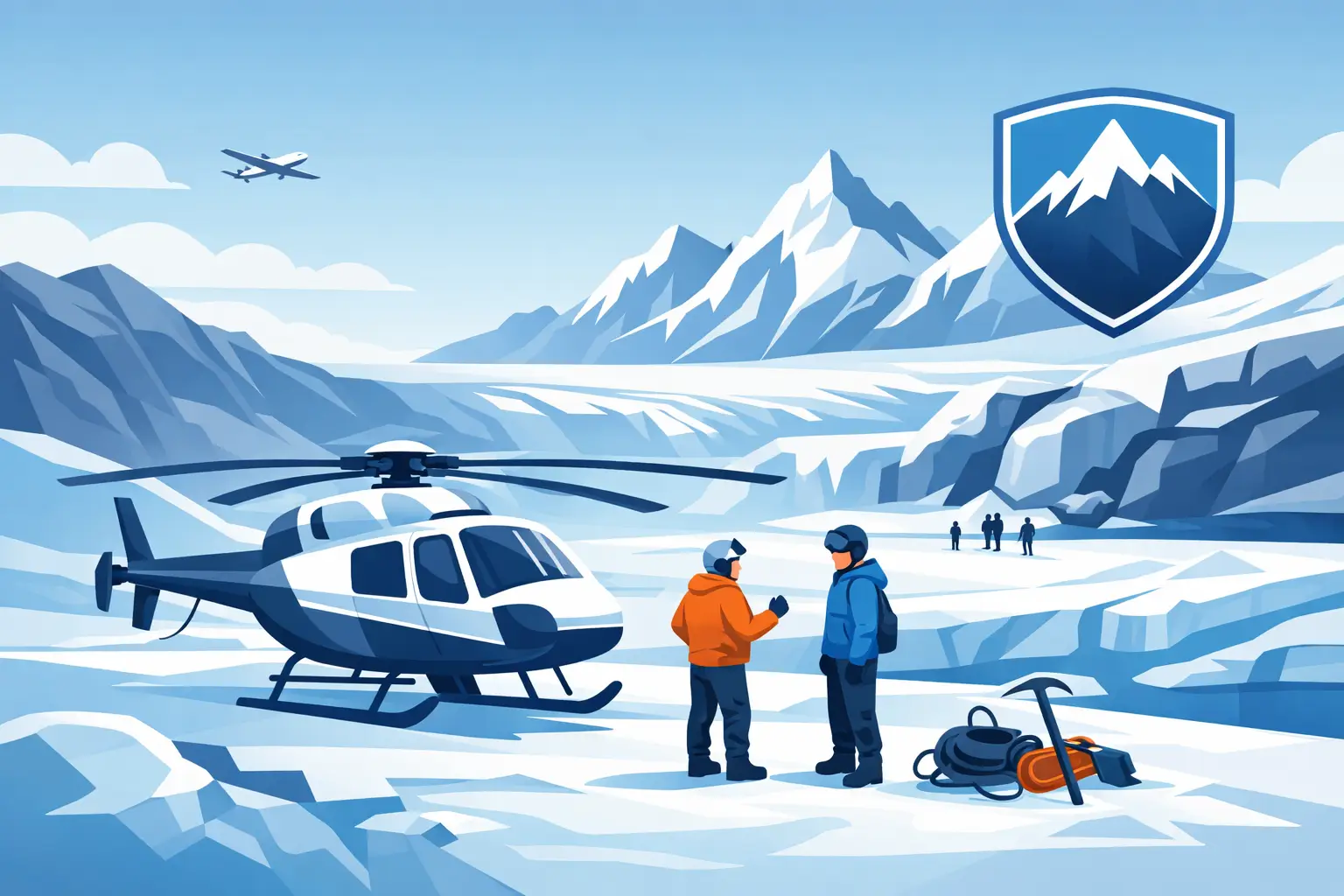
Helicopter filming is the stronger choice when the landscape itself is a central character. Iceland is built for these perspectives: ice caps stretching beyond the road network, braided rivers cutting through volcanic sand, waterfalls hidden inside remote valleys, and highlands that change from green to black to white within a single horizon.
From the air, a filmmaker can plan sequences rather than isolated shots. A flight can begin with the coastline, track toward a glacier, circle a volcanic ridge at an appropriate and safe distance, and continue to a landing area for a ground sequence. This gives a project visual continuity that is difficult to recreate with separate drone flights from multiple locations.
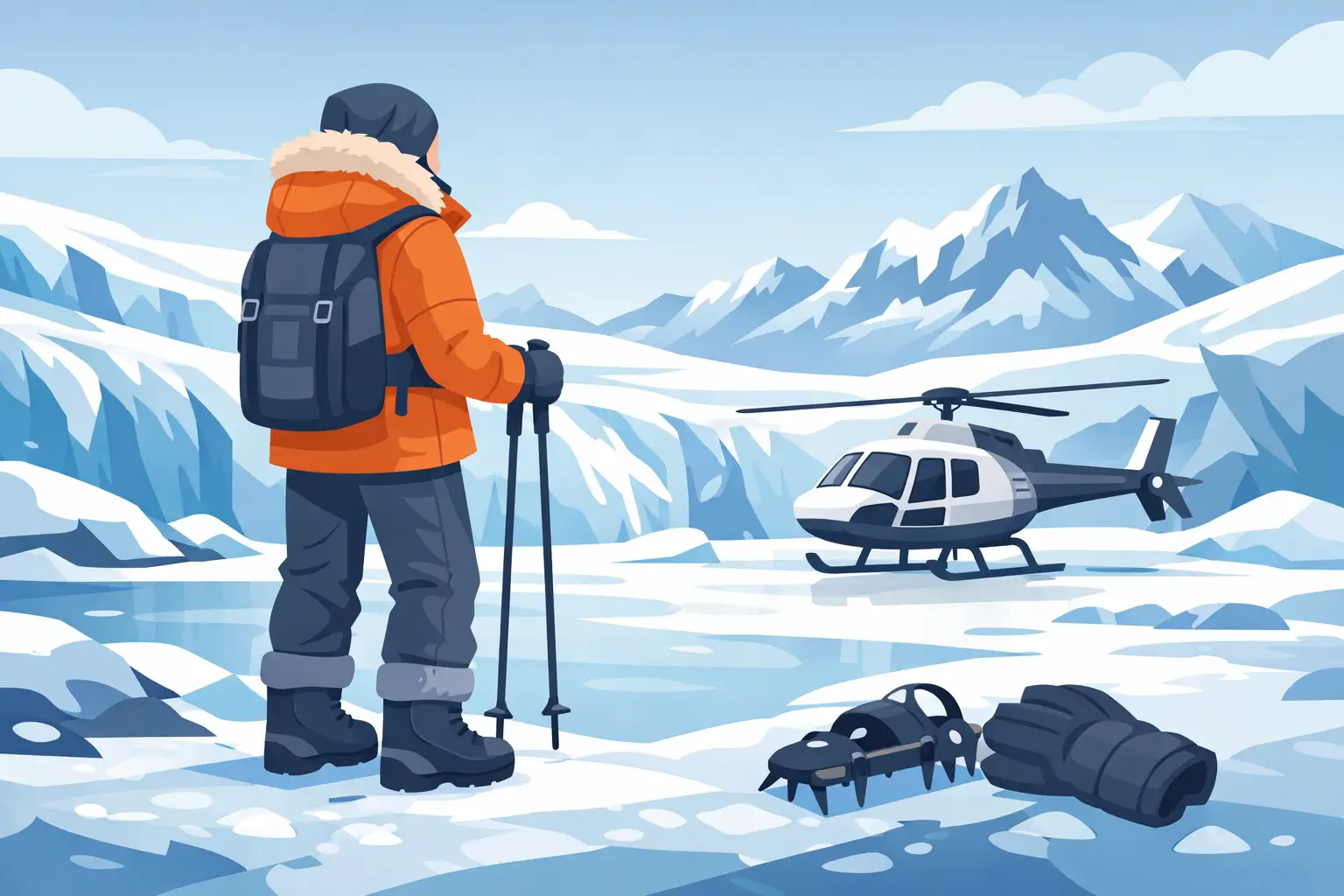
Helicopters also offer meaningful operational flexibility for productions with limited time. They can transport key crew, camera equipment within weight and safety limits, and talent to remote destinations without committing the entire day to overland travel. For a campaign shoot or editorial assignment with a narrow weather window, this can be the difference between capturing the location and missing it.
At HeliAir, aerial filming flights can be arranged around the creative brief, whether that means a short location-specific charter or a more ambitious route built around glaciers, waterfalls, volcanoes, and remote highlands. The planning should begin with the desired scenes, not with a generic flight pattern.
Camera Movement, Image Quality, and Sound
Neither platform automatically produces better footage. The camera package, stabilization system, lens choice, operator skill, light, and shot planning all have more influence than the aircraft alone.
Drones provide highly stabilized footage in a compact package and can create smooth, deliberate movements at low speed. Their perspective can feel immediate and immersive, especially when they fly over water, along a ridge, or toward a subject at close range. For social campaigns and digital-first content, this may be exactly what the edit needs.
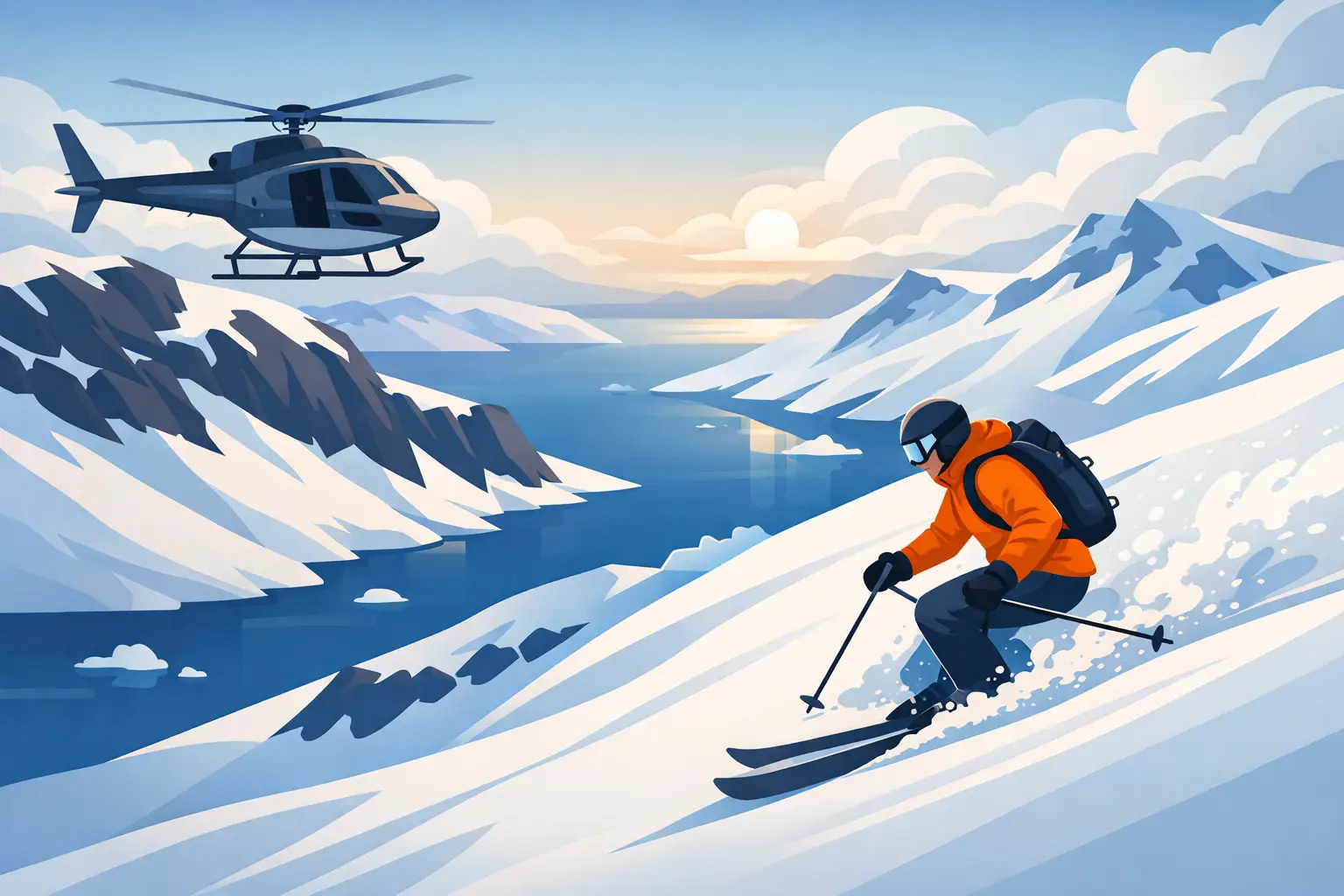
A helicopter supports a different visual language. It can carry professional cinema systems and specialized stabilized mounts, allowing longer-lens work, high-speed tracking, broad landscape reveals, and extended takes across major terrain. It is also better suited to aerial sequences involving moving vehicles, skiers, boats, or an expedition route across a large area.
Sound is the clear trade-off. Helicopter footage should generally be treated as visual footage, with natural sound recorded separately on the ground or built in post-production. Drones are quieter from a distance but are not silent, and their sound can still affect interviews, wildlife scenes, and intimate location recording. If synchronized production audio is essential, plan the aerial work separately from dialogue scenes.
Access, Permissions, and Safety in Iceland
The most beautiful location is not automatically an available filming location. Responsible aerial work begins with airspace awareness, location permissions, environmental considerations, and a realistic understanding of the conditions on the day.
Drone productions need to confirm where they can legally and safely operate, especially around airports, towns, protected areas, landmarks with local restrictions, and sensitive wildlife zones. They should also allow time for scouting launch and recovery points. A dramatic view from above is of little value if the team cannot safely position the aircraft on the ground.
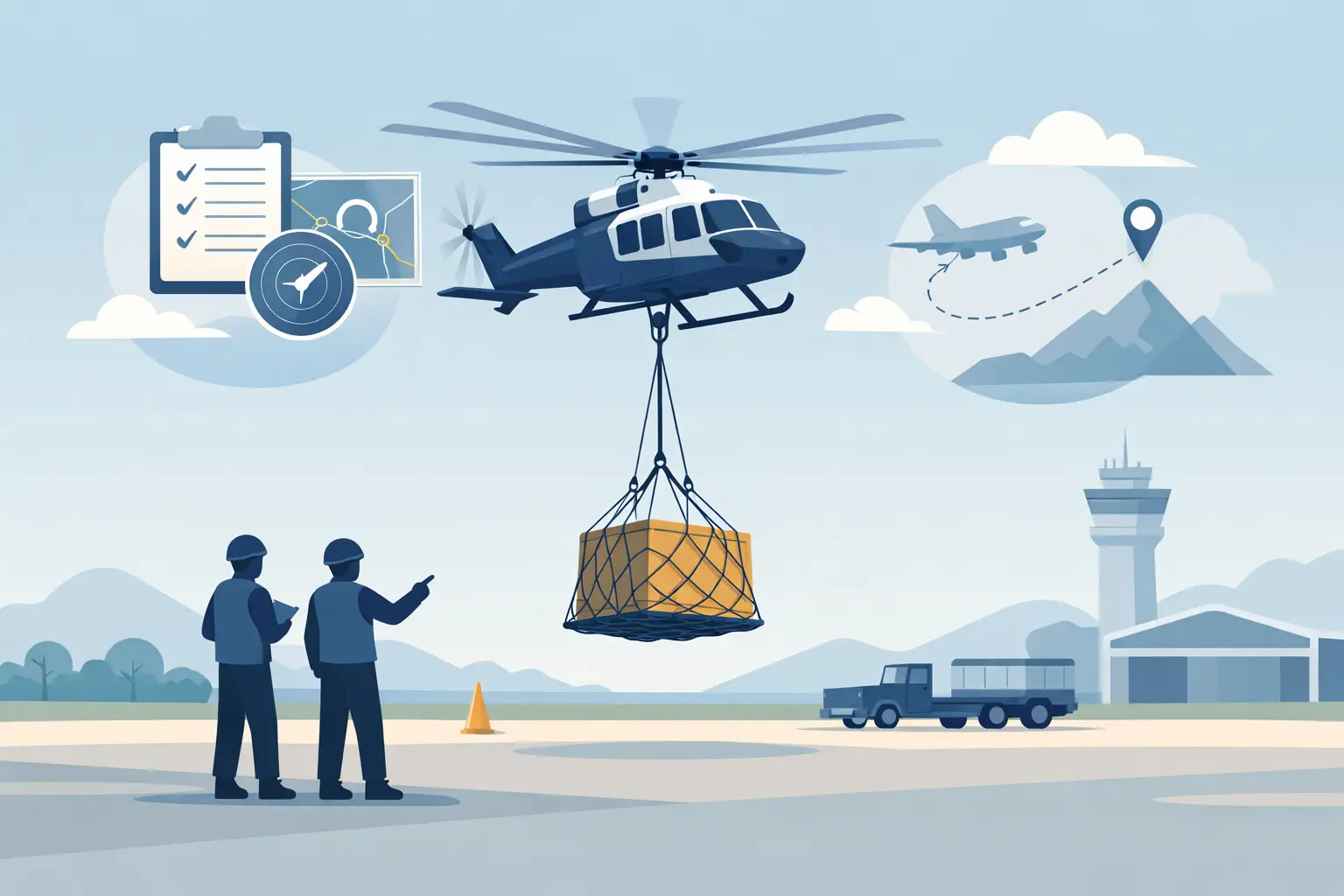
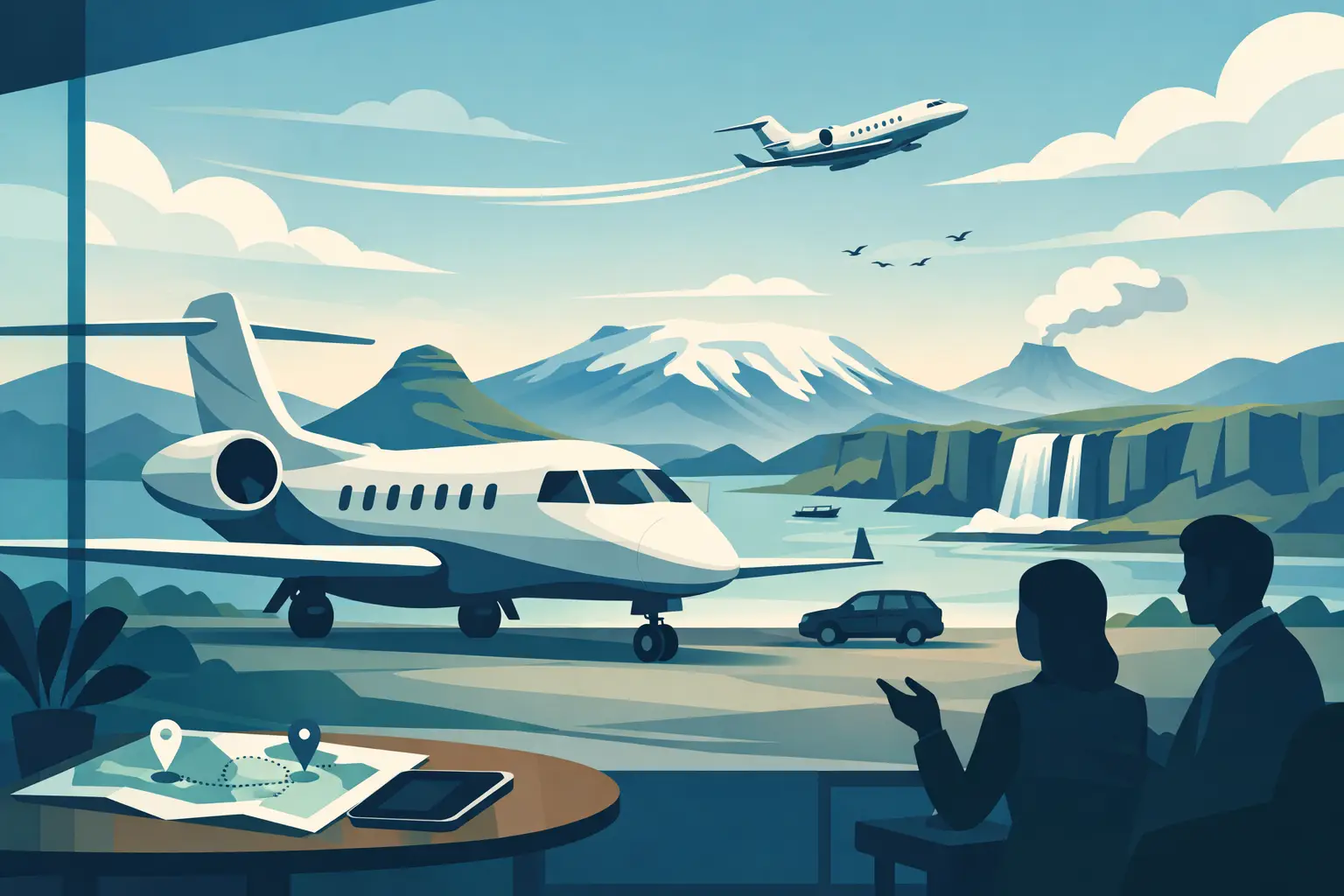
Helicopter operations require equally serious coordination, but the planning framework is different. Route selection, landing options, passenger and equipment weights, fuel, weather, terrain, and filming requirements must work together. An experienced local aviation operator can advise on what is realistic, suggest alternatives when a requested route is unsuitable, and build contingencies into the day.
Weather deserves special attention. Low cloud can obscure a summit while conditions remain workable elsewhere. Wind may make a drone launch inappropriate at a waterfall but still permit a helicopter route in another region, depending on the forecast and operational assessment. Flexibility in location and timing is often more valuable than a rigid shot list.
Cost Is More Than the Flight Rate
Drone filming may appear less expensive because the aircraft itself is smaller and the crew can be lean. That can be true for a single, accessible location. Yet a production should also account for travel time, vehicle logistics, scouting, permits, extra shoot days, and the possibility that a short flight window does not align with the schedule.
Helicopter filming has a higher direct cost, but it can reduce the time required to reach several difficult locations and deliver footage that would otherwise demand a much larger ground operation. For projects where Iceland’s remoteness is part of the story, the calculation is not only cost per hour in the air. It is cost per usable shot, per location reached, and per day saved.
A hybrid approach is often the strongest creative choice. Use helicopter footage for the grand approach, terrain transitions, and remote access. Use a drone for the low, intimate movements once the production is on location. The final edit gains both the scale of Iceland from above and the closer details that make the viewer feel present.
Choose the Platform Around the Story
Start with the emotional purpose of the shot. If the audience needs to feel the force of a remote glacier, the distance between a volcano and the sea, or the exclusivity of arriving somewhere few visitors reach, helicopter filming may be the natural fit. If the scene needs a measured, close pass over a single setting, a drone may serve it beautifully.
The best aerial plan is rarely about choosing one technology over another. It is about matching the aircraft to the terrain, the weather, the permissions, and the story you want people to remember. Build the shot list around what Iceland can safely offer on the day, and the landscape will do the rest.