Iceland Aerial Sightseeing Guide

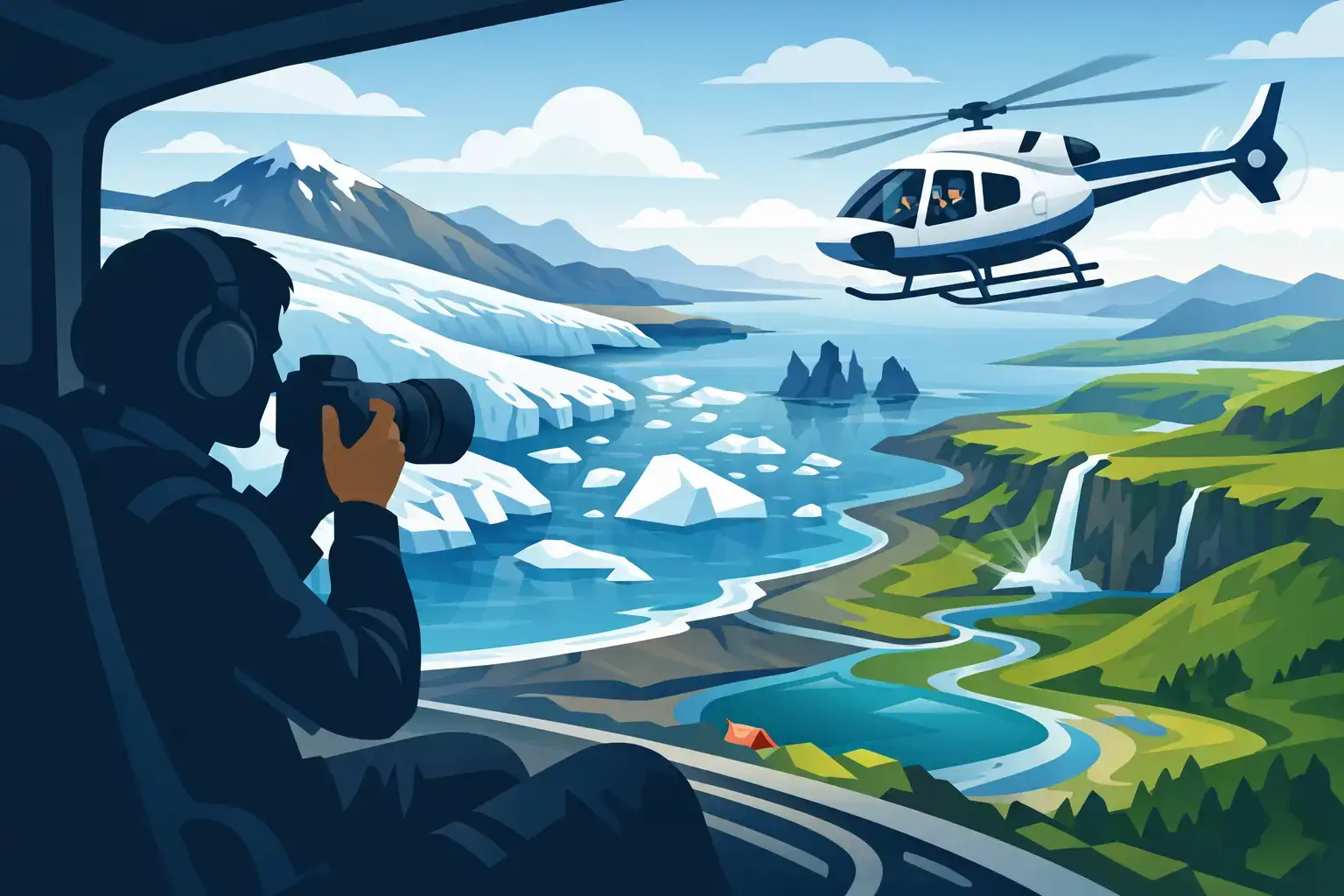
The difference starts the moment you leave the ground. Roads in Iceland are part of the adventure, but they also impose distance, weather delays, and a fixed perspective. An Iceland aerial sightseeing guide matters because the country was shaped on a scale that often makes the best terrain difficult to grasp from ground level. From the air, you see how lava fields run into glacier tongues, how river systems cut through black sand, and how remote highland basins sit far beyond the reach of an ordinary day trip.

For travelers planning one standout experience, aerial sightseeing is less about checking off landmarks and more about choosing what kind of Iceland you want to experience. Some flights are about iconic scenery near Reykjavík. Others are built around landings on mountain ridges, glacier edges, or volcanic terrain that would otherwise take a long overland journey to access. The right choice depends on your time, budget, weather flexibility, and whether you want a classic scenic tour or a fully tailored charter.

How to use this Iceland aerial sightseeing guide

The first decision is simple: do you want a scheduled sightseeing experience or a custom helicopter day built around your priorities? A shorter tour works well if you want a premium highlight without giving up an entire day. It gives you strong scenery, efficient logistics, and a clear route. A custom charter is better when the destination matters as much as the flight itself, especially for photographers, private groups, proposals, family celebrations, or travelers trying to reach several remote sites in one day.

Departure point also shapes the experience. Flights from Reykjavík are ideal for visitors already based in the capital or arriving on a tight itinerary. Northern departures, including routes from Ólafsfjörður, open a different side of Iceland, with dramatic mountain coastlines, snow conditions in season, and access that suits heli-skiing support or bespoke exploration away from the busiest visitor corridors.

What many travelers underestimate is how much time a helicopter saves. A place that could take half a day by vehicle, assuming roads are open and conditions cooperate, may become a practical stop within a much broader aerial route. That efficiency is a major part of the value, especially for luxury travelers trying to experience Iceland deeply in limited time.

What you can actually see from the air

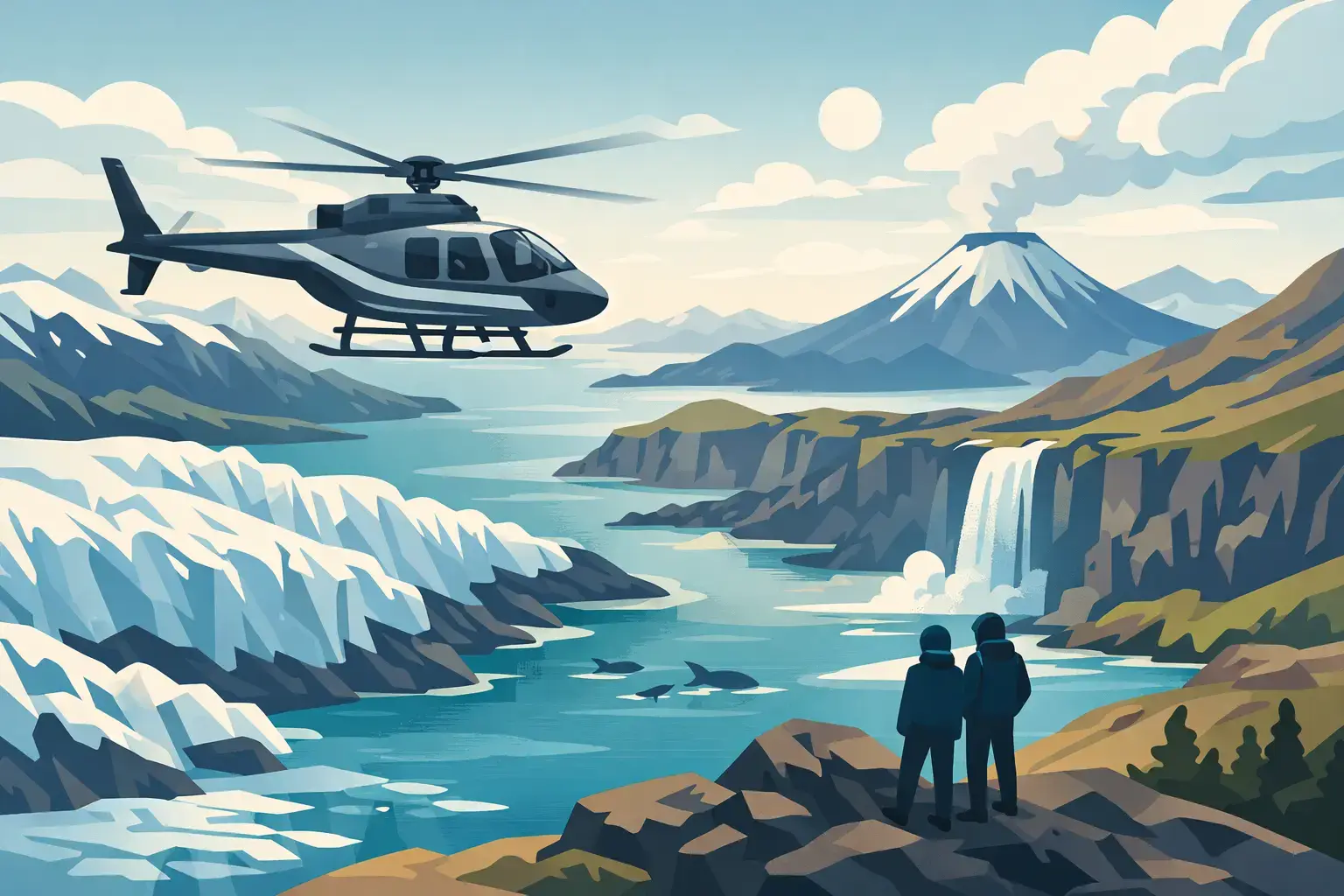
Iceland rewards altitude. Waterfalls that look impressive from a viewing platform become part of larger canyon systems. Glaciers reveal their fractured surfaces and long ice flows. Volcanic zones stop looking like isolated attractions and start to read as active landscapes, with craters, fissures, lava fields, and ash-colored ridges connected across miles.

For many guests, the strongest routes combine contrast. A single flight might include green coastal lowlands, dark lava terrain, braided glacial rivers, and snow-covered heights. That variety is why aerial sightseeing feels so different here compared with a standard scenic flight elsewhere. Iceland changes fast, and from above the transitions are immediate.

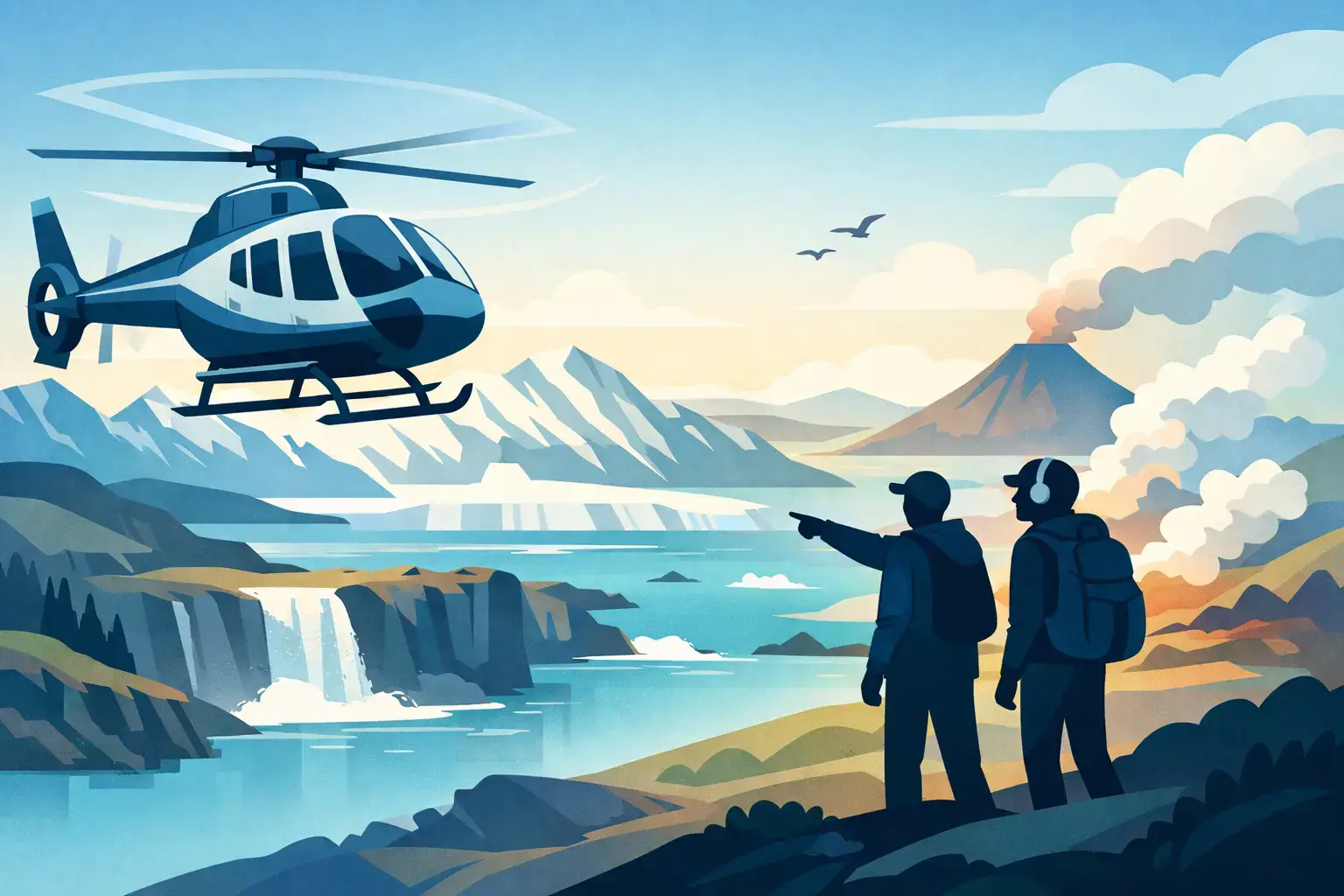
Landings can elevate the experience further, but they are not always the main point. Some travelers want uninterrupted scenic time in the air. Others want the chance to step out in a place that feels otherwise unreachable. A mountain landing for photos, a glacier-edge stop, or a remote highland touch-down adds privacy and scale in a way that ground touring rarely matches.

Choosing the right flight length

Shorter scenic flights are often the smartest fit for first-time visitors. You get a strong sense of Iceland’s topography, you avoid a major time commitment, and you still have room in the day for other plans. This works especially well for couples on a premium city-based itinerary, cruise guests with limited time, or families wanting one exceptional activity without a full-day logistics chain.

Mid-length flights tend to offer the best balance. They allow enough time to move beyond the immediate outskirts of a departure base and into more dramatic territory. They also create room for route flexibility if weather conditions shift. For many guests, this is the sweet spot between price and access.

Longer scenic flights and full-day helicopter experiences are where customization really shows its value. If your goal is to combine several major landscapes in one outing, add landings, or build the day around photography and privacy, extra flight time matters. The trade-off is obvious: a longer charter costs more, and weather planning becomes even more important. But for travelers who want a once-in-a-lifetime experience rather than a standard excursion, this is often where Iceland feels most exclusive.

Weather, season, and the reality of flying in Iceland

Any honest Iceland aerial sightseeing guide has to say this plainly: weather decides more than marketing does. Conditions can change quickly, and good operators plan around that reality rather than pretending it is a minor detail. Cloud ceiling, wind, visibility, and landing-site conditions all affect what is possible on the day.

That does not mean helicopter sightseeing is unreliable. It means flexibility matters. If aerial touring is high on your priority list, do not place it in the final unmovable hour of your trip. Build some margin into your schedule when possible. Morning conditions may differ from afternoon conditions, and one region may fly better than another.

Season changes the look of the country, but there is no single best time for everyone. Summer offers long daylight hours and broad access to highland terrain. Shoulder seasons can deliver dramatic light, fewer visitors, and strong visual contrast. Winter brings snow coverage, low-angle light, and a sharper, more alpine feel, especially in the north. The trade-off is that winter conditions can be more restrictive, and your route may need to adapt.

For photographers, this matters even more than for general sightseers. Snow can simplify the landscape in beautiful ways, while summer reveals geological texture and color. If your priority is image-making rather than general sightseeing, the ideal season depends on what you want your Iceland to look like.

Scenic tour or private charter?

A scenic tour is the right option when you want a polished route, clear timing, and a straightforward decision. It is efficient, premium, and easy to fit into a wider Iceland itinerary. For many travelers, that is exactly the point.

A private charter makes sense when the day needs to revolve around you rather than the route. That could mean a custom proposal landing, a family celebration, a volcano-focused flight, a transfer folded into sightseeing, or a plan that reaches several remote highlights without returning to the road in between. It is also the better choice for travelers who value privacy, have a specific destination in mind, or want to combine scenic flying with practical transport.

This is where an operator like HeliAir stands apart. The value is not just in offering set tours, but in being able to shape a helicopter journey around where you actually want to go, whether that is a glacier, a waterfall, a remote highland site, or an airport transfer that becomes part of the experience rather than dead time.

Who gets the most out of aerial sightseeing in Iceland

This experience is best for travelers who value access and perspective more than volume. If you prefer to cover ten low-cost stops by car, a helicopter is not the logical fit. If you want one extraordinary window into Iceland’s scale, and you want to reach places that would otherwise consume most of a day, it makes immediate sense.

It is especially strong for couples celebrating something meaningful, private groups, families with limited time, photographers, and luxury travelers who want Iceland to feel both cinematic and personal. It also works well for people who are comfortable paying more for less friction. Avoiding long drives, changing road conditions, and crowded viewing areas has real value when the trip itself is meant to feel exceptional.

Commercial and specialist users come to aerial operators for a different reason. For them, sightseeing may be secondary to logistics. Aerial filming, mountain access, heli-skiing support, point-to-point flights, and sling work all require local knowledge and aviation capability that go well beyond standard tourism. The best operators can handle both worlds without making either feel improvised.

What to ask before you book

The most useful questions are practical ones. Ask whether the route is fixed or adaptable, whether a landing is included or weather-dependent, how many passengers the aircraft can accommodate, and what kind of flexibility exists if conditions change. If you are booking a private experience, ask what can realistically fit into your time window rather than assuming every wish list can be combined in one flight.

It is also worth being clear about your priorities. If seeing a volcano matters more than photographing a waterfall, say so. If privacy matters more than total flight duration, say that too. Good aerial planning starts with trade-offs, not assumptions.

The best Iceland flights are rarely the ones that try to include everything. They are the ones built around a clear idea of what will make the day feel unforgettable for you. Choose the perspective first, then let the route follow.

Are Private Helicopter Flights Worth It?

If you have one day in Iceland and a list that includes a glacier, a waterfall, black sand, and a volcano site, the real question is not only cost. It is whether private helicopter flights are worth it for the kind of trip you want to have. For some travelers, the answer is clearly yes. For others, a helicopter is less about transportation and more about choosing a different standard of experience.

A private helicopter flight changes the shape of a day. What would take hours on the road can become a direct route over lava fields, braided rivers, mountain ridges, and remote highlands. That matters in Iceland, where distance on a map rarely reflects travel time on the ground and where weather, road conditions, and daylight can define what is actually possible.

When are private helicopter flights worth it?

They are worth it when time is limited, access matters, and the experience itself is part of the reason you came. If you are visiting Iceland for a short stay, a helicopter can turn a tight schedule into a meaningful one. Instead of spending most of your day driving, you spend it seeing.

They are also worth it when the destination is difficult to reach in any other practical way. Iceland has plenty of spectacular places that are simple to admire in photos but far less simple to fit into a normal itinerary. Remote waterfalls, glacier edges, interior highlands, and landing sites with almost no surrounding infrastructure become realistic when you can approach them by air.

For private groups, couples celebrating something big, families with mixed energy levels, or photographers chasing specific light and terrain, the value often goes beyond luxury. It becomes a question of control. You are not adjusting your expectations to a fixed route. You are building the flight around what matters most.

What you are really paying for

The price of a private helicopter flight is not only about airtime. You are paying for access, efficiency, flexibility, and a perspective that cannot be recreated from the ground.

Access is the most obvious advantage. Iceland rewards travelers who can get beyond the standard viewpoints, but those places often demand long drives, rough routes, or seasonal compromises. A helicopter makes more of the country available within a single outing.

Efficiency is the next factor. On a road trip, a large share of the day can disappear into transit. That may be part of the fun for some travelers. For others, especially on shorter luxury itineraries, it is simply the least memorable part of the trip. A helicopter compresses travel time and expands the part people actually remember.

Then there is flexibility. Private flights are not built around a bus timetable or a packed sightseeing loop. If your priority is a volcano area, a glacier landing, or a custom route that strings together multiple landscapes, a private aircraft creates options that a standard day tour cannot.

And finally, there is perspective. Iceland is dramatic from the road, but from above the geology makes immediate sense. You see how lava fields spread, how rivers cut through sand plains, how glaciers press into mountain valleys, and how isolated many of the country’s most striking features really are. That aerial understanding is part of why the experience stays with people.

Are private helicopter flights worth it for sightseeing alone?

Yes, if sightseeing is not just about checking landmarks off a list.

A private helicopter is not the cheapest way to see Iceland. It is often the best way to see a lot of it well, especially if you care about quality over quantity. From the air, the country feels bigger, wilder, and more layered. You are not standing in one place trying to imagine what lies beyond the next ridge. You are watching the terrain unfold in real time.

That said, worth is personal. If you are happy with a classic self-drive route, enjoy long scenic days in the car, and do not mind crowds at major stops, then the premium may not make sense. But if your goal is a once-in-a-lifetime experience, a helicopter flight delivers something roads simply cannot.

This is especially true for visitors who want to combine spectacle with comfort. You can leave from the city, be over untouched terrain quickly, and return having seen parts of Iceland that many visitors never reach at all. For high-end travel, that is often the difference between a good trip and an unforgettable one.

Where the value is strongest in Iceland

Iceland is one of the clearest cases for why private helicopter flights can justify the cost. The landscape is highly varied, the weather can narrow your window, and some of the most impressive areas are far more practical by air than by road.

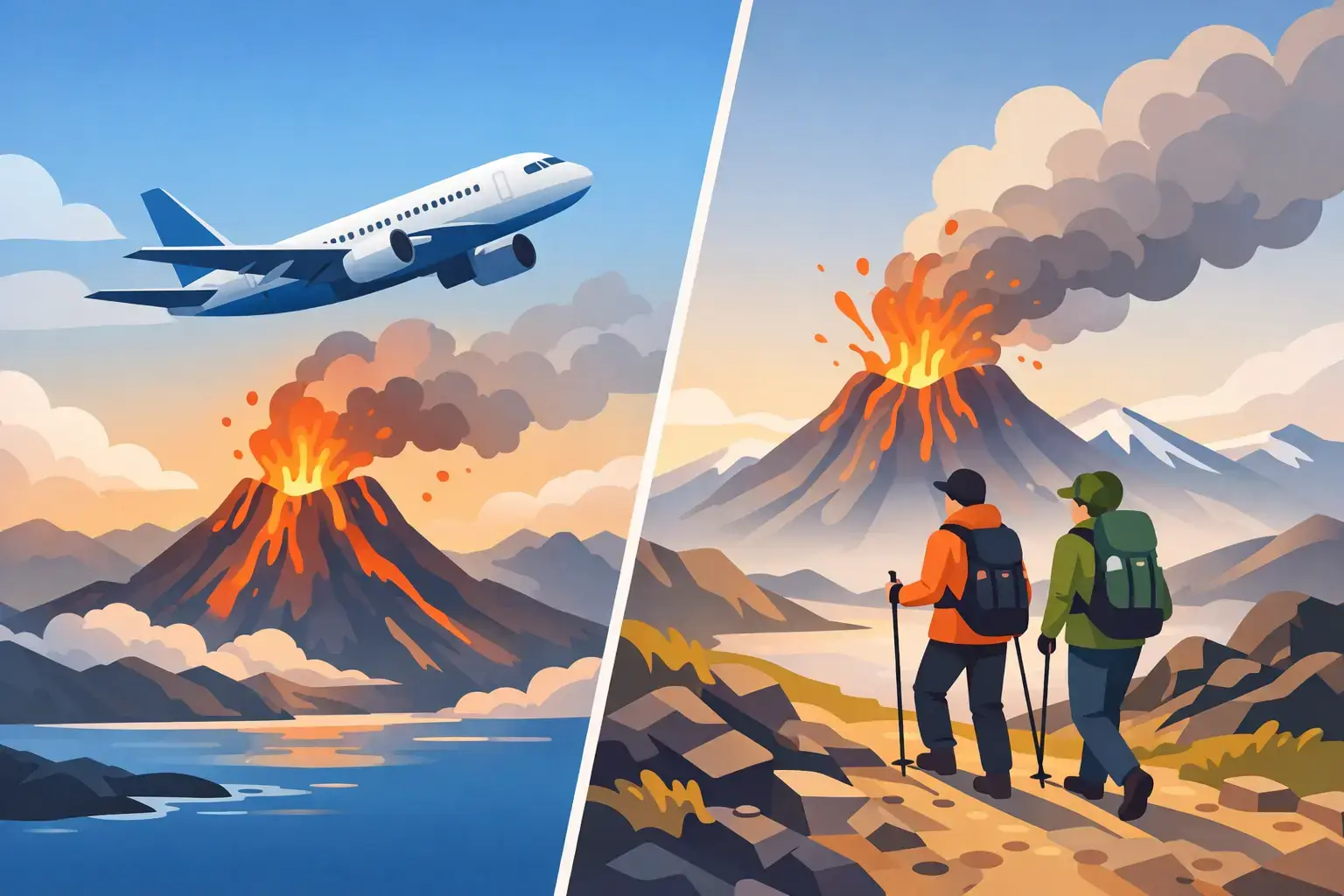
Volcano and geothermal regions are a good example. Seeing recent volcanic terrain from above gives scale that is impossible to grasp from a parking area or trailhead. The same goes for glaciers, where crevasses, ice formations, and surrounding mountains become visually dramatic in a way ground access rarely matches.

Waterfalls and highland areas are another strong case. Some locations are famous because they are easy to reach. Others are just as impressive but far less visited because they require time, road knowledge, or specialized access. A helicopter shifts that balance. It can make remote feel immediate.

That is why premium operators in Iceland, including HeliAir, tend to attract travelers who value both scenery and logistics. The flight is not only scenic. It is a practical tool for reaching the best version of the day you had in mind.

When they may not be worth it

There are situations where a private helicopter flight is probably not the right choice.

If your budget is already stretched by flights, hotels, and other activities, a helicopter may add pressure rather than pleasure. Iceland offers extraordinary views from the road, on foot, and on standard tours. You do not need a helicopter to have a strong trip.

It may also be less worthwhile if you prefer slow travel. Some people want the farm roads, the roadside coffee stops, the long transitions, and the feeling of arriving gradually. A helicopter does almost the opposite. It removes friction. That is a benefit for many travelers, but not all.

And then there is weather. Helicopter operations in Iceland are shaped by real conditions, not wishful planning. A good operator will always prioritize safety, which means schedules can change when weather demands it. If your trip has no flexibility at all, that is worth considering before you build a major itinerary moment around a single flight.

Private tour or private transfer?

This is where value becomes more specific.

If your goal is a celebratory experience, photography outing, proposal, family adventure, or premium sightseeing day, the flight itself is the event. In that case, the value comes from the route, the views, and the ability to land in places that feel far removed from standard tourism.

If your goal is to move efficiently between locations, the value comes from time saved and effort avoided. A private helicopter transfer can make sense for airport connections, point-to-point travel, and specialized itineraries where driving would consume half the day. For some visitors, that is not indulgence. It is smart trip design.

Commercial and production clients often see this even more clearly. Aerial filming, heli-skiing support, and technical sling work are not luxury add-ons. They are tasks that require precision aircraft capability and local operating knowledge. In those cases, worth is measured less by emotion and more by outcomes.

How to decide if it is worth it for you

Start with three questions. What is your time worth on this trip? What places do you actually want to reach? And do you want transportation, or do you want an experience that becomes one of the trip’s defining memories?

If the answer includes limited time, remote destinations, privacy, and a strong preference for custom planning, a private helicopter flight usually makes sense. If the answer is mostly curiosity but not priority, then a different kind of tour may be the better fit.

The strongest bookings tend to come from travelers who already know what they value. They are not comparing a helicopter to a rental car mile for mile. They are deciding whether direct access, tailored routing, and an aerial view of Iceland are worth paying for. Often, for the right traveler, they are.

A private helicopter flight is rarely about doing more for the sake of more. It is about seeing Iceland in a way that matches the scale of why you came here in the first place.

Volcano Landing Tour Iceland: What to Expect

The moment the helicopter lifts out of Reykjavík, the scale of Iceland changes. Roads stop mattering, distances shrink, and a volcano landing tour Iceland experience starts to feel less like sightseeing and more like direct access to terrain most visitors only see from far away.

For travelers who want more than a scenic pass over lava fields, landing is the difference. You are not just looking at a volcanic landscape through a window. You are stepping into it, with time to take in the textures, the silence, the wind, and the raw geology that made Iceland famous in the first place.

Why a volcano landing tour Iceland experience stands out

A standard volcano tour can be impressive from the air alone. You see crater systems, lava flows, ridgelines, and black sand plains in a way no overland route can match. But when a tour includes a landing, the experience shifts from visual to physical.

That matters in Iceland, where the terrain is often the story. Fresh lava fields can look abstract from above, almost painted into the landscape. On the ground, they feel massive, irregular, and alive with detail. Older volcanic areas tell a different story, with weathered rock, moss, ash, and layers of eruption history that become far more vivid when you are standing in the middle of them.

For many guests, this is also about time. Reaching dramatic volcanic areas by vehicle and foot can mean a full day of logistics, changing conditions, and limited flexibility. By helicopter, you trade the long approach for access. You spend less time getting there and more time actually experiencing the place.

What the flight is really like

Most premium volcano tours begin with a short safety briefing and a weather check. That may sound procedural, but in Iceland it is part of good planning. Conditions can change fast, and the best operators build the route around what is safe, visible, and worthwhile that day.

Once airborne, the first surprise for many visitors is how quickly the urban edge disappears. Within minutes, the landscape opens into lava fields, coastlines, mountain ridges, and geothermal zones. Depending on route and conditions, a volcano flight may combine several of these elements in a single itinerary, which is part of what makes the helicopter format so compelling.

The landing itself is usually the emotional high point. There is a distinct shift when the rotors slow and the aircraft settles into a place that feels remote, exposed, and unreachable by ordinary travel. You step out into air that feels cleaner, colder, and sharper. Even guests who have spent days touring Iceland often say this is the first time the country feels truly vast.

That does not mean every landing is the same. Some sites feel stark and lunar, shaped by black rock and recent geological activity. Others are broader and more cinematic, with views extending across glaciers, valleys, or the coastline. The route, the season, and the day’s conditions all shape the experience.

Who this kind of tour suits best

A volcano landing tour is not only for extreme adventure travelers. In practice, it appeals to a wider group of guests who want a high-value experience and would rather spend their time in the landscape than in transit.

It works especially well for couples celebrating something significant, families looking for a once-in-a-lifetime Iceland day, photographers who want strong vantage points, and private groups with limited time. It also suits travelers who like comfort but do not want a passive luxury experience. Helicopter access is premium, but the payoff is active and memorable.

There are trade-offs, of course. If someone wants a long technical hike, this is a different kind of day. A helicopter volcano tour is about access, perspective, and curated time in exceptional places. It is less about endurance and more about getting close to Iceland’s most dramatic terrain without spending hours reaching it.

When to book a volcano landing tour in Iceland

There is no single perfect month because volcanic landscapes look different across the year. Summer brings longer daylight, easier visibility, and broader operational flexibility. The colors are more varied, and surrounding highland terrain often adds contrast to the black lava and craters.

Winter can be extraordinary for a different reason. Snow and low sun reshape the volcanic landscape and create sharper contrast from the air. But winter also brings more weather variability, and that can affect routing, timing, and landing options.

Shoulder seasons often strike a useful balance. You may get strong light, fewer crowds in the wider travel market, and dramatic conditions without the peak summer rush. The right answer depends on whether your priority is stable touring conditions, seasonal contrast, photography, or simply fitting the flight into a broader Iceland itinerary.

If you are planning around one specific helicopter experience, it makes sense to keep some flexibility in your schedule. That gives the operator room to choose the best window rather than forcing a flight into marginal conditions.

Weather, safety, and why flexibility matters

In Iceland, weather is not a footnote. It shapes aviation every day. That is not a drawback so much as a reality of operating in a serious landscape.

A well-run volcano landing tour puts safety first without making the experience feel rigid. Routes may be adjusted based on visibility, wind, cloud base, and landing conditions. In practical terms, that means the exact volcanic site or sequence of sights can change. For guests who understand Iceland, that is usually a good sign. You want local pilots making real-time decisions, not following a fixed script when conditions say otherwise.

This is also why premium helicopter touring has such strong value when handled properly. It combines exclusivity with judgment. The aircraft gives access, but the operator’s local knowledge determines whether that access becomes exceptional.

Private tour or shared experience?

It depends on what you want from the day. A shared flight can be a strong option for travelers who mainly want the experience of flying over and landing in volcanic terrain at a more accessible entry point. You still get the drama of the landscape and the core thrill of helicopter access.

A private tour is where the experience becomes more tailored. That may mean shaping the route around photography, pairing the volcano landing with a glacier or waterfall, adjusting departure timing for better light, or simply creating a quieter, more personal atmosphere. For anniversaries, proposals, family travel, and high-end Iceland itineraries, private flights often make the most sense.

For guests already investing in premium accommodation, private guides, or a short Iceland stay, the helicopter often becomes the most efficient way to reach places that would otherwise consume an entire day.

How to prepare without overthinking it

Dress for exposure, not for the city. Even if your day starts in calm conditions, landing sites can be windy and colder than expected. Wear sturdy shoes, layered clothing, and sunglasses if conditions are bright.

Bring a camera, but do not spend the whole landing behind it. Volcanic terrain is one of those places that can become strangely abstract in photos if you never stop to absorb the scale. A few great images matter more than hundreds of rushed ones.

Most of all, approach the tour with the right expectation. This is not a theme-park version of a volcano. It is Iceland on its own terms – weather-shaped, geologically dramatic, and variable from one day to the next. That is exactly what gives it value.

The real value of landing, not just flying over

Aerial sightseeing in Iceland is already special. A landing makes it personal. It creates a pause in the middle of a landscape that usually feels out of reach, and that pause is often what guests remember most.

For travelers considering a volcano landing tour Iceland experience, the question is not simply whether the view is worth it. The view almost certainly is. The better question is whether you want to spend part of your Iceland trip seeing the country from a distance, or standing in a place that very few visitors reach at all.

That is the appeal of flying with a local operator such as HeliAir. The experience is not built around checking off a landmark. It is built around getting you into the right place, at the right time, with the kind of access that changes how Iceland feels. If you want one part of your trip to stay sharp long after the rest begins to blur together, this is usually the one.

10 Best Aerial Views Iceland Has to Offer

Some places in Iceland are impressive from the road. Others only make full sense once you leave the road behind. The best aerial views Iceland offers are the ones that show scale all at once – glacier tongues pushing into black sand, braided rivers cutting through the highlands, crater rims, sea cliffs, and waterfalls that look almost unreal from above.

For travelers planning a premium experience, the real question is not whether Iceland is worth seeing by air. It is which landscapes change most dramatically when viewed from a helicopter, and what kind of flight gives you the right balance of scenery, access, and flexibility. Some areas are famous for a reason. Others are better if you want privacy, strong photography conditions, or a route shaped around your schedule.

Where the best aerial views in Iceland truly stand out

Aerial sightseeing in Iceland is not just about height. It is about access and perspective. From the ground, lava fields can feel endless in one direction. From the air, you see how they fold around mountains, break toward the coast, or spill into valleys. A glacier becomes more than a white surface. You start to see crevasses, ash lines, melt channels, and the sheer size of the ice cap.

That shift in perspective is why helicopter travel suits Iceland especially well. Distances that take hours by vehicle can become part of a single flight plan, and remote places that are difficult to combine in one day suddenly can be. For couples, private groups, and photographers, that matters. You spend less time in transit and more time where the landscape is at its best.

10 best aerial views Iceland travelers should consider

1. The Reykjanes Peninsula volcanic zone

Fresh lava, crater systems, geothermal color, and a coastline shaped by the North Atlantic make Reykjanes one of the most compelling short-flight regions in the country. From above, recent eruption areas reveal texture you simply cannot read from a roadside viewpoint. You see the path of lava, the vents, the old fields beside the new, and the wider volcanic system connecting it all.

This is one of the strongest choices for travelers based in Reykjavik who want dramatic terrain without committing to a full-day itinerary.

2. Landmannalaugar and the southern Highlands

Landmannalaugar is one of Iceland’s great color studies. Rhyolite mountains, black lava, snow patches, and steam vents sit together in a way that feels almost designed for aerial viewing. By road, it is remote and time-consuming. By helicopter, it becomes accessible in a way that still feels exclusive.

This region works particularly well for guests who want something beyond the standard South Coast circuit. It also photographs beautifully in late summer, when the contrast between mineral colors and dark terrain is strongest.

3. Háifoss and the interior canyon country

Háifoss has presence from the ground, but from the air the entire setting comes together. You see the waterfall’s drop, the canyon depth, the surrounding plateau, and the river system feeding it. That bigger frame is what makes the experience. It is less about a single waterfall and more about seeing how water has carved the land over time.

For travelers who want a high-impact stop without the crowds of more accessible locations, this area is often a very smart choice.

4. Eyjafjallajökull and the glacier-volcano landscape

Few places summarize Iceland better than a glacier sitting over a volcano. Eyjafjallajökull is iconic because it combines ice, dark ridgelines, outwash plains, and the memory of eruption in one compact region. From above, the contrasts are sharp and immediate.

The advantage here is variety. In a single flight, you can move from coastline to glacier to volcanic terrain without the visual repetition that some routes can have.

5. The black sand coast near Vík

The South Coast is famous at ground level, but the black sand beaches and sea stacks near Vík are at their best from the air. The geometry is what stands out – waves meeting long arcs of dark sand, cliffs breaking into the ocean, and inland green farmland giving way to volcanic shoreline.

This is a strong route for first-time visitors who want a classic Iceland image, but elevated into something more private and cinematic.

6. Vatnajökull outlet glaciers

Vatnajökull is vast, and that scale is hard to grasp unless you see it from above. The outlet glaciers are especially impressive because they show movement and structure more clearly than the broad ice cap alone. Crevasse fields, blue ice sections, ash bands, and glacial lagoons all become easier to read from the air.

If your priority is glacier scenery, this is among the most rewarding choices in the country. It is also one of the best examples of why flight time matters. A shorter scenic loop can be spectacular, but a longer custom route gives you room to follow the ice into more remote terrain.

7. North Iceland fjords near Ólafsfjörður

North Iceland has a different personality from the South Coast. The landscapes are broader, quieter, and often feel more private. Around Ólafsfjörður, steep mountain walls meet fjord water in a way that creates clean, dramatic lines from above. In the right season, the light here can be exceptional.

For returning Iceland visitors, this is often where the trip becomes more interesting. It trades some of the headline-name landmarks for atmosphere, space, and a stronger sense of discovery.

8. Remote waterfalls beyond the main road

Some of the best aerial views in Iceland are not the most famous names. Remote waterfalls in the interior and less-visited valleys often create the strongest private flight experiences because they are part of a broader route rather than a single crowded stop. From above, waterfalls gain context. You see where they begin, how they drop, and what landscape surrounds them.

This is where a tailored itinerary usually beats a fixed sightseeing checklist.

9. Jökulsárlón and the glacial lagoon region

Jökulsárlón is striking at ground level, but from the air you understand its relationship to the glacier, the coast, and the nearby black sand plain. Icebergs drift in a lagoon that looks almost abstract from above, then narrow channels carry ice toward the sea.

It is one of Iceland’s most photogenic areas, but also one where timing matters. Light, cloud cover, and seasonal ice conditions all shape the result.

10. The central Highlands

If you want the greatest sense of Icelandic wilderness, the central Highlands are hard to beat. Rivers braid across ash plains, moss softens old lava, and mountains rise out of seemingly empty terrain. From above, the region feels enormous and beautifully isolated.

This is not always the first choice for a first-time visitor, but it is often the most memorable for guests who want to feel they have reached the Iceland few people see.

How to choose the best aerial views Iceland offers for your trip

The right route depends on what you value most. If you want headline scenery and efficient access from Reykjavik, volcano zones, the South Coast, and nearby highland edges are obvious starting points. If privacy matters more than checking off famous names, North Iceland and custom interior routes often deliver a stronger experience.

Photography guests usually benefit from planning around light and terrain rather than trying to fit too many landmarks into one itinerary. Midday can be clear and operationally convenient, but early or late light often brings more texture to glaciers, mountains, and black sand. Families and private groups may care less about ideal photography conditions and more about combining a few major landscapes with a smooth flight duration.

That is where helicopter travel has a real advantage over fixed ground touring. You can shape the day around priorities instead of forcing priorities into a rigid day.

What affects visibility, routing, and overall experience

Iceland rewards flexibility. Weather can sharpen a flight or change it entirely. Cloud ceiling, wind, coastal fog, and seasonal snow cover all influence what works best on a given day. That is not a drawback so much as part of operating in a serious natural environment.

The best operators are clear about this. A premium flight experience should feel exciting, but it should also feel professionally handled. Sometimes that means adjusting the route for better conditions. Sometimes it means choosing a different region altogether because the scenery will simply be better there.

This is one reason bespoke planning matters. HeliAir works with guests who want more than a standard sightseeing slot – whether that means a volcano-focused route, a glacier and waterfall combination, or a private transfer that turns travel time into a scenic experience.

Why aerial travel changes the Iceland itinerary itself

Luxury travel in Iceland is often limited by overland time. A place may be worth seeing, but not worth the full-day drive if your trip is short. Helicopter access changes that calculation. You can leave from Reykjavik or North Iceland, cross difficult terrain quickly, and build an itinerary around the landscape rather than the road network.

That matters for honeymoon travelers, private celebrations, multigenerational families, and corporate or production guests alike. The appeal is not only beauty. It is efficiency, range, and the ability to reach places that would otherwise be impractical.

The best aerial views Iceland offers are not just beautiful scenes from a higher angle. They are the landscapes that become more coherent, more dramatic, and more personal once you see them from the air. If you are planning a once-in-a-lifetime trip, it is worth choosing the route that gives Iceland room to surprise you.

Reykjavik to Highlands Helicopter Flights

A Reykjavik to highlands helicopter flight changes the scale of Iceland in a matter of minutes. What looks distant and difficult on a map suddenly becomes part of the same day – black sand expanses, mossy lava fields, glacial rivers, and mountain ridges with barely another person in sight. For travelers who want more than a scenic loop, it is one of the clearest ways to reach the country’s interior without giving up comfort, time, or flexibility.

The Highlands are where Iceland feels least edited. Roads are seasonal, distances are deceptive, and many of the most striking locations demand a full day of driving in a capable vehicle, sometimes much more. By helicopter, that equation changes. You leave Reykjavik and trade hours of overland transit for direct access to landscapes that would otherwise dominate an itinerary.

Why choose a Reykjavik to highlands helicopter trip

The obvious reason is speed, but that is only part of the appeal. A helicopter is not just transportation in Iceland. It is a way to experience the terrain properly. The route matters as much as the landing. From the air, river systems braid across ash plains, geothermal areas appear in ribbons of color, and the Highlands stop feeling like a blank center on the map.

For luxury travelers, this makes the day far more efficient. You can stay in Reykjavik, depart from the city, reach remote highland areas, land in places that are inaccessible or impractical by car, and return without turning the experience into an endurance exercise. That matters if your schedule is tight, if you are traveling with family, or if you simply prefer your adventure with a little more control.

There is also the privacy factor. A private or tailored helicopter journey gives you space to experience Iceland on your own terms. That can mean planning around photography light, combining multiple landscapes into one flight, or building a highland route around a specific destination rather than joining a fixed overland tour.

What you see on the way from Reykjavik to the Highlands

The most memorable part of many flights is the transition itself. Reykjavik drops away quickly, and the organized edges of the capital give way to a rougher, emptier interior. Depending on route, conditions, and the day’s plan, the journey can include wide volcanic plains, crater systems, glacier-fed rivers, geothermal zones, and mountain formations that make the Highlands feel almost lunar.

This is where helicopter travel stands apart from small-plane sightseeing or road travel. The aircraft can follow the terrain closely enough to reveal texture, but with the freedom to cover ground fast. You are not limited to a single viewpoint from a roadside stop. You are seeing how the landscape connects.

Some guests want dramatic volcanic scenery. Others are drawn to waterfalls hidden deep inland, stark rhyolite mountains, or the green and black contrasts that only make sense when viewed from above. The right flight depends on what kind of Iceland you want to remember. There is no single best route, only the right one for your priorities.

Landings make the difference

A scenic flight is impressive. A scenic flight with a remote landing is usually what turns it into a once-in-a-lifetime experience.

The Highlands reward that extra step. Landing on a ridge, beside a remote river valley, or near a geothermal area gives the day a completely different rhythm. You step out into stillness, with no parking lot, no bus schedule, and no need to share the view with a crowd. That sense of access is the real luxury.

Not every landing site is available every day. Weather, wind, visibility, and ground conditions all shape what is realistic and safe. That is not a drawback – it is part of operating properly in Iceland. An experienced local operator plans around those realities and adjusts routes when needed, which is exactly how high-end helicopter touring should work.

Is a helicopter to the Highlands worth it?

If your goal is simply to say you visited the interior, there are cheaper ways to do it. Super Jeep tours and self-drive highland routes can be excellent, especially for travelers who want a long overland adventure and do not mind the time commitment.

A helicopter becomes worth it when time, access, and quality of experience matter more than checking a box. If you want to reach remote terrain in a fraction of the time, pair aerial sightseeing with an actual landing, avoid a full day behind the wheel, and shape the experience around your interests, the value is easy to understand.

It is also worth it for travelers who already know Iceland rewards flexibility. A ground itinerary can be limited by road conditions and daylight. A helicopter charter opens options. You can prioritize the Highlands as part of a broader day, combine them with glaciers or waterfalls, or create a direct route to a location that would otherwise consume the entire schedule.

Who this type of flight suits best

A Reykjavik to highlands helicopter experience is a strong fit for couples celebrating something significant, private groups, families wanting a standout day in Iceland, and photographers who care about angle, light, and access. It also makes sense for visitors staying in Reykjavik who want to experience the wild interior without relocating for multiple nights or organizing a technical self-drive plan.

The format works especially well for guests who expect premium travel to feel personal. That means less interest in standardized sightseeing and more interest in having the day shaped around what they actually want to see. Sometimes that is a straightforward scenic outing. Sometimes it is a custom charter built around several landing points and a longer route through the interior.

For commercial and specialist travelers, the value can be even more direct. Film crews, photographers, and private charter clients often need reach and efficiency more than anything else. In those cases, the helicopter is not just part of the experience. It is the only practical tool for the job.

Planning a Reykjavik to highlands helicopter flight

The best highland flights start with a conversation, not a generic booking form. Iceland’s interior is too varied, and helicopter planning is too weather-sensitive, for one-size-fits-all decisions to produce the best day.

A few things shape the itinerary quickly. First is timing. Summer offers the broadest access to the Highlands, but shoulder-season conditions can still produce exceptional flights depending on destination and weather. Second is duration. A shorter charter can give you a strong aerial impression and one meaningful landing, while a longer flight allows for a deeper route and more ambitious combinations.

Third is your purpose. A couple celebrating an anniversary may want a scenic landing and a route built around dramatic contrast. A photographer may care more about specific terrain, directional light, and flexibility in the air. A family may want the wow factor without stretching the day too far. A strong operator will help define that clearly and build around it.

What to expect on the day

Premium helicopter travel in Iceland should feel straightforward. You arrive, review the plan, and depart with a route built around current conditions and your priorities. That operational clarity matters because the weather always gets a vote.

Some days deliver crystal-clear visibility and broad route options. Others require adjustments, alternate destinations, or a shift in timing. The right attitude is not rigid expectation but confidence in local judgment. Iceland rewards travelers who understand that flexibility is part of getting the best result, especially in the Highlands.

Dress practically even if the experience itself is high-end. The interior can be cold, windy, and exposed even in summer, and a remote landing feels much better when you are prepared to step comfortably into the environment. The luxury here is not formality. It is direct access to a place most visitors never reach properly.

HeliAir is built around exactly that kind of access – premium flights shaped by local knowledge, real operational experience, and the ability to turn a rough idea into a precise route.

The best reason to do it

The Highlands are hard to appreciate from a brochure. They are too large, too empty, and too varied. The best reason to take a helicopter from Reykjavik is simple: it lets you experience Iceland’s interior as a living landscape rather than a distant ambition on the map.

If a trip to Iceland deserves one day that feels unmistakably different from standard travel, this is a strong candidate. You leave the city, cross into the country’s wild center, land where roads stop mattering, and return with a sense of scale that stays with you long after the flight ends.

Private Volcano Flight Iceland: What to Expect

A volcano seen from the road is impressive. A volcano seen from a private helicopter is something else entirely – the shape of the crater, the black lava fields stretching outward, the steam, the scale, and the sudden understanding of how raw Iceland really is. For travelers considering a private volcano flight Iceland offers one of the rare places where that kind of access feels both dramatic and genuinely worthwhile.

This is not just a scenic shortcut. It is a way to trade hours of driving and crowded viewpoints for direct access, flexible routing, and a far more complete view of the landscape. For couples planning a once-in-a-lifetime trip, photographers chasing the right light, or private groups who want a tailored day rather than a fixed tour, a private flight changes the experience.

Why a private volcano flight in Iceland stands apart

Iceland has no shortage of headline scenery, but volcanoes are different. Glaciers and waterfalls are visually stunning from many angles. Volcanic terrain reveals itself best from above. You see how lava moved across valleys, how fissures cut through the land, and how recent eruptions reshaped areas that looked completely different only a short time ago.

That is the real advantage of booking privately. The flight can be built around what matters most to you. Some guests want the newest eruption sites on the Reykjanes Peninsula. Others want a broader route that combines volcanic areas with coastlines, geothermal zones, or glacier views. A private charter gives room for that kind of planning.

It also changes the pace. Instead of fitting into a standard departure, you can shape the day around your schedule, your group, and current conditions. In Iceland, that flexibility matters. Weather, visibility, and local volcanic access conditions can shift quickly, and the best flights are always the ones planned with both ambition and realism.

What you actually see on a private volcano flight Iceland route

The answer depends on current activity, safe flight conditions, and where you depart from, but the visual range is often much broader than guests expect. A volcano flight is rarely just about one crater.

From the air, recent eruption zones can show glowing geological contrast even when no eruption is actively underway – hardened lava fields, smoking ground, ash-dark ridgelines, and fresh geological scars that still look newly formed. In southwestern Iceland, the Reykjanes Peninsula has become especially compelling because it combines recent volcanic activity with dramatic coastal terrain and easy reach from the capital area.

Longer private charters can widen the experience further. A route may include geothermal areas, mountain ridges, remote valleys, or glacier-backed landscapes so the volcano becomes the centerpiece of a broader aerial journey. That tends to suit travelers who want the impact of volcanic scenery without limiting the entire flight to a single feature.

In the right conditions, landing adds another dimension. Not every volcano route includes a landing, and not every landing site is appropriate on every day, but stepping out into a remote Icelandic landscape is often what turns a memorable flight into a defining travel experience. The value is not only the view from the aircraft. It is the ability to pause inside the landscape itself.

Private charter vs. standard sightseeing tour

For some travelers, a scheduled sightseeing tour is enough. It gives a fixed route, a clear duration, and a simpler booking decision. But for guests looking at a private volcano flight in Iceland, the difference is not subtle.

Private charter is better for travelers who want control over timing, route emphasis, privacy, and pace. If you are celebrating something important, traveling with family, planning a proposal, or arranging a high-end day with multiple stops, the private option fits more naturally. It is also better for photographers and filmmakers who need to discuss light, angles, and timing in advance.

The trade-off is straightforward: private aviation costs more. But when compared against the time saved, the exclusivity, and the ability to combine multiple areas in a single outing, many guests find the value easy to justify. Iceland is a destination where overland travel can consume large parts of a day. A helicopter compresses distance in a way few other experiences can.

Weather, safety, and why flexibility matters

The finest volcano flights are always shaped around conditions, not wishful thinking. Icelandic weather can turn quickly, and experienced operators plan with that in mind. That is part of the appeal of flying with a local aviation team that knows the terrain, seasonal patterns, and practical limits of each route.

Visibility matters as much as precipitation. A clear-looking day on the ground may still be unsuitable for a volcano route depending on cloud cover, wind, and conditions around landing zones. That does not mean the trip is at risk of being ruined. It usually means the plan may need to be refined. Sometimes that involves adjusting departure time. Sometimes it means shifting the route to get the best possible scenery while staying fully within safe operating limits.

For premium travelers, that operational honesty is a feature, not a drawback. A serious helicopter experience in Iceland should never promise the impossible. It should promise expert judgment, good alternatives, and a route that makes sense on the day.

How to plan the right flight for your trip

The best private volcano charters start with a simple question: what do you want this flight to feel like?

If your priority is pure spectacle, a shorter focused route over active or recently active volcanic terrain may be enough. If you want a broader luxury experience, it often makes sense to combine the volcano with a mountain landing, glacier views, or a more remote scenic section that shows Iceland’s variety from above.

Timing matters too. Morning and late-day light can both be excellent, especially for photography, but the best window depends on season, route, and weather. Group size also shapes the plan. A couple may want a quiet, cinematic experience. A family might prioritize variety and comfort. A production team may need technical coordination beyond a standard sightseeing brief.

That is why custom planning is worth it. An operator like HeliAir can build the charter around where you are staying, how much time you have, and whether you want a dedicated volcano flight or a wider scenic itinerary with volcanic highlights folded in.

Who gets the most from this experience

A private volcano flight is not only for thrill-seekers. In practice, it appeals to a surprisingly broad range of travelers.

Luxury couples book it because it feels intimate and unforgettable without being staged. Families choose it because it turns long logistics into a shared experience. Private groups appreciate the exclusivity and efficiency. Photographers value the access and changing perspective. Business and production clients often need the same aircraft expertise for practical reasons, whether that means aerial filming, site access, or moving quickly across difficult terrain.

What connects all of them is the same idea: seeing Iceland properly often means seeing it from above.

Is it worth the price?

For travelers who measure experiences by how rare they are, yes. A private volcano flight Iceland experience delivers something difficult to replicate any other way – speed, perspective, and access in one flight.

It is not the right choice for every itinerary. If your trip is built around budget-conscious road travel and flexible self-drive stops, a helicopter charter may feel like a major leap. But for visitors who have limited time, want a signature day, or prefer tailored travel over fixed group touring, it can become the part of the trip that defines the rest.

The smartest way to look at it is not as a simple transport cost or a standard excursion price. It is a custom aerial experience over one of the world’s most geologically active and visually striking landscapes. That is a narrow category, and Iceland sits near the top of it.

A great private flight should leave you with more than photos. It should give you a sharper sense of the land beneath you – how it formed, how it continues to change, and why some places are best understood from the air.

Glacier Landing Flight Iceland: What to Expect

A glacier landing flight Iceland experience changes your sense of scale almost immediately. Roads, rivers, and lava fields flatten into patterns from the air, then a white ice cap rises ahead and fills the windshield. The moment that matters most, though, is not only the flight itself. It is the landing – stepping out onto a glacier that would take hours, or in some cases days, to approach overland.

For travelers who want more than a scenic pass, this is one of the most memorable ways to experience Iceland. It combines the reach of helicopter travel with the feeling of arriving somewhere genuinely remote. You are not looking at the landscape from a distance. You are standing inside it.

Why a glacier landing flight in Iceland stands apart

Iceland has no shortage of dramatic scenery, and plenty of tours promise a lot in a short time. A glacier landing flight is different because it does two things at once. It gives you the broad cinematic perspective that only comes from the air, and it adds a physical destination instead of a flyby.

That distinction matters. Aerial sightseeing is spectacular, but a landing creates a different kind of memory. The sound drops when the rotor slows. The air feels sharper. Snow, ice, volcanic ash, and distant mountain ridges all become tangible rather than abstract. If you are celebrating a milestone, traveling as a couple, planning a private family experience, or simply want access without long hours on the road, this is where the value becomes clear.

It also suits travelers who are short on time but unwilling to compromise on experience. Iceland’s geography is beautiful, but it can be slow to cross by car. A helicopter compresses distance in a way that opens up the day. You can leave from the city or a regional base, reach glacier terrain quickly, land in a place few visitors ever stand, and still have the rest of your itinerary ahead of you.

What the experience actually feels like

Most guests imagine the glacier as the main event, but the flight there is half the story. From the helicopter, Iceland reveals how tightly its landscapes are layered. You may lift off over coastal areas or lowland valleys, then cross black sand stretches, braided rivers, moss-covered lava, waterfalls, and rising highlands in one continuous sweep.

As the glacier comes into view, you begin to see texture rather than just whiteness. Crevasse lines, wind-shaped ridges, ash-streaked snow, and the edge where ice meets exposed rock all tell the story of a living environment. On clear days, visibility can be extraordinary. Distances feel deceptive because the air is so crisp.

The landing itself is smooth but thrilling. Pilots select a suitable site based on conditions, visibility, and the character of the terrain that day. Once on the ground, you are usually given time to step out, take photos, absorb the silence, and simply look around. Depending on the route and weather, you may have views toward volcanoes, mountain ranges, interior highlands, or coastal plains.

This is not a strenuous expedition. It is premium access to a place that still feels wild.

Who a glacier landing flight Iceland is best for

This type of flight appeals to travelers who want exclusivity, but not necessarily extravagance for its own sake. The real luxury is access. You are avoiding long drives, crowded viewpoints, and the limits of standard sightseeing routes.

Couples often choose glacier landings for proposals, anniversaries, or once-in-a-lifetime trips. Families like them because the experience is visually dramatic without requiring technical ability. Private groups and photographers are drawn to the flexibility. If conditions allow, routing can be tailored around what matters most – ice formations, volcanic landscapes, waterfalls, or a broader multi-stop scenic plan.

It is also a strong fit for travelers who have seen Iceland before and want a more elevated perspective on a return visit. If you have already driven the South Coast or visited glacier viewpoints from the ground, arriving by helicopter creates a completely different understanding of the same landscape.

Weather, season, and the reality of flying in Iceland

The best glacier flights are shaped by conditions, not by rigid promises. That is true of aviation anywhere, but especially in Iceland. Weather changes quickly, and responsible operators plan around that rather than against it.

For guests, this means flexibility is part of the experience. Some days bring perfect visibility and dramatic contrast across the ice. Other days may still be flyable but softer in tone, with low cloud, shifting light, or route adjustments. Occasionally, conditions mean delaying or rescheduling for safety. That is not a flaw in the product. It is part of operating well in a country where weather and terrain demand real judgment.

Season matters too, though not always in the way travelers expect. Summer often brings longer daylight and easier trip planning, while winter can create striking light, snow cover, and a stronger sense of Arctic atmosphere. Shoulder seasons can be excellent for contrast in the landscape. The right time depends on what kind of scenery you want, how flexible your itinerary is, and whether this is one part of a larger private travel plan.

Choosing the right flight, not just the longest one

Longer is not automatically better. The best glacier landing flight in Iceland is the one built around your priorities.

If your goal is to add a high-impact experience to a packed Reykjavík itinerary, a shorter scenic flight with a glacier landing may be exactly right. If you want a more immersive day, a custom charter can combine glaciers with waterfalls, volcanic zones, black sand areas, or remote highland locations that are difficult to connect efficiently by car. For photographers, timing and route flexibility may matter more than raw flight duration. For families, comfort and pacing may take priority.

This is where bespoke planning becomes valuable. Instead of trying to force your interests into a fixed sightseeing template, you can build around the views and landings that matter most. In Iceland, that often produces a better experience than simply selecting the most time in the air.

What to wear and how to prepare

Even in summer, glacier environments are cooler than many guests expect. Dress for exposure rather than city weather. A warm layer, solid shoes or boots, and a wind-resistant outer layer are usually the smart choice. You do not need technical expedition gear for a standard landing, but you do want to feel comfortable standing on snow or ice for a period of time.

A camera or phone is obvious, but it helps to remember that this is one of those rare travel moments that can become overly filtered through a screen. Take the photos, then put the device down for a minute. The sound, scale, and light are a large part of what makes the landing memorable.

If you are planning a special occasion or have a very specific destination in mind, mention that early. Operators can advise what is realistic based on season, timing, and aircraft availability. With premium helicopter travel, the planning conversation is part of the service.

The difference between a scenic add-on and a serious experience

Not every helicopter tour is designed the same way. Some are built to offer a quick highlight. Others are created around access, flexibility, and destination quality. If a glacier landing is high on your list, it is worth choosing an operator that understands Iceland’s terrain in operational detail and can shape the route around the day rather than relying on a generic script.

That local knowledge affects more than comfort. It influences where you can land, how you adapt to weather, and how effectively a flight can combine multiple landscapes without feeling rushed. For travelers investing in a premium experience, that operational depth is not background detail. It is part of what you are paying for.

At HeliAir, that approach is central to the experience. The goal is not just to fly over Iceland’s best scenery. It is to get you into it, with the kind of route planning and local aviation judgment that makes a private or semi-private flight feel purposeful from start to finish.

Is it worth it?

For the right traveler, absolutely. A glacier landing is not the cheapest way to see Iceland, and it is not meant to be. It is for people who value time, access, privacy, and the feeling of doing something few others will do on their trip.

The trade-off is simple. You are choosing depth over volume. Rather than spending a full day covering ground to reach a viewpoint, you arrive directly in extraordinary terrain and experience it from both above and under your feet. That combination is hard to match.

If Iceland is a once-in-a-lifetime journey, this is the kind of experience that earns its place. And if it is your second or third visit, it may be the one that changes how you see the country altogether.

A good glacier landing flight does more than show you Iceland at its best. It gives you a way to stand still in one of its most remote places and feel, for a moment, like the country opened just for you.

Iceland Remote Access Flights Explained

Some parts of Iceland look close on a map and still take most of a day to reach. A waterfall deep in the highlands, a glacier landing site, or a ridgeline beyond the road network can turn a simple outing into a long logistical exercise. That is exactly where Iceland remote access flights change the experience. Instead of planning around road limits, river crossings, seasonal closures, and long transfer times, you plan around where you actually want to go.

For travelers who value time, privacy, and access, this is less about transportation in the basic sense and more about shaping the day around the destination. You can leave from the capital area or North Iceland, reach terrain that would otherwise require a serious overland effort, and spend your energy on the landscape itself rather than the approach.

What Iceland remote access flights really mean

Remote access flights are designed for places that are hard, slow, or sometimes impossible to reach efficiently by car. In Iceland, that often means the central highlands, isolated waterfalls, glacier margins, volcanic terrain, black sand stretches, or private landing areas arranged for a specific itinerary.

The point is not simply that a helicopter can go where a car cannot. It is that Iceland’s geography creates real gaps between what looks nearby and what is practical in one day. Roads can be seasonal. Highland routes can be rough even in summer. Weather can reshape a driving plan fast. A direct flight turns those variables into a much cleaner travel window.

That matters for luxury travelers, photographers, families, private groups, and production teams alike. Everyone wants something slightly different, but the common thread is efficiency paired with access.

Why travelers choose Iceland remote access flights

The first reason is time. A place that may take five or six hours to reach over land, once you factor in route conditions and stops, can become part of a half-day or full-day aerial plan. That changes what is possible, especially for visitors with limited time in Iceland.

The second reason is exclusivity. Remote areas feel different when you arrive directly, land with space around you, and experience the setting without the rhythm of crowded roadside stops. For couples celebrating something special, families wanting a private day out, or groups planning a high-end Iceland itinerary, that privacy is part of the value.

The third reason is perspective. Iceland’s terrain is dramatic from the ground, but it makes more sense from above. Glacial rivers show their braided paths. Volcanic fields reveal their scale. Highland plateaus and cliff edges stop looking like isolated sights and start reading as one connected landscape.

There is also a practical side that should not be overlooked. For some clients, remote access flights are not a scenic extra. They are the most sensible option for reaching a filming location, moving between points quickly, scouting terrain, or supporting specialist work in places where roads are not the best answer.

Where these flights can take you

Iceland remote access flights are at their best when the destination is visually extraordinary and logistically awkward. That includes glacier areas where a landing creates a far more direct experience than a long overland approach. It includes volcano regions where aerial access gives you a safer, broader view of active or recently active landscapes. It includes waterfalls tucked into less-traveled terrain and highland sites that feel genuinely removed from the standard tourist route.

The south often draws the most attention because of its glaciers, black sand coast, and famous volcanic systems. The highlands appeal to travelers who want a wilder, more remote Iceland, especially in summer when the interior opens up but still demands time and planning. North Iceland adds another dimension, with mountain terrain, coastal drama, and access points that suit travelers staying away from Reykjavík.

The best destination is rarely the one with the biggest name. It is the one that matches the kind of day you want. Some travelers want a cinematic landing near a glacier or volcano. Others want multiple scenic passes with one quiet stop in a place they would never reach on their own. The strongest itineraries are built around that preference rather than a generic checklist.

Scenic tour or custom charter?

This is where expectations matter. A structured scenic flight works well when you want a polished experience with a clear route and a fixed duration. It is a strong fit for travelers who want premium access without needing to design every detail.

A custom charter makes more sense when the destination is the priority. If you have a specific waterfall in mind, want to combine several areas in one day, need a pickup or transfer component, or are planning photography, heli-skiing support, or location work, custom routing is usually the better route.

Neither option is automatically better. It depends on whether you want simplicity or precision. Many guests start with a general idea – glaciers, volcanoes, highlands, or a proposal setting far from the crowds – and refine the plan with the operator based on season, weather, and flight time.

What to expect from the planning process

Good remote access flight planning starts with a simple question: where do you want the day to lead? Once that is clear, the rest falls into place more easily. Departure base, flight duration, landing options, seasonal access, and timing all depend on the destination.

Weather is always part of the conversation in Iceland, and any serious operator will be direct about that. Clear skies in one region do not guarantee the same conditions in another. Wind, visibility, and safety always come first. That does not make planning uncertain so much as realistic. The best flight plans are flexible enough to adapt while still protecting the overall experience.

This is also why direct communication matters. Premium helicopter travel in Iceland is not a one-size-fits-all product. A private couple planning a once-in-a-lifetime flight, a family wanting easier access to dramatic scenery, and a production team needing aerial logistics all require different routing, timing, and operational support. A tailored conversation usually produces a better result than forcing a complex request into a standard booking mold.

Iceland remote access flights for photography, proposals, and private events

Some of the strongest use cases for remote access flights are personal. A photographer may want low-angle light over glacial terrain and enough flexibility to position for the best conditions. A couple may want a landing site with privacy and scale, somewhere that feels impossible to stage by road. A private group may want to turn transfer time into the highlight of the trip.

In those cases, the details matter. Time of day, direction of light, season, and the character of the landing location shape the result. So does pacing. A rushed itinerary can make even a spectacular route feel transactional. A well-planned one gives the experience room to breathe.

That same principle applies to corporate and technical use. If the goal is aerial filming, scouting, or support work, access is only part of the equation. Stability, timing, route control, and coordination all become part of the service. Premium remote access flights should feel organized without feeling rigid.

Trade-offs worth understanding

Helicopter access is fast, but it is not casual. Weather can shift plans. Some areas are better in one season than another. Not every landing is appropriate every day, and not every beautiful place is equally suitable for every group.

Cost is another real consideration. Remote access flights are premium by nature, especially private charters. But the value is not measured only in flight time. It is measured in what the flight replaces: long drives, overnight logistics, convoy planning, limited access windows, or simply the inability to reach a place at all within your schedule.

For many travelers, that trade makes sense when the trip itself is built around high-value experiences. For technical clients, it can be even more straightforward. Efficiency, direct routing, and operational flexibility often justify the decision immediately.

Choosing the right operator for remote access

Experience in Iceland matters. So does clarity. You want an operator who knows the terrain, understands how quickly conditions can change, and can speak honestly about what is possible on the day you want to fly.

That includes more than aviation skill. It means understanding how to shape a route that feels worth the investment, how to balance ambition with safety, and how to suggest alternatives when conditions call for them. A company like HeliAir is built around that kind of local judgment, combining scenic expertise with practical charter capability across very different types of flights.

The best remote access flight is not always the most complicated one. Often it is the one that feels effortless from the client side because the planning behind it was thoughtful from the start.

If Iceland is on your list because you want more than roadside viewpoints, remote access flights open a different version of the country – one where distance shrinks, the map gets more interesting, and the day can be designed around the places that usually stay out of reach.

Iceland Helicopter Tour Weather Policy

One clear morning in Reykjavík can turn into low cloud over a glacier landing site an hour later. That is why an iceland helicopter tour weather policy matters long before takeoff. If you are booking a premium flight over volcanoes, waterfalls, or the highlands, weather is not a minor detail in Iceland. It shapes routing, timing, landings, and sometimes whether the flight can operate at all.

For travelers used to luxury touring, that can feel like a drawback at first. In practice, it is part of what keeps helicopter travel in Iceland both extraordinary and professionally managed. The best operators do not treat weather as a fine-print inconvenience. They build it into flight planning from the start, explain the likely scenarios clearly, and work with you to protect both safety and the overall experience.

What an Iceland helicopter tour weather policy really means

A weather policy is not simply a cancellation rule. It is the framework that guides whether a tour departs as booked, leaves at a different time, follows an adjusted route, or is called off for the day. In Iceland, that framework has to account for rapid shifts in visibility, wind, precipitation, icing conditions, and local terrain effects that can vary dramatically between Reykjavík, the coast, inland valleys, and mountain landing zones.

For guests, the most useful way to think about it is this: you are booking an aviation experience, not just a sightseeing slot. The helicopter can access places that would take hours or even days to reach by road, but that flexibility still operates inside strict safety limits. A strong weather policy protects those limits without turning the experience into guesswork.

That is especially relevant for scenic flights with landings. A route may be flyable while a planned mountaintop or glacier touchdown is not. In those cases, an operator may adjust the itinerary rather than cancel the entire experience. That trade-off often produces a better outcome than a blunt yes-or-no approach.

Why Iceland changes the conversation

In many destinations, weather policy is mostly about rain. In Iceland, the issue is broader. Wind can be the decisive factor even on a bright day. Low cloud can close in around elevated terrain while the city remains clear. Snow, sea mist, and fast-moving fronts can alter conditions quickly, especially in shoulder and winter seasons.

This is one reason premium helicopter travel here works best with a degree of schedule flexibility. Travelers who understand that reality usually have a smoother experience because they can adapt if a departure is shifted by a few hours or moved to another day. If you are planning a proposal flight, a photography charter, or a short-stay luxury itinerary, that buffer is worth building in.

The upside is that weather judgment in Iceland tends to be highly localized and highly informed. An experienced local operator is not making broad assumptions based on a city forecast. Decisions are made around actual flying conditions, route specifics, alternates, and the standard required for a safe and worthwhile trip.

Common outcomes under an Iceland helicopter tour weather policy

Most weather-related outcomes fall into four categories: the flight operates as planned, the departure time is adjusted, the route is modified, or the tour is canceled and rebooked or refunded according to booking terms.

A time change is often the least disruptive option. Morning fog may burn off. Wind may ease later in the day. If your schedule allows, this can preserve the full experience with minimal compromise.

A route adjustment is also common and often misunderstood. Guests sometimes assume that any change means a lesser trip. That is not always true. If one landing zone is closed by weather, another dramatic area may still be accessible. Waterfalls, coastal ridgelines, lava fields, and inland valleys can offer excellent alternatives depending on the day’s conditions.

Cancellations do happen, and when they do, they should be treated as a sign of sound decision-making, not poor service. In helicopter aviation, the right call is sometimes the one that disappoints the schedule but protects the standard of the operation.

How weather decisions are usually made

The final go or no-go decision rests with the operator and pilot, based on operational requirements and actual conditions. That point matters because weather apps used by travelers often do not reflect aviation reality in mountainous terrain. A forecast may look acceptable at ground level while visibility or wind at the intended route or landing site is outside safe operating margins.

This is where premium service and professional discipline should work together. You want an operator who communicates early, updates you promptly, and explains whether the issue is timing, route feasibility, or a full cancellation. Vague language helps nobody, especially if you are coordinating drivers, photography plans, or onward travel.

For private charters, the decision process may also include more routing flexibility than a scheduled sightseeing tour. A bespoke flight can sometimes be redesigned around the day’s best conditions. That does not remove weather limits, but it can create options that a fixed retail route may not have.

What to expect with refunds, rebooking, and alternatives

A sensible weather policy usually separates operator-led weather cancellations from guest-led cancellations. If the operator cancels because conditions are unsafe or unsuitable, guests are commonly offered a rescheduled departure or a refund under the company’s terms. The exact handling can depend on how close the departure is, whether the flight is private or shared, and whether an acceptable alternative was offered.

For private groups and custom itineraries, there can be more nuance. If your flight includes special permits, remote landing coordination, or multiple service elements, not every cost may be equally flexible. That is why it is worth asking the question before you book rather than after weather becomes an issue.

The best time to clarify policy is at the planning stage. Ask what happens if weather affects only part of the itinerary. Ask whether a shorter route, a different region, or a later departure is possible. For high-value trips, those details are part of the service, not an afterthought.

How to book smart around Iceland weather

If a helicopter tour is one of the highlights of your Iceland trip, do not leave it for the final non-flexible hour of your vacation. The smartest approach is to schedule it earlier in your stay when possible. That leaves room to move the flight if conditions are not right on the original day.

It also helps to avoid stacking tight commitments around your departure time. Booking a helicopter experience between rigid dining reservations, long road transfers, or an international flight is possible, but it gives you fewer options if weather shifts. Premium travel feels better when there is space for expert adjustment.

Clothing matters too, though not in the way some guests expect. Dress for changing outdoor conditions at landing sites, but understand that wardrobe flexibility will not influence flight feasibility. A clear, practical operator will help with what to wear while being equally clear that weather decisions are operational, not cosmetic.

If you are traveling for a special occasion, mention it early. A skilled team can often advise on the best timing, season, and backup structure for your goals. That is especially useful for proposals, aerial filming, and photography-focused charters where light and visibility are part of the experience.

Questions worth asking before you confirm

A premium booking deserves premium clarity. Before confirming, ask how weather notifications are typically handled, how much flexibility exists on departure time, whether rerouting is possible, and what the refund or rebooking terms are if the operator cancels.

You should also ask whether your experience includes a landing and, if so, whether an alternative landing area may be used. For guests booking exclusive flights, it is worth discussing whether the itinerary can be adapted toward the best available conditions on the day.

If you are flying with HeliAir, this kind of conversation is part of planning the trip properly. Iceland rewards ambition, but it rewards informed ambition even more.

The real value of a good weather policy

The strongest iceland helicopter tour weather policy does not promise that weather will cooperate. It promises that your flight will be managed by people who know Iceland’s terrain, respect aviation limits, and can shape a great experience around what the day allows. That is what you want when the landscape is this dramatic and the access is this exclusive.

If you build a little flexibility into your itinerary, ask the right questions upfront, and work with a team that treats weather as part of the craft rather than a surprise, you give yourself the best chance of seeing Iceland exactly as it should be seen – from above, with confidence.

Best Time for Iceland Helicopter Tour

A helicopter tour in Iceland can feel completely different in June than it does in February, even if the route is similar. That is why the best time for Iceland helicopter tour planning depends less on a single month and more on what you want to see from the air – green highlands, snow-covered peaks, fresh volcanic terrain, midnight sun, or sharp winter light over glaciers.

For some travelers, the answer is simple: come in summer for longer days and broader access. For others, winter delivers the drama they had in mind all along. The right timing comes down to priorities, flexibility, and an honest understanding of Icelandic weather.

What makes timing matter so much in Iceland

In many destinations, helicopter sightseeing is mostly a question of availability. In Iceland, season changes the landscape itself. Rivers shift in color and volume, snowlines move, the highlands open and close, and light can be soft and low for much of the day or bright well into the evening.

That matters because helicopter travel gives you access to places most visitors never reach by road. If you are booking a scenic flight, a volcano tour, a glacier landing, or a custom charter into remote terrain, the month you choose affects not only the view but also what is realistically accessible and how much daylight you have to work with.

Weather is the other major factor. Iceland rewards flexible travelers. Clear skies can produce extraordinary visibility, but aviation always works within real conditions. The best experience usually comes from choosing the right season for your goals and leaving room for adjustments if needed.

Best time for Iceland helicopter tour by season

Summer: June through August

If you want the broadest access and the easiest planning window, summer is often the best time for Iceland helicopter tour travel. Days are long, the landscape is open, and remote areas become much more practical for sightseeing and private itineraries.

This is the season for green valleys, exposed volcanic formations, braided rivers, waterfalls at full force, and extended flights that benefit from abundant daylight. It is especially appealing for first-time visitors who want classic Iceland from above without worrying about short days or winter driving before or after the tour.

Summer also works well for families, private groups, and travelers building a premium itinerary with several moving parts. If you are pairing a helicopter experience with luxury lodging, highland access, photography stops, or same-day transfers, the long light gives you more room to plan.

The trade-off is demand. Summer is Iceland’s busiest travel season, and the premium experiences tend to fill earlier. The scenery is spectacular, but it is not the snowy, cinematic Iceland some visitors imagine first.

Fall: September and October

Fall is one of the most underrated times to fly. Early September can still offer strong access and relatively generous daylight, while the colors begin to shift across moss fields, lava, and mountain slopes.

For photographers, this season has real appeal. The light softens, the crowds thin compared with peak summer, and the contrast between dark volcanic ground and fresh seasonal change can be striking from the air. Custom scenic flights can feel especially refined at this time of year because Iceland starts to look more dramatic and less uniformly bright.

Conditions also become more changeable. Some routes remain excellent, but flexibility becomes more important as the season progresses. If your schedule is tight and you want the most predictable planning conditions, summer still has the edge.

Winter: November through March

For travelers chasing atmosphere, winter may be the best time for Iceland helicopter tour experiences. Snow on mountains and lava fields changes the scale of the landscape. Glaciers look sharper, ridgelines stand out, and low winter sun can create an almost cinematic view across the country.

Winter flights are ideal for guests who want drama over breadth. A shorter scenic route can feel more intense because every surface has contrast. Glacier regions are especially impressive in clear winter conditions, and aerial sightseeing from Reykjavík can be a powerful way to experience Iceland without committing to long overland travel in winter weather.

This season suits couples, luxury travelers, and private groups looking for a standout experience within a broader winter itinerary. It can also be a smart option for visitors with limited time who still want access to Iceland’s biggest scenery.

The trade-offs are clear. Daylight is limited, weather can shift quickly, and some remote areas are less practical for the kind of broad custom routing that works easily in summer. Winter can be exceptional, but it rewards travelers who value quality of conditions over maximizing range.

Spring: April and May

Spring sits in an appealing middle ground. Snow still lingers in higher terrain, but the days are getting longer and the country starts opening up again. From the air, that mix can be beautiful – white peaks, dark lava, thawing valleys, and stronger light than winter.

For visitors who want fewer peak-season crowds without giving up too much daylight, spring is worth serious consideration. It works particularly well for scenic flights and bespoke tours where the goal is variety in the landscape rather than a single seasonal effect.

Spring does not always deliver the certainty of full summer access or the pure winter look some travelers want. But if you like Iceland in transition, it can be one of the most interesting times to fly.

The best month depends on what you want to see

If your priority is volcanoes and raw geological landscapes, late spring through early fall often gives the clearest operational window for wider routing and landings in suitable conditions. Volcanic terrain is impressive year-round, but the combination of daylight and access can make summer and early fall particularly strong.

If glaciers are at the top of your list, winter and spring offer strong visual contrast, while summer gives more flexibility for combining glacier views with waterfalls, black sand areas, and inland routes. There is no bad season for glacier scenery from the air – only different moods.

If you are focused on waterfalls and green interiors, aim for summer. The country feels open, vivid, and expansive. If your ideal Iceland is snow, shadow, and sharp mountain relief, winter is the obvious fit.

For photographers, the answer is usually more specific. Summer gives range and late-evening light. Fall gives color and mood. Winter gives clean contrast and dramatic low-angle light. The best timing depends on your visual style, not just the destination.

Weather matters more than the calendar

It is tempting to search for a perfect month and treat it as a guarantee. In Iceland, that is not how it works. Even in the strongest season for your goals, conditions on the day still matter.

That is not a drawback of helicopter touring here. It is part of flying in a place defined by active weather, shifting visibility, and fast-changing natural conditions. An experienced local operator plans around that reality with route judgment, timing adjustments, and practical communication.

For guests, the smart approach is simple. If your Iceland helicopter tour is a high priority, avoid placing it in the final non-flexible hours of your trip. Give yourself room in the itinerary when possible. Premium travel works best here when there is enough space to let conditions line up properly.

When to book for the best experience

If you are traveling in summer, book early. This is the season most visitors instinctively choose, especially for private sightseeing, volcano flights, and custom experiences built around multiple stops.

For winter, earlier planning is still helpful, particularly if the helicopter tour is part of a larger luxury itinerary or a proposal, celebration, filming plan, or private transfer day. The advantage in winter is not necessarily easier last-minute availability. It is the chance to shape the right day around light, route, and overall travel flow.

For custom charters, earlier is almost always better. It gives more time to discuss exactly where you want to go, whether that is a remote waterfall, a glacier edge, a highland landing, or a point-to-point solution that saves hours of ground travel.

So when is the best time for Iceland helicopter tour travel?

For the widest choice of routes, longest days, and easiest logistics, summer is the safest answer. For the most dramatic visual atmosphere, winter is hard to beat. Spring and fall offer a more nuanced version of Iceland – quieter, moodier, and often ideal for travelers who care as much about quality of light as they do about checking off landmarks.

If you want one clear recommendation, June through September is the strongest overall window for most travelers. If you want the most memorable recommendation, choose the season that matches the Iceland you came to see.

The best flights are not built around a generic peak month. They are built around your timing, your priorities, and the version of Iceland that will stay with you long after you leave the ground.