Helicopter Sling Work in Iceland

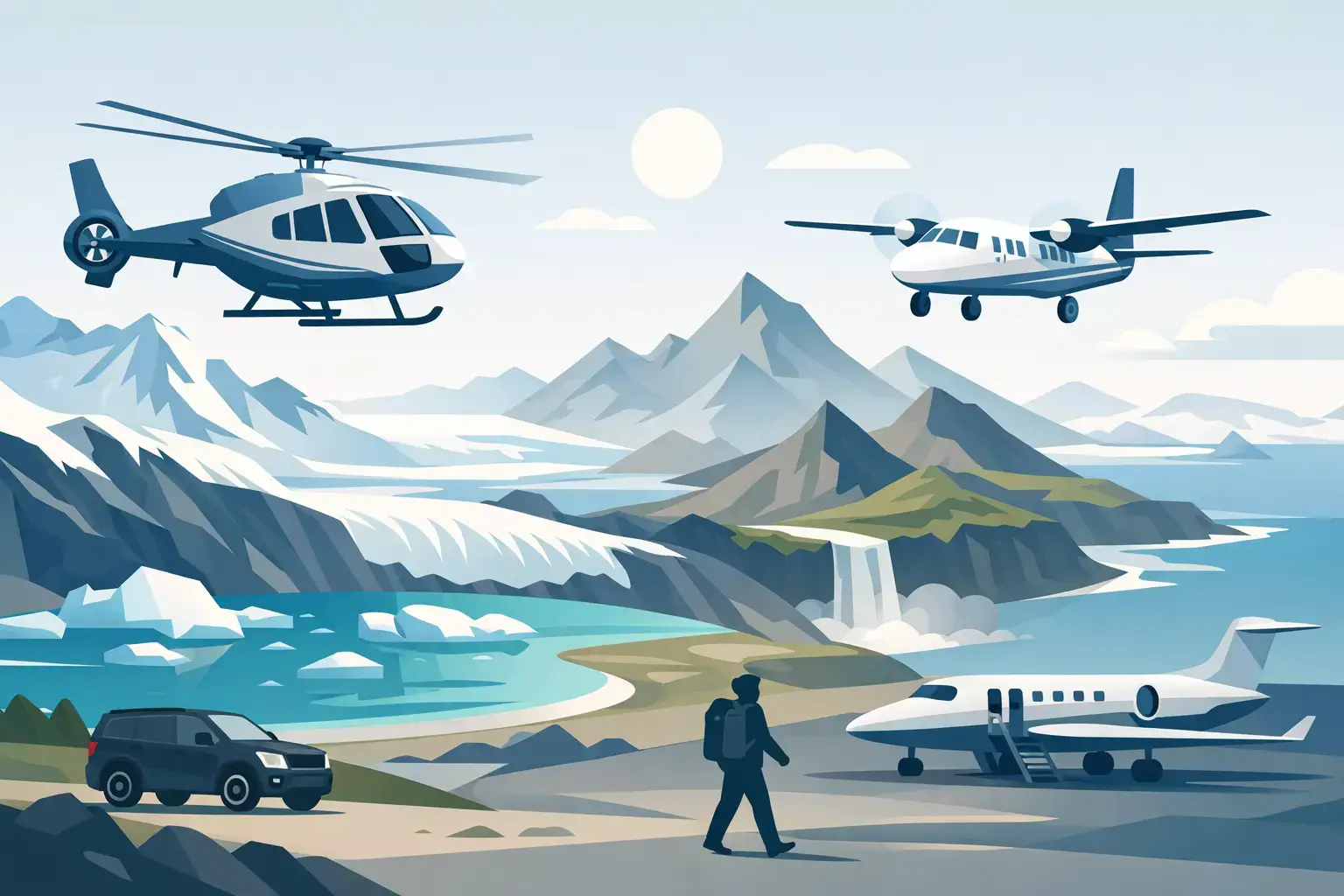
A steel tower section hanging beneath a helicopter over black sand, lava fields, or a narrow mountain ridge is not a sightseeing moment. It is precision work. Helicopter sling work in Iceland is used when ground access is slow, impossible, or simply too disruptive for the job at hand. For utility crews, construction teams, researchers, and production support, it is often the cleanest way to move equipment into places where roads end and terrain takes over.

Iceland is exceptionally well suited to this kind of operation, and also exceptionally demanding. Distance is only part of the equation. Weather shifts quickly, wind funnels through valleys, landing zones can be limited, and many sites sit on terrain that looks open from a map but works very differently in real conditions. That is why sling operations here are less about brute lift and more about planning, timing, and local flight judgment.

What helicopter sling work in Iceland is used for

Sling work means carrying an external load suspended beneath the aircraft. That load might be construction materials, utility components, tools, fuel, camera gear, scientific equipment, or specialized supplies for remote operations. In Iceland, the use cases are broad because the country has so many areas where overland transport is inefficient or not viable.

A mountain communications site may need replacement hardware without sending a convoy across rough tracks. A remote lodge project may need building materials delivered where heavy vehicles would damage fragile ground. A production crew may need technical equipment positioned near glaciers, waterfalls, or highland locations with minimal setup time. In each case, the helicopter is not just transport. It is a logistics solution that compresses distance and reduces the ground footprint of the project.

That does not mean a helicopter is always the cheaper option. If a site is accessible by road and the timing is flexible, ground transport can make more sense. Sling work becomes attractive when the value of speed, access, and reduced site disruption outweighs the cost of mobilizing aircraft and crew.

Why Iceland changes the way sling work is planned

Iceland rewards aerial access, but it does not forgive assumptions. Jobs that look simple on paper can become more technical because of wind, elevation, surface conditions, or the lack of suitable staging areas. A lift near the coast may deal with salt exposure and gusting conditions. A highland job may involve soft ground, changing visibility, and long positioning legs. Glacier-adjacent work adds another layer of caution around airflow, temperature, and terrain effects.

This is where local operating knowledge matters. The question is rarely just, Can the helicopter lift it? The better question is, Can the load be lifted safely from this pickup point, flown on this route, and placed accurately at this destination under today’s conditions? Weight, shape, rigging, balance, and weather all interact. Iceland’s environment makes that interaction more pronounced.

Season also matters. Summer opens more project windows in the highlands, but it can also bring heavy demand for aircraft and tight scheduling. Winter may suit some technical operations, especially when frozen ground improves site conditions, yet daylight and weather can narrow the available flight period. There is no universal best month. It depends on the site, the load, and how much flexibility the project can tolerate.

The loads that make sense for sling operations

Not every item is a good sling load. The best candidates are well understood, properly rigged, and sized for clean handling in flight. Materials such as lumber bundles, tower parts, generators, fuel containers, fencing supplies, and pre-packed equipment loads are common examples. Awkward loads can still be moved, but they require more preparation and often more conservative operating limits.

Shape matters as much as total weight. A compact, balanced load is usually easier to manage than a lighter object with a poor center of gravity or high wind resistance. If a load can spin, shift, or catch airflow, the plan has to account for that. In practical terms, this often means spending more time on packaging and rigging before the first flight. That time is well spent. Better preparation on the ground usually leads to a faster and safer operation in the air.

For clients, one of the most useful early steps is simple documentation. Dimensions, estimated weight, photos, pickup conditions, and delivery conditions help define whether the job is straightforward or highly specialized. That is especially true in Iceland, where a small detail on the ground can have an outsized effect on how the mission is flown.

How a helicopter sling work project is typically organized

Most successful sling work starts long before the aircraft lifts off. The planning phase usually focuses on four things: the load, the site, the route, and the timing. The operator needs to understand exactly what is being moved, how it will be rigged, where it will be picked up, and what the drop zone looks like in real operating conditions.

A site survey may be needed, either in person or through detailed imagery and client briefing. That helps identify hazards such as wires, uneven ground, rotor wash sensitivity, limited approach paths, or the need for staging space. In Iceland, route planning also has to account for terrain funnels and weather patterns that can differ sharply over short distances.

On the day of operation, efficiency depends on coordination. Ground crews need clear roles. Loads should be staged and ready. Communication protocols should be established in advance. If the project involves multiple lifts, the pace of the work is usually determined less by flight time alone and more by how cleanly each pickup and set-down can be turned around.

This is another area where there are trade-offs. A rushed site setup can create delays later. A well-organized staging area may cost more labor upfront but save aircraft time across the whole operation. Since helicopter hours are valuable, good ground discipline is often the difference between a tidy project and an expensive one.

Safety, weather, and operational limits

Premium service in aviation is not about promising yes to every request. It is about knowing when conditions support the mission and when they do not. Sling work places more variables into the operation than a standard passenger flight, so weather decisions are especially important.

Wind is one of the biggest factors. Even when visibility looks fine and the route is flyable, gusts at the pickup or destination point can make external load work unsuitable. Cloud base, precipitation, and localized terrain effects also matter. Iceland can produce very different conditions within the span of one job, especially when operating between lowland staging areas and elevated interior terrain.

That is why flexibility is part of responsible planning. Clients with rigid deadlines should discuss timing margins early. In some cases, the smart approach is to build a weather window into the project rather than tying the operation to a single fixed hour. That may feel less convenient at first, but it usually leads to a smoother result.

Who uses helicopter sling work in Iceland

The client profile is wider than many people expect. Utility and telecom providers use sling operations for remote infrastructure support. Construction and maintenance teams use them to place materials where cranes and trucks cannot realistically reach. Film and photography projects use them to move technical gear into visually dramatic but logistically difficult terrain. Research groups and specialist crews may use them for seasonal field deployment in areas where time on site is limited and transport efficiency matters.

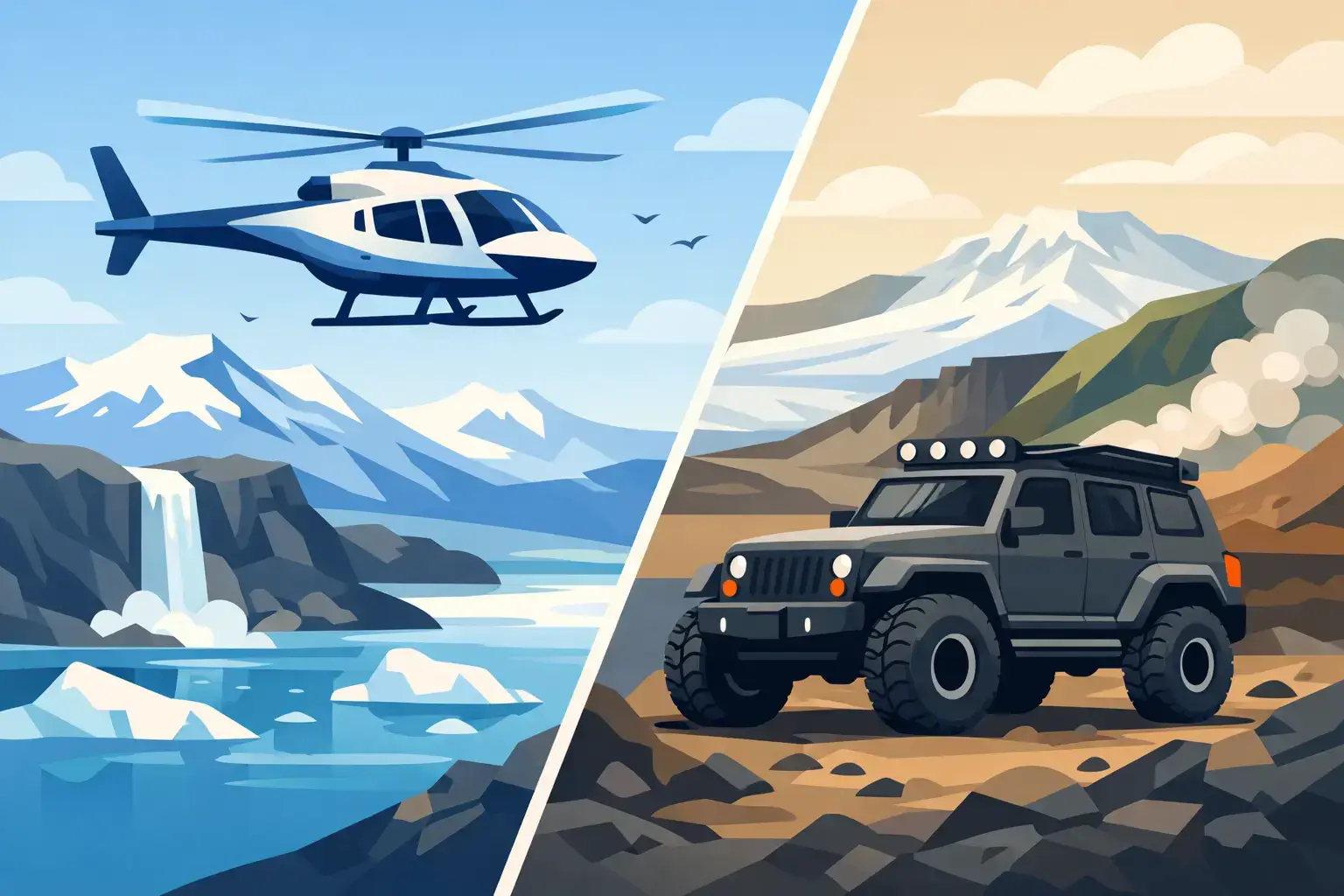
For international clients, Iceland adds a particular advantage. Distances can look manageable on a map, yet travel overland may involve hours of driving, restricted access, rough tracks, or environmental sensitivities. A helicopter changes that equation quickly. It can turn a difficult logistics chain into a direct operation with fewer moving parts.

That is also why some clients pair technical flight support with other helicopter services. A project may involve site inspection, cargo movement, aerial filming, and executive transport within the same operating plan. When one operator can handle those elements coherently, the project tends to run with less friction.

Choosing the right partner for sling work

The best helicopter sling work in Iceland comes from an operator that understands both the aircraft and the setting. Lift capability matters, but so do dispatch judgment, route knowledge, site assessment, and the ability to adapt when Icelandic conditions shift. Clients should expect a clear conversation about the load, realistic timelines, weather sensitivity, and any site constraints that may affect execution.

That kind of clarity is part of the value. For a premium client, whether commercial or private, the goal is not just to move something from A to B. It is to do it with accuracy, efficiency, and a plan built around the realities of Iceland rather than generic assumptions. HeliAir supports that approach by combining local helicopter expertise with tailored mission planning for both scenic and technical operations.

If you are considering sling work here, the strongest starting point is a practical one: define the load, define the site, and start the conversation early enough to shape the operation properly. In Iceland, the best outcomes usually come from planning that respects the landscape as much as the schedule.

Heli Skiing Iceland: What to Expect

A glacier line dropping toward the North Atlantic is not the usual heli-ski backdrop. That is part of what makes heli skiing Iceland different. You are not flying into a crowded alpine system with lodges stacked valley to valley. You are stepping into a remote, weather-shaped landscape where long descents, dramatic sea views, and direct helicopter access create a ski day that feels far more private.

For travelers used to skiing in the Rockies, the Alps, or British Columbia, Iceland changes the scale of the experience. The mountains are not the tallest in the world, but they rise sharply from fjords and coastal valleys, which makes the skiing visually striking and surprisingly varied. A single day can bring powder fields, steeper technical lines, and wide-open runs with a view of the ocean below. The appeal is not just snow quality. It is access, terrain character, and the rare feeling that you are skiing at the edge of the Arctic on your own schedule.

Why heli skiing Iceland stands out

Most premium ski trips promise exclusivity. Iceland can deliver it in a more literal sense. Large areas of skiable terrain sit far from roads and traditional resort infrastructure, so the helicopter is not a luxury add-on. It is the practical way in.

That creates a different rhythm from a conventional ski vacation. You are not commuting from a lift base or waiting in public lines. The day is built around weather windows, guide judgment, helicopter efficiency, and terrain choice. For private groups, that means a more tailored experience from the start. Ability level, preferred pace, filming requests, sightseeing interests, and even non-ski add-ons can shape the itinerary.

The setting also matters. In northern Iceland especially, mountains drop toward narrow fjords and open water, giving many runs a visual scale that feels outsized compared with the vertical. You may not remember every number on the altimeter, but you will remember the sensation of landing on a ridge with snow in one direction and the sea in the other.

What the terrain is really like

Travelers sometimes assume Iceland is all volcanic novelty and no serious skiing. That misses the point. The country offers real ski terrain, but it expresses itself differently from major continental mountain ranges.

You can expect a mix of broad alpine slopes, couloirs, ridge-accessed descents, and long rolling lines that keep opening as you ski lower. Snow conditions vary with elevation, aspect, wind, and the maritime climate. That means flexibility is part of the experience. Some days favor softer powder snow in protected zones. Other days are about stable, confidence-building corn cycles in spring. The best operators plan around what the mountain is offering that day rather than forcing a fixed agenda.

This is also why group composition matters. A private group of strong skiers can move toward steeper and more technical objectives if conditions allow. Mixed-ability groups usually get more value from a balanced day with terrain that stays enjoyable rather than overly ambitious. In Iceland, good planning is not about squeezing in the maximum number of runs at any cost. It is about choosing lines that fit the weather, snowpack, and guests in the aircraft.

When to go for heli skiing in Iceland

The main season is typically spring, when longer daylight and more stable patterns support flight operations and snow quality. This timing surprises some US travelers who associate ski trips with midwinter powder calendars. In Iceland, spring often delivers the better balance of access, visibility, and snow coverage.

March through early June is generally the window people look at first, though exact timing depends on the region and seasonal conditions. Earlier in the season can bring a more winter snow feel, while later spring may offer smoother, more predictable corn snow in the right zones. Neither is universally better. It depends on what kind of skiing you want and how much flexibility you have in your travel dates.

If your priority is the highest chance of flight-ready weather, it helps to build margin into the itinerary. A multi-day stay gives your operator more room to work around Icelandic conditions. Travelers who lock themselves into a single narrow day can still have a great experience, but they are accepting more weather risk.

Weather is part of the luxury equation

In Iceland, premium service does not mean pretending the weather is controllable. It means managing it well.

Helicopter skiing depends on visibility, wind, landing conditions, and snow stability. The best experience comes from operators who are direct about that from the outset. Sometimes that means adjusting departure times. Sometimes it means switching terrain zones. Sometimes it means waiting for the right window instead of chasing a marginal one.

For high-end travelers, this can actually be a strength rather than a drawback. A professionally managed helicopter operation should protect the quality of the day, not just the calendar reservation. Clear communication, local knowledge, and flexible planning matter more in Iceland than flashy promises. When conditions line up, the reward is exceptional. When they do not, you want an aviation team that knows exactly where the margins are.

Who heli skiing Iceland is best for

This is not only for expert skiers collecting bragging rights, although advanced skiers will find plenty to appreciate. Iceland works especially well for private groups who want a ski trip that feels exclusive without becoming overly formal. Couples celebrating a major trip, families with strong skiing backgrounds, small groups of friends, and photographers all tend to get a lot out of the format.

It is also a strong fit for travelers who value time. Iceland’s roads are scenic, but reaching remote mountain areas overland takes commitment. A helicopter changes that equation completely. The day begins with direct access and unfolds around experience rather than transit.

That said, heli-skiing is not a casual add-on for first-time skiers. Guests should arrive with solid off-piste ability, strong fitness, and realistic expectations about variable snow. The better your group communicates its skill level in advance, the better the day can be designed.

Planning the day: private, tailored, and efficient

A good heli-ski day starts well before takeoff. The planning conversation should cover skiing ability, group size, preferred style of terrain, and whether the day is purely ski-focused or part of a broader Iceland itinerary.

This is where a helicopter operator with wider charter capability adds value. If you are already organizing scenic flights, private transfers, filming support, or a custom itinerary around Iceland, heli-skiing can fit into a larger aviation plan rather than stand alone as a fixed package. That is especially useful for travelers combining Reykjavík, the north, and remote landscapes in one trip.

For some guests, the goal is simple: ski the best available lines. For others, the experience matters just as much as the descents. They may want aerial photography, a scenic landing, or a day shaped around a premium private group experience. HeliAir approaches this as a bespoke operation, which is exactly how heli-skiing in Iceland should be handled.

What to wear and bring

Gear matters, but not in a complicated way. If you have heli-skied elsewhere, the basics are familiar: proper ski clothing for changing mountain conditions, avalanche safety equipment as required by the operator, appropriate skis for off-piste snow, and a clear understanding of the day’s plan.

The main adjustment for Iceland is the maritime weather. Conditions can shift quickly, and wind can play a bigger role in perceived temperature than visitors expect. Layering well, protecting hands and face, and bringing quality eyewear are simple choices that improve the day. Premium trips feel better when small discomforts are handled before they become distractions.

If you are traveling from the US and building this into a broader Iceland vacation, ask early about rental logistics, luggage limitations, and staging points. Smooth planning on the ground makes the flight experience feel effortless once you are in the air.

More than a ski trip

The strongest case for heli skiing Iceland is not that it replaces classic destinations. It does something different. It combines serious skiing with an aerial perspective that belongs to Iceland alone – glaciers, dark peaks, fjords, distant coastlines, and terrain that still feels genuinely removed from the usual circuit.

For the right traveler, that difference is the whole point. You are not coming here to repeat a trip you could take somewhere else. You are coming for a day shaped by local aviation expertise, mountain judgment, and direct access to places few visitors ever see from above, let alone ski.

If you are considering it, plan with enough flexibility to let Iceland be Iceland. That is usually when the best days happen.

Helicopter Photography Iceland Tips

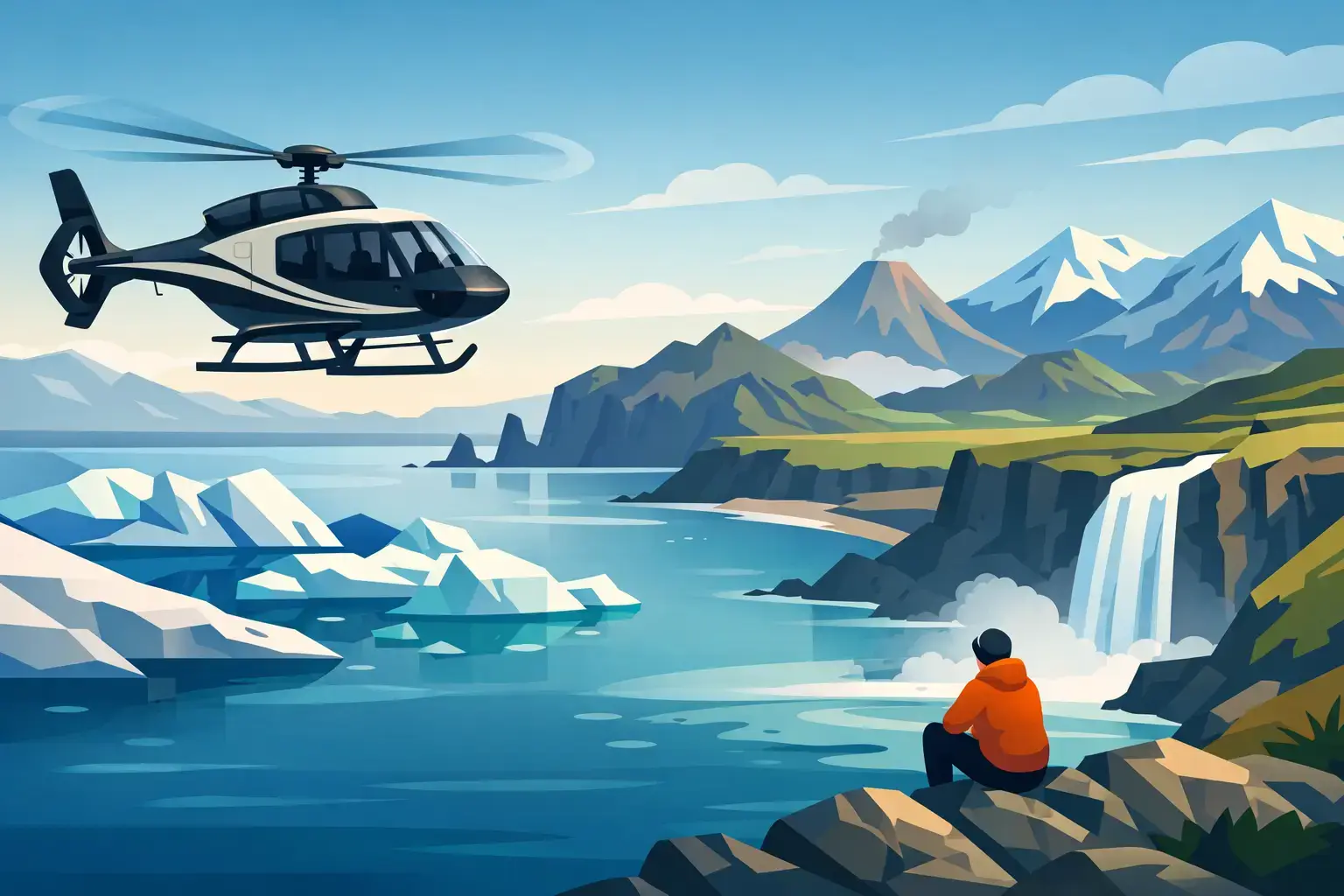
A good Iceland photo from the ground usually starts with patience. A great one from the air starts with access. When people search for helicopter photography Iceland, they are usually not looking for a novelty flight. They want angles that roads cannot deliver, light that changes by the minute, and a way to reach glaciers, volcanoes, black sand coasts, and highland rivers without spending half the day getting there.

That is the real appeal of shooting Iceland by helicopter. You trade long overland transfers for time in the air and time on location. For photographers, that changes everything. It means more flexibility around weather windows, more control over perspective, and the chance to build a flight around the landscapes that matter most to your portfolio.

Why helicopter photography in Iceland stands apart

Iceland is built for aerial work. The terrain is dramatic at every scale. From above, braided rivers look like silver threads across volcanic plains. Glacial crevasses turn into abstract patterns. Waterfalls that feel vertical from the ground reveal their full shape when seen from the side or slightly above. Even familiar landmarks become different subjects once altitude, direction, and light are working in your favor.

But the same conditions that make Iceland visually extraordinary also make it demanding. Weather moves fast. Light can be flat one hour and perfect the next. Wind matters, and so does season. In winter, low sun can add depth all day long, but access and conditions are tighter. In summer, you get generous daylight and huge route options, though midday light can be harsher than many photographers expect.

This is why helicopter photography is less about simply getting airborne and more about planning the right flight. The best results come when the aircraft, route, landing options, and timing all support the images you want to make.

Planning helicopter photography Iceland around the shot list

The first question is not which helicopter to book. It is what you want to photograph. Some photographers want wide scenic frames of glaciers and mountain ridges. Others want tight volcanic textures, waterfall systems, or a black sand coastline under low-angle light. Those priorities shape the route, flight duration, and whether you need a scenic overflight or a custom charter with landings.

If your goal is variety, a longer flight often makes more sense than trying to force too much into a short window. Iceland’s landscapes are spread out, and even from the air, distance matters. A 90-minute experience can be excellent for a focused region. A longer custom itinerary is better if you want a fuller aerial portfolio with distinct terrain types in one day.

Landing capability also changes the photography. Shooting through an open or closed aircraft door creates one type of image. Stepping onto a remote ridge or beside a glacier edge creates another. Ground access at a private landing site gives you stable compositions, room to change lenses, and the chance to work the scene rather than racing past it.

What makes the best aerial subjects in Iceland

Not every famous destination is best from a helicopter. Some are more impressive on foot. Others become extraordinary only when viewed from above. Glaciers are one of the clearest examples. Their scale is difficult to understand from the ground, but from the air, the flow lines, icefalls, and ash-streaked surfaces become visually legible.

Volcanic terrain is another strong match. Recent lava fields, crater systems, geothermal color, and fissure patterns often read better from altitude than they do at eye level. Highlands routes can be especially rewarding because they combine rivers, rhyolite mountains, mossy plateaus, and isolated roads that emphasize how remote the landscape really is.

Waterfalls can go either way. Some are iconic from established viewing areas, but from a helicopter they gain context. You see the river feeding them, the canyon below, and the surrounding topography in one frame. That broader composition is often what turns a beautiful photo into a memorable one.

Gear choices that work in the air

For most helicopter photography in Iceland, less gear is better. You do not need your full kit in the cabin. You need a camera setup that you can handle quickly and confidently in a moving aircraft with changing light. Two camera bodies can be useful, but only if you are comfortable managing them safely and efficiently.

A wide-to-mid zoom is usually the workhorse lens. It gives you enough width for landscapes while still allowing some compression of ridgelines, glaciers, and river systems. A second lens with moderate reach can help for isolating textures, but very long lenses are often harder to use in the aircraft and less practical in variable conditions.

Fast lens changes are not always realistic, especially if doors are off or space is limited. That is one reason many experienced aerial photographers keep their setup simple. Clean front elements, secure straps, and good battery discipline matter more than carrying every possible focal length.

Polarizers are a mixed decision. They can help in some situations, especially with glare, but they also reduce light and can create uneven effects in very wide scenes. It depends on the lens, the angle to the sun, and whether you are shooting through glass. Neutral density filters are generally less useful unless you have a very specific creative plan during a landing.

Shooting technique inside the aircraft

Aerial photography rewards small technical choices. Shutter speed is one of the most important. Even if the helicopter is stable, you are still working in motion, and Iceland’s weather can add vibration or wind. In practice, faster shutter speeds give you more keepers.

If you are photographing through windows, managing reflections becomes part of the job. Dark clothing helps. So does paying attention to your angle relative to the glass. If the flight allows open-door shooting, image quality improves, but so do the demands on technique and gear security. You want every loose item controlled before takeoff.

Communication with the pilot matters more than many first-time photographers expect. Pilots familiar with aerial sightseeing and photo work understand how to present a subject, make a gradual turn, or pass a feature from the better side based on light. That only helps if they know what you are trying to capture. A clear pre-flight conversation about priorities often produces better images than any piece of equipment.

Weather, light, and the value of flexibility

Iceland rarely rewards rigid plans. The best helicopter photography sessions often happen because the schedule has room to adapt. If cloud cover is sitting on one glacier system, another route may be open and spectacular. If wind limits one landing area, a different destination may offer stronger conditions and equally strong imagery.

This is where working with a local operator makes a real difference. Experience is not just about flying safely. It is about understanding how Iceland behaves on a given day, which routes suit the weather, and when waiting an hour can transform the light. HeliAir, for example, operates from more than one base and builds both structured tours and custom helicopter itineraries around exactly that kind of on-the-ground reality.

For photographers visiting Iceland on a tight schedule, this flexibility is often the difference between getting a nice scenic flight and getting images worth the trip.

Is a tour or a custom charter better?

It depends on your goal. A scenic tour can be ideal if you want a premium aerial experience and strong images without needing full control over the route. It is efficient, well-planned, and often enough for travelers who want to photograph a specific region in good light.

A custom charter is the better fit when photography is the main purpose of the flight. That is especially true for professionals, production teams, serious enthusiasts, or private groups with specific locations in mind. Custom planning gives you more say over timing, route logic, landings, and how long to spend at each location.

There is also a budget trade-off. A tailored helicopter photography day in Iceland is a premium product. But for many travelers, the value is obvious. You are not paying only for flight time. You are paying for access, efficiency, and the ability to design a day around Iceland’s most difficult variable – conditions.

Getting the images you came for

The strongest aerial photography in Iceland usually comes from restraint. Pick a few target landscapes. Build around the weather. Leave room for route changes. Bring the gear you will actually use well. And choose a flight plan that treats photography as the point, not as an afterthought.

Iceland gives very little that feels ordinary from the air. If you plan carefully, stay flexible, and fly with people who know the terrain, the camera has a way of taking care of the rest.

Private Helicopter Charter Iceland

A black-sand beach, a glacier landing, and dinner back in Reykjavík the same day – that is the appeal of private helicopter charter Iceland. You are not working around bus schedules, long gravel roads, or a fixed group itinerary. You are buying access, time, and a far better vantage point on a country that often makes the biggest impression from the air.

For travelers who want more than a standard sightseeing tour, a private helicopter changes the shape of the trip. Iceland is full of places that look close on a map and take hours to reach on the ground. Some are seasonal. Some are remote. Some are simply better experienced with a pilot who knows where the weather is moving, where the light is best, and which landing areas make sense on the day.

Why choose private helicopter charter Iceland?

The obvious reason is speed, but speed is only part of the value. A helicopter charter lets you build a day around what you actually care about. That might mean landing near a glacier for photos, flying inland to the highlands, combining several waterfalls in one route, or arranging a direct transfer that also happens to be one of the most memorable flights of your trip.

There is also a comfort factor that matters more than many visitors expect. Iceland can be demanding overland. Weather shifts quickly, roads can be rough, and even famous sights can involve long driving days. A private helicopter removes much of that friction. Instead of spending half the day getting somewhere, you spend that time seeing more of the country.

That said, a charter is not about cramming in every landmark. The best private flights are curated. They balance distance, weather windows, landing opportunities, and the pace you want. For some groups, that means a dramatic one-to-two-hour scenic flight. For others, it means a full-day itinerary with multiple stops and time on the ground.

What a private helicopter charter in Iceland can include

A well-planned charter can be purely scenic, purely practical, or both. Many guests start with a destination in mind – a volcano area, a glacier, a remote waterfall, the Highlands, or the South Coast – and then shape the flight around how much time they want in the air versus on the ground.

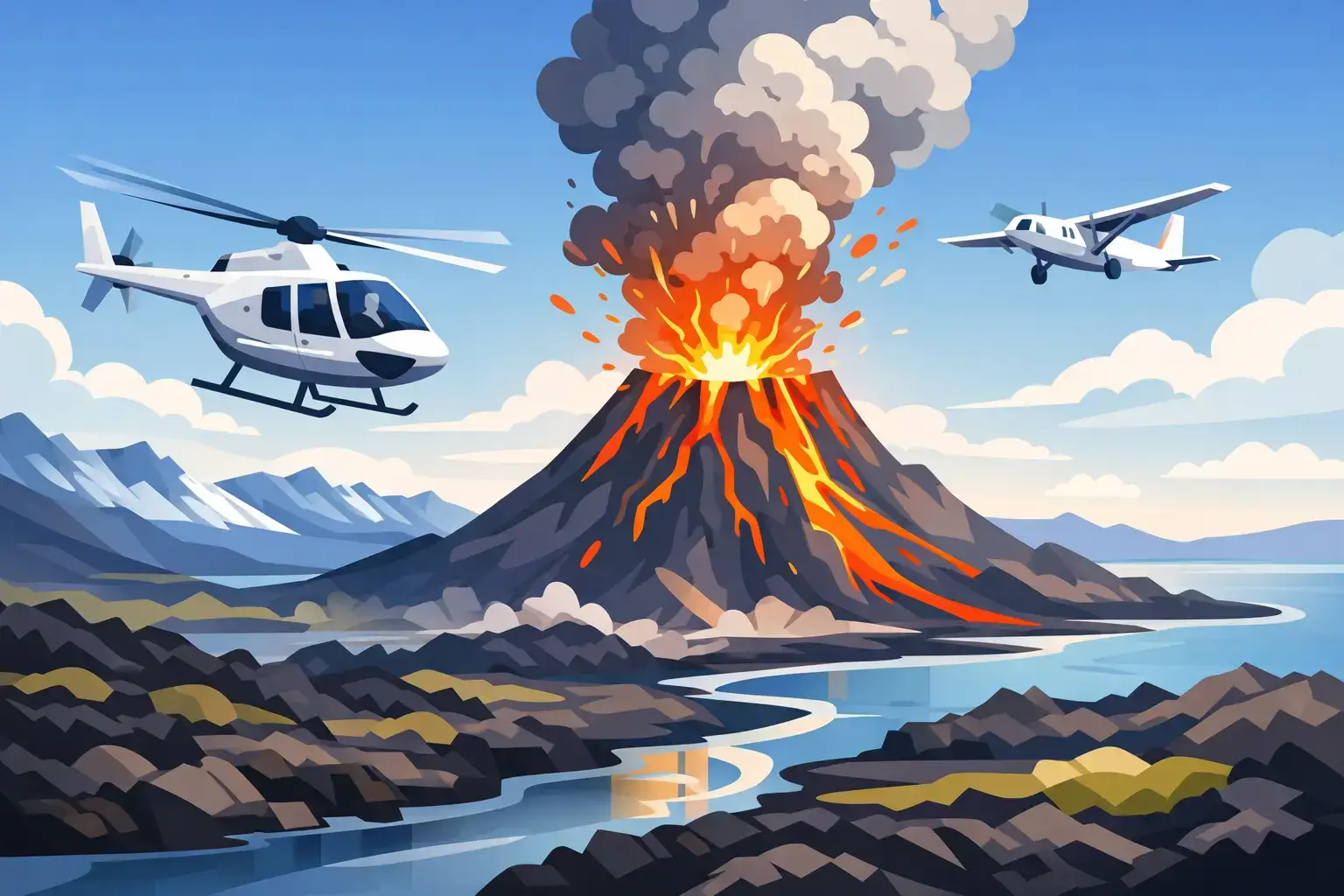
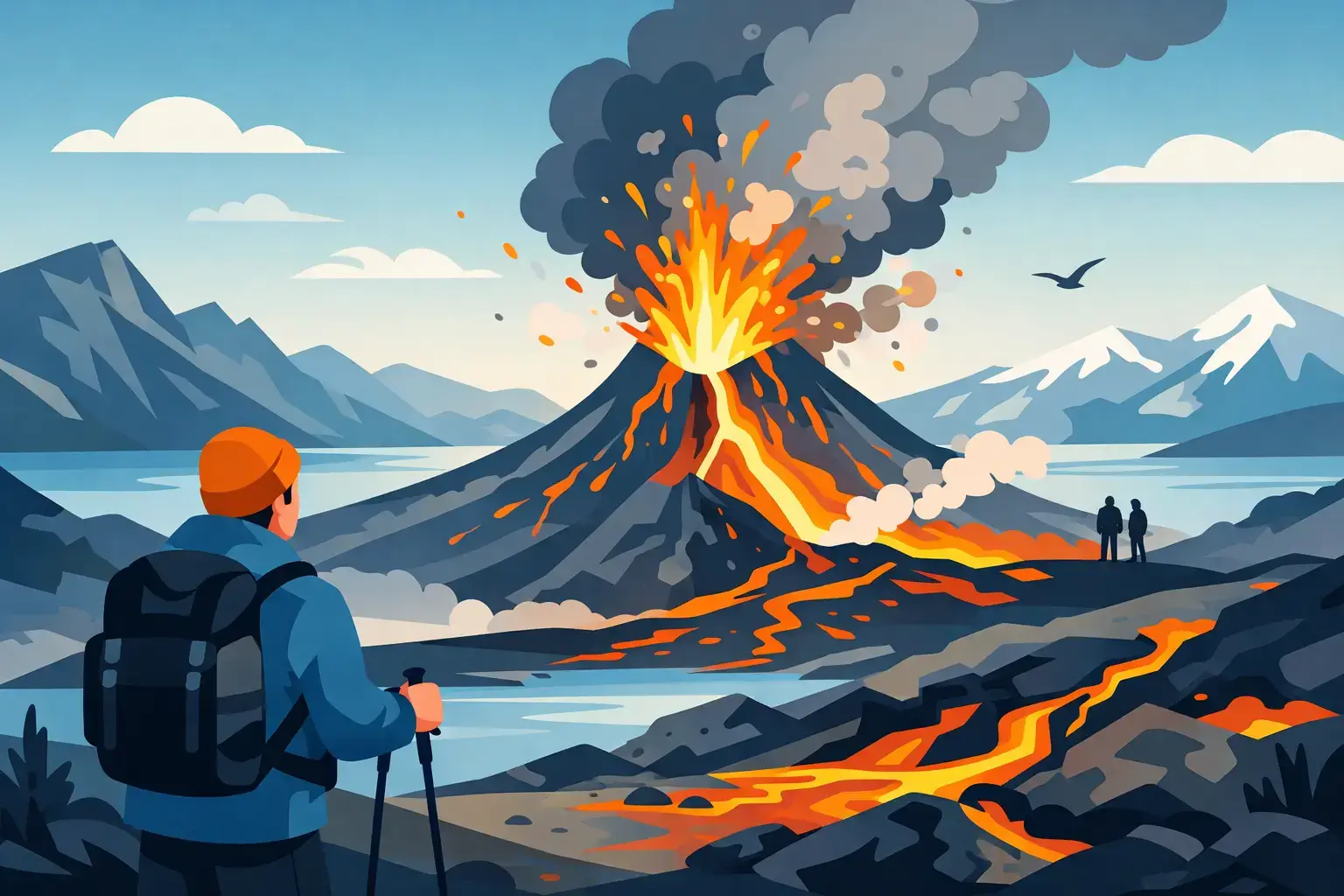
Volcano flights are often high on the list because Iceland’s volcanic terrain is best understood from above. Fresh lava fields, craters, geothermal zones, and stark changes in color become much more dramatic from a helicopter. The same is true of glacier landscapes. From the ground, you see a section. From the air, you see the scale, the crevasses, the ice tongues, and the way the terrain unfolds around them.

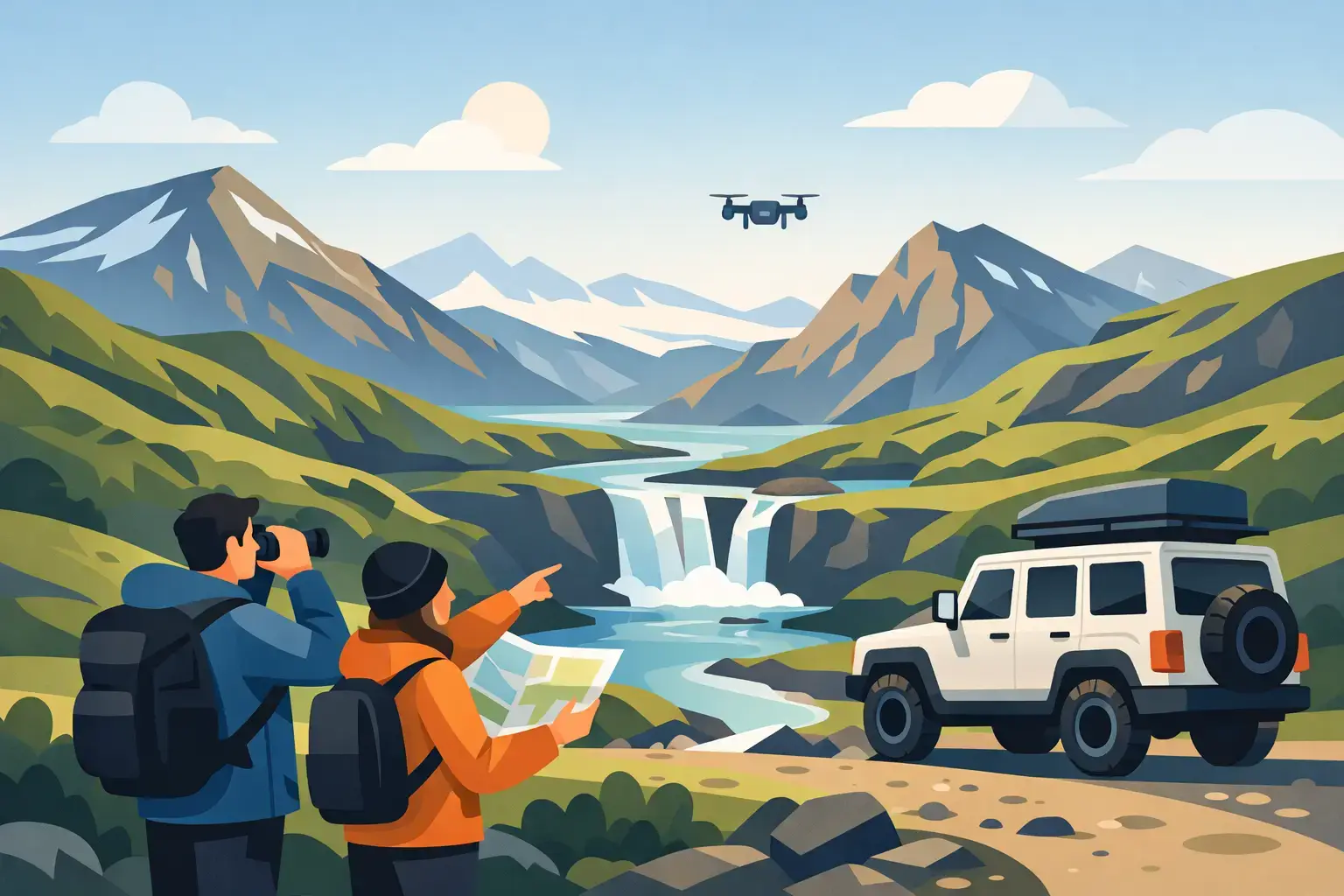
Waterfall charters are another strong choice, especially for travelers who want iconic views without the usual crowds. A helicopter can pair major sights with lesser-known locations that would be inefficient to combine by car. Photographers often prefer this format because it gives them range. Instead of committing an entire day to one region, they can work with changing weather and light.

Private charters are also used for airport transfers, point-to-point travel, filming, heli-skiing support, and technical flight work. That range matters because the planning standards are different from a tourism-only operator. If you need a premium arrival from Keflavík, a direct transfer to a lodge, or a flight that supports a production schedule, the charter conversation becomes more about timing, load, landing requirements, and operational flexibility.

When a charter makes more sense than a scheduled tour

Scheduled helicopter tours are excellent when the route already matches what you want. They are efficient, well-defined, and often ideal for couples or small groups who want a premium experience without designing a custom day. But there are clear situations where private helicopter charter Iceland is the stronger option.

The first is when time is limited. If you have one free day in Iceland and want to see more than one region, a private charter can turn a tight schedule into a meaningful experience. The second is privacy. Celebrations, proposals, family trips, and high-end travel often call for a more exclusive setting. The third is specificity. If you have particular locations, filming goals, ski objectives, or photography priorities, a private aircraft gives you the flexibility to plan around those needs.

There is a cost trade-off, of course. A private charter is a premium service, and the final rate depends on aircraft, flight time, route, landings, and waiting time if required. But for many travelers, the real comparison is not against a bus tour. It is against the value of a day in Iceland, how much ground travel they are avoiding, and whether they want a fixed experience or one built around them.

How charter planning usually works

The process is more personal than a standard online booking, and that is a good thing. Private helicopter flights work best when they are tailored around your priorities instead of squeezed into a preset box.

In most cases, planning starts with a few essentials: where you want to depart from, how many people are flying, what you want to see, and how much time you want to commit. From there, the route is refined around weather patterns, aircraft suitability, seasonal access, and whether landings are realistic at the locations you have in mind.

A strong operator will also help you narrow the brief. Guests often begin by asking for everything at once – glaciers, black sand, waterfalls, volcanoes, Highlands. Sometimes that can be done. Sometimes the better answer is to focus on one region and do it properly. Iceland rewards restraint. A charter feels more exclusive when the day has rhythm and purpose, not when it feels rushed.

This is also where local knowledge matters. Conditions in Iceland can change quickly, and a route that looks perfect in theory may need small adjustments on the day. That is normal. The goal is not rigid adherence to a paper plan. The goal is the best possible flight within safe operating conditions.

What to expect on the day

Private helicopter travel in Iceland feels refreshingly direct. You arrive, meet the crew, review the route, and confirm any weather-related adjustments. If the charter includes landings, those are discussed clearly so everyone knows the timing and ground conditions.

Once airborne, the experience is different from fixed-wing sightseeing. A helicopter can track terrain more closely, approach dramatic features with a different sense of scale, and access landing areas that open up the landscape in a more personal way. That is part of what guests are paying for – not just aerial transport, but an immersive view of Iceland’s geology and geography.

You should also expect some flexibility. Weather is a real operational factor in Iceland, not a footnote. Clouds, wind, visibility, and changing local conditions can affect routing and landing plans. Premium service does not mean pretending weather is irrelevant. It means handling it well, communicating clearly, and adapting intelligently.

If you are planning photography or filming, mention that early. Weight, equipment, doors-on versus standard arrangements, timing, and light all affect how the flight should be structured. The same applies to ski support, utility tasks, or corporate transport. The more specific the request, the better the charter can be built around it.

Choosing the right operator for private helicopter charter Iceland

Not every helicopter company serves the same type of customer. Some focus mainly on short scenic tours. Others can handle a broader mix of luxury travel, transfers, custom route planning, and specialist operations. If your trip is high-value or highly specific, that difference matters.

You want an operator that knows Iceland beyond the postcard stops and can guide you honestly on what is worth doing. Dual operating bases can also be a major advantage, especially if your travel plans involve North Iceland as well as Reykjavík. The ability to combine premium sightseeing with practical charter capability is useful because it means one team can handle both the experience and the logistics.

This is where HeliAir stands out. The company pairs scenic expertise with real charter depth, offering everything from Reykjavík and Ólafsfjörður departures to custom flights, airport transfers, heli-skiing support, and aerial production work. For guests, that means fewer limitations and a planning process centered on what they actually want to do in Iceland.

Is it worth it?

For the right traveler, absolutely. If your goal is simply to say you took a helicopter ride, a standard tour may be enough. But if you want Iceland on your terms – faster access, better privacy, smarter routing, and the freedom to shape the day around a specific vision – a private charter delivers something far more personal.

The country has a way of making people ambitious. They arrive with a short list and quickly realize how much more they want to see. A helicopter does not make Iceland smaller. It makes your time in it count for more. If you know the places you want to reach, or just know you want something exceptional, the best next step is to start the conversation early and build the flight around that idea.

Keflavik Helicopter Transfer in Iceland

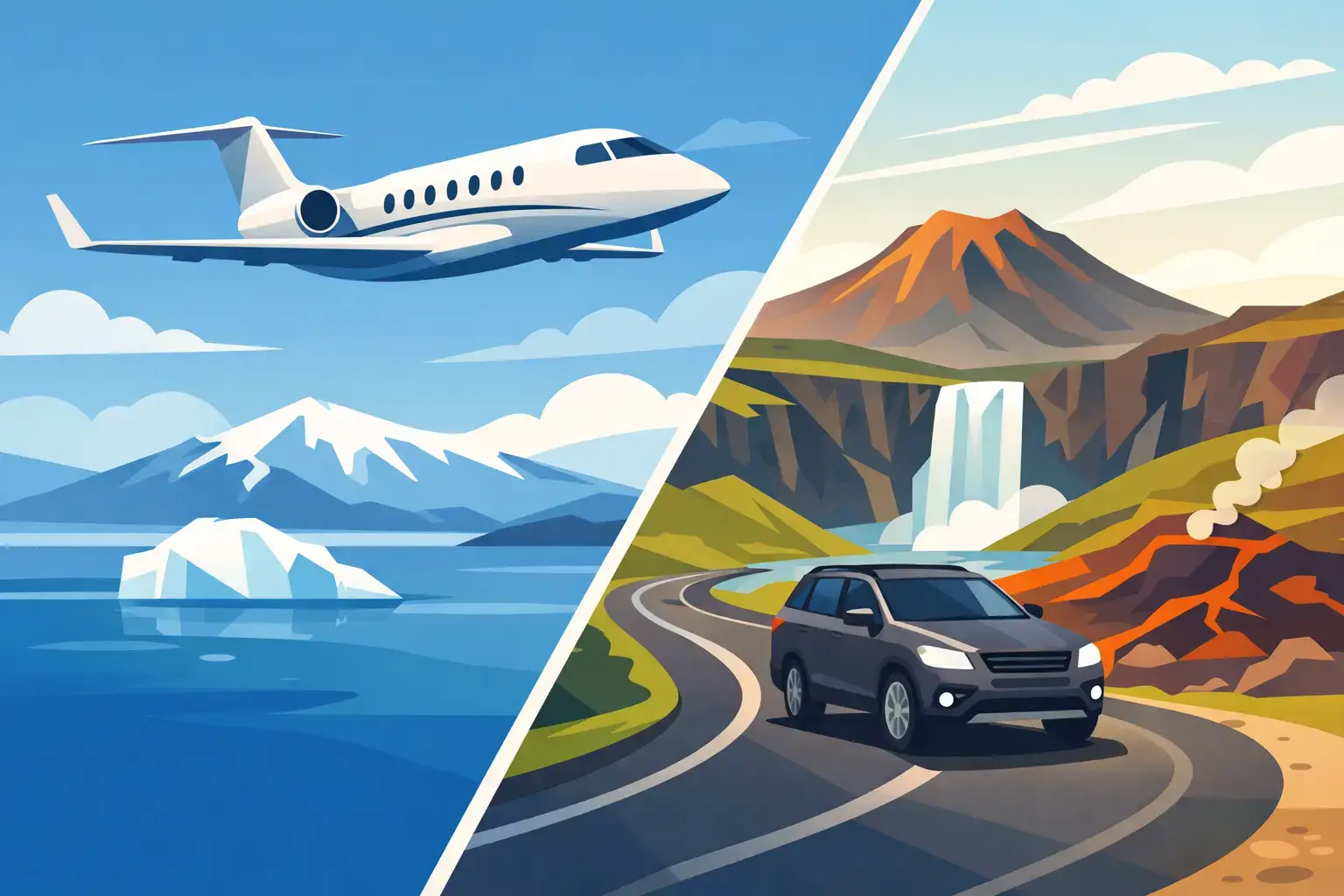
Landing at Keflavík is exciting right up to the moment you look at the road ahead. If your schedule is tight, your hotel is in Reykjavík, or your real destination is a glacier-side lodge, volcanic highland retreat, or private villa far beyond the usual route, a keflavik helicopter transfer changes the shape of the trip immediately. You skip the long ground leg and start seeing Iceland the way it was meant to be seen – from above.

For many travelers, that choice is not only about speed. It is about arriving with energy, privacy, and a sense of occasion that fits the rest of the journey. A helicopter transfer from Keflavík can be purely practical, but it also turns airport logistics into part of the experience.

Why choose a keflavik helicopter transfer

Driving from Keflavík works well for many visitors, and for standard city arrivals it is often enough. But premium travel usually has different priorities. Time matters. Privacy matters. So does flexibility when the plan includes more than a simple hotel check-in.

A helicopter transfer is especially useful when your itinerary starts outside Reykjavík, when you are connecting to a remote property, or when the transfer itself needs to support a larger plan. That could mean reaching a lodge in South Iceland, linking directly into a sightseeing flight, meeting a yacht or private group, or getting key guests where they need to be without spending half the day on the road.

There is also a comfort factor that is easy to underestimate. After an overnight flight from the US, many travelers do not want another long segment by car. A helicopter shortens that transition and replaces it with broad views of lava fields, coastlines, mountains, and weather systems moving across the landscape. You arrive feeling like the trip has already started.

What a helicopter transfer from Keflavík can look like

The exact routing depends on weather, landing access, baggage, and where you want to go. That is the real advantage of charter planning in Iceland. The flight can be designed around the destination rather than forced into a fixed template.

For some guests, the transfer is a direct flight from the airport area to Reykjavík. That works well for travelers staying in the city, connecting to a second flight, or wanting an efficient arrival before meetings, private dining, or a short-stay luxury itinerary. For others, Reykjavík is only a waypoint, and the aircraft continues the day’s momentum by heading toward a private landing site, a countryside hotel, or a scenic area where the journey blends into a tailored excursion.

This is where helicopter travel starts to stand apart from traditional airport transport. A road transfer usually has one job. A helicopter can combine several. It can move you quickly, show you the landscape, and support a broader custom itinerary without losing half a day to overland transit.

Best use cases for a keflavik helicopter transfer

Some trips benefit more than others. If you are arriving for a city break and have no time pressure, a car may be enough. But if your Iceland plan is built around access, exclusivity, or complicated logistics, helicopter transfer becomes far more compelling.

Couples on a short luxury stay often choose it because every hour counts. Instead of landing, collecting bags, driving, checking in, and trying to recover the day, they can be airborne again quickly and arrive in Reykjavík or beyond with a completely different pace.

Families and private groups tend to value the privacy and simplicity. Keeping everyone together is easier than splitting vehicles or coordinating multiple transfers, especially when children, photographers, or high-end travel arrangements are involved.

For production teams, corporate travelers, and specialist customers, the case is even clearer. Timing can be tight, destinations may be remote, and the transfer may need to align with filming schedules, events, site visits, or onward aviation support. In those situations, the helicopter is not a luxury add-on. It is the most efficient tool for the job.

From airport transfer to custom Iceland itinerary

One of the strongest reasons to book a helicopter from Keflavík is that the service does not have to end at the first landing. It can be the opening leg of a day designed around exactly what you want to see.

That may mean a direct transfer to Reykjavík followed by a volcano tour later that afternoon. It may mean routing from the airport toward waterfalls, black sand coastlines, or glacier scenery before arriving at your accommodation. It may even mean skipping the city entirely and heading straight into Iceland’s dramatic interior or toward a remote peninsula that would take many hours to reach by road.

This flexibility is particularly appealing for visitors who have already invested in a premium Iceland trip and do not want the experience diluted by avoidable transit time. If your goal is to make the most of limited days, the arrival transfer can become one of the smartest places to start.

At HeliAir, that kind of planning is part of the service. The goal is not to fit your trip into a generic product, but to shape the flight around your arrival, destination, and the kind of Iceland experience you actually want.

Practical details that matter

A premium transfer still needs practical clarity. Helicopter operations in Iceland are shaped by weather, daylight, landing conditions, and aircraft capability. That means every request benefits from direct planning rather than assumptions.

Baggage is one of the first things to discuss. Passenger count and luggage volume affect aircraft choice and loading. A couple traveling light has different options than a family arriving with winter gear, camera equipment, or oversized bags. This is easy to manage when it is addressed early.

Weather is the other major variable. Iceland’s conditions can change quickly, and safe aviation decisions always come first. In practice, that means flexibility is part of high-quality helicopter service. A good operator does not promise the impossible. It gives you realistic guidance, keeps communication clear, and builds the day around what conditions allow.

Landing locations also vary. Some guests want the fastest route to a city base or hotel-adjacent landing area. Others are aiming for private properties, rural lodges, or destinations where local access has to be checked in advance. The best transfer planning takes those details seriously from the start.

Is a Keflavík helicopter transfer worth it?

That depends on what you value most. If the only goal is the cheapest way into Reykjavík, then no – a standard car transfer will do the job. Helicopter travel is not trying to compete with that.

It is worth it when time is scarce, privacy matters, or the transfer needs to do more than move you from one point to another. It is worth it when the destination is difficult to reach by road, when your trip has a high-end structure, or when you want your first look at Iceland to feel every bit as memorable as the landscapes you came to see.

For many travelers, the real value is not measured only in minutes saved. It is in reducing friction. You avoid a long drive after landing. You create space for a better first day. You begin with a sense of scale that no highway approach can offer.

Who should consider booking one

A keflavik helicopter transfer makes the most sense for travelers who see arrival time as part of the trip, not dead space between the airport and the real experience. That includes luxury couples, families, private groups, photographers, event guests, and anyone connecting to remote accommodations or bespoke touring.

It is also a strong option for clients with technical requirements. Film crews, corporate groups, and specialist charter customers often need more than scenic appeal. They need dependable planning, route flexibility, and an operator that understands Iceland as both a destination and a working aviation environment.

That combination is rare, and it is why helicopter transfer can be such a strong fit here. In Iceland, distance is not always the problem. Access is. When access improves, the entire trip opens up.

If you are considering a helicopter transfer from Keflavík, the smartest next step is to think beyond the airport. Consider where you really want the day to begin, what you want to avoid, and what kind of arrival would match the trip you came to Iceland to have.