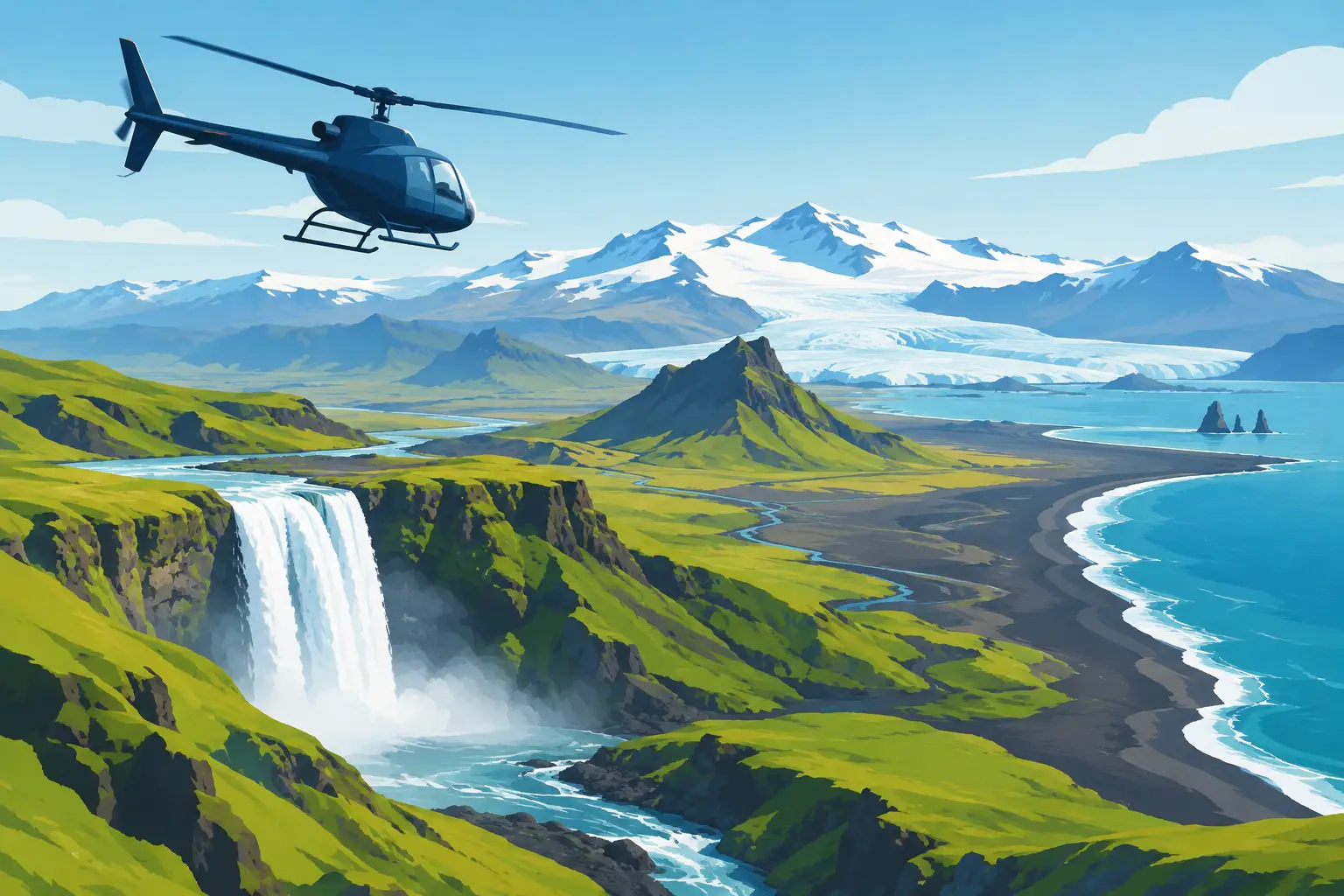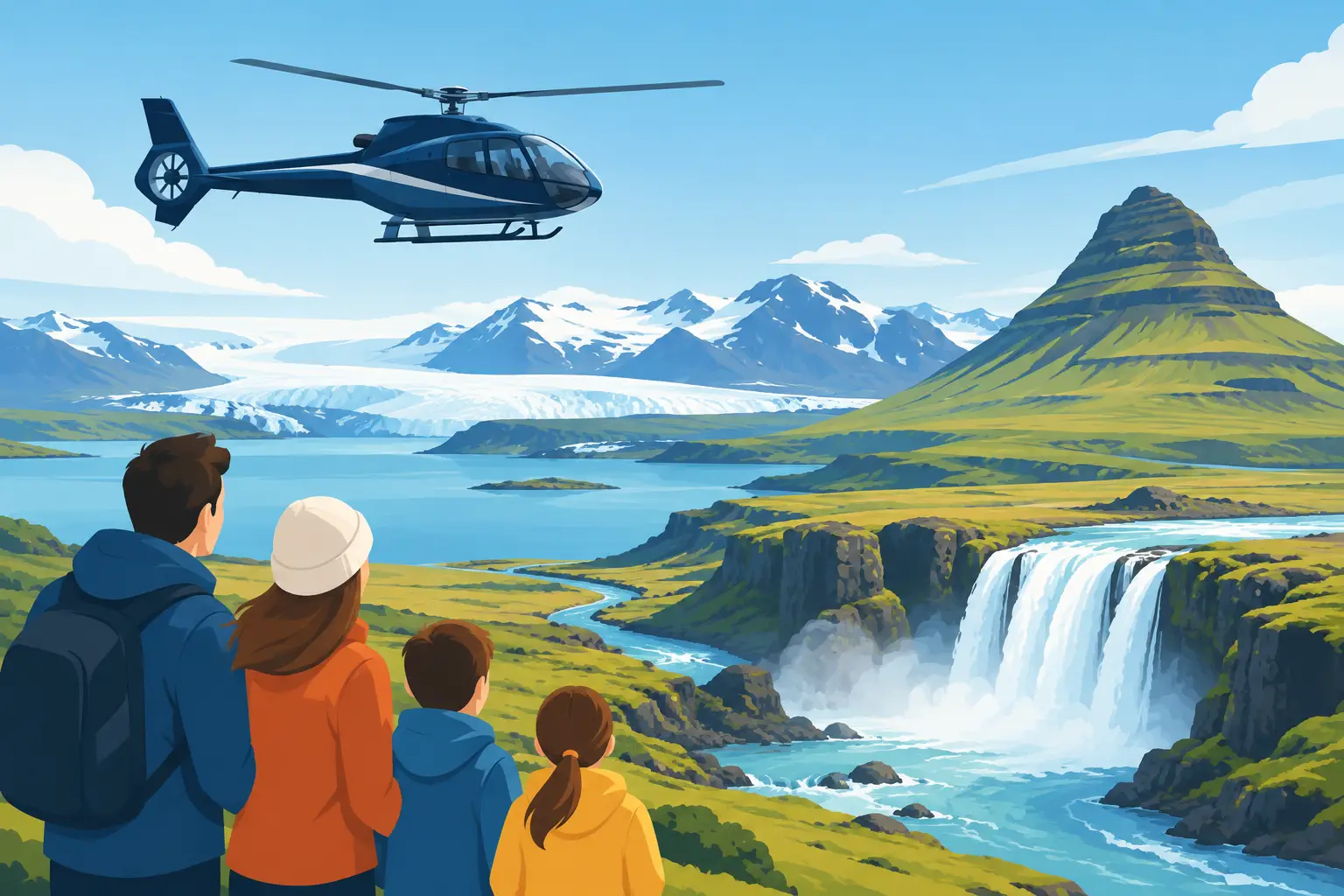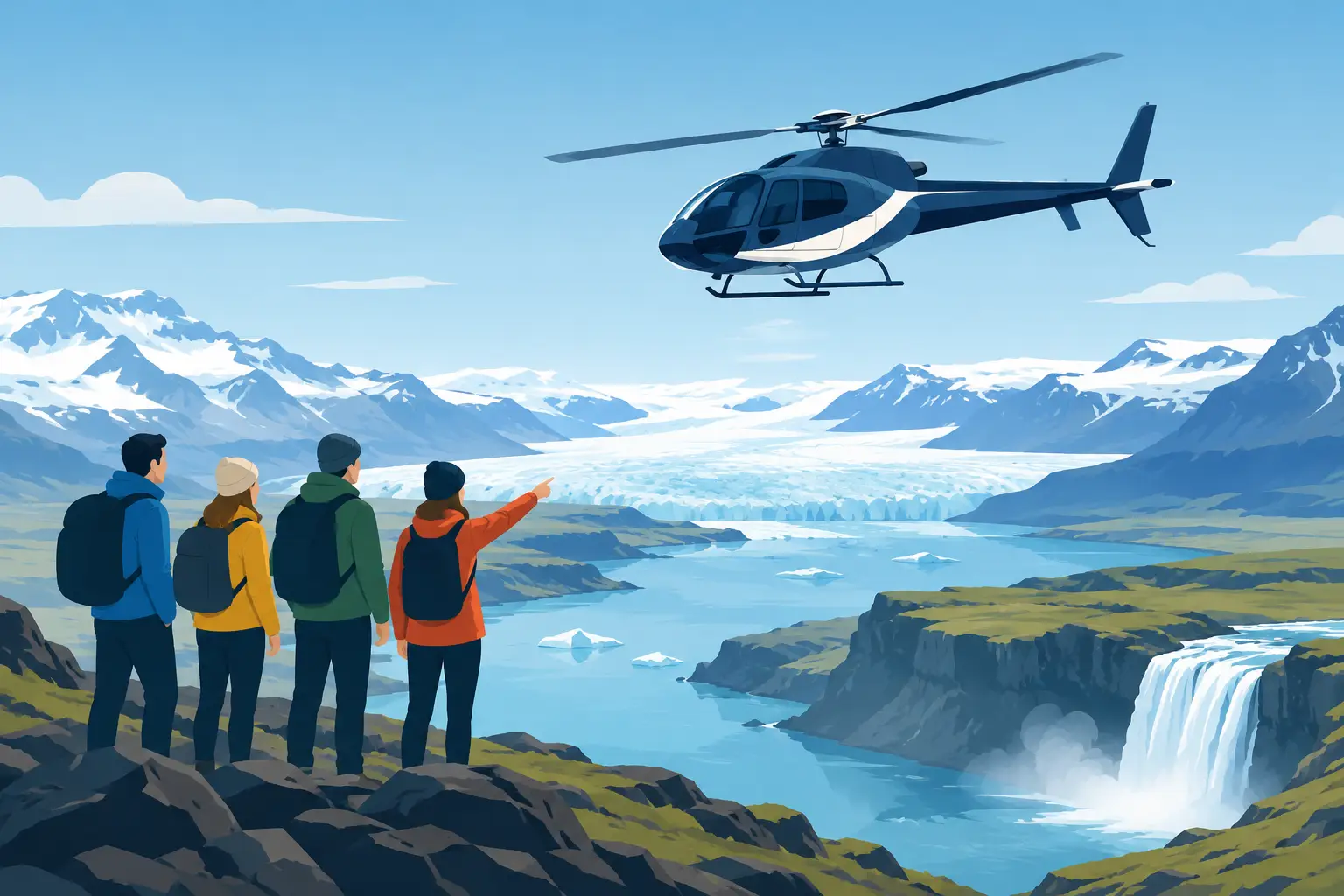
A Glacier Film Shoot Example From Iceland

A glacier film shoot example is rarely about putting a camera in front of ice and waiting for dramatic weather. The images that feel effortless on screen usually come from careful aviation planning, a tight crew, and a route designed around light, wind, terrain, and the story being told. In Iceland, a helicopter can turn a glacier sequence from a long logistical exercise into a focused production day with access to locations that would otherwise demand hours of driving and hiking.

For a luxury campaign, documentary, music video, or high-end travel production, the aircraft is not simply transportation. It is the tool that connects distinct visual worlds: black-sand coast, braided glacial rivers, volcanic ridgelines, blue ice, and remote snowfields. The strongest result comes when the flight plan serves the creative concept while respecting the realities of Icelandic weather and alpine operating conditions.

A Glacier Film Shoot Example: Building the Day

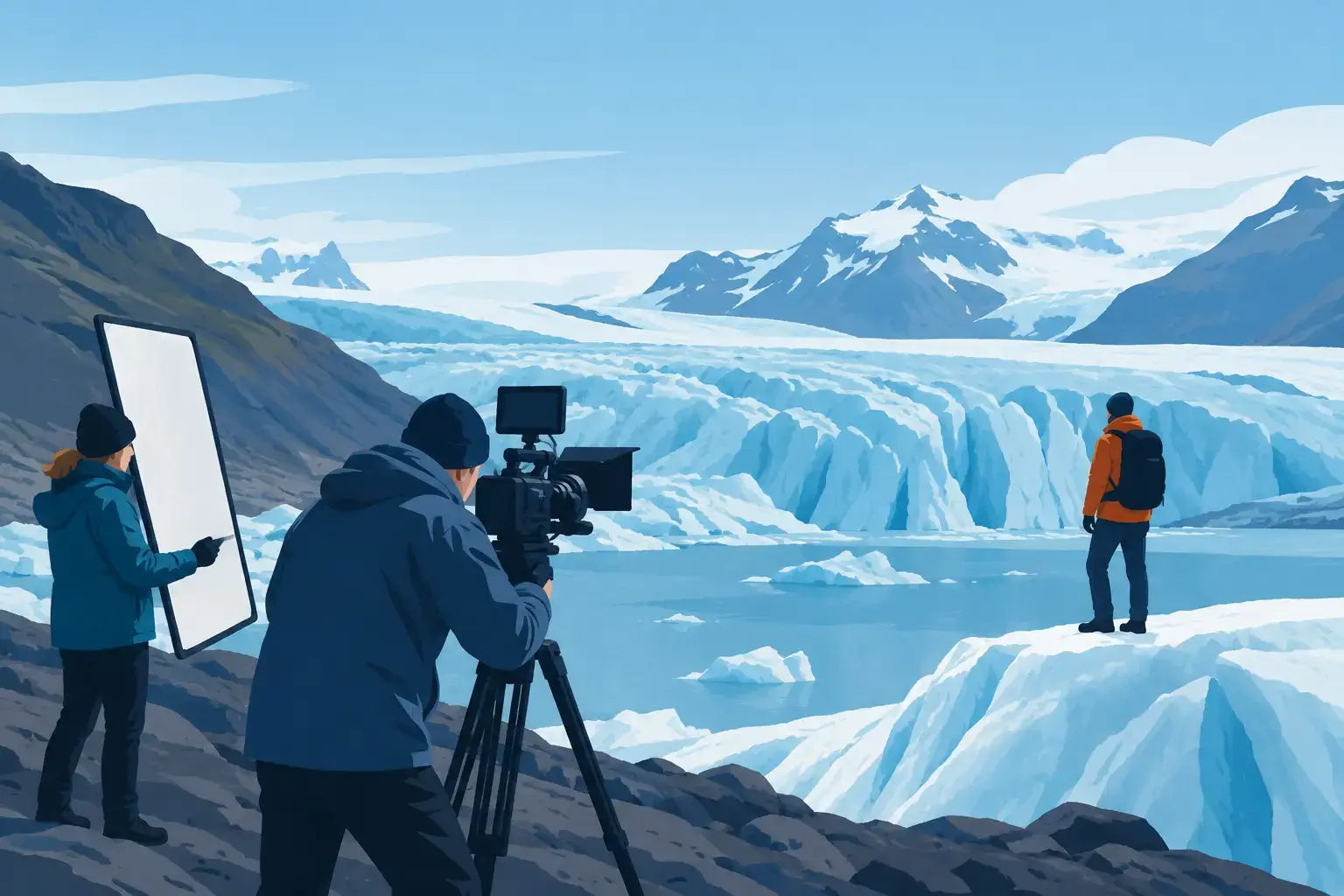
Consider a small international production filming a 60-second brand piece centered on contrast. The creative brief calls for one subject moving through Iceland’s raw landscape, beginning against dark volcanic ground and ending on a sweeping glacier. The aim is not to make the destination look busy or staged. It is to create the feeling of complete space, scale, and isolation.

A practical helicopter-based shoot might begin with an early departure from Reykjavík, when the light is lower and the day’s weather pattern is easier to assess. The crew travels light: a director, director of photography, camera assistant, talent, and an essential production lead. A compact cinema package, stabilized aerial camera system, stills kit, and carefully selected wardrobe are more useful than a large truck of equipment that cannot move quickly between locations.

After departure, the first aerial sequence captures the transition from settled areas to open terrain. From the helicopter, the camera can follow river channels across dark sand, reveal mountain contours, and build anticipation before the glacier appears. These shots do more than establish the location. They create a visual argument for the journey itself.

The aircraft then approaches the glacier from a route selected for conditions on the day. The pilot and aerial team assess cloud cover, wind, visibility, and landing options as part of the operation. A planned landing area may need to change if weather, snow conditions, or safety considerations make another area the better choice. That flexibility is one of the defining advantages of a private helicopter charter, but it also requires a production team willing to work with the landscape rather than force a rigid schedule.

The Landing Scene: Scale Without Losing the Human Story

Once on the glacier, the ground sequence should remain simple. A wide shot of a single person walking across an immense ice field can communicate more than an elaborate setup. The subject becomes a point of reference, showing the true scale of the glacier while keeping the frame emotionally readable.

For this example, the director uses three key scenes. First, talent exits the helicopter and pauses as the rotors settle. Second, the camera tracks a short walk along a safe, pre-approved area of snow and ice. Third, a close portrait captures breath, movement in the clothing, and reflected light from the glacier. The wide images provide grandeur; the close work gives the audience someone to follow.

The trade-off is time. Wind can rise quickly, clouds can lower, and cold affects batteries, lenses, and people. A production that tries to capture ten distinct setups at a remote landing site may come home with less usable material than one that commits to three decisive shots. On a glacier, restraint often looks more expensive on screen.

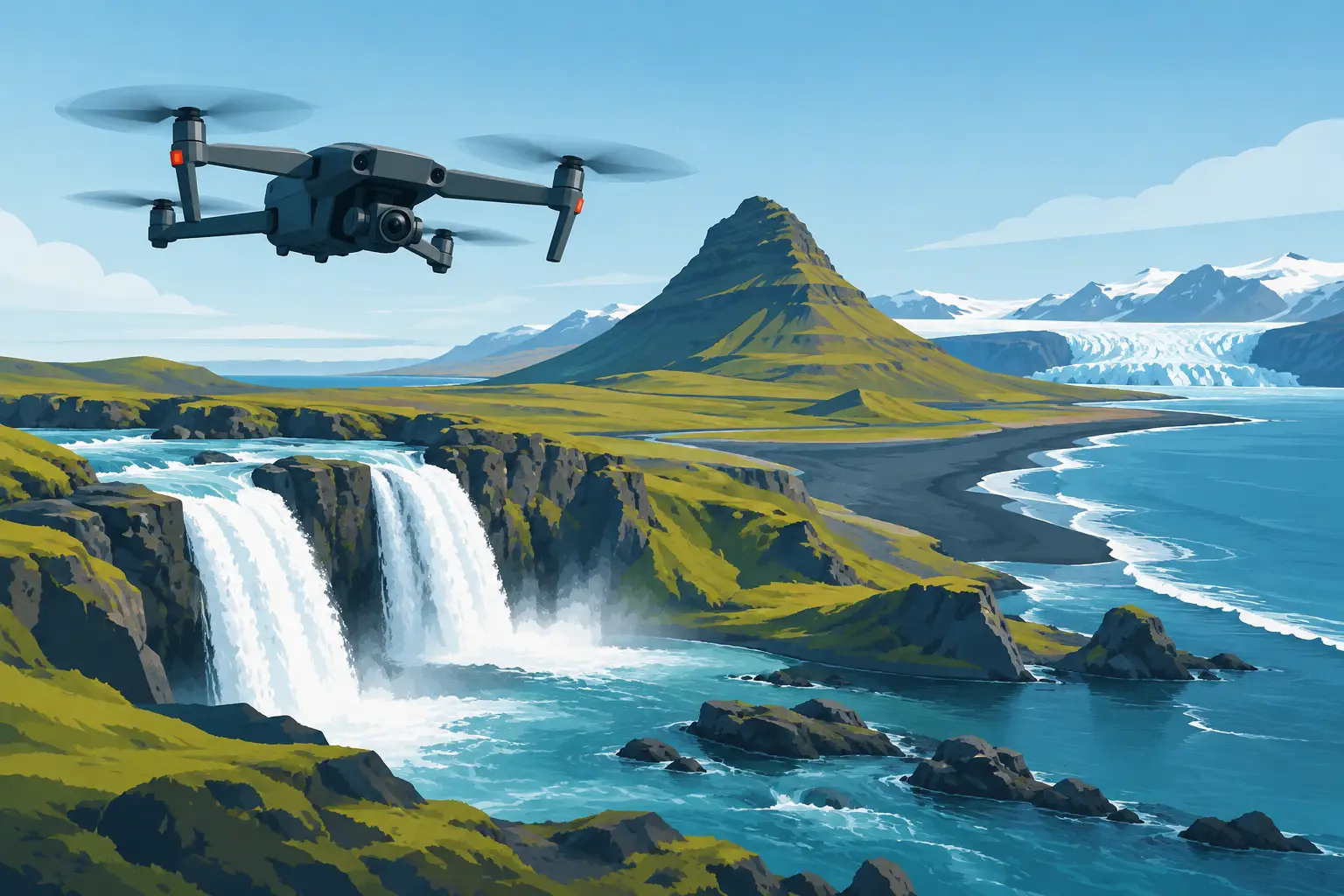
Drone footage may be part of the creative plan, but it should never be assumed. Local rules, operating conditions, airspace coordination, wind, and the proximity of the helicopter all affect whether a drone can be used safely and legally. In many cases, helicopter-mounted or handheld camera work provides the primary coverage, with aerial drone shots treated as a conditional addition rather than a dependency.

Why Helicopter Movement Changes the Edit

Aerial filming is most valuable when it creates movement that cannot be replicated from the ground. A slow side profile of a glacier tongue, a rise over a ridge to reveal the ice cap, or a retreating shot that places the subject within a vast valley can give an editor natural transitions between scenes.

The camera movement should have a purpose. Fast passes may fit an automotive or action concept, while a hospitality campaign may need calm, floating shots that feel private and contemplative. The correct flight profile depends on the story, the aircraft, weather, and what can be safely operated on the day.

A good aerial unit plans for coverage, not just hero shots. That means capturing broad establishing views, medium transitions, texture shots of crevasses and snow patterns, and clean plates without talent. These details make post-production more flexible and help a short sequence feel like a complete journey rather than a collection of beautiful clips.

Production Planning That Protects the Creative Idea

The best glacier shoots begin well before the flight. A location conversation should cover the desired season, visual references, crew size, equipment weight, talent requirements, and whether the project needs still photography alongside motion. Winter can bring dramatic low-angle light and snow-covered terrain, while summer may reveal deeper blue ice, exposed volcanic textures, and longer working days. Neither is automatically better. The right choice depends on the campaign’s visual language.

Weather remains the central variable. Iceland can offer several seasons in a single day, and conditions can change substantially between the departure point and the glacier. A flexible production window is far more valuable than a packed one-day schedule with no contingency. When possible, build a weather hold day into the itinerary and avoid placing the glacier shoot immediately before an international departure.

It also helps to separate essential shots from desirable shots before the aircraft leaves the ground. The essential list might include the glacier arrival, one strong ground performance, a reveal shot, and a final departure sequence. If those are completed, additional locations become a creative bonus rather than a source of pressure.

Wardrobe deserves special attention. On camera, dark or richly colored outer layers can stand out against snow and ice, but the talent must also remain genuinely warm. Footwear needs to be appropriate for the approved landing area and conditions. Loose items, long fabric, hats, and accessories should be considered carefully around aircraft operations. Practical styling protects both the look of the scene and the pace of the day.

Choosing the Right Charter Partner

A glacier filming flight is a technical operation as well as a creative one. Production teams need an operator that understands Iceland’s terrain, can discuss realistic routing, and can adapt the plan when conditions demand it. Clear communication about payload, camera equipment, landing expectations, safety procedures, and schedule priorities prevents costly misunderstandings.

HeliAir can arrange bespoke helicopter support for aerial filming and photography, from focused half-day shoots to larger custom itineraries that combine glaciers, waterfalls, volcanic landscapes, and remote highlands. The most productive conversations start with the creative treatment and the non-negotiable shots, then turn those ambitions into a workable aviation plan.

There is also a commercial advantage to flying intelligently. Rather than spending production hours moving camera vehicles across long distances, a helicopter allows the crew to concentrate resources where they appear on screen. That does not mean every project needs the longest possible flight. Sometimes a concise charter with one exceptional landing and a well-planned aerial route produces the stronger film.

A glacier does not need heavy staging to make an impression. Give the landscape room, keep the crew agile, and plan for the weather to have a voice in the final image. The footage will feel less like a location backdrop and more like Iceland itself.
Volcano Flights Weather: What Shapes Your Flight

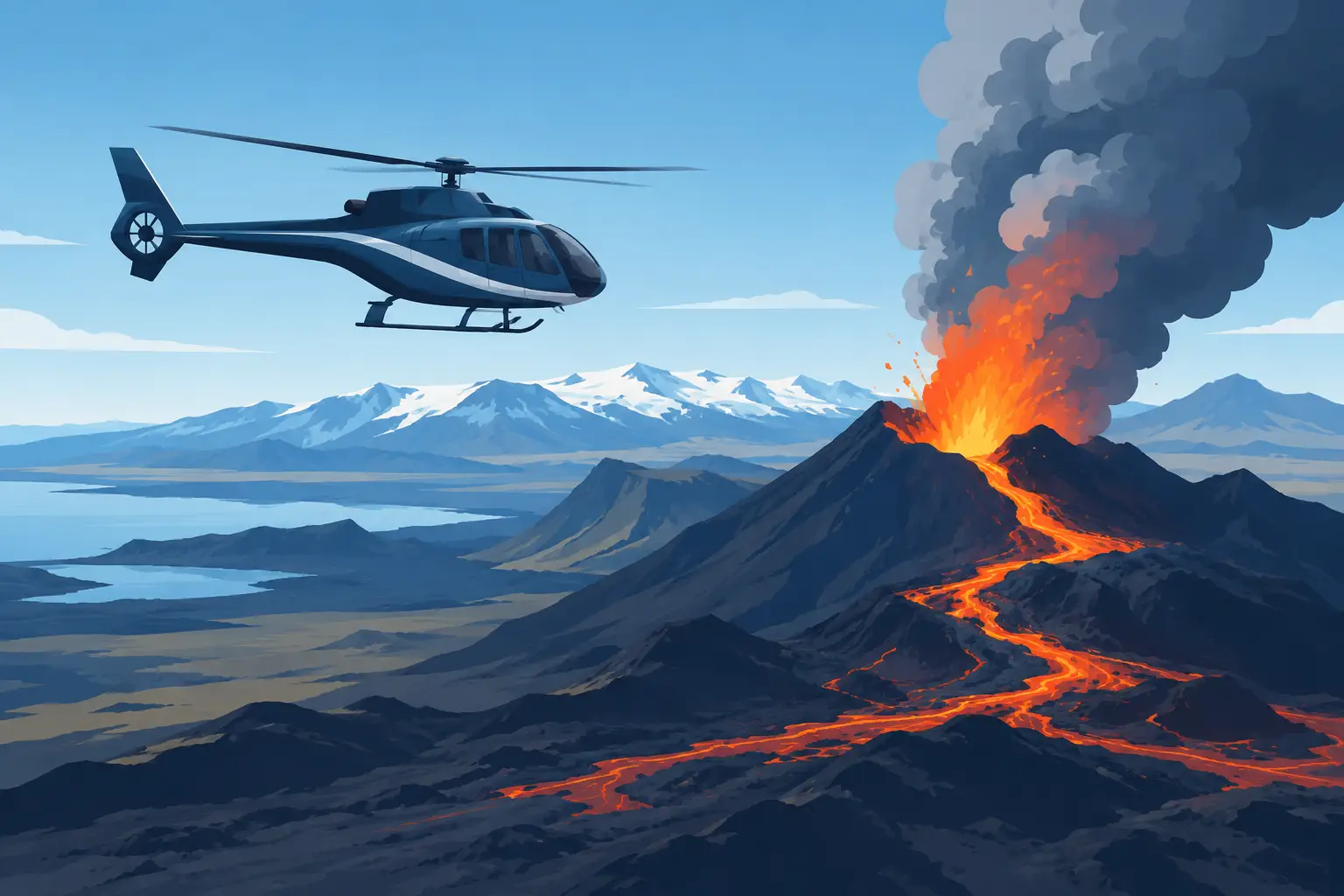
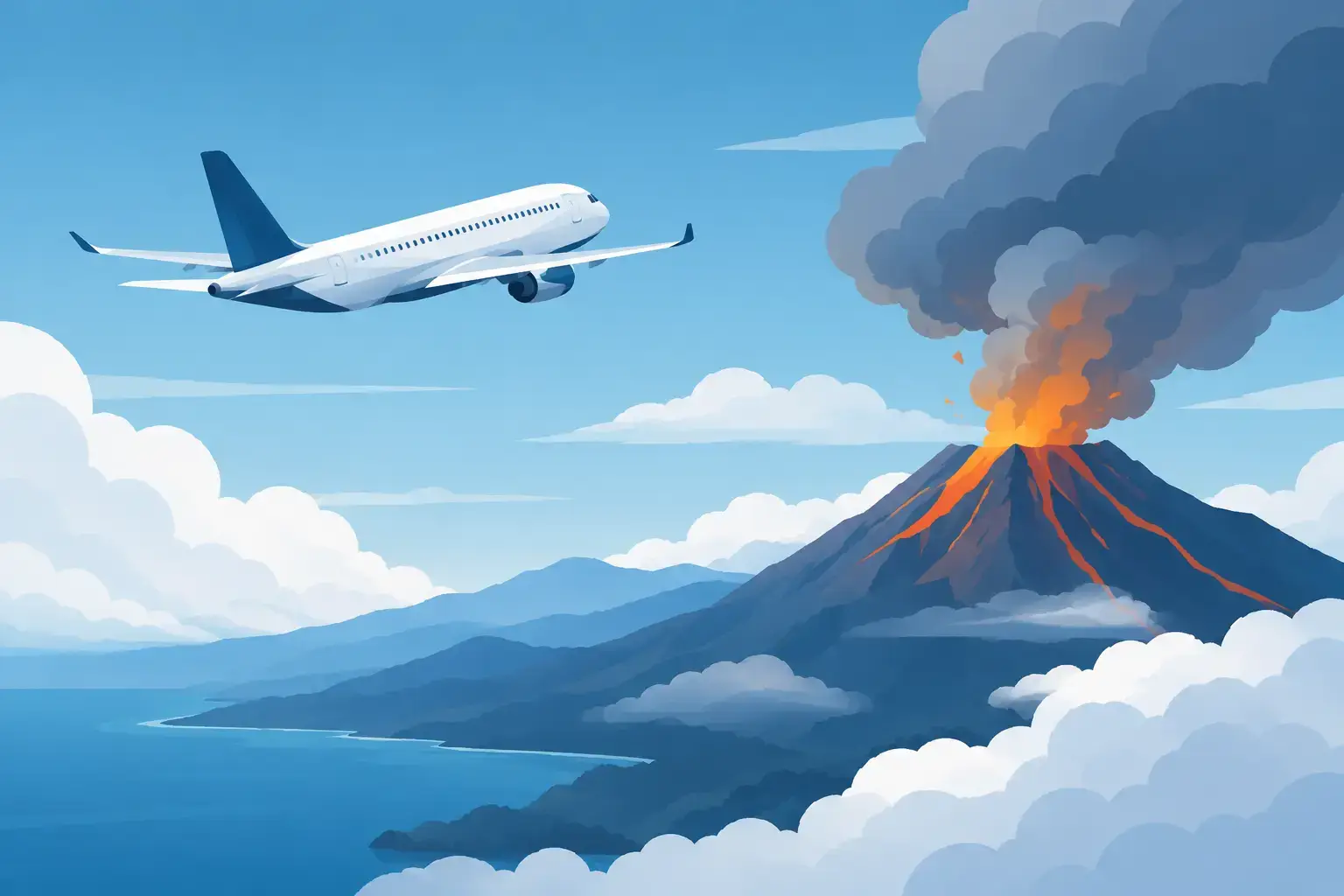
A volcano can be perfectly visible from Reykjavík in the morning and hidden behind low cloud by lunch. That is the reality of weather for volcano flights in Iceland: it is part of the experience, but it also sets the terms. A helicopter gives you exceptional access to lava fields, craters, glaciers, and remote highlands, yet the best flight is never the one that pushes through marginal conditions. It is the one planned around the day Iceland gives you.

For private travelers, photographers, and groups building a once-in-a-lifetime itinerary, understanding a few weather basics makes the experience more relaxed. It also makes it easier to appreciate why your pilot may suggest an earlier departure, a different route, or a change of landing location.

Volcano Flights Weather in Iceland: What Pilots Watch

A clear forecast does not always mean ideal flying weather. Pilots assess the conditions along the entire route, at the volcano itself, and at every intended landing area. Iceland’s terrain creates its own weather patterns, particularly where the coast, mountains, glaciers, and highlands meet.

Visibility is the obvious factor. To enjoy a volcano from above, guests need more than a gap in the clouds at departure. The pilot must be able to maintain safe visual reference over the route and around the destination. Low cloud can settle quickly into valleys, wrap around ridgelines, or obscure a crater that was visible only minutes earlier.

Wind matters just as much. A scenic helicopter flight may remain comfortable in a light breeze, but stronger winds can create turbulence around mountains and exposed lava fields. Gusts also affect whether a remote landing site is suitable. A wide lava plain may look open and simple from a distance, but surface wind near a landing area can be very different from the conditions reported in the city.

Cloud base is another key consideration. Iceland’s landscapes are best seen with space between the aircraft and the terrain. When cloud sits low over a glacier or volcanic ridge, it can limit both the view and route options. Higher cloud with good visibility below may still allow an excellent flight, especially when a pilot can adjust the route toward clearer terrain.

Precipitation, icing risk, and daylight complete the picture. Rain is not automatically a reason to cancel, but heavy rain can reduce visibility substantially. In colder months, temperatures and moisture at altitude require extra attention. During winter, available daylight can also shape departure times and route planning.

Why Iceland’s Volcano Areas Create Their Own Conditions

Volcanoes are rarely isolated destinations. Many of Iceland’s most dramatic volcanic landscapes sit beside glaciers, black-sand plains, ocean coasts, or mountain systems. Those features influence airflow and cloud formation in ways that a simple city forecast cannot fully capture.

Near glacier volcanoes such as Eyjafjallajökull, colder air over ice can meet milder air from lower elevations and create cloud or mist close to the terrain. In the Reykjanes Peninsula, coastal winds can move in quickly from the Atlantic. In the central highlands, weather can be clear on one side of a ridge and far less inviting on the other.

This is why a local aviation team looks beyond the forecast icon on a phone. Conditions may favor a route over waterfalls and geothermal terrain rather than a direct approach to a particular crater. For a private charter, that flexibility is one of the greatest advantages. The goal is not to follow a rigid line on a map. It is to create the strongest possible flight within the conditions available.

Active Volcanoes Add Another Layer of Planning

When a volcanic eruption is active, weather is only one operational consideration. Volcanic gases, smoke, ash, heat, and changing restricted areas can all affect how closely an aircraft may approach. Safety authorities may issue airspace restrictions, and these can change with little notice as an eruption evolves.

Ash deserves particular respect. Fine volcanic ash can be damaging to aircraft systems and is not something a helicopter operation flies through for the sake of a closer view. Even when an eruption is visible from a safe distance, wind direction determines where gas and ash travel. A clear sky at the departure point does not guarantee clear air near the eruption site.

The trade-off is straightforward: the most dramatic-looking plume is not always the best direction from which to view it. Your pilot may choose a position that offers a more distant perspective, a different angle, or no landing at all. That decision protects the aircraft, crew, and guests while still preserving the scale of the landscape.

An active eruption also changes rapidly. A flight that is suitable one day may not be suitable the next, even under similar weather. Guests should treat a volcano itinerary as an extraordinary opportunity rather than a fixed promise of a particular viewing point.

What Happens If Conditions Change Before Departure

Icelandic weather is dynamic, and a forecast is not a guarantee. Operations teams monitor conditions leading up to the flight, then pilots make the final assessment closer to departure. If the weather is not suitable, there are often several possible outcomes: a delayed departure, a revised route, a rescheduled flight, or a cancellation when safe operation is not possible.

A route change does not have to mean a lesser experience. If cloud covers one volcanic area but conditions are clear toward the coast, a private helicopter itinerary may shift toward glaciers, waterfalls, black-sand beaches, or geothermal features. Iceland rewards flexibility. Many guests remember the unexpected destination as the defining moment of the day.

That said, there are times when waiting is the right answer. A premium aerial experience should feel exciting, not rushed or uncertain. If conditions will not provide a safe and worthwhile flight, a professional operator will be direct about it.

How to Plan a Better Volcano Flight

The most practical choice is to schedule your helicopter experience early in your Iceland visit, particularly if seeing a specific volcano is a priority. This leaves room to move the flight if weather requires it. Travelers who reserve a volcano flight for their final afternoon have fewer options if cloud, wind, or volcanic restrictions intervene.

Morning flights can often offer calmer conditions and clearer light, although this varies by season and location. Photographers may prefer later light for texture across lava fields and mountain slopes, but should balance that preference against the day’s forecast. Your pilot and operations team can advise on what is realistic for the planned route.

Dress for the landing, not just the cabin. Helicopters are heated and comfortable, but a remote volcanic landing site can be cold, windy, and uneven underfoot. Warm layers, sturdy closed-toe footwear, gloves, and a windproof outer layer are sensible in every season. Sunglasses are useful on bright days, especially around snow, ice, or pale volcanic sand.

Private groups should also be open about their priorities before departure. Is the goal aerial photography, a remote landing, an engagement, a family experience, or simply the most spectacular scenery possible? The answer helps shape the best alternatives if weather shifts. HeliAir can build a tailored route around the conditions, available time, and the landscapes that matter most to your group.

The Advantage of Flexibility in the Air

Helicopters are uniquely suited to Iceland because they can connect dramatic places that would otherwise require long drives, difficult hikes, or multiple days of travel. But their real advantage is not simply speed. It is the ability to adapt.

A pilot may fly around a cloud bank for a clearer view, choose a sheltered approach to a landing site, or combine volcanic terrain with a glacier, waterfall, or highland valley when conditions favor it. These decisions happen with an understanding of local topography and the aircraft’s operating limits, not by chasing a forecast screenshot.

For guests, the best approach is to arrive with a destination in mind and an appetite for discovery. Iceland’s weather may redraw the route, but it often reveals a version of the country that no fixed itinerary could have planned.

Aerial Filming Techniques for Iceland Shoots

Aerial filming techniques are not just about putting a camera above a landscape. In Iceland, the difference between a striking sequence and a compromised shoot often comes down to route planning, light, weather margins, and clear communication between the production team and flight crew. A helicopter gives filmmakers direct access to glaciers, volcanic terrain, sea cliffs, waterfalls, and highlands that can take hours or days to reach overland. It also demands a disciplined approach.

For a commercial, feature project, travel film, or private photography assignment, the best aerial work begins well before the aircraft starts. The aim is simple: create images that feel expansive and effortless while the operation behind them remains deliberate, safe, and responsive to Iceland’s conditions.

Start With the Story, Not the Shot List

Aerial footage can quickly become a collection of beautiful but disconnected landscapes. Before selecting locations, decide what the flight needs to communicate. Is the subject scale, isolation, motion, contrast, or arrival? A vehicle crossing black sand tells a different story from a close pass along a glacial edge. A waterfall may need a wide reveal to establish its place in the valley, while a volcano may work better as a slow orbit that lets the textures and surrounding terrain build on screen.

This decision shapes every operational choice: time of day, direction of travel, aircraft position, lens selection, and whether the sequence is best captured in one continuous movement or several distinct shots. Iceland’s landscapes are vast, but the strongest aerial sequences are usually specific. A single helicopter rising over a ridge to reveal an interior valley can be more memorable than five minutes of scenic coverage.

Build a shot plan around a small number of priorities. Identify the essential shots, the useful alternatives, and the shots that can be abandoned if weather or timing changes. This gives the pilot and aerial coordinator room to make sound decisions without losing the creative purpose of the flight.

Aerial Filming Techniques That Create Scale

The helicopter’s ability to move in three dimensions is its greatest creative advantage. The most effective aerial filming techniques use that movement with restraint. Fast, low, or aggressive-looking moves may have a place in an action sequence, but Iceland often needs less. Its terrain supplies the drama.

Use reveals to give the landscape a sense of arrival

A reveal works when the viewer has a visual reference before the wider scene appears. Begin behind a ridge, along a cliff face, or close to a foreground feature, then climb or track outward to expose the glacier, waterfall, crater, or coastline beyond. The foreground creates depth and makes the final view feel earned.

This is particularly effective around layered terrain. A flight path can follow a dark lava field before lifting into a view of snow-covered mountains, or move alongside a canyon wall before opening toward a distant waterfall. The aircraft movement should feel steady enough that the audience can read the geography.

Fly lateral passes for texture and parallax

Forward movement can flatten a scene, especially with distant mountains. A lateral pass, where the helicopter moves parallel to a subject, lets foreground elements travel across the frame faster than the background. This parallax creates dimension and gives glaciers, canyon walls, and coastal cliffs a stronger sense of scale.

The trade-off is that lateral passes require careful planning around wind, terrain, and the desired sun angle. A route that looks ideal on a map may place the camera toward glare or leave the key face of a mountain in shadow. The operator’s local knowledge matters as much as the camera plan.

Keep orbits purposeful

An orbit is useful when a subject has shape: a volcanic cone, a solitary waterfall, a glacier tongue, a remote lodge, or a group positioned in an open landscape. A slow, consistent orbit allows the scene to change naturally while keeping the subject anchored in frame.

Avoid orbiting simply because the aircraft can. If there is no reason for the viewer to see all sides of a location, a direct approach or departure may be more effective. Every minute in the air should serve the story, particularly when light and weather windows are limited.

Let the horizon breathe

A level horizon is not always mandatory, but an unintentionally tilted image can make a grand landscape feel unstable. In wide shots, give the frame enough sky or enough foreground to establish orientation. Iceland’s low winter sun, cloud layers, and long coastal horizons can be as visually important as the subject itself.

For closer work, use natural lines such as rivers, crevasses, roads, and ridges to lead the eye through the frame. These details help viewers understand the vast distances that aerial footage can otherwise make difficult to judge.

Plan for Iceland’s Light and Weather

Iceland rewards flexible productions. Light can change from soft and diffused to high contrast within a short flight, and conditions vary significantly between the coast, highlands, and glacial areas. A blue-sky forecast is not automatically the best filming forecast. Broken cloud can add shape, shadow, and atmosphere, while overcast conditions may be ideal for capturing waterfalls and dark volcanic ground without harsh highlights.

Early and late light can bring warmth and long shadows, especially in spring and autumn. In summer, the extended daylight offers more scheduling options, but the sun may remain high for long periods. Winter brings lower light and a more dramatic palette, alongside shorter operating windows and additional weather considerations.

Treat a filming window as a range rather than a fixed appointment. Have a primary route and a secondary route that can work under different cloud bases, wind directions, and visibility. An experienced Icelandic helicopter team can help assess whether a glacier route remains practical, whether a coastal alternative offers better light, or whether delaying departure will improve both safety and footage.

Build the Flight Around Safe, Clear Collaboration

Aerial production is a team effort. The pilot is responsible for the operation of the aircraft and has the final decision on what conditions and maneuvers are appropriate. The camera operator, director, producer, and any door-off or specialized equipment team need a clear briefing before departure.

Discuss the route, must-have shots, communication method, seating positions, equipment limits, and any landing requirements. If the camera is handheld, stabilization, shutter settings, lens changes, and physical fatigue all become practical considerations. If the shoot uses a stabilized camera system, allow time for installation, balancing, testing, and operational checks.

Secure all loose equipment. A lens cap, battery, map, or scarf that seems minor on the ground can become a serious hazard in flight. Clothing should be warm, practical, and suited to the planned landing environment, not just the cabin temperature. Glacial and highland locations can be considerably colder and windier than Reykjavík.

Permits and access also need early attention. Iceland includes protected areas, private land, and locations with restrictions that may affect landing, filming, or ground support. Production timelines should allow for permissions, location checks, and contingency plans rather than assuming every dramatic viewpoint is available on demand.

Choose the Right Aircraft Setup

The right setup depends on the production, not simply on the size of the aircraft. A compact team may prioritize maneuverability and quick relocation. A larger commercial crew may need room for multiple cameras, a director, sound considerations, or extensive support equipment. The choice also affects payload, seating, door configuration, and the practical duration of each filming leg.

Be specific about what you are bringing. Camera bodies, long lenses, gimbals, batteries, monitors, safety equipment, and cold-weather cases all add weight. A detailed equipment list helps the operator plan accurately and prevents last-minute compromises.

For premium travel content, a helicopter can also be part of the story. Landing at a remote viewpoint allows the footage to move from a broad aerial establishing shot to an intimate on-the-ground moment, then return to the air. That transition creates a fuller sense of place than aerial coverage alone.

HeliAir can arrange custom aerial filming flights around a production’s schedule, visual brief, and logistical needs, from a focused scenic shoot to wider support for remote Iceland locations.

Make the Edit Easier While You Are Flying

Good aerial coverage is not only about standout shots. Editors need clean entries, exits, holds, and variations. Hold each composition longer than feels necessary in the moment. Capture a wide establishing view, a medium pass that reveals texture, and a close detail where practical. Repeat a key move if light and conditions allow, but change only one variable at a time: altitude, speed, lens, or direction.

Watch for continuity. Snow, cloud shadows, wind direction on water, and changing light can make shots filmed minutes apart look unrelated. That is not always a problem, but it should be a creative choice. If a sequence is meant to cut together as one journey, capture its components in a logical order.

The most memorable Iceland aerial footage rarely comes from forcing a predetermined plan onto the landscape. It comes from arriving prepared, listening to the conditions, and recognizing when a sudden break in cloud, a shifting tide line, or a quiet approach to a glacier offers the better shot. Leave room for that moment. It is often the one viewers remember.

Aerial Iceland Adventures Beyond the Road

A road trip can show you Iceland’s famous sights. A helicopter can show you what lies beyond them. Aerial Iceland adventures turn vast distances, shifting terrain, and remote landscapes into a day shaped around what you want to see: a glacier landing, a volcanic crater, a waterfall hidden in the highlands, or the long, dramatic sweep of the coast.

For travelers with limited time and high expectations, the difference is not simply speed. It is access. Iceland’s most memorable places are often separated by hours of driving, rough tracks, seasonal road closures, or terrain with no road at all. From the air, the route becomes part of the experience.

Why Iceland is made for helicopter travel

Iceland is compact on a map but demanding on the ground. Mountain passes, black-sand plains, glacial rivers, and changing weather can turn a short-looking journey into a full-day commitment. A helicopter replaces much of that transit time with a direct view over the landscapes people come to Iceland to see.

From Reykjavík, a flight can quickly leave the city behind for lava fields, geothermal valleys, glacier tongues, and thundering waterfalls. In North Iceland, departure from Ólafsfjörður offers immediate access to steep mountains, deep valleys, and broad, snow-covered terrain that is difficult to appreciate from a roadside pullout.

The view also changes how Iceland makes sense. You can see where glaciers have carved valleys, how volcanic eruptions have shaped black deserts, and why rivers constantly redraw the land. The scale is visible at once: ice meeting rock, green lowlands giving way to barren highlands, and the Atlantic stretching beyond the coast.

Aerial Iceland adventures for different kinds of travelers

No two private flights need to follow the same route. Some guests want an efficient, unforgettable addition to a Reykjavík itinerary. Others are planning a full day in the wild, with several landings and a route built around photography, a proposal, a family celebration, or a specific landscape they have dreamed of seeing.

The first-time Iceland flight

For first-time visitors, a scenic flight with a mountain or remote-landscape landing offers a powerful introduction to the country. It is ideal when your schedule is tight but you want more than a quick view from the city. The experience begins with the coastline and surrounding volcanic landscape, then moves rapidly into terrain that feels far removed from Reykjavík.

This option suits couples, families, and private groups who want a premium experience without committing an entire day. The best itinerary depends on visibility, season, and the natural features that are most compelling at the time of flight.

Volcanoes, lava fields, and black landscapes

Iceland’s volcanic terrain is never static in the long view. Even when no eruption is taking place, the country’s lava fields, fissures, craters, and geothermal areas tell the story of an island still being formed. From above, patterns in the rock become clear: old lava flows spreading across the land, moss softening their edges, and new formations standing in stark contrast.

Active volcanic areas require a thoughtful approach. Flight routes and landing locations depend on official restrictions, weather, gas conditions, and operational safety. The right experience is not a promise to land at any particular point. It is a professionally planned route that provides the best available perspective while respecting a changing natural environment.

Glaciers and highland landings

A glacier flight is one of the clearest examples of what helicopter travel makes possible. From the air, crevasses, ice falls, and ridgelines appear with a scale that is impossible to understand from ground level. With suitable conditions, a landing adds another dimension: the silence, cold air, and sense of standing in a place that feels genuinely remote.

Highland journeys can pair glaciers with volcanic deserts, hidden waterfalls, and broad river systems. These are often best as longer private charters because the appeal is in the combination of destinations, not a single viewpoint. A custom itinerary also gives more room to adapt to the day’s weather and light.

Waterfalls few visitors reach

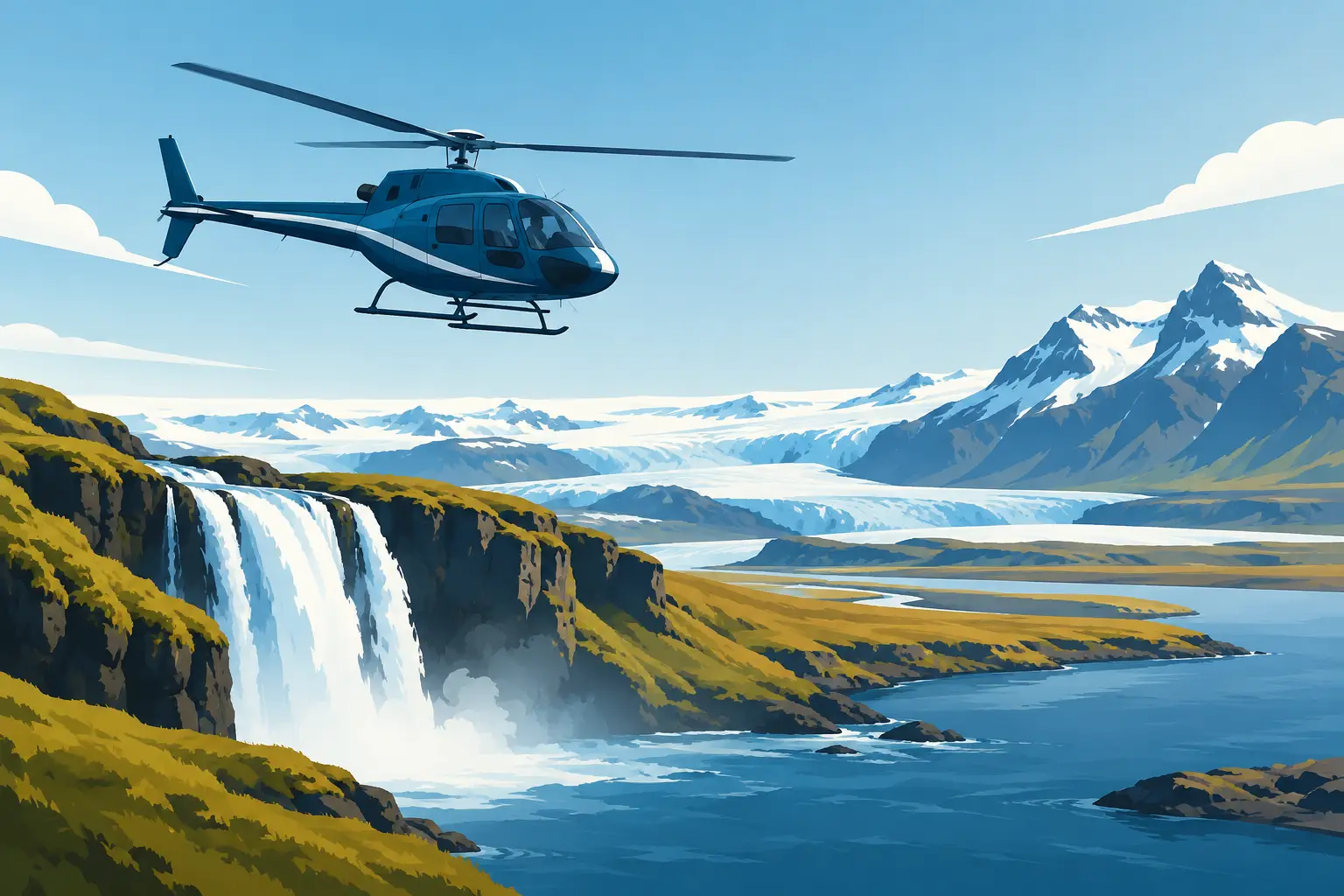
Iceland has waterfalls visible from popular roads, but some of its most impressive cascades are positioned far from the usual routes. Aerial access can reveal deep canyons, river valleys, and falls such as Háifoss in a way that puts their height and setting into perspective.

For photographers, the advantage is timing as much as access. Early or late light can change the color of the land, while cloud cover can create a more dramatic mood over mountains and ice. A private charter allows the day to be designed around those priorities, though Icelandic weather always has the final say.

How to plan a private helicopter day in Iceland

The best aerial experience starts with a clear idea of what matters most to you. That may be a specific destination, a preferred landing, a photography goal, or simply the desire to see Iceland’s defining landscapes without spending most of the day on the road.

Share your travel dates, group size, departure preference, and any must-see features early in the planning process. A skilled local operator can then recommend a route that matches the season and practical flying conditions. HeliAir can arrange structured sightseeing flights as well as bespoke charters for guests who want their itinerary built around a personal vision.

It helps to be flexible about the precise order of stops. A route may be adjusted to take advantage of clearer skies in one area, avoid stronger winds near another, or select a more suitable landing site. That is not a compromise in service. It is how experienced aviation planning gets the most from a landscape where conditions can change quickly.

A few practical choices will shape the day. Shorter scenic flights are excellent for a concentrated experience close to your departure base. Longer charters create room for multiple landings and more remote destinations. If your priority is photography, tell the team in advance so the route, timing, and seating can be considered accordingly. If you are traveling with children or guests who prefer a gentler adventure, the itinerary can focus on scenic variety without demanding long ground transfers or difficult hiking.

Weather is part of the experience

Iceland’s weather is one reason aerial travel feels so immediate. Low clouds can wrap around mountains in minutes. Wind can rise quickly near exposed ridges. Sunlight may break through over a glacier while rain moves across a nearby valley.

That reality calls for flexibility, not lowered expectations. Helicopter operations are planned around safety first, and pilots assess conditions carefully before and during every flight. In some cases, a departure time may shift, a route may change, or a trip may need to be postponed or canceled. Guests should leave room in their schedule where possible and view a weather adjustment as part of traveling well in Iceland.

Dress for the landing, not only the cabin. Even on a comfortable day in Reykjavík, a glacier or highland stop can be cold and windy. Warm layers, sturdy closed-toe shoes, gloves, and sunglasses are sensible choices. Your operator can advise on what is appropriate for the specific route and season.

When a helicopter is the right choice

A helicopter is not meant to replace every ground journey. Driving remains a rewarding way to experience Iceland slowly, stop in small towns, and spend time at well-known landmarks. But when time is limited, when a destination is genuinely remote, or when the occasion calls for something more personal, flying changes what is possible.

It is especially valuable for travelers who do not want to choose between a volcano, a glacier, and a waterfall because they only have one free day. It also works for private groups who value traveling together on their own schedule, rather than following the fixed pace of a large tour.

The most memorable flights are rarely about checking off the greatest number of landmarks. They are about being in the right place when the light shifts over the ice, landing where there is no road, and seeing Iceland as the vast, elemental country it is. Build the day around the landscape you cannot stop thinking about, then let the route take you there.

Family Friendly Scenic Helicopter Flights in Iceland

Iceland asks a lot of families on the ground. Waterfalls can mean long drives, glacier views can require full-day itineraries, and a child’s patience can disappear somewhere between the second fuel stop and the third souvenir shop. Family friendly scenic helicopter flights offer a different way to experience the country: less transit, more landscape, and a shared view that stays with everyone long after the trip.

For families who value time, comfort, and experiences worth planning a trip around, a helicopter can turn a distant volcano, black-sand coastline, glacier, or highland waterfall into part of a single extraordinary day. The key is choosing a flight that suits your group rather than trying to fit your group into a standard itinerary.

What Makes a Helicopter Flight Work for Families?

The best family flight is not necessarily the longest one. It is the one that matches your children’s ages, your appetite for adventure, and the rest of your Iceland itinerary. A shorter scenic flight can be ideal for a family with younger children or a packed schedule. A longer private excursion may be the better choice for older children, teenagers, and families who want to land in a remote area and spend time outside the aircraft.

From the air, Iceland’s scale becomes easier to understand. You can see the channels cut by glacial rivers, the contrast between moss-covered lava fields and dark volcanic sand, and the way waterfalls spill from high plateaus. For children, this is not a distant view through a bus window. It is a real-time geography lesson with a headset and a front-row seat.

There is also a practical advantage. Helicopters reduce the hours spent getting from one natural landmark to the next. That does not mean rushing the experience. It means reserving more of the day for the places your family came to see.

Choosing Family Friendly Scenic Helicopter Flights

Start with flight duration. A scenic flight of roughly 30 to 60 minutes can deliver a memorable aerial perspective without asking younger travelers to sit still for too long. Longer flights, including 1.5-hour to 3.5-hour experiences, create room for landings, deeper access to the highlands, and a more varied route across glaciers, volcanoes, and waterfalls.

For many families, a private charter is worth considering. It gives you greater flexibility over the pace of the day and can make the experience feel more relaxed from the beginning. You can discuss the interests of your group, whether that means dramatic volcano terrain, photography, gentle sightseeing, or reaching a particular part of the country that would otherwise take most of a day by road.

A private itinerary also allows for thoughtful decisions around landing locations. A family traveling with small children may prefer a straightforward scenic route with one accessible landing. Families with capable older children may want a more adventurous highland destination, provided conditions are suitable on the day.

Consider your children’s comfort honestly

Most children are fascinated by the aircraft, the headsets, and the changing view. Still, every child is different. If someone in your family tends to get motion sick, tell the flight team before departure and choose a route that avoids making a long first flight feel like a test of endurance. Sitting with a clear view outside, eating lightly beforehand, and keeping the day’s schedule unhurried can help.

Noise-reducing headsets make onboard communication much easier, but young children should be comfortable wearing them. Dress in layers, even in summer. Icelandic conditions can shift quickly, and a landing site may feel much cooler and windier than Reykjavík.

Weight, seating, and minimum-age policies vary by aircraft and operator. Share accurate passenger details when arranging the trip, including the ages of children and any mobility considerations. A good plan begins with those practical details, not after everyone arrives at the helipad.

The Iceland Landscapes Children Remember

A helicopter’s real luxury is access. It gives your family the chance to see places that are difficult to combine on a road-based day trip, especially when time is limited.

Volcanic terrain is often the immediate favorite. From above, lava fields reveal their shapes and textures, while craters and ridgelines show how actively Iceland has been formed. These landscapes feel less like a postcard and more like another planet, which tends to capture the attention of children and adults equally.

Glaciers add a different kind of drama. Their immense white and blue surfaces, broken by crevasses and edged by dark volcanic ground, are especially striking from the air. A landing near a glacier can give children a sense of the cold, scale, and silence that photographs cannot deliver.

Waterfalls are equally compelling because their setting changes completely from above. Rather than standing at the base and seeing only the falling water, you can follow the river back toward the plateau, watch it bend through the landscape, and understand just how far the drop extends. Remote falls and highland rivers are particularly rewarding on a longer custom route.

Weather Is Part of the Experience

Icelandic weather deserves respect, particularly when traveling with children. Aviation decisions are made around safety and operating conditions, not a fixed vacation schedule. Wind, visibility, cloud cover, and conditions at a planned landing location can affect the route, timing, or whether a flight can operate at all.

Build flexibility into your plans. If possible, schedule your helicopter experience early in your stay rather than on the final day. That provides more room to adjust if weather requires a change. Avoid placing a nonrefundable dinner reservation or a long-distance transfer immediately after the flight, especially if your family is booking a longer excursion.

Flexibility can also improve the flight itself. A skilled local crew may recommend a different route than the one you initially imagined because the light is better, clouds are clearing in another direction, or a highland landing is more favorable elsewhere. Iceland rarely rewards rigid plans. It rewards travelers who allow the day to show them its best version.

How to Prepare Without Overplanning

Keep the morning simple. Have everyone fed, use the restroom before departure, and arrive with enough time that no one feels hurried. Bring sunglasses, a fully charged phone or camera, and a secure outer layer. At landing sites, follow the crew’s instructions closely, particularly around the rotor area and uneven terrain.

Photography is part of the appeal, but do not let screens take over the experience. Assign one adult to take photographs during key moments, then let the rest of the family look out the window. The most lasting memories often come from a child recognizing a glacier from the air, spotting a waterfall before anyone else, or stepping onto a remote ridge where there are no crowds at all.

If you are traveling with a baby, a toddler, or a child with specific sensory or medical needs, discuss this directly with the operator before confirming. The right team can advise on what is realistic for the aircraft, route, weather, and your family’s circumstances. Occasionally, the best decision is a shorter flight now and a more ambitious aerial adventure when the children are older.

A Premium Experience That Still Feels Personal

A family helicopter trip should never feel like a rushed attraction. It should feel like a carefully run aviation experience shaped around the people in the cabin. That is why direct planning matters. Explain what your family hopes to see, how much time you have, and whether this is a once-in-a-lifetime splurge or one part of a larger luxury Iceland itinerary.

HeliAir can arrange sightseeing flights from Reykjavík and Ólafsfjörður, from concise aerial experiences to full-day exclusive charters. For a private family group, that opens up possibilities beyond a fixed route: a volcano-focused flight, a glacier landing, a highland waterfall, or a tailored journey that makes the most of the day’s conditions.

The right flight leaves children excited rather than exhausted and gives adults something increasingly rare on a family vacation: the feeling that every minute was well spent. Choose the route with room to breathe, let Iceland’s weather guide the final details, and give your family a view of the country that no road can provide.

Plan Your Group Charter in Iceland by Helicopter

A group trip to Iceland can lose momentum quickly on the road. One person wants to see a glacier, another has their sights set on a volcanic landscape, and someone else has limited time between a hotel stay and dinner in Reykjavík. When you plan a group charter by helicopter, the itinerary can follow your priorities rather than a fixed bus route or a full day of driving.

A private helicopter experience is not simply a faster way to travel. It is an opportunity to bring your group into Iceland’s most dramatic scenery with more privacy, flexibility, and time at the destination. The right charter begins with a clear idea of who is traveling, what matters most to them, and what conditions may shape the day.

How to Plan a Group Charter in Iceland

The first decision is the purpose of the flight. A family celebrating a milestone may want a relaxed scenic journey with a glacier landing and time for photographs. A corporate group may need an efficient airport transfer followed by a memorable short flight before an evening event. A production team may be focused on aerial angles, equipment, and precise timing.

These are all group charters, but they require different planning. Share the occasion, the number of guests, preferred dates, departure location, and any non-negotiable destinations from the start. If you are traveling with children, older relatives, or guests with limited mobility, mention that as well. A well-planned charter accounts for the people in the cabin, not only the places on the map.

Group size influences aircraft selection and the structure of the experience. One private helicopter may suit an intimate party, while larger groups may need more than one aircraft or staggered departures. Flying in separate aircraft can be a practical answer, but it changes the feeling of the day. Groups that want to arrive, land, and celebrate together should discuss this early with their operator.

Budget also affects the route, flight duration, landing time, and level of exclusivity. A shorter private flight can create an exceptional introduction to Iceland from above. A longer charter opens the door to remote highlands, multi-stop routes, glacier terrain, and destinations that would take hours to reach overland.

Choose the Landscape Before Choosing the Route

Iceland rewards travelers who begin with a destination rather than a generic sightseeing plan. From Reykjavík, a charter can be shaped around volcanic terrain, black-sand coastlines, waterfalls, glaciers, geothermal areas, or the expansive interior. From Northern Iceland, the mountains and fjords around Ólafsfjörður offer a different perspective, especially for guests drawn to skiing, wilderness, or remote coastal scenery.

For many groups, the best route combines contrast. You might fly from the city toward a highland plateau, land near a glacier or a sweeping waterfall, then return over rugged ridgelines and lava fields. The visual change is part of the experience. Iceland from above is not one landscape repeated for an hour. It is a sequence of distinct environments unfolding beyond the cabin windows.

Landing options deserve as much thought as the flight itself. A scenic pass over a waterfall is memorable, but standing in a remote location with your group, away from the crowds and road access, creates a more personal moment. Consider what you want to do on the ground: take photographs, enjoy a quiet toast, film content, or simply absorb the view. That helps determine how much landing time to build into the charter.

Not every location is appropriate in every season, and landing sites depend on weather, terrain, operational conditions, and permissions. Flexibility is not a compromise in Iceland. It is how experienced flight planning protects the quality of the day.

Match the Flight to Your Group’s Pace

A common mistake is trying to fit every landmark into one charter. Iceland is vast, and an ambitious route can turn a private experience into a rushed checklist. It is usually better to choose two or three priorities and allow space for the unexpected view, the longer photo stop, or a weather-driven route adjustment.

A couple traveling with a photographer may be happy with a focused, light-efficient flight. A multigenerational family may prefer more time on the ground and a comfortable pace between stops. Friends visiting for a long weekend may want to make a half-day charter the centerpiece of the trip. For executive or incentive groups, the schedule may be fixed, which puts even more value on a route that delivers dramatic scenery within a specific time window.

Your departure point matters too. Flying from Reykjavík can minimize transfers for guests staying in the capital, while a departure from another area may make more sense if your itinerary already includes the North Coast, a ski destination, or a remote lodge. Airport transfers can also be integrated into a larger private travel plan when timing and routing align.

Plan for Icelandic Weather, Not Against It

Weather is part of the experience of traveling in Iceland, and it should be part of the charter conversation from the first inquiry. Conditions can change quickly across mountains, glaciers, and coastal regions. Wind, cloud cover, visibility, and seasonal daylight all influence what is possible on a given day.

That does not mean a charter needs to feel uncertain. It means the strongest itineraries have thoughtful alternatives. If a glacier route is not suitable, another area may offer clearer skies, striking terrain, and an equally impressive landing opportunity. If a longer route becomes impractical, a shorter scenic experience can still provide extraordinary views.

For groups with limited availability, reserve room in the wider itinerary where possible. Avoid placing a helicopter charter immediately before an immovable international departure or the only dinner reservation that matters. A little schedule flexibility gives the pilot and operations team more options to work with safe flying conditions.

Dress for the landing environment, not just the cabin. Even in summer, exposed terrain can be cold and windy. Sturdy footwear, warm layers, and weather-resistant outerwear are sensible choices for glacier, highland, or mountain stops. Your operator can advise on the right preparation for the planned route and season.

Make the Private Details Count

The most memorable group charters often include simple personal touches rather than elaborate additions. A proposal, anniversary, family reunion, or team celebration can be planned around a landing with a view that feels entirely removed from ordinary travel. For photographers and filmmakers, a tailored charter can prioritize light, angles, and locations that support the creative brief.

If your group is celebrating, explain the moment you have in mind. Timing matters. Some guests prefer the surprise to happen after landing, while others want the entire group to know the plan in advance. If food, drinks, equipment, or special items are part of the experience, discuss them before the flight so weight, space, safety, and handling can be properly considered.

Commercial and specialist groups should be equally specific. Aerial filming, sling work, heli-skiing support, and technical flights require clear operational details, including locations, payloads, crew needs, landing areas, and contingency plans. The more precise the brief, the more efficiently the aircraft and flight plan can be matched to the assignment.

Build the Charter Around One Great Day

HeliAir can help turn an early idea into a charter that works in the real conditions of Iceland. Start with your group size, dates, desired departure point, and the places you most want to see. Then be open to local advice on routing, aircraft, weather windows, and the destinations that will deliver the strongest experience on the day.

The goal is not to see Iceland faster for the sake of speed. It is to spend less time in transit and more time where the landscape feels truly beyond reach. Give your group one clear priority, leave room for the conditions, and let the flight become the part of the trip everyone continues talking about long after landing.

Best Private Group Flights for Seeing Iceland

A four-hour drive can take a group from Reykjavík to a waterfall. A private helicopter can turn that same day into a landing on a remote ridge, a pass over a glacier, and a view of volcanic terrain few visitors reach at all. The best private group flights are not simply about flying faster. They are about choosing an aircraft, route, and pace that let everyone experience Iceland on their own terms.

For families, friends traveling together, photographers, and guests planning a once-in-a-lifetime celebration, a private helicopter flight creates room for a day that feels personal rather than scheduled around a bus route. The right flight balances the places you want to see with the realities that make Iceland extraordinary: fast-changing weather, seasonal light, mountain terrain, and the distance between its most dramatic landscapes.

What Makes the Best Private Group Flights Different

A private group flight begins with one useful question: what do you want to remember most? For some groups, it is standing near a glacier with no crowds in sight. For others, it is seeing black-sand coastlines, powerful waterfalls, geothermal color, or a volcano from an aerial perspective that ground travel cannot provide.

Unlike a fixed sightseeing departure, a private charter can be planned around your interests, available time, group size, and preferred level of adventure. You may want a concise scenic flight from Reykjavík before dinner, an airport transfer that becomes an unforgettable introduction to the country, or a full-day journey into the highlands with carefully selected landings. The best choice depends on the experience, not just the flight duration.

Privacy also changes the atmosphere on board. Your group travels together, with the ability to speak directly with the pilot about the route, conditions, and what is visible below. For a multigenerational family or a small group of friends, that flexibility often matters as much as the destination itself.

Start With the Places That Are Hardest to Reach

Iceland rewards travelers who look beyond the familiar roadside stops. Many of its most striking scenes are separated by rough roads, long driving distances, or terrain that is inaccessible for much of the year. Helicopters make those places realistic within a limited itinerary.

A volcano flight can reveal the scale of lava fields, craters, and recent geological activity in a way that is impossible from ground level. Depending on conditions and operating restrictions, a route may pair volcanic landscapes with nearby geothermal areas or coastal views. The exact experience varies, because volcanic areas are living environments and access must always follow current safety guidance.

Glacier routes offer another kind of scale. From the air, ice caps, crevasses, outlet glaciers, and glacial rivers form a landscape of blue, white, gray, and black. A landing, when conditions allow, gives a group time to step into the setting rather than simply pass over it. This is especially compelling for guests who want photographs with genuine sense of place, not a view from behind a vehicle window.

Waterfalls and highland valleys work particularly well for private groups because the route can connect several distinct landscapes in one flight. A dramatic waterfall may be followed by a wide river valley, then a remote plateau or a mountain landing. That contrast is part of Iceland’s appeal: the landscape changes quickly, yet each scene feels immense.

Choose a route with a reason

Trying to see every highlight in one flight can make the day feel rushed. A more rewarding plan gives the route a clear center. A group focused on photography may prioritize light, angles, and time on the ground. A family may prefer shorter flight segments and a comfortable landing location. Couples celebrating a special occasion may want a quiet mountain stop with room to take in the view.

A skilled local operator will help shape the route around those priorities while making decisions based on weather and safe operating conditions. The most memorable itinerary is often the one that leaves enough room for the unexpected view, the extra pass over a valley, or a landing that becomes possible when the clouds lift.

Match Aircraft and Flight Time to Your Group

Aircraft selection is a practical part of planning the best private group flights. Seating capacity, passenger comfort, luggage, camera equipment, and the desired range all influence what will work best. A small group may prefer the intimacy and agility of a compact helicopter, while a larger party may need an aircraft with additional seats or a plan that uses more than one departure.

Be clear about the entire group from the start, including children, personal items, and any gear. This is not merely administrative detail. Helicopter weight and balance requirements are central to safe operations, and accurate information helps the operator recommend the right aircraft and route.

Flight time deserves the same care. A short scenic flight can be a powerful addition to a Reykjavík itinerary, especially for travelers with limited time. For groups hoping to land in remote locations and experience several landscapes, a longer charter offers a much better rhythm. Time on the ground is part of the experience, so ask whether the quoted duration includes landings, transfers, and any planned stops.

For groups arriving at Keflavík International Airport, a private transfer can also serve a larger purpose than transportation. Instead of beginning the trip with a drive, guests can start with an aerial introduction to the Reykjanes Peninsula and continue toward Reykjavík or another destination. It is an efficient option, though weather, luggage needs, and onward arrangements should be discussed in advance.

Weather Is Part of the Experience, Not an Afterthought

Icelandic weather is one reason helicopter travel here feels so immediate. It is also why a private flight should be approached with flexibility. Wind, visibility, cloud cover, precipitation, and conditions at both departure and landing sites can affect a route. A bright forecast in Reykjavík does not guarantee the same conditions over a glacier or in the highlands.

The right approach is to plan the flight early in your stay when possible. That creates room to move the experience if conditions are not suitable on the original day. It also prevents a weather decision from becoming a disappointment at the end of a tightly packed itinerary.

A professional operator will not promise a landing or route that conditions do not support. That caution is part of premium service. Pilots assess current weather, terrain, and operational limits before departure and may adjust the plan to find the best available experience. A different valley, coastline, or mountain landing can still deliver an exceptional day.

Dress for the landing, not the cabin

Helicopter cabins are comfortable, but exposed landing sites can be cold and windy even in summer. Dress in warm layers, wear sturdy closed-toe shoes, and bring gloves and a weather-resistant outer layer. Sunglasses are useful year-round, particularly around snow, ice, and low-angle light.

For photography, secure loose items and ask about equipment handling before departure. Wind can be strong at remote sites, and the best image is never worth compromising safety. Your crew will provide a safety briefing and clear instructions around the aircraft. Following them keeps the experience relaxed for everyone.

How to Plan a Private Group Flight Well

The planning process should be straightforward, but specific. Start with your dates, departure location, group size, and the amount of time you can dedicate to the flight. Then share the landscapes you care about most. Mention whether the trip is a proposal, family milestone, production shoot, ski objective, or simply a rare chance to see Iceland from above.

It also helps to be honest about what cannot move. If you must reach another destination by a certain time, say so. If the helicopter flight is the highlight of the trip and you have flexibility, that is equally valuable information. A custom itinerary works best when the operator understands both your wish list and your constraints.

Ask practical questions before confirming: how much landing time is included, what happens if weather changes, what clothing is recommended, and whether your group can be accommodated in one aircraft. If you are traveling with a photographer, videographer, or specialized equipment, raise that early. Aerial filming and photography can require a different operating plan than a sightseeing charter.

HeliAir can arrange private routes from Reykjavík and northern Iceland, combining scenic access with the operational planning required for remote terrain. The goal is not to force every group into the same itinerary. It is to build a flight around where you want to go and what conditions allow on the day.

The strongest private helicopter days leave guests with more than a checklist of landmarks. They create a moment of perspective: a glacier extending beyond the horizon, an empty highland valley below the skids, or a waterfall that suddenly makes Iceland feel far larger than any map suggests. Give your group the time and flexibility to follow that feeling.

What Is Helicopter Sling Work for Iceland Projects?

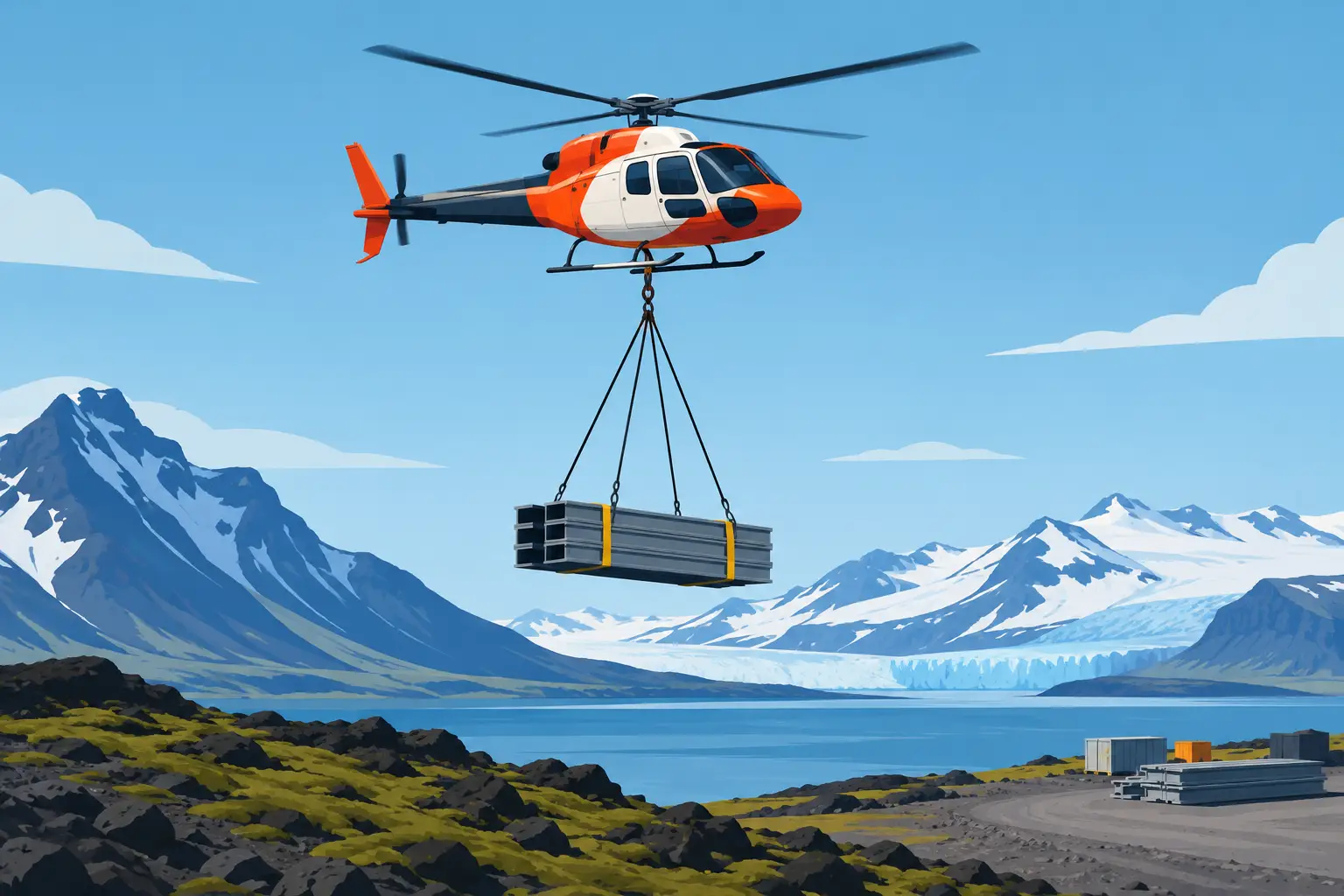
A construction site above the highlands, a remote mountain hut, equipment needed beside a glacier, or supplies headed to a location with no road access – these are the situations where a helicopter can do more than provide a remarkable view. For customers asking what is helicopter sling work, the simple answer is this: it is the transport of cargo suspended beneath a helicopter on a certified line, allowing materials to be delivered or removed without landing the aircraft.

In Iceland, sling work can turn a difficult ground operation into a practical aerial lift. But it is not a shortcut to be used casually. Every lift depends on the cargo, terrain, weather, landing area, aircraft performance, and the people coordinating the job on the ground.

What Is Helicopter Sling Work?

Helicopter sling work, also called external-load or underslung cargo work, involves carrying a load below the helicopter rather than inside the cabin. The cargo is attached to an approved sling, cargo net, basket, or lifting rig. The pilot flies the load to its destination, where a trained ground crew receives, guides, and disconnects it.

This method is used when the item is too large, too dirty, too awkward, or too numerous to carry in the cabin. It is also the preferred option when a helicopter needs to make repeat deliveries efficiently, such as moving building materials, fuel containers, tools, machinery, or supplies to a remote worksite.

The aircraft does not need to land at every pickup or drop-off point. That is a major advantage in Iceland, where rough lava fields, steep slopes, glacial terrain, and protected landscapes often leave little or no suitable landing space. The helicopter can hover while the load is attached or released, provided the site and conditions support a safe operation.

Why Sling Work Makes Sense in Iceland

Iceland is a country of dramatic distances and difficult access. A location that appears close on a map may require hours of driving, river crossings, a specialized vehicle, or travel over seasonal tracks. Some locations are simply unreachable by road.

Sling work is valuable where conventional transport would mean extensive ground disturbance, long construction delays, or a complicated convoy. A helicopter can move a load directly across mountains, valleys, rivers, and glaciers, reducing the time spent getting people and equipment into position.

This is particularly useful for projects involving remote cabins, telecommunications equipment, survey work, utility maintenance, scientific field teams, film productions, and infrastructure in hard-to-reach areas. It can also support operations that need gear delivered quickly but do not require a permanent road or staging route.

There is a trade-off. Helicopter lifting is a specialized service, not the lowest-cost option for every load. It makes the strongest operational sense when road access is poor, time is valuable, the terrain is sensitive, or the alternative requires significant manpower and equipment. For a site beside a paved road, ground transport will usually be the better choice. For a site high in the interior or beyond the end of the track, an aerial lift may be the most efficient solution.

What Can a Helicopter Carry on a Sling?

The right cargo depends on the aircraft, the flight distance, elevation, temperature, wind, fuel requirements, and the shape of the load. A helicopter’s lifting capacity is not a single fixed number. Warm conditions, higher elevations, and longer routes can all reduce the weight available for cargo.

Common sling loads include construction supplies, lumber, roofing materials, generators, tanks, drilling equipment, field supplies, camera equipment, and bagged materials. A single larger item may be lifted alone, while smaller goods are often grouped in cargo nets or purpose-built containers for repeated loads.

Load shape matters as much as weight. A compact, securely rigged load is generally easier to fly than a broad or uneven item that can catch the wind. Long materials, loose sheets, and anything that can swing or rotate require careful planning. The goal is not simply to get the cargo airborne. It is to make sure it remains stable throughout the flight and can be placed accurately at the destination.

Hazardous materials, fuel, pressurized containers, and unusual equipment may need additional assessment or may require a different transport method. The operator should know exactly what is being carried before a lift is scheduled.

How a Sling Operation Is Planned

A successful sling job begins well before the helicopter arrives. The operator reviews the route, load details, site conditions, airspace considerations, and expected weather. In Iceland, conditions can change quickly, so a sound plan also includes alternatives for wind, visibility, and timing.

The pickup point and drop zone must be suitable for the task. Ground crews need a clear working area, a safe distance from people and vehicles, and a way to approach the load without entering a hazardous rotor-wash area. Loose objects must be secured. Dust, gravel, snow, and lightweight materials can become airborne under the helicopter’s downwash.

Communication is equally important. The pilot and designated ground personnel work to agreed procedures, often with radio contact and clear hand signals where appropriate. Only trained, essential personnel should be in the operational area. This keeps the lift controlled from attachment through release.

A typical operation follows a deliberate sequence:

  • The load is weighed, inspected, and rigged with approved equipment.
  • The crew confirms the pickup and delivery zones are clear and ready.
  • The helicopter approaches and hovers for attachment or pickup.
  • The pilot carries the external load along the planned route.
  • The receiving crew guides the placement, disconnects the load, and confirms the area is clear.

For larger jobs, the process is repeated in carefully managed cycles. A well-organized staging area can make a substantial difference to productivity, especially when several loads are needed within a limited weather window.

Weather, Terrain, and Safety Decisions

Sling work is highly weather-sensitive. Wind can affect the aircraft, the suspended cargo, and the people working below. Low cloud, fog, precipitation, icing risk, and changing visibility may delay or stop an operation, even if the pickup point looks acceptable from the ground.

Terrain creates its own considerations. Mountain ridges can produce turbulence and strong localized winds. Glacial areas may have limited visual reference in flat light. Valleys can channel wind, while remote sites may offer few options if conditions deteriorate. Local experience matters because a route that looks straightforward on a satellite image can behave very differently in real conditions.

Safety decisions are made around the actual conditions on the day, not the planned schedule. If the weather or site setup does not allow a safe lift, the operation may be postponed, adjusted, or divided into smaller loads. That flexibility is part of professional helicopter logistics, particularly in Iceland’s variable environment.

What Customers Should Prepare Before Requesting a Lift

The most useful first step is to provide a clear description of the job. Include the pickup and drop-off locations, approximate cargo dimensions and weight, photographs if available, the number of loads, preferred dates, and any access constraints at either end.

It also helps to explain the purpose of the lift. A one-time delivery to a mountain lodge is planned differently from a multi-day construction project or a filming operation with changing locations. If the cargo has special handling requirements, that should be raised early.

An experienced operator can then assess whether sling work is suitable, which aircraft and rigging approach may fit the job, and how weather contingencies should be handled. HeliAir can help turn a remote-access challenge into a practical flight plan, from the first site review through the final delivery.

For the right project, helicopter sling work is not only about moving cargo. It is about reaching the places that make Iceland extraordinary without forcing the landscape, schedule, or logistics to do more than they should.

Is Helicopter Tourism in Iceland Worth It?

A waterfall that takes half a day to reach by road can be beneath you in minutes. A glacier ridge, a black-sand valley, or a fresh volcanic landscape can become part of the same afternoon. That is the real appeal of helicopter tourism in Iceland: not simply seeing more scenery, but reaching places that feel far beyond the usual itinerary.

For travelers with limited time and high expectations, a helicopter changes the shape of an Iceland trip. It replaces long drives, weather-dependent road conditions, and crowded viewpoints with a direct route into the country’s most dramatic terrain. The experience is premium, certainly, but its value lies in access, perspective, and the freedom to build a day around what matters most to you.

What helicopter tourism makes possible in Iceland

Iceland is large, sparsely populated, and often deceptive on a map. A destination that looks close may require several hours of driving around coastlines, across mountain passes, or on rough highland roads. Many exceptional places have no practical road access at all.

A helicopter can connect Reykjavík with volcanic fields, glacier edges, river valleys, and highland plateaus in a fraction of the time. From the air, the landscape also makes more sense. You can see how a braided glacial river moves across black sand, where lava has reshaped an old valley, and how waterfalls spill from the highlands toward the coast.

This does not mean every Iceland experience should happen by air. A road trip has its own rewards: small fishing villages, quiet cafés, geothermal pools, and the pleasure of moving slowly through changing weather. But when the goal is to reach a remote location, combine several major landscapes in one day, or create a private experience around a proposal, family celebration, or photography plan, flying offers something ground travel cannot.

The views are only part of the experience

The strongest helicopter flights do more than circle familiar landmarks. They are designed around landings. Touching down on a mountaintop, beside a glacier, or in an isolated highland setting changes the experience from a scenic flight into a true encounter with the landscape.

A typical route might begin over Reykjavík before following the coast or heading inland toward volcanic terrain. Depending on flight time, conditions, and your priorities, the journey can include a landing near a geothermal area, a glacier viewpoint, or a remote waterfall. Longer private charters can combine contrasting landscapes in one itinerary, such as a volcano, black-sand plains, and an ice cap.

The sensation of arrival is striking. There are no bus doors opening beside a parking lot, no line for a viewing platform, and often no sound beyond the wind once the rotor stops. Iceland feels bigger from the air, then more personal when you step onto terrain that would otherwise be inaccessible.

Volcanoes and lava fields

Volcanic landscapes are among the most compelling reasons to fly. Iceland’s eruption sites and lava fields change over time, and access can be restricted or impractical from the ground. Aerial viewing reveals the scale and shape of the terrain, including fissures, craters, dark lava flows, and the vivid green moss that gradually returns to older fields.

Conditions and official access guidance always determine what is possible. A responsible operator will never promise a landing where weather, volcanic activity, or safety restrictions make it unsuitable. The best alternative may be an aerial route or a landing in a nearby area with equally dramatic views.

Glaciers, waterfalls, and the highlands

Glaciers are not static white horizons. From above, they show deep blue crevasses, ash-streaked ice, and the paths of meltwater rivers below. Waterfalls are equally impressive from the air, particularly those set deep within valleys or dropping from high plateaus.

The central highlands offer a different kind of beauty: vast, raw, and largely empty. Their colors can shift from black volcanic sand to rust-red ridges, green valleys, and milky glacial rivers. These are destinations where helicopter travel is not just faster. It is often the only comfortable and efficient way to reach the most remote perspectives.

Choosing the right flight length

The right helicopter experience depends on how much of Iceland you want to see and how you prefer to travel. Shorter scenic flights are an excellent choice for visitors based in Reykjavík who want a memorable aerial introduction without committing a full day. They can work especially well on arrival day, before an evening reservation, or when a broader road-trip itinerary is already planned.

Flights of roughly 90 minutes to three and a half hours allow more room for meaningful landings and a wider range of terrain. This is often the sweet spot for couples, families, and private groups who want to combine a few defining landscapes rather than rush between them.

A full-day exclusive charter is best for travelers who want the day itself to be the destination. It creates time for a tailored route, extended stops, picnic planning where appropriate, photography, and access to areas that would require multiple days by road. It can also be the practical choice for a group whose schedule leaves little room for long drives.

Private charter is not only about luxury. It is about control. You can prioritize glaciers over waterfalls, focus on the north from Ólafsfjörður, plan a flight around an aerial photography brief, or arrange a transfer that becomes part of the trip rather than a logistical gap. HeliAir can help shape that route around the season, the weather, and the places you most want to experience.

What to expect before you fly

Icelandic weather deserves respect. Clear skies in one region do not guarantee clear conditions in another, and wind can be as important as visibility. Flight plans are always subject to safe operating conditions, which means flexibility is part of any well-planned helicopter experience.

Build some room into your schedule when possible. If the flight is a major highlight, avoid placing it in the final hours before an international departure or an event that cannot move. Morning and afternoon can each offer beautiful light, but the best departure time depends on the route, season, and forecast rather than a universal rule.

Dress for the landing, not just the cabin. Even in summer, a glacier or mountaintop can be cold and windy. Wear warm layers, sturdy closed-toe shoes, and sunglasses if conditions are bright. In winter, insulated outerwear, gloves, and a hat are essential. Your operator can advise on the specifics for your planned terrain.

Photography is welcome, but it is worth remembering that the flight is not a studio set. Window reflections, weather, vibration, and seating arrangements all affect images. If photography or filming is a primary purpose, say so during planning. A route, timing, and aircraft arrangement can then be considered with that goal in mind.

Is helicopter tourism right for your Iceland trip?

It depends on your priorities. If you want to cover Iceland slowly over two weeks, spend time hiking, and enjoy the rhythm of the road, a helicopter may be a special addition rather than the centerpiece. A short scenic flight can add a perspective that enriches the rest of the journey.

If you have only a few days, are traveling for a milestone occasion, or want access to landscapes well beyond the standard route, it can be one of the most worthwhile decisions you make. The cost is higher than a bus tour or rental car, but the comparison is incomplete. You are paying for time, private access, specialist aviation expertise, and a view of Iceland that very few travelers experience.

It also suits different kinds of travelers. Couples may want an intimate landing in a remote setting. Families often appreciate avoiding long drives with younger children. Private groups can share the charter cost while creating a day that fits their interests. Production teams and professional photographers may need aviation support that goes beyond sightseeing altogether.

The best flight is not necessarily the longest one. It is the one that fits your time, comfort level, and reason for coming to Iceland. Start with the landscape you cannot stop thinking about, leave room for weather, and let an experienced local crew turn that idea into a route worth remembering.

Volcano Tours in Iceland by Private Helicopter

A volcano can take hours to reach by road, then still remain distant behind a river crossing, a closed track, or a changing weather system. Volcano tours by helicopter replace that compromise with a clear view of Iceland’s active geological landscape: black lava fields, crater rows, steaming ground, glacier-capped peaks, and the vast terrain connecting them.

For travelers with limited time in Reykjavík, a private helicopter flight can turn a full-day ground excursion into an experience measured in hours rather than miles. For photographers, couples, families, and private groups, it also creates something road travel rarely can: the freedom to see how Iceland’s volcanoes actually shape the land around them.

Volcano Tours Give You a Different Scale

Iceland’s volcanic terrain is compelling from ground level, but its true scale is easiest to understand from the air. Aerial views reveal the path of old eruptions across valleys and plains, where jagged lava meets moss-covered fields, braided rivers, and ice. What appears to be a single mountain from the road may be part of a larger volcanic system extending far beyond the visible horizon.

A helicopter’s perspective is especially valuable because many of Iceland’s most dramatic volcanic areas sit in remote or difficult-to-access country. Highland roads can be seasonal, rough, or inaccessible during parts of the year. A private flight can cross glaciers, black-sand expanses, and uninhabited interior landscapes without requiring hours in a vehicle.

The experience is not simply about getting closer. It is about seeing the relationships between volcano, glacier, coastline, and highland. Few places make that connection as immediate as Iceland, where fire and ice often occupy the same frame.

What You May See From the Air

Every route is shaped by conditions, season, and aviation planning, but an Iceland volcano flight may include volcanic craters, eruption sites, lava flows, geothermal areas, and glacier-covered volcanoes. Depending on the departure point and the selected flight time, the landscape can shift quickly from Reykjavík’s coast to interior plateaus and mountain ridges.

Eyjafjallajökull is one of Iceland’s best-known volcanic landmarks, recognized around the world after its 2010 eruption. From above, the glacier and surrounding valleys offer a striking lesson in the country’s contrasts. The mountain’s ice cap, dark ridges, green lowlands, and nearby waterfalls create a route with far more visual range than a single destination stop.

Other areas may reveal older lava fields that have softened under moss over decades or centuries. Their texture is still unmistakable from the air: rippled black formations, sharp edges, and irregular channels marking where molten rock once moved. On a clear day, this landscape can be paired with distant glaciers, waterfalls, or coastal views for a flight that feels distinctly Icelandic rather than narrowly focused on one crater.

If an eruption is active, interest naturally rises. However, active volcanic conditions are never a guaranteed sightseeing product. Flight paths, landing possibilities, and even whether an area can be approached depend on official restrictions, wind, gas conditions, visibility, and pilot assessment. The best operator will treat those limits as part of professional planning, not as an inconvenience to be ignored.

Private Helicopter or Shared Scenic Flight?

The right format depends on how you want to spend your time. A scheduled scenic flight can be an excellent choice for travelers who want a defined route and a shorter, efficient aerial introduction to Iceland. It offers a polished experience with a clear departure plan and a strong sense of what is possible beyond the city.

A private charter is better suited to guests who want flexibility. Perhaps you are planning a proposal on a remote ridge, building a photography itinerary around the best available light, or combining a volcano flight with a glacier, waterfall, or highland landing. Private groups can discuss priorities before departure and shape the route around the experience that matters most to them.

That flexibility still has practical boundaries. Helicopters operate within weight limits, weather conditions, airspace requirements, and safe landing criteria. A custom itinerary is not a promise that every requested location will be possible on the day. It is a commitment to plan intelligently and make the strongest available experience from the conditions Iceland provides.

How Long Should a Volcano Flight Be?

For guests based in Reykjavík, flight time matters more than many people expect. A shorter flight can provide an exhilarating aerial view of nearby volcanic landscapes and the capital region, making it a strong option for a tight itinerary. It is often ideal when volcano scenery is one highlight among several planned activities.

A 1.5- to 3.5-hour experience creates more room to reach deeper landscapes, vary the terrain, and potentially include a landing when conditions allow. Longer flights are particularly rewarding for travelers who want to combine volcanic features with glaciers, waterfalls, or remote highlands rather than choosing one type of scenery over another.

A full-day private experience is a different category entirely. It allows for a more considered route, time on the ground at suitable locations, and the ability to follow the day’s best weather window. This format works well for milestone travel, production teams, serious photographers, and guests who prefer an unhurried day built around access rather than a fixed checklist.

Weather Is Part of the Experience

Icelandic weather is not a footnote to a helicopter tour. It determines visibility, comfort, routing, and the possibility of landing. Low cloud can obscure a glacier that was crystal clear an hour earlier. Wind can make one valley unsuitable while another offers excellent conditions. Seasonal light changes the character of the landscape as much as the weather does.

That is why good volcano tours begin with realistic expectations. Your pilot and operations team monitor conditions and assess the safest, most rewarding route available. In some cases, a route may need to be adjusted. In others, a flight may need to be delayed or canceled. These decisions protect both the guest experience and the standards required for safe aviation in a rapidly changing environment.

Build flexibility into your Iceland itinerary where possible, especially if a helicopter flight is a priority. An early booking window and a schedule with room to move can make a meaningful difference. Dress warmly in layers, wear sturdy footwear for any planned landing, and bring a camera that you can operate comfortably with gloves on. The cabin will offer protection from the elements, but Iceland’s wind and temperatures are immediately felt once you step onto a ridge or lava field.

Choosing the Right Volcano Tour

Look beyond the word “volcano” when selecting a flight. The strongest experience is not always the one that promises the most dramatic-sounding destination. Ask where the flight departs, how much actual flight time is included, whether the route can be customized, and what happens if weather changes the plan.

It is also worth considering the purpose of your trip. A couple celebrating a special occasion may value a private landing and quiet time in an extraordinary setting. A family may prefer a shorter flight that fits smoothly around other plans. Photographers may need a longer charter with careful timing, open sightlines, and room to work with the pilot on angles and light. Corporate and production travelers may require aerial logistics as much as scenery.

HeliAir can arrange structured sightseeing flights and bespoke helicopter journeys from Reykjavík and Ólafsfjörður, bringing local aviation knowledge to routes that reach far beyond standard road itineraries. The best starting point is simple: decide what you most want to see, how much time you have, and whether flexibility or a fixed itinerary matters more.

A volcano flight is most memorable when it leaves room for Iceland to be itself. Choose a route with ambition, trust the conditions on the day, and let the landscape decide which unforgettable view arrives next.